
Homework Answers
Total mass of the hydrocarbon taken = 2.257 g
Amount of carbon dioxide formed = V = 4.21 L
Pressure , P = 1.0 bar
Temperature = T = 298.15 K
Assuming the CO2 gas to be ideal, we can calculate the number of moles of CO2 formed as follows:

Each mole of CO2 contains 1 mole of C.
Since all the C in CO2 must come from the hydrocarbon, the number of moles of C in the hydrocarbon must be 0.1698 mol.
Now, the amount of water formed = 1.92 g
Molar mass of water = 18.0 g/mol
Hence, number of moles of water formed is

Note that each mole of water contains 2 mole of H.
Hence, the number of mole of H in the hydrocarbon is 
Hence, we can find the empirical formula of the compound by finding the whole number ratio of moles of C and H in the hydrocarbon.

Hence, the empirical formula of the compound is
 .
.
Now, we will use the Dumas method data to calculate the molecular weight and then we will use the molecular weight to calculate the molecular formula.
Mass of empty flask = 71.814 g
Mass of flask and compound vapour = 73.188 g
Hence, mass of the compound vapour, m = 73.188 g - 71.814 g = 1.374 g
Volume of the flask i.e. Volume of the compound vapor = V = 247.0 mL = 0.2470 L
Temperature of the water bath i.e. temperature of the vapor , T= 100.0 C = 100+273.15 K = 373.15 K
Pressure = P = 813.0 torr
Using Ideal gas law to the vapour we can write

Replacing the number of moles , n by 
where m = mass of vapour and M = molar mass of vapour, we get
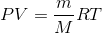
Hence, putting in the value of all the known quantities, we can calculate the molecular weight of the hydrocarbon as follows:

Hence, the molecular weight of the hydrocarbon is 159 g/mol.
One unit of empirical formula
has a mass of

Hence, the number of empirical units in the molecular formula is
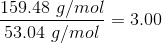
Hence, the molecular formula has 3 times more carbon and hydrogen than the empirical formula.
Hence, the molecular formula is  .
.
Hence, the molecular formula of the compound is
 .
.
Add Answer to:
A scientist decides to determine the molecular formula of a compound containing only carbon and hydrogen....
Upon combustion, an unknown compound containing only carbon and hydrogen produces 40.29 g carbon dioxide and...
Upon combustion, an unknown compound containing only carbon and hydrogen produces 40.29 g carbon dioxide and 16.49 g water. Determine the empirical formula of the unknown compound.
Determine the empirical formula of an organic compound containing only carbon and hydrogen if combustion analysis...
 Determine the empirical formula of an organic compound containing only carbon and hydrogen if combustion analysis of a 1.50 g sample produces 4.71 g CO_2 and 1.93 g H_2O
Upon combustion, an unknown compound containing only carbon and hydrogen produces 55.50 g carbon dioxide and...
Upon combustion, an unknown compound containing only carbon and hydrogen produces 55.50 g carbon dioxide and 22.72 g water. Determine the empirical formula of the unknown compound. C2H3 CH3 C2H CH2 CH
a combustion analysis of a 0.2104 g hydrocarbon sample (containing only hydrogen and carbon) yielded 0.6373...
a combustion analysis of a 0.2104 g hydrocarbon sample (containing only hydrogen and carbon) yielded 0.6373 g carbon dioxide and 0.3259 g water. A separate experiment determined that the molecular weight of this compound is 58.7 g mol-1. from this data, determine both emperical and the molecular formula of this substance.
A compound contains only carbon, hydrogen, and oxygen. Combustion of 10.68 mg of the compound yields...
 A compound contains only carbon, hydrogen, and oxygen. Combustion of 10.68 mg of the compound yields 15.48 mg CO2 and 7.39 mg H20. The molar mass of the compound is 182.2 g/mol What are the empirical and molecular formulas of the compound? (Enter the elements in the order: C, H, O) The empirical formula: The molecular formula
A compound contains only carbon, hydrogen, and oxygen. Combustion of 10.68 mg of the compound yields...
A compound contains only carbon, hydrogen, and oxygen. Combustion of 10.68 mg of the compound yields 15.48 mg CO2 and 7.39 mg H2O. The molar mass of the compound is 182.2 g/mol. What are the empirical and molecular formulas of the compound? (Enter the elements in the order: C, H, O.) The empirical formula:? The molecular formula:?
2.516 g of a compound containing carbon, hydrogen and oxygen (CXHYOZ) is subjected to combustion analysis....
2.516 g of a compound containing carbon, hydrogen and oxygen (CXHYOZ) is subjected to combustion analysis. The results show that 3.082 g of CO2 and 2.705 g of H2O were produced. (i). What is the empirical formula for the compound? (ii). If the molecular weight of the compound is 160.2 g/mol, what is the molecular formula of the compound?
A 25.121 mg sample of a chemical known to contain only carbon, hydrogen, sulfur, and oxygen...
 A 25.121 mg sample of a chemical known to
contain only carbon, hydrogen, sulfur, and oxygen is put into a
combustion analysis apparatus, yielding 44.751 mg of carbon dioxide
and 18.319 mg of water. In another experiment, 30.199 mg of the
compound is reacted with excess oxygen to produce 13.05 mg of
sulfur dioxide. Add subscripts to the formula provided to correctly
identify the empirical formula of this compound. Do not change the
order of the elements.
A 25.121 mg...
A 25.121 mg sample of a chemical known to
contain only carbon, hydrogen, sulfur, and oxygen is put into a
combustion analysis apparatus, yielding 44.751 mg of carbon dioxide
and 18.319 mg of water. In another experiment, 30.199 mg of the
compound is reacted with excess oxygen to produce 13.05 mg of
sulfur dioxide. Add subscripts to the formula provided to correctly
identify the empirical formula of this compound. Do not change the
order of the elements.
A 25.121 mg...
Combustion of a 1.025 g sample of a compound containing only carbon, hydrogen and oxygen produced...
Combustion of a 1.025 g sample of a compound containing only carbon, hydrogen and oxygen produced 2.265 g of CO2 and 1.236 g of H2O. What is the empirical and molecular formulas of the sample compound, if its molecular weight has been roughly determined to be 363 g/mol by mass spectrometer?
Determine the empirical formula of a compound containing: a. 1. 48.5 gram sample containing 1.75 g...
 Determine the empirical formula of a compound containing: a. 1. 48.5 gram sample containing 1.75 g carbon & 46.75 g bromine. 2. 30.9 gram sample containing 9.63 g sulfur & 21.3 g chlorine Determine the molecular formula of the following: 3. Empirical formula = CFBro & molar mass = 254.7 g/mol 4. Empirical formula = C2H8N & molar mass = 46 g/mol Determine the molecular formula for the following: 5. 74.1% carbon, 8.6% hydrogen, & 17.3% nitrogen by mass. Its...
 Determine the empirical formula of an organic compound containing only carbon and hydrogen if combustion analysis of a 1.50 g sample produces 4.71 g CO_2 and 1.93 g H_2O
 A compound contains only carbon, hydrogen, and oxygen. Combustion of 10.68 mg of the compound yields 15.48 mg CO2 and 7.39 mg H20. The molar mass of the compound is 182.2 g/mol What are the empirical and molecular formulas of the compound? (Enter the elements in the order: C, H, O) The empirical formula: The molecular formula
 A 25.121 mg sample of a chemical known to
contain only carbon, hydrogen, sulfur, and oxygen is put into a
combustion analysis apparatus, yielding 44.751 mg of carbon dioxide
and 18.319 mg of water. In another experiment, 30.199 mg of the
compound is reacted with excess oxygen to produce 13.05 mg of
sulfur dioxide. Add subscripts to the formula provided to correctly
identify the empirical formula of this compound. Do not change the
order of the elements.
A 25.121 mg...
A 25.121 mg sample of a chemical known to
contain only carbon, hydrogen, sulfur, and oxygen is put into a
combustion analysis apparatus, yielding 44.751 mg of carbon dioxide
and 18.319 mg of water. In another experiment, 30.199 mg of the
compound is reacted with excess oxygen to produce 13.05 mg of
sulfur dioxide. Add subscripts to the formula provided to correctly
identify the empirical formula of this compound. Do not change the
order of the elements.
A 25.121 mg...
 Determine the empirical formula of a compound containing: a. 1. 48.5 gram sample containing 1.75 g carbon & 46.75 g bromine. 2. 30.9 gram sample containing 9.63 g sulfur & 21.3 g chlorine Determine the molecular formula of the following: 3. Empirical formula = CFBro & molar mass = 254.7 g/mol 4. Empirical formula = C2H8N & molar mass = 46 g/mol Determine the molecular formula for the following: 5. 74.1% carbon, 8.6% hydrogen, & 17.3% nitrogen by mass. Its...
Most questions answered within 3 hours.
-
Where is the error in this code sequence?
String s1 = "Hello";
String s2 = "ello";...
asked 10 months ago -
Financial data for Joel de Paris, Inc., for last year
follow:
Joel de Paris, Inc.
Balance...
asked 10 months ago -
Consider this reaction:
Al2(SO4)3 (aq)+ BaCl3
(aq) Al2Cl6 (aq)- +
3BaSO4(s) . What is the...
asked 10 months ago -
Suppose that Savneet is considering increasing her
recent random sample from 20 car rentals to 40...
asked 10 months ago -
Trucks arrive at an unloading terminal at an average rate of 120
per hour.
Trucks arrive...
asked 10 months ago -
Why are methanol and ethanol completely soluble in water while
octanol is not very little soluble....
asked 10 months ago -
A facilities manager at a university reads in a research report
that the mean amount of...
asked 10 months ago -
When the CuSO4 is rehydrated by adding water to the anhydrous
compound, is this an endothermic...
asked 10 months ago -
A ray of sunlight is passing from diamond into crown glass; the
angle of incidence is...
asked 10 months ago -
A block of mass 0.249 kg is placed on top of a light, vertical
spring of...
asked 10 months ago -
how do the kidneys compensate in the presences of acidosis
a) trigger hyperventilate
b) reserve acid...
asked 10 months ago -
Question 501 pts
The rental rate of capital to the firm increases. Which of the
following...
asked 10 months ago