
Homework Answers
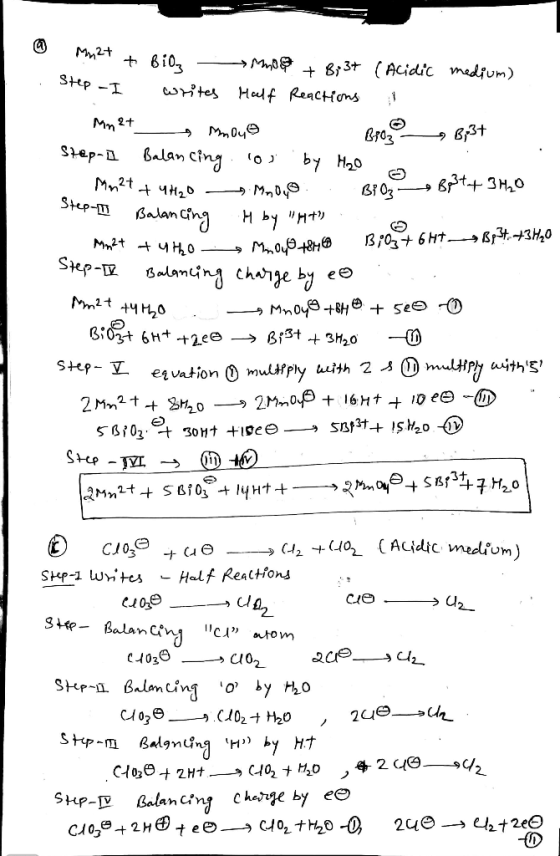
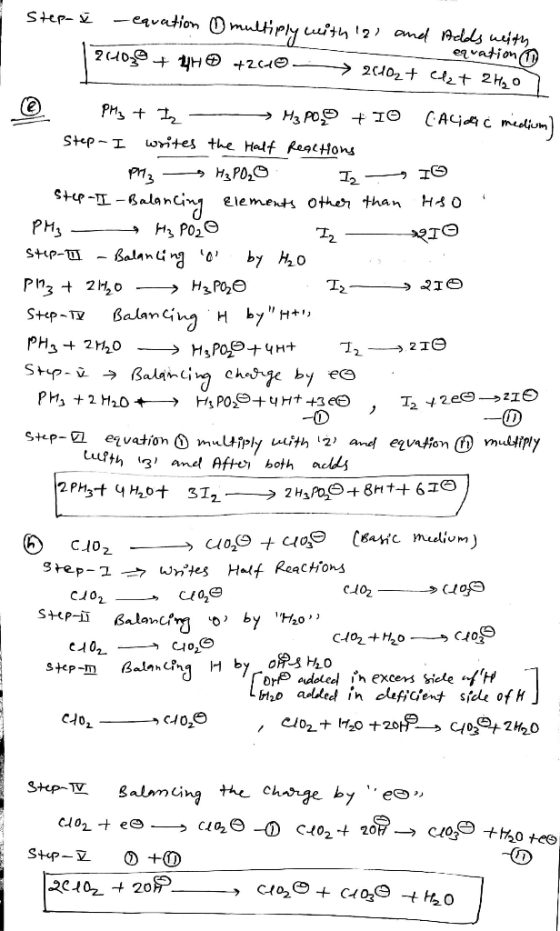
Balances by half reaction method
Add Answer to:
i
need help balancing the ones with the arrows. Thanks!
CHEM1301 - Chemical Principles I Balancing...
need help balancing the 1st equation then name what type of reaction is occurring for each equation A HNO3(aq) + Cu(...
 need help balancing the 1st equation
then name what type of reaction is occurring for each
equation
A HNO3(aq) + Cu(s) + O2(g) - Cu(NO3)2(aq) + 4H2O(l) +BANO2(g) Cu(NO3)2(aq) + 2 NaOH(aq) - Cu(OH)2(s) +2 NaNO3(aq) rxn. 2 Cu(OH)2(s) - CuO(s) + H2O(l) rxn. 3 rxn. 4 Cuo(s) + H2SO4(aq) CuSO.(aq) + Zn(s) — CuSO4(aq) + H2O(l) + ZnSO4(aq) + Cu(s) rxn. 5
need help balancing the 1st equation
then name what type of reaction is occurring for each
equation
A HNO3(aq) + Cu(s) + O2(g) - Cu(NO3)2(aq) + 4H2O(l) +BANO2(g) Cu(NO3)2(aq) + 2 NaOH(aq) - Cu(OH)2(s) +2 NaNO3(aq) rxn. 2 Cu(OH)2(s) - CuO(s) + H2O(l) rxn. 3 rxn. 4 Cuo(s) + H2SO4(aq) CuSO.(aq) + Zn(s) — CuSO4(aq) + H2O(l) + ZnSO4(aq) + Cu(s) rxn. 5
1. How do I read the half reaction table? 2. If im asked for the best...
 1. How do I read the half reaction table?
2. If im asked for the best reducing agent from Cu+, Ag+, F2, and
Fe3+, where do I look first in the table? before the arrow or after
the arrow?
3. Sometimes a value that has originally a positive (V) from the
table it will have the negative sign in a homework problem, and
viceversa, so the question is, how do I use the positive and
negative signs in respect to...
1. How do I read the half reaction table?
2. If im asked for the best reducing agent from Cu+, Ag+, F2, and
Fe3+, where do I look first in the table? before the arrow or after
the arrow?
3. Sometimes a value that has originally a positive (V) from the
table it will have the negative sign in a homework problem, and
viceversa, so the question is, how do I use the positive and
negative signs in respect to...
8. Using the Nernst equation, determine the ratio of Hg2+ to Cu2+ at equilibrium in an electrochemical cell in otherwise...
 8. Using the Nernst equation, determine the ratio of
Hg2+ to Cu2+ at equilibrium in an
electrochemical cell in otherwise pure water, when in contact with
Hg(s) and Cu (s)
Potentially useful data: Reaction Hg 2 +2e = Hgº(s) Feste = Fe2 Cu 2 +2e = Cuº(s) 2H + 2e = H2(g) Pb2 +2e=Pbº(s) Ca*2 + 2e = Cdº(s) 1/4 O2(g) + H + = 1/2 H2O 2 02(g) + 2H+ + 2e = H,O2 1/2 NO3 + H +...
8. Using the Nernst equation, determine the ratio of
Hg2+ to Cu2+ at equilibrium in an
electrochemical cell in otherwise pure water, when in contact with
Hg(s) and Cu (s)
Potentially useful data: Reaction Hg 2 +2e = Hgº(s) Feste = Fe2 Cu 2 +2e = Cuº(s) 2H + 2e = H2(g) Pb2 +2e=Pbº(s) Ca*2 + 2e = Cdº(s) 1/4 O2(g) + H + = 1/2 H2O 2 02(g) + 2H+ + 2e = H,O2 1/2 NO3 + H +...
need help for half cell potentials pls calculate step by step (NOTE - Remember that the...
 need help for half cell potentials pls calculate step by step
(NOTE - Remember that the positive electrode is attached to the red wire and the negative electrode is attached to the black wire.) Electrode Systems Used Anode (oxidation) Negative Cathode (reduction) Positive Measured Potential (V) Positive (Ecu) Copper and silver Cu() - Cu2+ + 2e" Ag+ +1e Ag) 0.432 V Zinc + Silver Zn cs + 2n**+ Zé dat + leº nAg (s) 1.484 V Copper & Zinc Zn(s)...
need help for half cell potentials pls calculate step by step
(NOTE - Remember that the positive electrode is attached to the red wire and the negative electrode is attached to the black wire.) Electrode Systems Used Anode (oxidation) Negative Cathode (reduction) Positive Measured Potential (V) Positive (Ecu) Copper and silver Cu() - Cu2+ + 2e" Ag+ +1e Ag) 0.432 V Zinc + Silver Zn cs + 2n**+ Zé dat + leº nAg (s) 1.484 V Copper & Zinc Zn(s)...
I need the pH that includes the activities. < Question 5 of 10 > Attempt 7...
 I need the pH that includes the activities.
< Question 5 of 10 > Attempt 7 - Determine the pH of a solution containing 0.050 M NaOH and 0.045 M KI neglecting activities. pH = 12.7 Determine the pH of the same solution including activities. Activity coefficients at various ionic strengths can be found in this table. pH= about us careers privacy policy terms of use contact us help Activity Coefficients for Aqueous Solutions at 25°C Ion size (a,pm) Ionic...
I need the pH that includes the activities.
< Question 5 of 10 > Attempt 7 - Determine the pH of a solution containing 0.050 M NaOH and 0.045 M KI neglecting activities. pH = 12.7 Determine the pH of the same solution including activities. Activity coefficients at various ionic strengths can be found in this table. pH= about us careers privacy policy terms of use contact us help Activity Coefficients for Aqueous Solutions at 25°C Ion size (a,pm) Ionic...
6. Given a total dissolved lead concentration of 2.0x10⁻⁵ M, a total dissolved NTA concentration of...
 6. Given a total dissolved lead concentration of
2.0x10⁻⁵ M, a total dissolved NTA concentration of
2.0x10⁻² M, and a pH of 12.3 (note extreme pH)
a. Under these conditions, what is the dominant form of NTA?
b. Write an equation for total dissolved NTA and for total
dissolved Pb. What assumptions can you make?
c. Calculate the predicted [Pb2+], considering NTA
complexation only?
d. What is the [Pb2+] as predicted by the solubility
of Pb(OH)2(s) at pH 12.3?
e....
6. Given a total dissolved lead concentration of
2.0x10⁻⁵ M, a total dissolved NTA concentration of
2.0x10⁻² M, and a pH of 12.3 (note extreme pH)
a. Under these conditions, what is the dominant form of NTA?
b. Write an equation for total dissolved NTA and for total
dissolved Pb. What assumptions can you make?
c. Calculate the predicted [Pb2+], considering NTA
complexation only?
d. What is the [Pb2+] as predicted by the solubility
of Pb(OH)2(s) at pH 12.3?
e....
7. A low concentration of NTA has equilibrated with PbCO3(s) at pH 7.00 in a medium...
 7. A low concentration of NTA has equilibrated with
PbCO3(s) at pH 7.00 in a medium having a final
HCO3- concentration of 7.50x10⁻⁴
M.
a. Determine [Pb2+].
b. Write out KT and the overall reaction for
KT.
c. What is the ratio of [Pb(NTA)- ] to
[H(NTA)2-] in this solution?
Potentially useful data: Reaction Hg 2 +2e = Hgº(s) Feste = Fe2 Cu 2 +2e = Cuº(s) 2H + 2e = H2(g) Pb2 +2e=Pbº(s) Ca*2 + 2e = Cdº(s) 1/4...
7. A low concentration of NTA has equilibrated with
PbCO3(s) at pH 7.00 in a medium having a final
HCO3- concentration of 7.50x10⁻⁴
M.
a. Determine [Pb2+].
b. Write out KT and the overall reaction for
KT.
c. What is the ratio of [Pb(NTA)- ] to
[H(NTA)2-] in this solution?
Potentially useful data: Reaction Hg 2 +2e = Hgº(s) Feste = Fe2 Cu 2 +2e = Cuº(s) 2H + 2e = H2(g) Pb2 +2e=Pbº(s) Ca*2 + 2e = Cdº(s) 1/4...
Using the standard reduction potentials listed, calculate the equilibrium constant for each of the following reactions...
 Using the standard reduction potentials listed, calculate the
equilibrium constant for each of the following reactions at 298
K.
A) Fe(s)+Ni2+(aq)→Fe2+(aq)+Ni(s)
Express your answer using two significant figures.
B) Co(s)+2H+(aq)→Co2+(aq)+H2(g)
Express your answer using two significant figures.
C) 10Br−(aq)+2MnO−4(aq)+16H+(aq)→2Mn2+(aq)+8H2O(l)+5Br2(l)
Express your answer using two significant figure.
E°(V) -0.83 +0.88 +1.78 +0.79 Half-Reaction E°(V) Half-Reaction Ag+ (aq) + - Ag(s) +0.80 2 H20(1) + 2 e — H2(8) + 2 OH+ (aq) AgBr(s) + - Ag(s) + Br" (aq) +0.10 HO2...
Using the standard reduction potentials listed, calculate the
equilibrium constant for each of the following reactions at 298
K.
A) Fe(s)+Ni2+(aq)→Fe2+(aq)+Ni(s)
Express your answer using two significant figures.
B) Co(s)+2H+(aq)→Co2+(aq)+H2(g)
Express your answer using two significant figures.
C) 10Br−(aq)+2MnO−4(aq)+16H+(aq)→2Mn2+(aq)+8H2O(l)+5Br2(l)
Express your answer using two significant figure.
E°(V) -0.83 +0.88 +1.78 +0.79 Half-Reaction E°(V) Half-Reaction Ag+ (aq) + - Ag(s) +0.80 2 H20(1) + 2 e — H2(8) + 2 OH+ (aq) AgBr(s) + - Ag(s) + Br" (aq) +0.10 HO2...
Calculate the cell potential for the following reaction as written at 25.00 °C, given that [Mg2...
Calculate the cell potential for the following reaction as written at 25.00 °C, given that [Mg2 ] = 0.774 M and [Sn2 ] = 0.0190 M. Standard reduction potentials can be found here. Reduction Half-Reaction Standard Potential Ered° (V) F2(g) + 2e– → 2F–(aq) +2.87 O3(g) + 2H3O+(aq) + 2e– → O2(g) + 3H2O(l) +2.076 Co3+(aq) + e– → Co2+(aq) +1.92 H2O2(aq) + 2H3O+(aq) + 2e– → 2H2O(l) +1.776 N2O(g) + 2H3O+(aq) + 2e– → N2(g) + 3H2O(l) +1.766 Ce4+(aq) + e– → Ce3+(aq)...
A chemist designs a galvanic cell that uses these two half-reactions: standard reduction potential half-reaction +...
 A chemist designs a galvanic cell that uses these two half-reactions: standard reduction potential half-reaction + O2(9)+4 H (aq)+4e' 2H20) = 1.23 V red Ered Fe+. (аq) Fe3(aq)+e = +0.771 V Answer the following questions about thiss cell Write a balanced equation for the half-reaction that happens at the cathode Write a balanced equation for the half-reaction that happens at the anode Write a balanced equation for the overall reaction that powers the cell. Be sure the reaction is spontaneous...
 need help balancing the 1st equation
then name what type of reaction is occurring for each
equation
A HNO3(aq) + Cu(s) + O2(g) - Cu(NO3)2(aq) + 4H2O(l) +BANO2(g) Cu(NO3)2(aq) + 2 NaOH(aq) - Cu(OH)2(s) +2 NaNO3(aq) rxn. 2 Cu(OH)2(s) - CuO(s) + H2O(l) rxn. 3 rxn. 4 Cuo(s) + H2SO4(aq) CuSO.(aq) + Zn(s) — CuSO4(aq) + H2O(l) + ZnSO4(aq) + Cu(s) rxn. 5
need help balancing the 1st equation
then name what type of reaction is occurring for each
equation
A HNO3(aq) + Cu(s) + O2(g) - Cu(NO3)2(aq) + 4H2O(l) +BANO2(g) Cu(NO3)2(aq) + 2 NaOH(aq) - Cu(OH)2(s) +2 NaNO3(aq) rxn. 2 Cu(OH)2(s) - CuO(s) + H2O(l) rxn. 3 rxn. 4 Cuo(s) + H2SO4(aq) CuSO.(aq) + Zn(s) — CuSO4(aq) + H2O(l) + ZnSO4(aq) + Cu(s) rxn. 5
 1. How do I read the half reaction table?
2. If im asked for the best reducing agent from Cu+, Ag+, F2, and
Fe3+, where do I look first in the table? before the arrow or after
the arrow?
3. Sometimes a value that has originally a positive (V) from the
table it will have the negative sign in a homework problem, and
viceversa, so the question is, how do I use the positive and
negative signs in respect to...
1. How do I read the half reaction table?
2. If im asked for the best reducing agent from Cu+, Ag+, F2, and
Fe3+, where do I look first in the table? before the arrow or after
the arrow?
3. Sometimes a value that has originally a positive (V) from the
table it will have the negative sign in a homework problem, and
viceversa, so the question is, how do I use the positive and
negative signs in respect to...
 8. Using the Nernst equation, determine the ratio of
Hg2+ to Cu2+ at equilibrium in an
electrochemical cell in otherwise pure water, when in contact with
Hg(s) and Cu (s)
Potentially useful data: Reaction Hg 2 +2e = Hgº(s) Feste = Fe2 Cu 2 +2e = Cuº(s) 2H + 2e = H2(g) Pb2 +2e=Pbº(s) Ca*2 + 2e = Cdº(s) 1/4 O2(g) + H + = 1/2 H2O 2 02(g) + 2H+ + 2e = H,O2 1/2 NO3 + H +...
8. Using the Nernst equation, determine the ratio of
Hg2+ to Cu2+ at equilibrium in an
electrochemical cell in otherwise pure water, when in contact with
Hg(s) and Cu (s)
Potentially useful data: Reaction Hg 2 +2e = Hgº(s) Feste = Fe2 Cu 2 +2e = Cuº(s) 2H + 2e = H2(g) Pb2 +2e=Pbº(s) Ca*2 + 2e = Cdº(s) 1/4 O2(g) + H + = 1/2 H2O 2 02(g) + 2H+ + 2e = H,O2 1/2 NO3 + H +...
 need help for half cell potentials pls calculate step by step
(NOTE - Remember that the positive electrode is attached to the red wire and the negative electrode is attached to the black wire.) Electrode Systems Used Anode (oxidation) Negative Cathode (reduction) Positive Measured Potential (V) Positive (Ecu) Copper and silver Cu() - Cu2+ + 2e" Ag+ +1e Ag) 0.432 V Zinc + Silver Zn cs + 2n**+ Zé dat + leº nAg (s) 1.484 V Copper & Zinc Zn(s)...
need help for half cell potentials pls calculate step by step
(NOTE - Remember that the positive electrode is attached to the red wire and the negative electrode is attached to the black wire.) Electrode Systems Used Anode (oxidation) Negative Cathode (reduction) Positive Measured Potential (V) Positive (Ecu) Copper and silver Cu() - Cu2+ + 2e" Ag+ +1e Ag) 0.432 V Zinc + Silver Zn cs + 2n**+ Zé dat + leº nAg (s) 1.484 V Copper & Zinc Zn(s)...
 I need the pH that includes the activities.
< Question 5 of 10 > Attempt 7 - Determine the pH of a solution containing 0.050 M NaOH and 0.045 M KI neglecting activities. pH = 12.7 Determine the pH of the same solution including activities. Activity coefficients at various ionic strengths can be found in this table. pH= about us careers privacy policy terms of use contact us help Activity Coefficients for Aqueous Solutions at 25°C Ion size (a,pm) Ionic...
I need the pH that includes the activities.
< Question 5 of 10 > Attempt 7 - Determine the pH of a solution containing 0.050 M NaOH and 0.045 M KI neglecting activities. pH = 12.7 Determine the pH of the same solution including activities. Activity coefficients at various ionic strengths can be found in this table. pH= about us careers privacy policy terms of use contact us help Activity Coefficients for Aqueous Solutions at 25°C Ion size (a,pm) Ionic...
 6. Given a total dissolved lead concentration of
2.0x10⁻⁵ M, a total dissolved NTA concentration of
2.0x10⁻² M, and a pH of 12.3 (note extreme pH)
a. Under these conditions, what is the dominant form of NTA?
b. Write an equation for total dissolved NTA and for total
dissolved Pb. What assumptions can you make?
c. Calculate the predicted [Pb2+], considering NTA
complexation only?
d. What is the [Pb2+] as predicted by the solubility
of Pb(OH)2(s) at pH 12.3?
e....
6. Given a total dissolved lead concentration of
2.0x10⁻⁵ M, a total dissolved NTA concentration of
2.0x10⁻² M, and a pH of 12.3 (note extreme pH)
a. Under these conditions, what is the dominant form of NTA?
b. Write an equation for total dissolved NTA and for total
dissolved Pb. What assumptions can you make?
c. Calculate the predicted [Pb2+], considering NTA
complexation only?
d. What is the [Pb2+] as predicted by the solubility
of Pb(OH)2(s) at pH 12.3?
e....
 7. A low concentration of NTA has equilibrated with
PbCO3(s) at pH 7.00 in a medium having a final
HCO3- concentration of 7.50x10⁻⁴
M.
a. Determine [Pb2+].
b. Write out KT and the overall reaction for
KT.
c. What is the ratio of [Pb(NTA)- ] to
[H(NTA)2-] in this solution?
Potentially useful data: Reaction Hg 2 +2e = Hgº(s) Feste = Fe2 Cu 2 +2e = Cuº(s) 2H + 2e = H2(g) Pb2 +2e=Pbº(s) Ca*2 + 2e = Cdº(s) 1/4...
7. A low concentration of NTA has equilibrated with
PbCO3(s) at pH 7.00 in a medium having a final
HCO3- concentration of 7.50x10⁻⁴
M.
a. Determine [Pb2+].
b. Write out KT and the overall reaction for
KT.
c. What is the ratio of [Pb(NTA)- ] to
[H(NTA)2-] in this solution?
Potentially useful data: Reaction Hg 2 +2e = Hgº(s) Feste = Fe2 Cu 2 +2e = Cuº(s) 2H + 2e = H2(g) Pb2 +2e=Pbº(s) Ca*2 + 2e = Cdº(s) 1/4...
 Using the standard reduction potentials listed, calculate the
equilibrium constant for each of the following reactions at 298
K.
A) Fe(s)+Ni2+(aq)→Fe2+(aq)+Ni(s)
Express your answer using two significant figures.
B) Co(s)+2H+(aq)→Co2+(aq)+H2(g)
Express your answer using two significant figures.
C) 10Br−(aq)+2MnO−4(aq)+16H+(aq)→2Mn2+(aq)+8H2O(l)+5Br2(l)
Express your answer using two significant figure.
E°(V) -0.83 +0.88 +1.78 +0.79 Half-Reaction E°(V) Half-Reaction Ag+ (aq) + - Ag(s) +0.80 2 H20(1) + 2 e — H2(8) + 2 OH+ (aq) AgBr(s) + - Ag(s) + Br" (aq) +0.10 HO2...
Using the standard reduction potentials listed, calculate the
equilibrium constant for each of the following reactions at 298
K.
A) Fe(s)+Ni2+(aq)→Fe2+(aq)+Ni(s)
Express your answer using two significant figures.
B) Co(s)+2H+(aq)→Co2+(aq)+H2(g)
Express your answer using two significant figures.
C) 10Br−(aq)+2MnO−4(aq)+16H+(aq)→2Mn2+(aq)+8H2O(l)+5Br2(l)
Express your answer using two significant figure.
E°(V) -0.83 +0.88 +1.78 +0.79 Half-Reaction E°(V) Half-Reaction Ag+ (aq) + - Ag(s) +0.80 2 H20(1) + 2 e — H2(8) + 2 OH+ (aq) AgBr(s) + - Ag(s) + Br" (aq) +0.10 HO2...
 A chemist designs a galvanic cell that uses these two half-reactions: standard reduction potential half-reaction + O2(9)+4 H (aq)+4e' 2H20) = 1.23 V red Ered Fe+. (аq) Fe3(aq)+e = +0.771 V Answer the following questions about thiss cell Write a balanced equation for the half-reaction that happens at the cathode Write a balanced equation for the half-reaction that happens at the anode Write a balanced equation for the overall reaction that powers the cell. Be sure the reaction is spontaneous...
Most questions answered within 3 hours.
-
Where is the error in this code sequence?
String s1 = "Hello";
String s2 = "ello";...
asked 10 months ago -
Financial data for Joel de Paris, Inc., for last year
follow:
Joel de Paris, Inc.
Balance...
asked 10 months ago -
Consider this reaction:
Al2(SO4)3 (aq)+ BaCl3
(aq) Al2Cl6 (aq)- +
3BaSO4(s) . What is the...
asked 10 months ago -
Suppose that Savneet is considering increasing her
recent random sample from 20 car rentals to 40...
asked 10 months ago -
Trucks arrive at an unloading terminal at an average rate of 120
per hour.
Trucks arrive...
asked 10 months ago -
Why are methanol and ethanol completely soluble in water while
octanol is not very little soluble....
asked 10 months ago -
A facilities manager at a university reads in a research report
that the mean amount of...
asked 10 months ago -
When the CuSO4 is rehydrated by adding water to the anhydrous
compound, is this an endothermic...
asked 10 months ago -
A ray of sunlight is passing from diamond into crown glass; the
angle of incidence is...
asked 10 months ago -
A block of mass 0.249 kg is placed on top of a light, vertical
spring of...
asked 10 months ago -
how do the kidneys compensate in the presences of acidosis
a) trigger hyperventilate
b) reserve acid...
asked 10 months ago -
Question 501 pts
The rental rate of capital to the firm increases. Which of the
following...
asked 10 months ago