![10 The colors observed for the four complexes of metal ion M3+, [M(en)3]3+, [M(ox)3], [MF6]3., and [MI6]3, are blue, green, v](http://img.homeworklib.com/questions/300e5b50-739b-11ea-9500-5d8ea4853c84.png?x-oss-process=image/resize,w_560)
Homework Answers
Ligand strength = en > ox > F- > I-
Strong field lignad cause large split in energy and due to this it absorb high energy violet , indiogo & blue and their complementary colour observed as yellow , orange & red . So strong field ligand will show lower energy light and weak field ligand will show high energy light. ]
[M(en)3 ] +3 = yellow
M( ox)3] -3 = green
MF6 ] -3 = blue
MI6] -3 = violet
Add Answer to:
10 The colors observed for the four complexes of metal ion M3+, [M(en)3]3+, [M(ox)3], [MF6]3., and...
Inorganic Chemistry Please help me with #5-#7 5. Draw a d-orbital energy-level diagram, and predict the...
 Inorganic Chemistry
Please help me with #5-#7
5. Draw a d-orbital energy-level diagram, and predict the number of unpaired electrons. a) Fe(CN) b)[Fe(H2O) c) [CoCl2 (tetrahedral) 6. Of the two complexes (a) [CoFeP and (b) [Co(en) one appears yellow and the other appears blue. Match the complex to the color and explain your choice. 7. Three different solutions with orange, green, and violet colors were prepared. Associate each color to the following complexes: [CrCle, (Cr(NHs, and (Cr(H2O
Inorganic Chemistry
Please help me with #5-#7
5. Draw a d-orbital energy-level diagram, and predict the number of unpaired electrons. a) Fe(CN) b)[Fe(H2O) c) [CoCl2 (tetrahedral) 6. Of the two complexes (a) [CoFeP and (b) [Co(en) one appears yellow and the other appears blue. Match the complex to the color and explain your choice. 7. Three different solutions with orange, green, and violet colors were prepared. Associate each color to the following complexes: [CrCle, (Cr(NHs, and (Cr(H2O
The electronic absorption spectrum UI (Cr(NH3)6]3+ (aq) is shown in Figure 11.5. One of the...
 The electronic absorption spectrum UI (Cr(NH3)6]3+ (aq) is shown in Figure 11.5. One of the observed peaks is centered at about 303 nm. 1.a. What is the approximate value of the wavelength for the two other peaks? Which one of these three peaks falls in the visible region of the electromagnetic spectrum? The wavelength at this peak is (Amax), and this transition accounts for the color of the complex ion in solution. The energy of the transition occurring at...
In relation to M(acac)3 complexes, assuming they contain an octahedrally coordinated M3+ ion: Draw the ligand...
In relation to M(acac)3 complexes, assuming they contain an octahedrally coordinated M3+ ion: Draw the ligand field orbital diagrams for Co(III), Fe(III), Mn(III), and Cr(III) to derive the possible electron configurations for the metal complexes. State the number of unpaired spins each configuration has. Which is the correct d-electron configuration for each complex? Which complexes are "high spin" and which are "low spin"? Thanks so much! I will give immediate upvotes!
Question 5 1) In the crystal structure of CuF, the Cu2+ ion is six coordinate with four F ions at...
 Question 5 1) In the crystal structure of CuF, the Cu2+ ion is six coordinate with four F ions at a distance of 1.93 A and two F ions at a distance of 2.27A. Explain. 2) Which of the following ligands F, CN, H20 and NO2 will form significantlhy distorted octahedral complexes with cobalt (II)? Explain 3) Which of the following octahedral complexes are expected to show very weak tetragonal distortion and why? (a) [Cr(CDl (b) [Mn(H20) (c)Cr(Ho and [Ti(H20...
M&M plain candies come in various colors. According to the M&M/Mars Department of Consumer Affairs, the...
 M&M plain candies come in various colors. According to the M&M/Mars Department of Consumer Affairs, the distribution of colors for plain M&M candies is as follows Color Purple Yllow Red OrangeGre en Blue 10% Brown 10% Percentage 17% 2390 2390 9% 8% Suppose you have a large bag of plain M&M candies and you choose one candy at random (a) Find P(green candy or blue candy) Are these outcomes mutually exclusive? Why? Yes. Choosing a green and blue M&M is...
When the transition metal materials are dissolved in the aqueous solution (e.g. Cu(NO3)2, Fe(NO3)3, K2CrO4, NiSO4),...
When the transition metal materials are dissolved in the aqueous solution (e.g. Cu(NO3)2, Fe(NO3)3, K2CrO4, NiSO4), the solutions have color(such as blue, green and yellow color). Why do transition metal complexes make colored compounds in solution? Describe the relevant theory and reasons.
5. Give chemical formulas for the following coordination complexes a) Triammineaquadichlorocobalt(III) chloride. b) Potassium diaquabis(oxalate)manganate(III). c)...
 5. Give chemical formulas for the following coordination complexes a) Triammineaquadichlorocobalt(III) chloride. b) Potassium diaquabis(oxalate)manganate(III). c) Tris(acetylacetonato)iron(III). d) Tri-[-carbonylbis(tricarbonyliron(O)). e) Loxo-bis(pentaamminechromium(III)]- 6. Of the two complexes (a) (CoFP and (b) (Co(en)]* one appears yellow and the other appears blue. Match the complex to the color and explain your choice.
Name: Prelab 1. Find the wavelengths for the different colors of light that make up the...
 Name: Prelab 1. Find the wavelengths for the different colors of light that make up the visible (white) light spectrum. You can use your textbook or the internet to find this information. Note which source you used in completing this table. Color Wavelength Range Violet Blue Green Yellow Orange Red 2. Knowing that the FeSCNP complex is red, predict the color of light it absorbs, and determine the range of wavelengths in which you would expect to find its wavelength...
Below is a reaction scheme that many students who are/were new to air-free techniques (i.e., Schlenk...
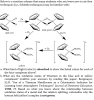 Below is a reaction scheme that many students who are/were new to air-free techniques (i.e., Schlenk techniques) may be familiar with: MC Zn dark-green dark-red MeCN NCCHE NCCHE NCCHE NCCHE yellow blue a. What kind of light (color) is absorbed to show the listed colors for each of the four complexes above? b. What are the oxidation states of Titanium in the blue and in yellow complexes? Confirm your answers by reading this paper: Burgmayer, S.J.N. "Use of a Titanium...
24. () Metal ion solutions also contain anions such as chloride ion. When you observe the...
 24. () Metal ion solutions also contain anions such as chloride ion. When you observe the emitted light of metal ion solutions, how do you know the resulting spectra comes from t sodium ion, and not the anion, such as chloride ion? (2) Describe an experiment you could perform to verify your answer to (1). 5. Sodium ion, a common contaminant of potassium salts, often interferes with potassium ion flame tests. To get around this problem, we view the flame...
 Inorganic Chemistry
Please help me with #5-#7
5. Draw a d-orbital energy-level diagram, and predict the number of unpaired electrons. a) Fe(CN) b)[Fe(H2O) c) [CoCl2 (tetrahedral) 6. Of the two complexes (a) [CoFeP and (b) [Co(en) one appears yellow and the other appears blue. Match the complex to the color and explain your choice. 7. Three different solutions with orange, green, and violet colors were prepared. Associate each color to the following complexes: [CrCle, (Cr(NHs, and (Cr(H2O
Inorganic Chemistry
Please help me with #5-#7
5. Draw a d-orbital energy-level diagram, and predict the number of unpaired electrons. a) Fe(CN) b)[Fe(H2O) c) [CoCl2 (tetrahedral) 6. Of the two complexes (a) [CoFeP and (b) [Co(en) one appears yellow and the other appears blue. Match the complex to the color and explain your choice. 7. Three different solutions with orange, green, and violet colors were prepared. Associate each color to the following complexes: [CrCle, (Cr(NHs, and (Cr(H2O
 The electronic absorption spectrum UI (Cr(NH3)6]3+ (aq) is shown in Figure 11.5. One of the observed peaks is centered at about 303 nm. 1.a. What is the approximate value of the wavelength for the two other peaks? Which one of these three peaks falls in the visible region of the electromagnetic spectrum? The wavelength at this peak is (Amax), and this transition accounts for the color of the complex ion in solution. The energy of the transition occurring at...
 Question 5 1) In the crystal structure of CuF, the Cu2+ ion is six coordinate with four F ions at a distance of 1.93 A and two F ions at a distance of 2.27A. Explain. 2) Which of the following ligands F, CN, H20 and NO2 will form significantlhy distorted octahedral complexes with cobalt (II)? Explain 3) Which of the following octahedral complexes are expected to show very weak tetragonal distortion and why? (a) [Cr(CDl (b) [Mn(H20) (c)Cr(Ho and [Ti(H20...
 M&M plain candies come in various colors. According to the M&M/Mars Department of Consumer Affairs, the distribution of colors for plain M&M candies is as follows Color Purple Yllow Red OrangeGre en Blue 10% Brown 10% Percentage 17% 2390 2390 9% 8% Suppose you have a large bag of plain M&M candies and you choose one candy at random (a) Find P(green candy or blue candy) Are these outcomes mutually exclusive? Why? Yes. Choosing a green and blue M&M is...
 5. Give chemical formulas for the following coordination complexes a) Triammineaquadichlorocobalt(III) chloride. b) Potassium diaquabis(oxalate)manganate(III). c) Tris(acetylacetonato)iron(III). d) Tri-[-carbonylbis(tricarbonyliron(O)). e) Loxo-bis(pentaamminechromium(III)]- 6. Of the two complexes (a) (CoFP and (b) (Co(en)]* one appears yellow and the other appears blue. Match the complex to the color and explain your choice.
 Name: Prelab 1. Find the wavelengths for the different colors of light that make up the visible (white) light spectrum. You can use your textbook or the internet to find this information. Note which source you used in completing this table. Color Wavelength Range Violet Blue Green Yellow Orange Red 2. Knowing that the FeSCNP complex is red, predict the color of light it absorbs, and determine the range of wavelengths in which you would expect to find its wavelength...
 Below is a reaction scheme that many students who are/were new to air-free techniques (i.e., Schlenk techniques) may be familiar with: MC Zn dark-green dark-red MeCN NCCHE NCCHE NCCHE NCCHE yellow blue a. What kind of light (color) is absorbed to show the listed colors for each of the four complexes above? b. What are the oxidation states of Titanium in the blue and in yellow complexes? Confirm your answers by reading this paper: Burgmayer, S.J.N. "Use of a Titanium...
 24. () Metal ion solutions also contain anions such as chloride ion. When you observe the emitted light of metal ion solutions, how do you know the resulting spectra comes from t sodium ion, and not the anion, such as chloride ion? (2) Describe an experiment you could perform to verify your answer to (1). 5. Sodium ion, a common contaminant of potassium salts, often interferes with potassium ion flame tests. To get around this problem, we view the flame...
Most questions answered within 3 hours.
-
Where is the error in this code sequence?
String s1 = "Hello";
String s2 = "ello";...
asked 10 months ago -
Financial data for Joel de Paris, Inc., for last year
follow:
Joel de Paris, Inc.
Balance...
asked 10 months ago -
Consider this reaction:
Al2(SO4)3 (aq)+ BaCl3
(aq) Al2Cl6 (aq)- +
3BaSO4(s) . What is the...
asked 10 months ago -
Suppose that Savneet is considering increasing her
recent random sample from 20 car rentals to 40...
asked 10 months ago -
Trucks arrive at an unloading terminal at an average rate of 120
per hour.
Trucks arrive...
asked 10 months ago -
Why are methanol and ethanol completely soluble in water while
octanol is not very little soluble....
asked 10 months ago -
A facilities manager at a university reads in a research report
that the mean amount of...
asked 10 months ago -
When the CuSO4 is rehydrated by adding water to the anhydrous
compound, is this an endothermic...
asked 10 months ago -
A ray of sunlight is passing from diamond into crown glass; the
angle of incidence is...
asked 10 months ago -
A block of mass 0.249 kg is placed on top of a light, vertical
spring of...
asked 10 months ago -
how do the kidneys compensate in the presences of acidosis
a) trigger hyperventilate
b) reserve acid...
asked 10 months ago -
Question 501 pts
The rental rate of capital to the firm increases. Which of the
following...
asked 10 months ago