
Homework Answers

Add Answer to:
Watching TV: In 2012, the General Social Survey asked a sample of 1326 people how much...
Watching TV: In 2012, the General Social Survey asked a sample of 1330 people how much...
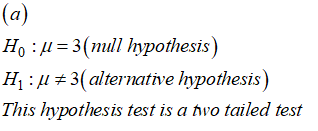
 Watching TV: In 2012, the General Social Survey asked a sample of 1330 people how much time they spent watching TV each day. The mean number of hours was 3.05 with a standard deviation of 2.70. A sociologist claims that people watch a mean of 3 hours of TV per day. Do the data provide sufficient evidence to conclude that the mean hours of TV watched per day is more than the claim? Use the a=0.10 level of significance and...
Watching TV: The 2012 general Social Survey asked a large number of people how much time...
 Watching TV: The 2012 general Social Survey asked a large number of people how much time they spent watching TV each day. The mean number of hours was 3.09 with a standard deviation of 2.72. Assume that in a sample of 34 teenagers, the sample standard deviation of daily TV time is 1.9 hours, and that the population of TV watching times is normally distributed. Can you conclude that the population standard deviation of TV watching times for teenagers differs...
5 4 6 Question 6 of 7 (1 point) Atempt 1 of Unlimited View question in...
 5 4 6 Question 6 of 7 (1 point) Atempt 1 of Unlimited View question in a popup 8.3 Section Exercise 20 (p-value, caic) Watching TV: In 2012, the General Social Survey asked a sample of 1310 people how much time they spent watching TV each day. The mean number of hours was 2.8 with a standard deviation of 2.6. A sociologist claims that people watch a mean of 3 hours of TV per day. Do the data provide sufficient...
In the 2016 General Social Survey, subjects reported the time spent every day watching television. Men...
In the 2016 General Social Survey, subjects reported the time spent every day watching television. Men reported watching an average of 5.3 hours per day and women reported watching an average of 4.1 hours per day. The difference in means is 1.2 and the associated standard error of the difference is .191. (a) If you hypothesize that men and women’s average amount of television per day differs significantly, set up the null and alternative hypotheses for a significance test. (b)...
For the 2015 General Social Survey, a comparison of females and males on the number of...
 For the 2015 General Social Survey, a comparison of females and males on the number of hours a day that the subject watched TV gave the following results. Group Females 510 3.10 Males 396 2.90 (a) Set up the hypotheses of a significance test to analyze whether the population means differ for females and males. Ho: -Select 2 H: --Select-- 12 (b) Conduct all parts of the significance test if df - 509 and standard error = 0.163. Interpret the...
3. How much TV do College Students watch? In a survey 361 students were asked how...
 3. How much TV do College Students watch? In a survey 361 students were asked how many hours of TV they watched per week. The sample gave an average of 6.504 hours. A bootstrap distribution gave a SE of 0.2939. Find and interpret a 90% confidence interval for the average number of hours a student watches TV per week.
A survey asked people, "How many hours do you spend watching reality TV shows per week?"....
 A survey asked people, "How many hours do you spend watching reality TV shows per week?". From a random sample of 1200 people, sample mean was 9.5 and the (sample) standard deviation was 3.1 hours. Construct a 90% confidence interval for population mean A (6.4, 12.6) B. Cannot compute based on the given information. C-19.32, 9.68) D.(4.4, 15.6) E. (9.35, 9.65) QUESTION 20 (Continue from the previous question) what is the minimum required sample size to make sure that the...
A newspaper article reported that people spend a mean of 7 hours per day watching TV,...
 A newspaper article reported that people spend a mean of 7 hours per day watching TV, with a standard deviation of 1.8 hours. A psychologist would like to conduct interviews with the 10% of the population who spend the most time watching TV. She assumes that the daily time people spend watching TV is normally distributed. At least how many hours of daily TV watching are necessary for a person to be eligible for the interview? Carry your intermediate computations...
A newspaper article reported that people spend a mean of 6 hours per day watching TV,...
 A newspaper article reported that people spend a mean of 6 hours per day watching TV, with a standard deviation of 1.8 hours. A psychologist would like to conduct interviews with the 10% of the population who spend the most time watching TV. She assumes that the daily time people spend watching TV is normally distributed. At least how many hours of daily TV watching are necessary for a person to be eligible for the interview? Carry your intermediate computations...
A newspaper article reported that people spend a mean of 7.5 hours per day watching TV,...
A newspaper article reported that people spend a mean of 7.5 hours per day watching TV, with a standard deviation of 1.8 hours. A psychologist would like to conduct interviews with the of the 10 % population who spend the most time watching TV. She assumes that the daily time people spend watching TV is normally distributed. At least how many hours of daily TV watching are necessary for a person to be eligible for the interview? Carry your intermediate...
 Watching TV: In 2012, the General Social Survey asked a sample of 1330 people how much time they spent watching TV each day. The mean number of hours was 3.05 with a standard deviation of 2.70. A sociologist claims that people watch a mean of 3 hours of TV per day. Do the data provide sufficient evidence to conclude that the mean hours of TV watched per day is more than the claim? Use the a=0.10 level of significance and...
 Watching TV: The 2012 general Social Survey asked a large number of people how much time they spent watching TV each day. The mean number of hours was 3.09 with a standard deviation of 2.72. Assume that in a sample of 34 teenagers, the sample standard deviation of daily TV time is 1.9 hours, and that the population of TV watching times is normally distributed. Can you conclude that the population standard deviation of TV watching times for teenagers differs...
 5 4 6 Question 6 of 7 (1 point) Atempt 1 of Unlimited View question in a popup 8.3 Section Exercise 20 (p-value, caic) Watching TV: In 2012, the General Social Survey asked a sample of 1310 people how much time they spent watching TV each day. The mean number of hours was 2.8 with a standard deviation of 2.6. A sociologist claims that people watch a mean of 3 hours of TV per day. Do the data provide sufficient...
 For the 2015 General Social Survey, a comparison of females and males on the number of hours a day that the subject watched TV gave the following results. Group Females 510 3.10 Males 396 2.90 (a) Set up the hypotheses of a significance test to analyze whether the population means differ for females and males. Ho: -Select 2 H: --Select-- 12 (b) Conduct all parts of the significance test if df - 509 and standard error = 0.163. Interpret the...
 3. How much TV do College Students watch? In a survey 361 students were asked how many hours of TV they watched per week. The sample gave an average of 6.504 hours. A bootstrap distribution gave a SE of 0.2939. Find and interpret a 90% confidence interval for the average number of hours a student watches TV per week.
 A survey asked people, "How many hours do you spend watching reality TV shows per week?". From a random sample of 1200 people, sample mean was 9.5 and the (sample) standard deviation was 3.1 hours. Construct a 90% confidence interval for population mean A (6.4, 12.6) B. Cannot compute based on the given information. C-19.32, 9.68) D.(4.4, 15.6) E. (9.35, 9.65) QUESTION 20 (Continue from the previous question) what is the minimum required sample size to make sure that the...
 A newspaper article reported that people spend a mean of 7 hours per day watching TV, with a standard deviation of 1.8 hours. A psychologist would like to conduct interviews with the 10% of the population who spend the most time watching TV. She assumes that the daily time people spend watching TV is normally distributed. At least how many hours of daily TV watching are necessary for a person to be eligible for the interview? Carry your intermediate computations...
 A newspaper article reported that people spend a mean of 6 hours per day watching TV, with a standard deviation of 1.8 hours. A psychologist would like to conduct interviews with the 10% of the population who spend the most time watching TV. She assumes that the daily time people spend watching TV is normally distributed. At least how many hours of daily TV watching are necessary for a person to be eligible for the interview? Carry your intermediate computations...
Most questions answered within 3 hours.
-
Where is the error in this code sequence?
String s1 = "Hello";
String s2 = "ello";...
asked 10 months ago -
Financial data for Joel de Paris, Inc., for last year
follow:
Joel de Paris, Inc.
Balance...
asked 10 months ago -
Consider this reaction:
Al2(SO4)3 (aq)+ BaCl3
(aq) Al2Cl6 (aq)- +
3BaSO4(s) . What is the...
asked 10 months ago -
Suppose that Savneet is considering increasing her
recent random sample from 20 car rentals to 40...
asked 10 months ago -
Trucks arrive at an unloading terminal at an average rate of 120
per hour.
Trucks arrive...
asked 10 months ago -
Why are methanol and ethanol completely soluble in water while
octanol is not very little soluble....
asked 10 months ago -
A facilities manager at a university reads in a research report
that the mean amount of...
asked 10 months ago -
When the CuSO4 is rehydrated by adding water to the anhydrous
compound, is this an endothermic...
asked 10 months ago -
A ray of sunlight is passing from diamond into crown glass; the
angle of incidence is...
asked 10 months ago -
A block of mass 0.249 kg is placed on top of a light, vertical
spring of...
asked 10 months ago -
how do the kidneys compensate in the presences of acidosis
a) trigger hyperventilate
b) reserve acid...
asked 10 months ago -
Question 501 pts
The rental rate of capital to the firm increases. Which of the
following...
asked 10 months ago