Complete "Embracing Missions Case Study," located on pages 94-98 of Cases in Health Care Marketing.
Complete "Embracing Missions Case Study," located on pages 94-98 of Cases in Health Care Marketing.
Homework Answers
Embracing Missions
SNAPSHOT
Institution:
Oakridge University Hospital, a 525-bed, public teaching hospital
affiliated with Oakridge University
Location:
Hamilton (population 1,328,984), located in the East South
Central region of the United States
Characters:
Mr. Bruce Faulkner, Assistant Manager of Central Supply
Ms. Sherry Graham, Respiratory Therapist
Ms. Elizabeth Murphy, Director of Nursing
(all of Oakridge University Hospital)
Context:
In this case, a top nursing executive in a public teaching hospital grows concerned when she encounters employees holding negative attitudes toward the establishment’s underprivileged patient population.
Elizabeth Murphy, Director of Nursing at Oakridge University Hospital,cannot wait to get off of her feet for her lunch break. It has been a verybusy morning, she is hungry, and she desperately is in need of a momentto catch her breath. On her way to the cafeteria, she navigates aroundand through several construction areas placed throughout the massive 525-bed public teaching hospital, located in Hamilton, a city of 1,328,984situated in the East South Central region of the United States.
The minor inconveniences associated with the construction are relativelynew to her and her fellow Oakridge University Hospital employees,resulting from the hospital’s efforts to upgrade a number of patient waitingareas, repaintseveralmain corridors, and make a number of other functionaland aestheticenhancements. Ultimately, through these upgrades,the establishment hopes to improve patient access and comfort at OakridgeUniversity Hospital.
As she ma
kes her way into the hospital’s cafeteria and purchases hermeal, Elizabeth spots two very familiar faces who invite her to join themfor lunch. They are Sherry Graham, a Respiratory Therapist, and BruceFaulkner, an Assistant Manager in the hospital’s central supply department.Joining them at their table, she eagerly awaits the latest news—and thetopic of the day pertained to the hospital’s construction. While each ofElizabeth’s two lunch mates were pleased with the construction, notingthat it would make for a better working environment for staff members,their comments regarding the benefits to Oakridge University Hospital’spatients were less sincere, something Elizabeth found to be very troubling.
Bruce questioned using hospital resources to improve patient waitingareas. He remarked that since the hospital is always full, why should moneybe spent to improve convenience and comfort for patients. He continuedon, noting that the hospital certainly does not have to worry about customertraffic, especially as it is the healthcare provider of last resortformost patients who are too poor to goanywhere else. Sherry agreed withBruce, adding that the hospital had no reason to fear competitorsStealingOakridge University Hospital’s patient population. She expressed thatbecause most of Oakridge University Hospital’s patients, as Medicaid orcharity cases, were not paying for their care anyway, they were not trulydeserving of the enhancements being made by the new construction projects.Sherry simply could not understand the rationale for doing more forOakridge University Hospital’s patient population.
Elizabeth, a 30-year veteran of the hospital, was dumbfounded by theviews expressed by Bruce and Sherry. Arguing that all patients should betreated with respect and dignity, she responded that one of the centralreasonsfor Oakridge University Hospital’s existence is to treat patientswithout sufficient financial resources and noted that this obligation is clearly expressed in its mission statement. As a mission mandate, Elizabeth conveyed that Oakridge University Hospital and its employees have an
obligation to these patients, making them important and deserving of the best health care that can possibly be offered.
Elizabeth was particularly quick to correct Sherry regarding her belief that Oakridge University Hospital’s patients are nonpayers. Sure, they may not have the means to open their wallets and pay for healthcare services, she expressed, but government programs provide funding on their behalf that the hospital would not receive otherwise. Technically, they are paying customers, the money just does not come from their pocketbooks.
Finishing up what turned out to be an unpleasant lunch experience,Elizabeth noted that even if Oakridge University Hospital never received a single penny from any source to pay for the healthcare costs of its clients, the patients of Oakridge University Hospital still deserve the best of care and attention. Finishing off her comments, she questioned the two, asking why they would even wish to work at Oakridge University Hospital if they did not see the value of both its mission and the rewards of serving the needy.
Returning to her office, Elizabeth reflected on her lunch experience. While she was concerned that both Bruce and Sherry embraced such views, she was particularly troubled that Sherry would do so, because she is involved in the direct delivery of care to patients. If she harbored feelings in her heart and mind that Oakridge University Hospital’s patients did not deserve the comfort and convenience of enhanced patient waiting areas, how might this impact the quality of the care that she provided?
But what Elizabeth perhaps viewed to be most troubling did not pertain to Bruce or Sherry specifically, but instead dealt with the fact that she had heard time and time again the same thing from many of Oakridge University Hospital’s employees. In prior years, she had even spoken with
Oakridge University Hospital’s top administrators about the matter, seeking guidance in how she should handle what at best is an uncaring attitude regarding patients, and at worst could lead to the inappropriate treatment of patients and even death. Sadly, though, the top officials did not have much guidance to offer, noting public sector bureaucracy and complexities associated with disciplining employees, especially in cases where there are no tangible infractions. Elizabeth found this to be very frustrating.
While Elizabeth always tried to educate and enlighten employeesholding negative beliefs about Oakridge University Hospital’s patientpopulation, she knew that her success at converting them was at bestvery limited. Thankfully, she did not view the mindset held by Bruce,Sherry, and others to be epidemic,but did view it to be prominentenough to warrant concern. And there was at least a degree of comfortin knowing that the problem was not limited to Oakridge UniversityHospital, as, through her network of professional contacts, she cameto realize that the mindset was rather commonplace at public hospitalsserving the underprivileged.
In trying to craft a theory on the origins of such a negative and unproductivemindset, Elizabeth’s best guess was that it simply was an artifactofthe institution’s culture and characteristics. She well knew that OakridgeUniversity Hospital did not possess a marketing culture; that its employeesdid not view themselves to be customer service agents or ambassadors onbehalf of the institution. And she well knew that a constant and unendingflow of patients who possessed few if any other options for medicalcare certainly could instill a mindset of complacency in employeesandthe institutions in which they served. Further, she knew that the size ofOakridge University Hospital did not help matters, as the employee basewas so large that massive bureaucracy was a given, making even seasonedemployees feel more like a number than an individual person. Elizabethreasoned that all of this and more set the stage for negative mindsets atOakridge University Hospital.
Regardless, Elizabeth could not understand why employees wouldcare to work for an institution that embraced a mission that theypersonallydeemed to be unacceptable. She wondered why theywould not desire working elsewhere; somewhere that supported a missionthey personally viewed to be acceptable. Their motives defiedcomprehension.
Elizabeth cared very much for Oakridge University Hospital’s patientsand, given her longtime experience at the hospital, she was committedto improvement on every front. Hearing Bruce and Sherry’s perspectivesbrought back countless memories of other employees expressing similarviews. She wondered what more she could do to improve the customerservice and marketing orientations of Oakridge University Hospital’semployees.
1. This case presents a very negative mindset harbored by at least someemployees at Oakridge University Hospital. What are the possibleramifications for patients at Oakridge University Hospital or anyother facility who encounter employees possessing the mindset heldby Bruce and Sherry? Do you believe that such a negative employeemindset can result in tangible patient harm, or is the mindset simplya personal expression that would not be extended to the careand treatment of patients? Please justify your responses.
2. Assume that you are Sherry’s supervisor and you receive a telephonecall from Elizabeth who conveys the perspectives that were echoed bySherry over lunch. Would you bring the matter up with Sherry? Whyor why not? If you did indeed address Sherry, what approachWouldyou take and what would you expect to gain by your actions?
3. Elizabeth attributes the negative perspectives of the patient populationheld by Bruce, Sherry, and some others at Oakridge UniversityHospital to be the product of culture, a burgeoning supply of
Patientswith few alternatives, and bureaucracy. Assuming that sheis correct, how might you go about stemming negative sentiment?
4. Elizabeth noted that she had approached the top executives atOakridge University Hospital and asked for guidance as to howshe should address employees when hearing negative perspectives
Regardingthe hospital’s patient base. Much to her dismay, she didnot receive any particularly beneficial advice. What does this sayabout the executives she consulted?
5. This case presents an account by a nursing executive who encountereda negative mindset held by at least some of Oakridge UniversityHospital’s employees. Suppose that Elizabeth had been accompaniedby a marketing manager during her lunch meeting with Bruceand Sherry. Would you anticipate the marketing manager’s perspectiveson the matter to be similar to Elizabeth’s, less intense, or moreintense? Please justify your response.
Add Answer to:
Complete "Embracing Missions Case Study," located on pages 94-98
of Cases in Health Care Marketing.
Ch. 5 health care marketing. Case Study Outline a general healthcare marketing plan that is appropriate...
Ch. 5 health care marketing. Case Study Outline a general healthcare marketing plan that is appropriate for CMC.
Ch 5. Health care marketing. Case Study. Cmc is experiencing declining inpatient and outpatient volumes. Develop...
Ch 5. Health care marketing. Case Study. Cmc is experiencing declining inpatient and outpatient volumes. Develop a list of five marketing initiatives to improve clinical workload.
Average 5-8 pages • Include introduction, problem statement, case study/previous cases, problem identification, causes, control and...
 Average 5-8 pages
• Include introduction, problem statement, case study/previous
cases, problem
identification, causes, control and improvement.
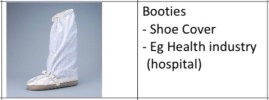
Booties - Shoe Cover - Eg Health industry (hospital)
Average 5-8 pages
• Include introduction, problem statement, case study/previous
cases, problem
identification, causes, control and improvement.
Booties - Shoe Cover - Eg Health industry (hospital)
Case study 1 Analyze and discuss the effects of informatics on health care case study 2...
 Case study 1 Analyze and discuss the effects of informatics on health care case study 2 Discuss the overall technology of computer networking systems and its applicability to health care. Case study 3 1. Design an appropriate chart to communicate a specific point. Use excel to design the chart.
Write a minimum of 2 pages for what are the goals/objectives and marketing strategy portions for...
Write a minimum of 2 pages for what are the goals/objectives and marketing strategy portions for your marketing plan to address the situation in the case study; East chestnut regional health system. Cite at least 3 reputable references to support your assignment
1). How will health reform impact the health care workforce? 2). Case Study: Health Resources &...
1). How will health reform impact the health care workforce? 2). Case Study: Health Resources & Services Administration. Medically Underserved Areas/Populations. These are federally designated areas or populations that have too few primary care providers, along with risk factors such as high infant mortality, high poverty, or a large elderly population. Develop strategic plans to address a medically underserved area you’ve identified.
In two to three pages, complete the case study below by answering the questions. Maria Lopez...
In two to three pages, complete the case study below by answering the questions. Maria Lopez is a single Hispanic female living in a large Mississippi city. She is 35 years old and has been diagnosed with major depressive disorder (MDD) and post-traumatic stress disorder (PTSD). She recently lost her job and health insurance, so she does not take any medication for her illnesses. Maria has had physical health issues as well, including hypertension, type 2 diabetes, and obesity. Maria's...
HCA-401 Chapter 9 Case Study #2 Strategic Plan for Health Care for Increased Population of young...
HCA-401 Chapter 9 Case Study #2 Strategic Plan for Health Care for Increased Population of young women in the military
Case Study: You are a community educator for a large health care system. You are preparing...
Case Study: You are a community educator for a large health care system. You are preparing a series of two classes on smoking cessation that will be followed by a support group for people who want to quit smoking. a) What resources might you use to help you with the content of the course?
Case Study: You are a community educator for a large health care system. You are preparing...
Case Study: You are a community educator for a large health care system. You are preparing a series of two classes on smoking cessation that will be followed by a support group for people who want to quit smoking .Write objectives for the first class, with one at each of the six levels of the cognitive domain.
 Average 5-8 pages
• Include introduction, problem statement, case study/previous
cases, problem
identification, causes, control and improvement.
Booties - Shoe Cover - Eg Health industry (hospital)
Average 5-8 pages
• Include introduction, problem statement, case study/previous
cases, problem
identification, causes, control and improvement.
Booties - Shoe Cover - Eg Health industry (hospital)
 Case study 1 Analyze and discuss the effects of informatics on health care case study 2 Discuss the overall technology of computer networking systems and its applicability to health care. Case study 3 1. Design an appropriate chart to communicate a specific point. Use excel to design the chart.
Most questions answered within 3 hours.
-
Where is the error in this code sequence?
String s1 = "Hello";
String s2 = "ello";...
asked 10 months ago -
Financial data for Joel de Paris, Inc., for last year
follow:
Joel de Paris, Inc.
Balance...
asked 10 months ago -
Consider this reaction:
Al2(SO4)3 (aq)+ BaCl3
(aq) Al2Cl6 (aq)- +
3BaSO4(s) . What is the...
asked 10 months ago -
Suppose that Savneet is considering increasing her
recent random sample from 20 car rentals to 40...
asked 10 months ago -
Trucks arrive at an unloading terminal at an average rate of 120
per hour.
Trucks arrive...
asked 10 months ago -
Why are methanol and ethanol completely soluble in water while
octanol is not very little soluble....
asked 10 months ago -
A facilities manager at a university reads in a research report
that the mean amount of...
asked 10 months ago -
When the CuSO4 is rehydrated by adding water to the anhydrous
compound, is this an endothermic...
asked 10 months ago -
A ray of sunlight is passing from diamond into crown glass; the
angle of incidence is...
asked 10 months ago -
A block of mass 0.249 kg is placed on top of a light, vertical
spring of...
asked 10 months ago -
how do the kidneys compensate in the presences of acidosis
a) trigger hyperventilate
b) reserve acid...
asked 10 months ago -
Question 501 pts
The rental rate of capital to the firm increases. Which of the
following...
asked 10 months ago