Initial investment $ 300,000 Pretax salvage value $ 35,000 Cost savings per year $ &n
| Initial investment | $ 300,000 | ||
| Pretax salvage value | $ 35,000 | ||
| Cost savings per year | $ 85,000 | ||
| Working capital reduction | $ 55,000 | ||
| Tax rate | 35% | ||
| *Depreciation straight-line | |||
| over life | 5 | ||
| What is the IRR of the project? | |||
Homework Answers
| Depreciation= (Cost-Salvage Value)/ Life Of The Asset | |||||||
| =$300000-35000)/5 | |||||||
| $ 53,000 | per year | ||||||
| Calculation Of After Tax Cash Flow per year | |||||||
| Cost Saving | $ 85,000 | ||||||
| Less: Depreciation | $ 53,000 | ||||||
| Net Income | $ 32,000 | ||||||
| Tax @35% | $ 11,200 | ||||||
| Net Income After Tax | $ 20,800 | ||||||
| Add Depreciation | $ 53,000 | ||||||
| Net Cash Flow After Tax | $ 73,800 | ||||||
| Let us calculate NPV at 10% and 20% disount rate | |||||||
| Year | Particular | Cash Flow | PV Factor @10% | PV At 10% | PV Factor @20% | PV At 20% | |
| 0 | Initial Investment | -300000 | 1 | -300000 | 1 | -300000 | |
| 0 | Reduction In Working capital | 55000 | 1 | 55000 | 1 | 55000 | |
| 1 | Annual Cash Inflow | $ 73,800 | 0.909090909 | 67090.90909 | 0.833333333 | 61500 | |
| 2 | Annual Cash Inflow | $ 73,800 | 0.826446281 | 60991.73554 | 0.694444444 | 51250 | |
| 3 | Annual Cash Inflow | $ 73,800 | 0.751314801 | 55447.03231 | 0.578703704 | 42708.333 | |
| 4 | Annual Cash Inflow | $ 73,800 | 0.683013455 | 50406.39301 | 0.482253086 | 35590.278 | |
| 5 | Annual Cash Inflow | $ 73,800 | 0.620921323 | 45823.99364 | 0.401877572 | 29658.565 | |
| 5 | Salvage Value | $ 35,000 | 0.620921323 | 21732.24631 | 0.401877572 | 14065.715 | |
| NPV | 56492.30989 | -10227.11 | |||||
| IRR = 10% + 56492.31/(56492.31+10227.1)*10 | |||||||
| IRR = 10% + 56492.31/66719.41 | |||||||
| =10+8.47 | |||||||
| =18.47% ( Approx) | |||||||
| =18.19% (Exact Using Excel Function) | |||||||
Add Answer to:
Initial investment
$ 300,000
Pretax salvage value
$ 35,000
Cost savings per year
$ &n
Initial investment $ 300,000 Pretax salvage value $ 35,000 Cost savings per year $ &n
Initial investment $ 300,000 Pretax salvage value $ 35,000 Cost savings per year $ 85,000 Working capital reduction $ 55,000 Tax rate 35% *Depreciation straight-line over life 5 What is the IRR of the project?
Telecom Italia is considering the investment in a capital project. The initial cost in year 0...
Telecom Italia is considering the investment in a capital project. The initial cost in year 0 is $130,000 to be depreciated straight over 5 years to an expected salvage value of $15,000. The firm’s tax rate is 35% and it has a 10% cost of capital (the firm's discount rate, or "hurdle" rate). For this project an additional investment in working capital of $12,000 is required and it will be recovered in full at the end of the project’s life....
Pretax Cost Savings
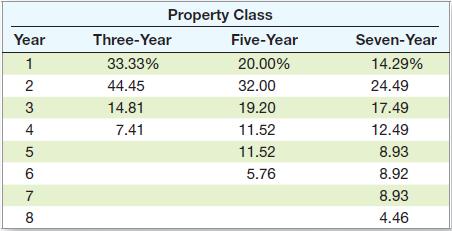 A proposed cost-saving device has an installed cost of $805,000. The device will be used in a five-year project but is classified as three-year MACRS property for tax purposes. The required initial net working capital investment is $83,000, the marginal tax rate is 24 percent, and the project discount rate is 9 percent. The device has an estimated Year 5 salvage value of $127,000. What level of pretax cost savings do we require for this project to be profitable? MACRS schedulePretax...
Question 3 (14 marks) A project has an initial investment of $300,000 for fixed equipment. The...
 Question 3 (14 marks) A project has an initial investment of $300,000 for fixed equipment. The fixed equipment will be depreciated on a straight-line basis to zero book value over the three-year life of the project and have zero salvage value. The project also requires $38,000 initially for net working capital. All net working capital will be recovered at the end of the project. Sales from the project are expected to be $300,000 per year and operating costs amount to...
Calculate the NPV for the following capital budgeting proposal: $100,000 initial cost for equipment, straight-line depreciation...
Calculate the NPV for the following capital budgeting proposal: $100,000 initial cost for equipment, straight-line depreciation over 5 years to a zero book value, $5,000 pre-tax salvage value of equipment, 35% tax rate, $45,000 additional annual revenues, $15,000 additional annual cash expenses, $8,000 initial investment in working capital to be recouped at project end, and a cost of capital of 11%. Should the project be accepted or rejected?
Kolby’s Korndogs is looking at a new sausage system with an installed cost of $655,000. This cost will be depreciated st...
Kolby’s Korndogs is looking at a new sausage system with an installed cost of $655,000. This cost will be depreciated straight-line to zero over the project’s five-year life, at the end of which the sausage system can be scrapped for $85,000. The sausage system will save the firm $183,000 per year in pretax operating costs, and the system requires an initial investment in net working capital of $35,000. If the tax rate is 22 percent and the discount rate is...
The initial investment for this project will be $2.4 million. This amount is for depreciable equipment,...
The initial investment for this project will be $2.4 million. This amount is for depreciable equipment, which will be depreciated over 4 years using the straight-line method to zero book value. A working capital investment of $300,000 will also be made at the beginning of the project (Time T=0). The entire working capital investment will be recovered at the end of the project. Initial marketing studies suggest that Earnings before Depreciation and Taxes for 6 years will be as shown...
Francis, LLC is considering a 4-year project with an initial cost of $120,000. The equipment depreciation is straight-li...
Francis, LLC is considering a 4-year project with an initial cost of $120,000. The equipment depreciation is straight-line to zero over the life of the project. The firm believes that they can sell the equipment for the salvage value of $40,000 at the end of the project. The tax rate is 40%. The project requires no additional working capital over the life of the project. Annual operating cash flows are $48,000. Assuming a required rate of return of 10%, what...
Wildhorse Company management is considering a project that will require an initial investment of $47,000 and...
Wildhorse Company management is considering a project that will require an initial investment of $47,000 and will last for 10 years. No other capital expenditures or increases in working capital are anticipated during the life of the project. What is the annual EBIT that will make the project economically viable if the cost of capital for the project is 8 percent and the firm will depreciate the investment using straight-line depreciation and a salvage value of $0? Assume that the...
Tax Impact Capital Investment Projects typically have 4 major categories: 1. Initial Investment: Cash outflow to...
 Tax Impact Capital Investment Projects typically have 4 major categories: 1. Initial Investment: Cash outflow to purchase a new machine and the working capital cash outflows (if any) at year o 2. Current disposal of old machine and the effects of gain/loss from sales old machine on tax paid or tax savings (in case of sold of old machine) at year 0. 3. Annual net cash flow from operations: difference between net cash flows under old machine and new machine...
 Question 3 (14 marks) A project has an initial investment of $300,000 for fixed equipment. The fixed equipment will be depreciated on a straight-line basis to zero book value over the three-year life of the project and have zero salvage value. The project also requires $38,000 initially for net working capital. All net working capital will be recovered at the end of the project. Sales from the project are expected to be $300,000 per year and operating costs amount to...
 Tax Impact Capital Investment Projects typically have 4 major categories: 1. Initial Investment: Cash outflow to purchase a new machine and the working capital cash outflows (if any) at year o 2. Current disposal of old machine and the effects of gain/loss from sales old machine on tax paid or tax savings (in case of sold of old machine) at year 0. 3. Annual net cash flow from operations: difference between net cash flows under old machine and new machine...
Most questions answered within 3 hours.
-
Where is the error in this code sequence?
String s1 = "Hello";
String s2 = "ello";...
asked 10 months ago -
Financial data for Joel de Paris, Inc., for last year
follow:
Joel de Paris, Inc.
Balance...
asked 10 months ago -
Consider this reaction:
Al2(SO4)3 (aq)+ BaCl3
(aq) Al2Cl6 (aq)- +
3BaSO4(s) . What is the...
asked 10 months ago -
Suppose that Savneet is considering increasing her
recent random sample from 20 car rentals to 40...
asked 10 months ago -
Trucks arrive at an unloading terminal at an average rate of 120
per hour.
Trucks arrive...
asked 10 months ago -
Why are methanol and ethanol completely soluble in water while
octanol is not very little soluble....
asked 10 months ago -
A facilities manager at a university reads in a research report
that the mean amount of...
asked 10 months ago -
When the CuSO4 is rehydrated by adding water to the anhydrous
compound, is this an endothermic...
asked 10 months ago -
A ray of sunlight is passing from diamond into crown glass; the
angle of incidence is...
asked 10 months ago -
A block of mass 0.249 kg is placed on top of a light, vertical
spring of...
asked 10 months ago -
how do the kidneys compensate in the presences of acidosis
a) trigger hyperventilate
b) reserve acid...
asked 10 months ago -
Question 501 pts
The rental rate of capital to the firm increases. Which of the
following...
asked 10 months ago