

Homework Answers
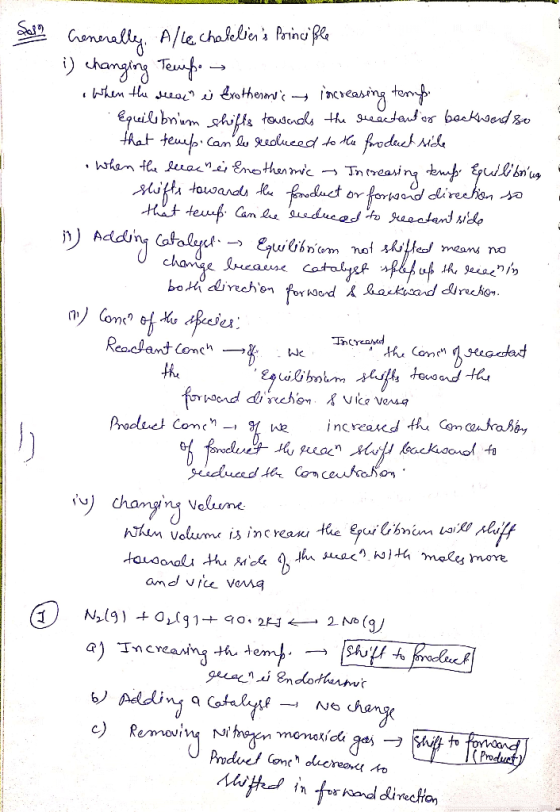


Add Answer to:
1) Determine the effect of each of the following changes on the equilibrium mixture for the...
Predict the sign of the entropy change, ?S?, for each of the reaction displayed. Drag the appropriate items to their re...
Predict the sign of the entropy change, ?S?, for each of the reaction displayed. Drag the appropriate items to their respective bins. Ba2+(aq)+SO42?(aq)?BaSO4(s) 2NaClO3(s)?2NaCl(s)+3O2(g) 2N2O(g)?2N2(g)+O2(g) 2H2(g)+O2(g)?2H2O(l) C7H16(g)+11O2(g)?7CO2(g)+8H2O(g) H2O(l)?H2O(g) Positive Negative
For the following equilibrium reaction, predict the direction of the equilibrium shift by specifying if each...
For the following equilibrium reaction, predict the direction of the equilibrium shift by specifying if each stress will cause the concentration of reactants or products to increase NH3(g)+H2O(l) ⇋ NH4+(aq)+OH−(aq) Drag the appropriate stresses to their respective bins. Adding NH4+(aq) Adding NH3(g) Adding OH-(aq) Removing NH4+(aq) Removing OH-(aq) Shifts in the direction of the reactants: Shift in the direction of the products:
Consider the following reaction at equilibrium. What will happen if O2 is added to the reaction?...
Consider the following reaction at equilibrium. What will happen if O2 is added to the reaction? 4FeS2(s) + 11O2(g) <--> 2Fe2O3(s) + 8SO2(g) A) The equilibrium constant will increase. B) The equilibrium will change in the direction of the reactants. C)The equilibrium will change in the direction of the products. D)No change in equilibrium is observed. E)The equilibrium constant will decrease. 2- Identify the change that will always shift the equilibrium to the right. 2SO2(g) + O2(g) ⇋ 2SO3(g) A)...
Part A Predict the sign of the entropy change, ΔS∘, for each of the reaction displayed. Drag the appropriate items to...
Part APredict the sign of the entropy change, ΔS∘, for each of the reaction displayed.Drag the appropriate items to their respective bins.Ag+(aq)+Cl−(aq)→AgCl(s)2KClO3(s)→2KCl(s)+3O2(g)2N2O(g)→2N2(g)+O2(g)2Mg(s)+O2(g)→2MgO(s)C7H16(g)+11O2(g)→7CO2(g)+8H2O(g)H2O(l)→H2O(g)Part BCalculate the standard entropy change for the reaction2Mg(s)+O2(g)→2MgO(s)using the data from the following table:SubstanceΔH∘f (kJ/mol)ΔG∘f (kJ/mol)S∘ [J/(K⋅mol)]Mg(s)0.000.0032.70O2(g)0.000.00205.0MgO(s)-602.0-569.627.00Express your answer to four significant figures and include the appropriate units.ΔS∘ =
Use LeCha^telier′s principle to predict whether each the following changes causes the system to shift in...
Use LeCha^telier′s principle to predict whether each the following changes causes the system to shift in the direction of products or reactants: HF(aq)+H2O(l)⇌F−(aq)+H3O+(aq) Part A adding some F−(aq) adding some a.in the direction of the reactants b.in the direction of the products Part B. removing some HF(aq) removing some in the direction of the products in the direction of the reactants SubmitRequest Answer Part C removing some H3O+(aq) removing some in the direction of the products in the direction of...
14. To improve air quality, chemists often remove sulfur from coal and natural gas by treating...
 14. To improve air quality, chemists often remove sulfur from coal and natural gas by treating the fue contaminant hydrogen sulfide with O2 in the following exothermic process: 2H S (B)+ 02 (8)2S (s)+ 2H0(8) If the reaction above is at equilibrium, predict the shift in the equilibrium position in response to each of the following changes in conditions. Identify whether the change will increase the formation of products, increase the formation of reactants, or have no effect on the...
Le Chateler's principle In the chart below: • Indicate the color of each solution as darker...
 Le
Chateler's principle
In the chart below: • Indicate the color of each solution as darker or lighter than the control after the addition of the specified substance. • Indicate the direction the equilibrium shifted as "toward products" or "toward reactants" based on the color change. • Based on the direction of the shift, indicate the substance(s) that increased which will either be the two reactants present on the reactant side of the equilibrium equation or the complex present on...
Le
Chateler's principle
In the chart below: • Indicate the color of each solution as darker or lighter than the control after the addition of the specified substance. • Indicate the direction the equilibrium shifted as "toward products" or "toward reactants" based on the color change. • Based on the direction of the shift, indicate the substance(s) that increased which will either be the two reactants present on the reactant side of the equilibrium equation or the complex present on...
For the hemoglobin equilibrium, indicate if each of the following changes shifts the equilibrium in the direction of th...
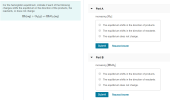 For the hemoglobin equilibrium, indicate if each of the following changes shifts the equilibrium in the direction of the products, the reactants, or does not change Part A Hb(aq) + O2(9) = HbO2(aq) increasing [02] O The equilibrium shifts in the direction of products. O The equilibrium shifts in the direction of reactants. The equilibrium does not change. Submit Request Answer Part B increasing (HbO2] O The equilibrium shifts in the direction of products. O The equilibrium shifts in the...
20. Use Le Châtelier's principle to predict if each of the following changes causes the system to shift in the dire...
 20. Use Le Châtelier's principle to predict if each of the following changes causes the system to shift in the direction of products or reactants: HCIO(aq) + H2O(12H30*(aq) + Clo" (aq) a. removing some HClO(aq) b. adding more Clo"(aq) c. removing some H30* (aq) d. adding more HCl(aq)
Consider the following reaction. It is occuring in a closed system and it is currently at...
Consider the following reaction. It is occuring in a closed system and it is currently at equilibrium: 2H2O(g) + Heat ↔ 2H2(g) + O2(g) Label each of the following statements with is effect on the reaction a) shift towards products b) shift towards reactants c) no change Adding water vapor. Adding hydrogen gas. Increase the pressure on the reaction vessel Adding a catalyst to the reaction vessel. Placing the reaction vessel in an ice bath
 14. To improve air quality, chemists often remove sulfur from coal and natural gas by treating the fue contaminant hydrogen sulfide with O2 in the following exothermic process: 2H S (B)+ 02 (8)2S (s)+ 2H0(8) If the reaction above is at equilibrium, predict the shift in the equilibrium position in response to each of the following changes in conditions. Identify whether the change will increase the formation of products, increase the formation of reactants, or have no effect on the...
 Le
Chateler's principle
In the chart below: • Indicate the color of each solution as darker or lighter than the control after the addition of the specified substance. • Indicate the direction the equilibrium shifted as "toward products" or "toward reactants" based on the color change. • Based on the direction of the shift, indicate the substance(s) that increased which will either be the two reactants present on the reactant side of the equilibrium equation or the complex present on...
Le
Chateler's principle
In the chart below: • Indicate the color of each solution as darker or lighter than the control after the addition of the specified substance. • Indicate the direction the equilibrium shifted as "toward products" or "toward reactants" based on the color change. • Based on the direction of the shift, indicate the substance(s) that increased which will either be the two reactants present on the reactant side of the equilibrium equation or the complex present on...
 For the hemoglobin equilibrium, indicate if each of the following changes shifts the equilibrium in the direction of the products, the reactants, or does not change Part A Hb(aq) + O2(9) = HbO2(aq) increasing [02] O The equilibrium shifts in the direction of products. O The equilibrium shifts in the direction of reactants. The equilibrium does not change. Submit Request Answer Part B increasing (HbO2] O The equilibrium shifts in the direction of products. O The equilibrium shifts in the...
 20. Use Le Châtelier's principle to predict if each of the following changes causes the system to shift in the direction of products or reactants: HCIO(aq) + H2O(12H30*(aq) + Clo" (aq) a. removing some HClO(aq) b. adding more Clo"(aq) c. removing some H30* (aq) d. adding more HCl(aq)
Most questions answered within 3 hours.
-
Where is the error in this code sequence?
String s1 = "Hello";
String s2 = "ello";...
asked 11 months ago -
Financial data for Joel de Paris, Inc., for last year
follow:
Joel de Paris, Inc.
Balance...
asked 11 months ago -
Consider this reaction:
Al2(SO4)3 (aq)+ BaCl3
(aq) Al2Cl6 (aq)- +
3BaSO4(s) . What is the...
asked 11 months ago -
Suppose that Savneet is considering increasing her
recent random sample from 20 car rentals to 40...
asked 11 months ago -
Trucks arrive at an unloading terminal at an average rate of 120
per hour.
Trucks arrive...
asked 11 months ago -
Why are methanol and ethanol completely soluble in water while
octanol is not very little soluble....
asked 11 months ago -
A facilities manager at a university reads in a research report
that the mean amount of...
asked 11 months ago -
When the CuSO4 is rehydrated by adding water to the anhydrous
compound, is this an endothermic...
asked 11 months ago -
A ray of sunlight is passing from diamond into crown glass; the
angle of incidence is...
asked 11 months ago -
A block of mass 0.249 kg is placed on top of a light, vertical
spring of...
asked 11 months ago -
how do the kidneys compensate in the presences of acidosis
a) trigger hyperventilate
b) reserve acid...
asked 11 months ago -
Question 501 pts
The rental rate of capital to the firm increases. Which of the
following...
asked 11 months ago