


Homework Answers
As per requirement of question, we have to identify graph image for all numbered sub-parts, for which please go through below table and thereafter detail solution
| S.No. | Type of Manufacturing Cost | Graph Image numbered |
|---|---|---|
| 1 | Annual Depreciation | Linear Graph that is (K) |
| 2 | Electricity Bill | First Fixed Charges then variable so it is (B) |
| 3 | Water Bill | Slab Rate system applied so it is (G) |
| 4 | Direct Material | First Cost is increasing (but marginally decreasing) thereafter increasing at fix rate so it is (I) |
1. Annual Depreciation of equipment, where the amount of depreciation charged is directly proportional to machine hours. So when the machine produce more, then more machine hours will be and as a result more depreciation will be charged.
| X Axis | Y Axis |
| Units Produced | Total Cost |
| 1000 | 10000 |
| 2000 | 20000 |
| 3000 | 30000 |
| 4000 | 40000 |
| 5000 | 50000 |
| 6000 | 60000 |

2. Electricity Bill, in this case flat fixed charge will be there and variable charge after certain number of kilowatt hours used and conceptually during variable costing, quantity of kilowatt hours will vary in direct proportion to units produced.
| X Axis | Y Axis |
| Units Produced | Total Cost |
| 500 | 10000 |
| 1000 | 10000 |
| 2000 | 15000 |
| 3000 | 20000 |
| 4000 | 25000 |
| 5000 | 30000 |

3. Water Bill- In this case, slab rate system is to be used, say for first 100,000 gallons or less there will be flat fee for Dollar 1,000 and thereafter for every next 10,000 gallons rate increase as per usage.
| X Axis | Y Axis | ||
| Units Produced | Total Cost | Water Gallons Used | Calculation |
| 5000 | 1000 | 100000 | Fixed |
| 10000 | 1000 | 100000 | Fixed |
| 11000 | 1030 | 110000 | For 1000 units, 10,000 gallons water used, so 10,000*.003=30 additional cost |
| 12000 | 1090 | 120000 | |
| 13000 | 1180 | 130000 | |
| 14000 | 1300 | 140000 |

4.Direct Material Cost - where per unit cost decreases with each pound of material used, with a minimum cost per unit of Dollar 9.20.
| X Axis | Y Axis | |
| Units Produced | Total Cost | Marginal Cost |
| 1 | 10 | 10 |
| 2 | 19.98 | 9.99 |
| 3 | 29.94 | 9.98 |
| 4 | 39.88 | 9.97 |
| 5 | 49.8 | 9.96 |
| 80 | 736.8 | 9.21 |
| 81 | 745.2 | 9.2 |
| 82 | 754.4 | 9.2 |
| 105 | 966 | 9.2 |
| 106 | 975.2 | 9.2 |

In this case, First Cost is increasing at marginally decreasing rate thereafter increasing at fix rate so it is (I)
Add Answer to:
- VUUN static) Select the graph that matches the numbered manufacturing out data indicate by loter...
Select the graph that matches the numbered manufacturing cost data. Indicate by letter which of the...
 Select the graph that matches the numbered manufacturing cost data. Indicate by letter which of the graphs best fits each of the situations or items described. (Click to view the graphs.) The vertical axes of the graphs represent total dollars of cost, and the horizontal axes represent production output during a calendar year. In each case, the zero point of dollars and production is at the intersection of the two axes. The graphs may be used more than once. 1....
Select the graph that matches the numbered manufacturing cost data. Indicate by letter which of the...
 Select the graph that matches the numbered manufacturing cost data. Indicate by letter which of the graphs best fits each of the situations or items described. (Click to view the graphs.) The vertical axes of the graphs represent total dollars of cost and the horizontal axes represent production output during a calendar year. In each case, the zero point of dollars and production is at the intersection of the two axes. The graphs may be used more than once. к...
Giaph/Chart B D F H hei 1 K Select the graph that matches the numbered manufacturing...
 Giaph/Chart B D F H hei 1 K Select the graph that matches the numbered manufacturing cost data. Indicate by letter which graph best fits the situation or item described. (Click to view the graphs.) The vertical axes of the graphs represent total cost, and the horizontal axes represent units produced during a calendar year. In each case, the zero point of dollars and production is at the intersection of the two axes. The graphs may be used more than...
Select the graph that matches the numbered manufacturing cost data. Indicate by letter which of the...
 Select the graph that matches the numbered manufacturing cost
data. Indicate by letter which of the graphs best fits each of the
situations or items described.
5. Annual depreciation of equipment, where the amount is computed by the straight-line method. When the depreciation rate was established, it was anticipated that the obsolescence factor would be greater than the wear-and-tear factor. 6. Rent on a manufacturing plant donated by the city, where the agreement calls for a fixed fee payment unless...
Select the graph that matches the numbered manufacturing cost
data. Indicate by letter which of the graphs best fits each of the
situations or items described.
5. Annual depreciation of equipment, where the amount is computed by the straight-line method. When the depreciation rate was established, it was anticipated that the obsolescence factor would be greater than the wear-and-tear factor. 6. Rent on a manufacturing plant donated by the city, where the agreement calls for a fixed fee payment unless...
PROBLEMS P4-1 L01 Variable and fixed cost pattern analysis The cost behavior patterns below are lettered...
 PROBLEMS P4-1 L01 Variable and fixed cost pattern analysis The cost behavior patterns below are lettered A through H. The vertical axes of the graphs represent total dollars of expense, and the horizontal axes represent production in units, machine hours, or direct labor hours. In each case, the zero point is at the intersec- tion of the two axes. Each graph may be used no more than once, Required: Select the graph that matches the lettered cost described here. a....
PROBLEM 3-13 Identifying Cost Behavior Pattern A number of graphs displaying cost behavior patterns are shown...
 PROBLEM 3-13 Identifying Cost Behavior Pattern A number of graphs displaying cost behavior patterns are shown below. The vertical axis on each graph represents total cost, and the horizontal axis represents level of activity (volume). Required: 1. For each of the following situations, identify the graph below that illustrates the cost behavior pattern involved. Any graph may be used more than once. Cost of raw materials used. Electricity billa flat fixed charge, plus a variable cost after a certain number...
Given here are a number of graphs. LOADING... (Click to view the graphs.) The horizontal axis represents the units produced over the year and the vertical axis represents total cost or revenues. Indicate by number which graph best fits the situation o
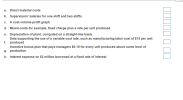 Given here are a number of graphs. LOADING... (Click to view the graphs.) The horizontal axis represents the units produced over the year and the vertical axis represents total cost or revenues. Indicate by number which graph best fits the situation or item described. Some graphs may be used more than once; some may not apply to any of the situations.
Cost Patterns The graphs below represent approximations of cost behavior patterns. The horizontal axis of each...
 Cost Patterns The graphs below represent approximations of cost behavior patterns. The horizontal axis of each graph represents units and the vertical axis represents dollars of total cost. Select the graph that best matches each of the situations described below. Each graph may be selected more than once (Select the appropriate graph by using the drop-down answer box found at the end of each situation.) a. Straight-line depreciation of a factory building.* b. Utility bill for electricity that includes a...
Matching Cost Behavior Descriptions to Cost Behavior Graphs Select the graph (A through L) that best...
Matching Cost Behavior Descriptions to Cost Behavior Graphs Select the graph (A through L) that best matches the numbered (1 through 7) italicized descriptions of various cost behavior. For each graph, the vertical (y) axis represents total dollars of cost, and the horizontal (x) axis represents output units during the period. The graphs may be used more than once. Required: 1. The cost of depreciation. The asset being depreciated is a large piece of production machinery equipment where the straight-line...
eBook Calculator Print Item Matching Cost Behavior Descriptions to Cost Behavior Graphs Select the graph (A...
 eBook Calculator Print Item Matching Cost Behavior Descriptions to Cost Behavior Graphs Select the graph (A through K) that best matches the numbered (1 through 6) descriptions of various cost behavior. For each graph, the vertical (y) axis represents total dollars of cost, and the horizontal (x) axis represents output units during the period. The graphs may be used more than once. PU Previous Check My Work Save and Exit Submit Assignment for Grading 557 PM 2/1/2020 eBook Calculator E...
 Select the graph that matches the numbered manufacturing cost data. Indicate by letter which of the graphs best fits each of the situations or items described. (Click to view the graphs.) The vertical axes of the graphs represent total dollars of cost, and the horizontal axes represent production output during a calendar year. In each case, the zero point of dollars and production is at the intersection of the two axes. The graphs may be used more than once. 1....
 Select the graph that matches the numbered manufacturing cost data. Indicate by letter which of the graphs best fits each of the situations or items described. (Click to view the graphs.) The vertical axes of the graphs represent total dollars of cost and the horizontal axes represent production output during a calendar year. In each case, the zero point of dollars and production is at the intersection of the two axes. The graphs may be used more than once. к...
 Giaph/Chart B D F H hei 1 K Select the graph that matches the numbered manufacturing cost data. Indicate by letter which graph best fits the situation or item described. (Click to view the graphs.) The vertical axes of the graphs represent total cost, and the horizontal axes represent units produced during a calendar year. In each case, the zero point of dollars and production is at the intersection of the two axes. The graphs may be used more than...
 Select the graph that matches the numbered manufacturing cost
data. Indicate by letter which of the graphs best fits each of the
situations or items described.
5. Annual depreciation of equipment, where the amount is computed by the straight-line method. When the depreciation rate was established, it was anticipated that the obsolescence factor would be greater than the wear-and-tear factor. 6. Rent on a manufacturing plant donated by the city, where the agreement calls for a fixed fee payment unless...
Select the graph that matches the numbered manufacturing cost
data. Indicate by letter which of the graphs best fits each of the
situations or items described.
5. Annual depreciation of equipment, where the amount is computed by the straight-line method. When the depreciation rate was established, it was anticipated that the obsolescence factor would be greater than the wear-and-tear factor. 6. Rent on a manufacturing plant donated by the city, where the agreement calls for a fixed fee payment unless...
 PROBLEMS P4-1 L01 Variable and fixed cost pattern analysis The cost behavior patterns below are lettered A through H. The vertical axes of the graphs represent total dollars of expense, and the horizontal axes represent production in units, machine hours, or direct labor hours. In each case, the zero point is at the intersec- tion of the two axes. Each graph may be used no more than once, Required: Select the graph that matches the lettered cost described here. a....
 PROBLEM 3-13 Identifying Cost Behavior Pattern A number of graphs displaying cost behavior patterns are shown below. The vertical axis on each graph represents total cost, and the horizontal axis represents level of activity (volume). Required: 1. For each of the following situations, identify the graph below that illustrates the cost behavior pattern involved. Any graph may be used more than once. Cost of raw materials used. Electricity billa flat fixed charge, plus a variable cost after a certain number...
 Cost Patterns The graphs below represent approximations of cost behavior patterns. The horizontal axis of each graph represents units and the vertical axis represents dollars of total cost. Select the graph that best matches each of the situations described below. Each graph may be selected more than once (Select the appropriate graph by using the drop-down answer box found at the end of each situation.) a. Straight-line depreciation of a factory building.* b. Utility bill for electricity that includes a...
 eBook Calculator Print Item Matching Cost Behavior Descriptions to Cost Behavior Graphs Select the graph (A through K) that best matches the numbered (1 through 6) descriptions of various cost behavior. For each graph, the vertical (y) axis represents total dollars of cost, and the horizontal (x) axis represents output units during the period. The graphs may be used more than once. PU Previous Check My Work Save and Exit Submit Assignment for Grading 557 PM 2/1/2020 eBook Calculator E...
Most questions answered within 3 hours.
-
Where is the error in this code sequence?
String s1 = "Hello";
String s2 = "ello";...
asked 11 months ago -
Financial data for Joel de Paris, Inc., for last year
follow:
Joel de Paris, Inc.
Balance...
asked 11 months ago -
Consider this reaction:
Al2(SO4)3 (aq)+ BaCl3
(aq) Al2Cl6 (aq)- +
3BaSO4(s) . What is the...
asked 11 months ago -
Suppose that Savneet is considering increasing her
recent random sample from 20 car rentals to 40...
asked 11 months ago -
Trucks arrive at an unloading terminal at an average rate of 120
per hour.
Trucks arrive...
asked 11 months ago -
Why are methanol and ethanol completely soluble in water while
octanol is not very little soluble....
asked 11 months ago -
A facilities manager at a university reads in a research report
that the mean amount of...
asked 11 months ago -
When the CuSO4 is rehydrated by adding water to the anhydrous
compound, is this an endothermic...
asked 11 months ago -
A ray of sunlight is passing from diamond into crown glass; the
angle of incidence is...
asked 11 months ago -
A block of mass 0.249 kg is placed on top of a light, vertical
spring of...
asked 11 months ago -
how do the kidneys compensate in the presences of acidosis
a) trigger hyperventilate
b) reserve acid...
asked 11 months ago -
Question 501 pts
The rental rate of capital to the firm increases. Which of the
following...
asked 11 months ago