
Homework Answers
Answers:
18) Uracil is a nitrogen containing base which is a not found in DNA.
19) Triacylglycerols are formed from glycerol and fatty acid Co enzyme-A ester.
20) Histidine, Isoleucine, Leucine, Lysine, Methionine, Phenylalanine, Threonine, Tryptophan, and Valine are amino acids that are not synthesized in the body but must be ingested with the diet are called essential amino acids.
21) On hydrogenation of 2-methylhex-2-ene will produce 2-methylhexane.

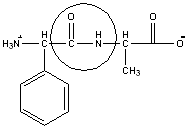
22) coupling of acid and amine to form amide bond called peptide bond shown by circle
23) A nucleotide consists of a nitrogen containing base and sugar.
24) Monomer of nucleic acids called nucleotides consist of 1) nitrogen containing base, 2) five carbon sugar and 3) phosphate groups
Add Answer to:
SHORT ANSWER. Complete the following. (3 pts ea unless noted otherwiso) 18) Which of nitrogen containing...
19) Triacylglyorols are form ad from glyor ol and MI id 20) What are amino adids...
 19) Triacylglyorols are form ad from glyor ol and MI id 20) What are amino adids that are not synthesizad in the body but must be ingested with the diet are called? 21) Draw the structure of a reactant that will produce 2-methylhexane when hydrogenation oocurs 22) Cirde the peptide bond in this structure 0 H HN-CH-č- N-CH-C-o CHS consists of a nitrogen-containing base and a sugar 23) A 24) The monomers of nudec acids called nudeotides, consist of what...
identify your answer. (2 pts ea) 12) Which statement is NOT true? A) There are many different types of lipids. B)...
 identify your answer. (2 pts ea) 12) Which statement is NOT true? A) There are many different types of lipids. B) Lipids are found in cell membranes. C) Some hormones are lipids D) Lipids are soluble in organic solvents. E) All lipids contain fatty acids. 13) The process of building up new molecules in the coll is called A) glycolysis. B) catabolism. C) anabolism. D) metabolism E) transamination. 14) Which of the following does not require energy from ATP hydrolysis?...
(18 pts) Answer True or False for each of the following questions (a) An amino acid...
 (18 pts) Answer True or False for each of the following questions (a) An amino acid is in the zwitterionic form only if the pll is well below 7 (b) Salting out takes advantage of the fact that the solubility of proteins varies with concentration. (c) Proteins usually consists of amino acids of both L-isomers (d) Essentially all a-helices found in proteins are left-handed globular protein is thermodynamically the most stable structure. ( Isoclectric focusing can be used to separate...
Namer A) alternating sugar and nitrogen bases liked by peptide bonds B) complimentary bases held ...
 Namer A) alternating sugar and nitrogen bases liked by peptide bonds B) complimentary bases held together by hydrogen bonds 6) The backbone of a niacleic acid strand consists of: alternating sugar and phosphate groups linked by phosphate ester bonds D) alternating nitrogen bases and phosphate groups linked by amide bonds Q 7) 刁what amino acids are involved in the following tripeptide? NH-CH-C-NH-CH-- CH NH OH D) His-Lys-Phe A) Tyr-His-Lys C) Lys-His-Tyr B) Lys-His-Phe 8) Which list contains only neutral polar...
A8. Which of the following describes carbohydrates? (a) a base, a sugar, and a phosphate b)...
 A8. Which of the following describes carbohydrates? (a) a base, a sugar, and a phosphate b) aldchydes and ketones with two or more hydroxyl groups. c) acids with two or more hydroxyl groups. d) amines with two or more hydroxyl groups. e) always contain a phosphate group. A9. Which of the following is NOT correct regarding reducing sugars? a) Sugars that react with oxidizing agents are called reducing sugars. b) The cyclic form of a monosaccharide reacts with oxidizing agents....
1. Four elements make up 96% of the molecules involved chemical a) Oxygen, (0), b) Nitrogen...
 1. Four elements make up 96% of the molecules involved chemical a) Oxygen, (0), b) Nitrogen (N), c) Carbon (C), d) Hydrogen (H) Ne in chemical evolution. Which of the following is not one of these? 2. During Chemical Evolution, elements reacted with each other to form sl norga compounds is thought to have been a critical solvent for elements and simple molec Oxygen ef Water molecules? a) Formaldehyde b) Carbon dloxide c) Ammonia d lipid bilayer was important because:...
____ 1. The diagram below represents serine, a polar, uncharged amino acid. Which functional group gives...
 ____ 1. The diagram below represents serine, a polar, uncharged
amino acid. Which functional group gives serine its
distinct property?
a. H3
b. CH2OH
c. –H
d. COO–
____ 2. The monomers shown below are monomers for which of the
following natural polymers?
a. polysaccharides
b. plastics
c. DNA
d. proteins
____ 3. Which of the following processes illustrates the production
of a protein?
a. specific code for amino acids --> amino acid chain -->
gene --> DNA --> specific...
____ 1. The diagram below represents serine, a polar, uncharged
amino acid. Which functional group gives serine its
distinct property?
a. H3
b. CH2OH
c. –H
d. COO–
____ 2. The monomers shown below are monomers for which of the
following natural polymers?
a. polysaccharides
b. plastics
c. DNA
d. proteins
____ 3. Which of the following processes illustrates the production
of a protein?
a. specific code for amino acids --> amino acid chain -->
gene --> DNA --> specific...
 19) Triacylglyorols are form ad from glyor ol and MI id 20) What are amino adids that are not synthesizad in the body but must be ingested with the diet are called? 21) Draw the structure of a reactant that will produce 2-methylhexane when hydrogenation oocurs 22) Cirde the peptide bond in this structure 0 H HN-CH-č- N-CH-C-o CHS consists of a nitrogen-containing base and a sugar 23) A 24) The monomers of nudec acids called nudeotides, consist of what...
 identify your answer. (2 pts ea) 12) Which statement is NOT true? A) There are many different types of lipids. B) Lipids are found in cell membranes. C) Some hormones are lipids D) Lipids are soluble in organic solvents. E) All lipids contain fatty acids. 13) The process of building up new molecules in the coll is called A) glycolysis. B) catabolism. C) anabolism. D) metabolism E) transamination. 14) Which of the following does not require energy from ATP hydrolysis?...
 (18 pts) Answer True or False for each of the following questions (a) An amino acid is in the zwitterionic form only if the pll is well below 7 (b) Salting out takes advantage of the fact that the solubility of proteins varies with concentration. (c) Proteins usually consists of amino acids of both L-isomers (d) Essentially all a-helices found in proteins are left-handed globular protein is thermodynamically the most stable structure. ( Isoclectric focusing can be used to separate...
 Namer A) alternating sugar and nitrogen bases liked by peptide bonds B) complimentary bases held together by hydrogen bonds 6) The backbone of a niacleic acid strand consists of: alternating sugar and phosphate groups linked by phosphate ester bonds D) alternating nitrogen bases and phosphate groups linked by amide bonds Q 7) 刁what amino acids are involved in the following tripeptide? NH-CH-C-NH-CH-- CH NH OH D) His-Lys-Phe A) Tyr-His-Lys C) Lys-His-Tyr B) Lys-His-Phe 8) Which list contains only neutral polar...
 A8. Which of the following describes carbohydrates? (a) a base, a sugar, and a phosphate b) aldchydes and ketones with two or more hydroxyl groups. c) acids with two or more hydroxyl groups. d) amines with two or more hydroxyl groups. e) always contain a phosphate group. A9. Which of the following is NOT correct regarding reducing sugars? a) Sugars that react with oxidizing agents are called reducing sugars. b) The cyclic form of a monosaccharide reacts with oxidizing agents....
 1. Four elements make up 96% of the molecules involved chemical a) Oxygen, (0), b) Nitrogen (N), c) Carbon (C), d) Hydrogen (H) Ne in chemical evolution. Which of the following is not one of these? 2. During Chemical Evolution, elements reacted with each other to form sl norga compounds is thought to have been a critical solvent for elements and simple molec Oxygen ef Water molecules? a) Formaldehyde b) Carbon dloxide c) Ammonia d lipid bilayer was important because:...
 ____ 1. The diagram below represents serine, a polar, uncharged
amino acid. Which functional group gives serine its
distinct property?
a. H3
b. CH2OH
c. –H
d. COO–
____ 2. The monomers shown below are monomers for which of the
following natural polymers?
a. polysaccharides
b. plastics
c. DNA
d. proteins
____ 3. Which of the following processes illustrates the production
of a protein?
a. specific code for amino acids --> amino acid chain -->
gene --> DNA --> specific...
____ 1. The diagram below represents serine, a polar, uncharged
amino acid. Which functional group gives serine its
distinct property?
a. H3
b. CH2OH
c. –H
d. COO–
____ 2. The monomers shown below are monomers for which of the
following natural polymers?
a. polysaccharides
b. plastics
c. DNA
d. proteins
____ 3. Which of the following processes illustrates the production
of a protein?
a. specific code for amino acids --> amino acid chain -->
gene --> DNA --> specific...
Most questions answered within 3 hours.
-
Where is the error in this code sequence?
String s1 = "Hello";
String s2 = "ello";...
asked 10 months ago -
Financial data for Joel de Paris, Inc., for last year
follow:
Joel de Paris, Inc.
Balance...
asked 10 months ago -
Consider this reaction:
Al2(SO4)3 (aq)+ BaCl3
(aq) Al2Cl6 (aq)- +
3BaSO4(s) . What is the...
asked 10 months ago -
Suppose that Savneet is considering increasing her
recent random sample from 20 car rentals to 40...
asked 10 months ago -
Trucks arrive at an unloading terminal at an average rate of 120
per hour.
Trucks arrive...
asked 10 months ago -
Why are methanol and ethanol completely soluble in water while
octanol is not very little soluble....
asked 10 months ago -
A facilities manager at a university reads in a research report
that the mean amount of...
asked 10 months ago -
When the CuSO4 is rehydrated by adding water to the anhydrous
compound, is this an endothermic...
asked 10 months ago -
A ray of sunlight is passing from diamond into crown glass; the
angle of incidence is...
asked 10 months ago -
A block of mass 0.249 kg is placed on top of a light, vertical
spring of...
asked 10 months ago -
how do the kidneys compensate in the presences of acidosis
a) trigger hyperventilate
b) reserve acid...
asked 10 months ago -
Question 501 pts
The rental rate of capital to the firm increases. Which of the
following...
asked 10 months ago