
Homework Answers
ANSWER :-
1. DIABETES:-
Diabetes mellitus is a group of metabolic diseases characterized by hyperglycemia resulting from defects in insulin secretion, insulin action, or both. The chronic hyperglycemia of diabetes is associated with long-term damage, dysfunction, and failure of various organs, especially the eyes, kidneys, nerves, heart, and blood vessels.
Several pathogenic processes are involved in the development of diabetes. These range from autoimmune destruction of the beta-cells of the pancreas with consequent insulin deficiency to abnormalities that result in resistance to insulin action. The basis of the abnormalities in carbohydrate, fat, and protein metabolism in diabetes is deficient action of insulin on target tissues. Deficient insulin action results from inadequate insulin secretion and/or diminished tissue responses to insulin at one or more points in the complex pathways of hormone action. Impairment of insulin secretion and defects in insulin action frequently coexist in the same patient, and it is often unclear which abnormality, if either alone, is the primary cause of the hyperglycemia.
Symptoms of marked hyperglycemia include polyuria, polydipsia, weight loss, sometimes with polyphagia, and blurred vision. Impairment of growth and susceptibility to certain infections may also accompany chronic hyperglycemia. Acute, life-threatening consequences of diabetes are hyperglycemia with ketoacidosis or the nonketotic hyperosmolar syndrome.
Long-term complications of diabetes include retinopathy with potential loss of vision; nephropathy leading to renal failure; peripheral neuropathy with risk of foot ulcers, amputation, and Charcot joints; and autonomic neuropathy causing gastrointestinal, genitourinary, and cardiovascular symptoms and sexual dysfunction. Glycation of tissue proteins and other macromolecules and excess production of polyol compounds from glucose are among the mechanisms thought to produce tissue damage from chronic hyperglycemia. Patients with diabetes have an increased incidence of atherosclerotic cardiovascular, peripheral vascular, and cerebrovascular disease. Hypertension, abnormalities of lipoprotein metabolism, and periodontal disease are often found in people with diabetes. The emotional and social impact of diabetes and the demands of therapy may cause significant psychosocial dysfunction in patients and their families.
The vast majority of cases of diabetes fall into two broad etiopathogenetic categories (discussed in greater detail below). In one category (type 1 diabetes), the cause is an absolute deficiency of insulin secretion. Individuals at increased risk of developing this type of diabetes can often be identified by serological evidence of an autoimmune pathologic process occurring in the pancreatic islets and by genetic markers. In the other, much more prevalent category (type 2 diabetes), the cause is a combination of resistance to insulin action and an inadequate compensatory insulin secretory response. In the latter category, a degree of hyperglycemia sufficient to cause pathologic and functional changes in various target tissues, but without clinical symptoms, may be present for a long period of time before diabetes is detected. During this asymptomatic period, it is possible to demonstrate an abnormality in carbohydrate metabolism by measurement of plasma glucose in the fasting state or after a challenge with an oral glucose load.
2. CHF :-
Heart failure develops when the heart, via an abnormality of cardiac function (detectable or not), fails to pump blood at a rate commensurate with the requirements of the metabolizing tissues or is able to do so only with an elevated diastolic filling pressure.
Signs and symptoms
Signs and symptoms of heart failure include the following:
-
Exertional dyspnea and/or dyspnea at rest
-
Orthopnea
-
Acute pulmonary edema
-
Chest pain/pressure and palpitations
-
Tachycardia
-
Fatigue and weakness
-
Nocturia and oliguria
-
Anorexia, weight loss, nausea
-
Exophthalmos and/or visible pulsation of eyes
-
Distention of neck veins
-
Weak, rapid, and thready pulse
-
Rales, wheezing
-
S 3 gallop and/or pulsus alternans
-
Increased intensity of P 2 heart sound
-
Hepatojugular reflux
-
Ascites, hepatomegaly, and/or anasarca
-
Central or peripheral cyanosis, pallor
See Presentation for more detail.
Diagnosis
Heart failure criteria, classification, and staging
The Framingham criteria for the diagnosis of heart failure consists of the concurrent presence of either two major criteria or one major and two minor criteria. [1]
Major criteria comprise the following:
-
Paroxysmal nocturnal dyspnea
-
Weight loss of 4.5 kg in 5 days in response to treatment
-
Neck vein distention
-
Rales
-
Acute pulmonary edema
-
Hepatojugular reflux
-
S 3 gallop
-
Central venous pressure greater than 16 cm water
-
Circulation time of 25 seconds or longer
-
Radiographic cardiomegaly
-
Pulmonary edema, visceral congestion, or cardiomegaly at autopsy
Minor criteria (accepted only if they cannot be attributed to another medical condition) are as follows:
-
Nocturnal cough
-
Dyspnea on ordinary exertion
-
A decrease in vital capacity by one third the maximal value recorded
-
Pleural effusion
-
Tachycardia (rate of 120 bpm)
-
Hepatomegaly
-
Bilateral ankle edema
The New York Heart Association (NYHA) classification system categorizes heart failure on a scale of I to IV, [2] as follows:
-
Class I: No limitation of physical activity
-
Class II: Slight limitation of physical activity
-
Class III: Marked limitation of physical activity
-
Class IV: Symptoms occur even at rest; discomfort with any physical activity
The American College of Cardiology/American Heart Association (ACC/AHA) staging system is defined by the following four stages [3] :
-
Stage A: High risk of heart failure but no structural heart disease or symptoms of heart failure
-
Stage B: Structural heart disease but no symptoms of heart failure
-
Stage C: Structural heart disease and symptoms of heart failure
-
Stage D: Refractory heart failure requiring specialized interventions
Testing
The following tests may be useful in the initial evaluation for suspected heart failure [3, 4, 5] :
-
Complete blood count (CBC)
-
Iron studies
-
Urinalysis
-
Electrolyte levels
-
Renal and liver function studies
-
Fasting blood glucose levels
-
Lipid profile
-
Thyroid stimulating hormone (TSH) levels
-
B-type natriuretic peptide levels
-
N-terminal pro-B-type natriuretic peptide levels
-
Electrocardiography
-
Chest radiography
-
Two-dimensional (2-D) echocardiography
-
Nuclear imaging [6]
-
Maximal exercise testing
-
Pulse oximetry or arterial blood gas
See Workup for more detail.
Management
Treatment includes the following:
-
Nonpharmacologic therapy: Oxygen and noninvasive positive pressure ventilation, dietary sodium and fluid restriction, physical activity as appropriate, and attention to weight gain
-
Pharmacotherapy: Diuretics, vasodilators, inotropic agents, anticoagulants, beta blockers, and digoxin
Surgical options
Surgical treatment options include the following:
-
Electrophysiologic intervention
-
Revascularization procedures
-
Valve replacement/repair
-
Ventricular restoration
-
Extracorporeal membrane oxygenation
-
Ventricular assist devices
-
Heart transplantation
-
Total artificial heart
3. CAD :-
Coronary artery atherosclerosis is the single largest killer of men and women in the United States. It is the principal cause of coronary artery disease (CAD), in which atherosclerotic changes are present within the walls of the coronary arteries.
Signs and symptoms
The signs and symptoms of coronary artery atherosclerosis include the following:
-
Chest pain
-
Shortness of breath
-
Weakness, tiredness, reduced exertional capacity
-
Dizziness, palpitations
-
Leg swelling
-
Weight gain
-
Diaphoresis
-
Stable angina pectoris
-
Intermittent claudication
-
Mesenteric angina
-
Tachycardia: Common in persons with acute coronary syndrome (ACS) and acute myocardial infarction (AMI)
-
High or low blood pressure
-
S4 gallop: A common early finding
-
S3 gallop: An indication of reduced left ventricular function
-
Heart murmurs
-
Tachypnea
-
Xanthelasmas
-
Livedo reticularis
-
Syncope
-
Leg edema
-
Rales
See Clinical Presentation for more detail.
Diagnosis
Laboratory tests:
-
Complete blood count (CBC)
-
Chemistry panel
-
Lipid profile
-
Thyroid function tests: To exclude thyroid disorders
-
Blood glucose and hemoglobin A1C (HbA1C) measurement: Appropriate in patients with diabetes mellitus
-
Myocardial fractional flow reserve (FFR)
-
Coronary flow reserve (CFR)
-
Lipid studies
-
C-reactive protein level
-
Serum markers
Imaging studies:
-
Echocardiography
-
Nuclear imaging
-
Computed tomography
-
Electron beam CT scanning
-
Optical coherence tomography imaging
-
Magnetic resonance imaging
-
Positron emission tomography
-
Coronary angiography
-
Doppler velocity probes
-
Ultrasonography
See Workup for more detail.
Management
The following are used in the management of angina:
-
Nitrates
-
Beta blockers
-
Statins
-
Calcium channel blockers
-
Ranolazine
Other agents used in the treatment of coronary artery stenosis or to aid in the management of stable coronary artery disease after intervention include the following:
-
Angiotensin-converting enzyme inhibitors to reduce blood pressure
-
Antiplatelet agents for acute coronary events
-
Intravenous glycoprotein IIb/IIIa inhibitors
-
Aspirin
-
Clopidogrel
-
Ticlopidine
-
HMG-CoA reductase inhibitors, or statins to lower LDL cholesterol levels
Treatment procedures for coronary artery atherosclerosis include the following:
-
Coronary artery bypass grafting (CABG)
-
Percutaneous coronary intervention (PCI)
-
Partial ileal bypass
In high- and intermediate-risk patients with 3-vessel disease, PCI was associated with significantly higher rates of revascularization and of major adverse cardiac and cerebrovascular events than CABG; the 2 procedures were equally effective in the treatment of low-risk patients with 3-vessel disease and in low- and intermediate-risk patients with left main CAD.
4. CKD :-
Chronic kidney disease (CKD)—or chronic renal failure (CRF), as it was historically termed—is a term that encompasses all degrees of decreased renal function, from damaged–at risk through mild, moderate, and severe chronic kidney failure. CKD is a worldwide public health problem. In the United States, there is a rising incidence and prevalence of kidney failure, with poor outcomes and high cost.
CKD is more prevalent in the elderly population. However, while younger patients with CKD typically experience progressive loss of kidney function, 30% of patients over 65 years of age with CKD have stable disease.
CKD is associated with an increased risk of cardiovascular disease and chronic renal failure. Kidney disease is the ninth leading cause of death in the United States.
The Kidney Disease Outcomes Quality Initiative (KDOQI) of the National Kidney Foundation (NKF) established a definition and classification of CKD in 2002.The KDOQI and the international guideline group Kidney Disease Improving Global Outcomes (KDIGO) have subsequently updated these guidelines.These guidelines have allowed better communication among physicians and have facilitated intervention at the different stages of the disease.
The guidelines define CKD as either kidney damage or a decreased glomerular filtration rate (GFR) of less than 60 mL/min/1.73 m2 for at least 3 months. Whatever the underlying etiology, once the loss of nephrons and reduction of functional renal mass reaches a certain point, the remaining nephrons begin a process of irreversible sclerosis that leads to a progressive decline in the GFR.
Hyperparathyroidism is one of the pathologic manifestations of CKD.
Staging
The different stages of CKD form a continuum. The stages of CKD are classified as follows [4] :
-
Stage 1: Kidney damage with normal or increased GFR (>90 mL/min/1.73 m2)
-
Stage 2: Mild reduction in GFR (60-89 mL/min/1.73 m2)
-
Stage 3a: Moderate reduction in GFR (45-59 mL/min/1.73 m2)
-
Stage 3b: Moderate reduction in GFR (30-44 mL/min/1.73 m2)
-
Stage 4: Severe reduction in GFR (15-29 mL/min/1.73 m2)
-
Stage 5: Kidney failure (GFR < 15 mL/min/1.73 m2 or dialysis)
In stage 1 and stage 2 CKD, reduced GFR alone does not clinch the diagnosis, because the GFR may in fact be normal or borderline normal. In such cases, the presence of one or more of the following markers of kidney damage can establish the diagnosis [4] :
-
Albuminuria (albumin excretion >30 mg/24 hr or albumin:creatinine ratio >30 mg/g [>3 mg/mmol])
-
Urine sediment abnormalities
-
Electrolyte and other abnormalities due to tubular disorders
-
Histologic abnormalities
-
Structural abnormalities detected by imaging
-
History of kidney transplantation in such cases
Hypertension is a frequent sign of CKD but should not by itself be considered a marker of it, because elevated blood pressure is also common among people without CKD.
In an update of its CKD classification system, the NKF advised that GFR and albuminuria levels be used together, rather than separately, to improve prognostic accuracy in the assessment of CKD. [3, 4] More specifically, the guidelines recommended the inclusion of estimated GFR and albuminuria levels when evaluating risks for overall mortality, cardiovascular disease, end-stage kidney failure, acute kidney injury, and the progression of CKD. Referral to a kidney specialist was recommended for patients with a very low GFR (< 15 mL/min/1.73 m²) or very high albuminuria (>300 mg/24 h). [3, 4]
Patients with stages 1-3 CKD are frequently asymptomatic. Clinical manifestations resulting from low kidney function typically appear in stages 4-5 (see Presentation).
Signs and symptoms
Patients with CKD stages 1-3 are generally asymptomatic. Typically, it is not until stages 4-5 (GFR < 30 mL/min/1.73 m²) that endocrine/metabolic derangements or disturbances in water or electrolyte balance become clinically manifest.
Signs of metabolic acidosis in stage 5 CKD include the following:
-
Protein-energy malnutrition
-
Loss of lean body mass
-
Muscle weakness
Signs of alterations in the way the kidneys are handling salt and water in stage 5 include the following:
-
Peripheral edema
-
Pulmonary edema
-
Hypertension
Anemia in CKD is associated with the following:
-
Fatigue
-
Reduced exercise capacity
-
Impaired cognitive and immune function
-
Reduced quality of life
-
Development of cardiovascular disease
-
New onset of heart failure or the development of more severe heart failure
-
Increased cardiovascular mortality
Other manifestations of uremia in end-stage renal disease (ESRD), many of which are more likely in patients who are being inadequately dialyzed, include the following:
-
Pericarditis: Can be complicated by cardiac tamponade, possibly resulting in death if unrecognized
-
Encephalopathy: Can progress to coma and death
-
Peripheral neuropathy, usually asymptomatic
-
Restless leg syndrome
-
Gastrointestinal symptoms: Anorexia, nausea, vomiting, diarrhea
-
Skin manifestations: Dry skin, pruritus, ecchymosis
-
Fatigue, increased somnolence, failure to thrive
-
Malnutrition
-
Erectile dysfunction, decreased libido, amenorrhea
-
Platelet dysfunction with tendency to bleed
Screen adult patients with CKD for depressive symptoms; self-report scales at initiation of dialysis therapy reveal that 45% of these patients have such symptoms, albeit with a somatic emphasis.
See Clinical Presentation for more detail.
Diagnosis
Screening
American College of Physicians guidelines on screening for CKD include the following recommendations:
-
Do not screen for CKD in asymptomatic adults without risk factors for CKD (grade: weak recommendation, low-quality evidence).
-
Do not test for proteinuria in adults with or without diabetes who are currently taking an angiotensin-converting enzyme inhibitor (ACEI) or an angiotensin II-receptor blocker (ARB)(grade: weak recommendation, low-quality evidence).
Laboratory studies
Laboratory studies used in the diagnosis of CKD can include the following:
-
Complete blood count (CBC)
-
Basic metabolic panel
-
Urinalysis
-
Serum albumin levels: Patients may have hypoalbuminemia due to malnutrition, urinary protein loss, or chronic inflammation
-
Lipid profile: Patients with CKD have an increased risk of cardiovascular disease
Evidence of renal bone disease can be derived from the following tests:
-
Serum calcium and phosphate
-
25-hydroxyvitamin D
-
Alkaline phosphatase
-
Intact parathyroid hormone (PTH) levels
In certain cases, the following tests may also be ordered as part of the evaluation of patients with CKD:
-
Serum and urine protein electrophoresis and free light chains: Screen for a monoclonal protein possibly representing multiple myeloma
-
Antinuclear antibodies (ANA), double-stranded DNA antibody levels: Screen for systemic lupus erythematosus
-
Serum complement levels: Results may be depressed with some glomerulonephritides
-
Cytoplasmic and perinuclear pattern antineutrophil cytoplasmic antibody (C-ANCA and P-ANCA) levels: Positive findings are helpful in the diagnosis of granulomatosis with polyangiitis (Wegener granulomatosis); P-ANCA is also helpful in the diagnosis of microscopic polyangiitis
-
Anti–glomerular basement membrane (anti-GBM) antibodies: Presence is highly suggestive of underlying Goodpasture syndrome
-
Hepatitis B and C, human immunodeficiency virus (HIV), Venereal Disease Research Laboratory (VDRL) serology: Conditions associated with some glomerulonephritides
Imaging studies
Imaging studies that can be used in the diagnosis of CKD include the following:
-
Renal ultrasonography: Useful to screen for hydronephrosis, which may not be observed in early obstruction or dehydrated patients; or for involvement of the retroperitoneum with fibrosis, tumor, or diffuse adenopathy; small, echogenic kidneys are observed in advanced renal failure
-
Retrograde pyelography: Useful in cases with high suspicion for obstruction despite negative renal ultrasonograms, as well as for diagnosing renal stones
-
Computed tomography (CT) scanning: Useful to better define renal masses and cysts usually noted on ultrasonograms; also the most sensitive test for identifying renal stones
-
Magnetic resonance imaging (MRI): Useful in patients who require a CT scan but who cannot receive intravenous contrast; reliable in the diagnosis of renal vein thrombosis
-
Renal radionuclide scanning: Useful to screen for renal artery stenosis when performed with captopril administration; also quantitates the renal contribution to the GFR
Biopsy
Percutaneous renal biopsy is generally indicated when renal impairment and/or proteinuria approaching the nephrotic range are present and the diagnosis is unclear after appropriate workup.
Management
Early diagnosis and treatment of the underlying cause and/or institution of secondary preventive measures is imperative in patients with CKD. These may slow, or possibly halt, progression of the disease.The medical care of patients with CKD should focus on the following:
-
Delaying or halting the progression of CKD: Treatment of the underlying condition, if possible, is indicated
-
Diagnosing and treating the pathologic manifestations of CKD
-
Timely planning for long-term renal replacement therapy
The pathologic manifestations of CKD should be treated as follows:
-
Anemia: When the hemoglobin level is below 10 g/dL, treat with erythropoiesis-stimulating agents (ESAs), which include epoetin alfa and darbepoetin alfa after iron saturation and ferritin levels are at acceptable levels
-
Hyperphosphatemia: Treat with dietary phosphate binders and dietary phosphate restriction
-
Hypocalcemia: Treat with calcium supplements with or without calcitriol
-
Hyperparathyroidism: Treat with calcitriol or vitamin D analogues or calcimimetics
-
Volume overload: Treat with loop diuretics or ultrafiltration
-
Metabolic acidosis: Treat with oral alkali supplementation
-
Uremic manifestations: Treat with long-term renal replacement therapy (hemodialysis, peritoneal dialysis, or renal transplantation)
Indications for renal replacement therapy include the following:
-
Severe metabolic acidosis
-
Hyperkalemia
-
Pericarditis
-
Encephalopathy
-
Intractable volume overload
-
Failure to thrive and malnutrition
-
Peripheral neuropathy
-
Intractable gastrointestinal symptoms
-
In asymptomatic patients, a GFR of 5-9 mL/min/1.73 m²,irrespective of the cause of the CKD or the presence or absence of other comorbidities
The National Kidney Foundation’s Kidney Disease Outcomes Quality Initiative (KDOQI) issued a Clinical Practice Guideline for Nutrition in Chronic Renal Failure, as well as a revision of recommendations for Nutrition in Children with Chronic Kidney Disease.
Add Answer to:
There will be 6 essay questions worth S points on the following subjects: Diabetes .CHF CAD...
Simplify Isinan 1 + cotn 0.44pm z Instructions iz consists of two essay questions each worth...
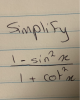 Simplify Isinan 1 + cotn 0.44pm z Instructions iz consists of two essay questions each worth 5 points, totaling 10 points. It is untimed and ted in one sitting. Question 1 5 pts According to James Robertson's advice to keep presentations from going awry while using technology is to know the subject. Know the audience and practice the presentation True False Next
The following questions are worth 6 points each. 21) Solve the following utility function to be...
 The following questions are worth 6 points each. 21) Solve the following utility function to be optimized. Only consider they are looking for an interior solution: (10pts) U(X1,x2) = 1 ln(x) + 2 In(x2) MU(x)= 1/ MU(X) = 2/2 Subject to the budget constraint: 500 = 2 + xy +4.X2 a. Find the optimal consumption bundle. (4 pts) b. Find the utility at this point. (1 pt) C. Show work (5 pts) u (x,x) = 1 in (X.) + 2...
in high school football, a touchdown is worth 6 points, a field goal is worth 3 points, and a safety is worth 2 points
in high school football, a touchdown is worth 6 points, a field goal is worth 3 points, and a safety is worth 2 points. Following a touchdown a team can try for a 1-point or 2 point conversion. in how many ways can a team score 9 points? explain your answer.__I don't really understand, but I tried it, and I got 2 so far.help?
Question 3 (Essay Worth 10 points) (03.02, 03.04 HC) A study showed that low-intensity shock therapy...
 Question 3 (Essay Worth 10 points) (03.02, 03.04 HC) A study showed that low-intensity shock therapy reduces pain levels in patients with lupus. During each session, electrodes were placed on the pain site indicated by the patient. Pain reduction was measured through self-reporting after each session. Another study is being designed to examine whether low-intensity shock therapy also reduces pain in patients suffering from bulging disks in the thoracic region of the back. Two hundred female patients are subjects in...
What is the prevalence of depression among people with diabetes? Questions 6-10 use the following information...
 What is the prevalence of depression among people with
diabetes?
Questions 6-10 use the following information A cross-sectional study is carried out in California to examine the association between type 2 diabetes and depression. Below are the data the investigators collected: Diabetes No diabetes Currently has depression 127 714 Does not currently have depression 273 5286 400 6000 Remember to show ALL your work for full credit! 2 pts DQuestion 6 What is the prevalence of depression among people with...
What is the prevalence of depression among people with
diabetes?
Questions 6-10 use the following information A cross-sectional study is carried out in California to examine the association between type 2 diabetes and depression. Below are the data the investigators collected: Diabetes No diabetes Currently has depression 127 714 Does not currently have depression 273 5286 400 6000 Remember to show ALL your work for full credit! 2 pts DQuestion 6 What is the prevalence of depression among people with...
III. Essay Questions (10 points) Answer one of the following three questions: 1. a. Describe the...
 III. Essay Questions (10 points) Answer one of the following three questions: 1. a. Describe the accounting treatment for employee stock options under the fair value method (SFAS 123 (R): Share-Based Payment). b. What is the reason for applying stock dividends and stock split events retroactively in calculating the earnings per share? 2. What are the advantages of leasing compared to purchase for lessees?
Essay Questions (15 points each) The following four essay questions contain excerpts from your text –...
Essay Questions (15 points each) The following four essay questions contain excerpts from your text – one for each lesson topic covered by this application lesson. Your assignment is to read the paragraph paying attention to the bolded text, which is the topic you are to write your essays on once you have had a chance to research the topic via the textbook, the LIRN database, web research, or any other form of media accessible to you. Once you have...
What is the prevalence of diabetes among people with depression? Questions 6-10 use the following information...
 What is the prevalence of diabetes among people with
depression?
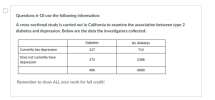
Questions 6-10 use the following information A cross-sectional study is carried out in California to examine the association between type 2 diabetes and depression. Below are the data the investigators collected: Diabetes No diabetes Currently has depression 127 714 Does not currently have depression 273 5286 400 6000 Remember to show ALL your work for full credit! D Question 8 2 pts What is the prevalence of diabetes among people...
What is the prevalence of diabetes among people with
depression?
Questions 6-10 use the following information A cross-sectional study is carried out in California to examine the association between type 2 diabetes and depression. Below are the data the investigators collected: Diabetes No diabetes Currently has depression 127 714 Does not currently have depression 273 5286 400 6000 Remember to show ALL your work for full credit! D Question 8 2 pts What is the prevalence of diabetes among people...
PART IV QUESTIONS: Answer the question in this part. It is worth a total of 6 points. Indicate al...
 Question 15 A and B
PART IV QUESTIONS: Answer the question in this part. It is worth a total of 6 points. Indicate all necessary steps and explain your reasoning. 15. Trapezoid EFGH is shown below with diagonal HF drawn. HF is perpendicular to FG and EH is perpendicular to both EF and HG. Side length GH is 58 inches long. (a) What other angle also has a measure of 36? State the angle below and label it on the...
Question 15 A and B
PART IV QUESTIONS: Answer the question in this part. It is worth a total of 6 points. Indicate all necessary steps and explain your reasoning. 15. Trapezoid EFGH is shown below with diagonal HF drawn. HF is perpendicular to FG and EH is perpendicular to both EF and HG. Side length GH is 58 inches long. (a) What other angle also has a measure of 36? State the angle below and label it on the...
What is the prevalence of depression among people without diabetes? Questions 6-10 use the following information...
 What is the prevalence of depression among people without
diabetes?
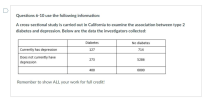
Questions 6-10 use the following information A cross-sectional study is carried out in California to examine the association between type 2 diabetes and depression. Below are the data the investigators collected: Diabetes No diabetes Currently has depression 127 714 Does not currently have depression 273 5286 400 6000 Remember to show ALL your work for full credit! D Question 7 2 pts What is the prevalence of depression among people...
What is the prevalence of depression among people without
diabetes?
Questions 6-10 use the following information A cross-sectional study is carried out in California to examine the association between type 2 diabetes and depression. Below are the data the investigators collected: Diabetes No diabetes Currently has depression 127 714 Does not currently have depression 273 5286 400 6000 Remember to show ALL your work for full credit! D Question 7 2 pts What is the prevalence of depression among people...
 Simplify Isinan 1 + cotn 0.44pm z Instructions iz consists of two essay questions each worth 5 points, totaling 10 points. It is untimed and ted in one sitting. Question 1 5 pts According to James Robertson's advice to keep presentations from going awry while using technology is to know the subject. Know the audience and practice the presentation True False Next
 The following questions are worth 6 points each. 21) Solve the following utility function to be optimized. Only consider they are looking for an interior solution: (10pts) U(X1,x2) = 1 ln(x) + 2 In(x2) MU(x)= 1/ MU(X) = 2/2 Subject to the budget constraint: 500 = 2 + xy +4.X2 a. Find the optimal consumption bundle. (4 pts) b. Find the utility at this point. (1 pt) C. Show work (5 pts) u (x,x) = 1 in (X.) + 2...
 Question 3 (Essay Worth 10 points) (03.02, 03.04 HC) A study showed that low-intensity shock therapy reduces pain levels in patients with lupus. During each session, electrodes were placed on the pain site indicated by the patient. Pain reduction was measured through self-reporting after each session. Another study is being designed to examine whether low-intensity shock therapy also reduces pain in patients suffering from bulging disks in the thoracic region of the back. Two hundred female patients are subjects in...
 What is the prevalence of depression among people with
diabetes?
Questions 6-10 use the following information A cross-sectional study is carried out in California to examine the association between type 2 diabetes and depression. Below are the data the investigators collected: Diabetes No diabetes Currently has depression 127 714 Does not currently have depression 273 5286 400 6000 Remember to show ALL your work for full credit! 2 pts DQuestion 6 What is the prevalence of depression among people with...
What is the prevalence of depression among people with
diabetes?
Questions 6-10 use the following information A cross-sectional study is carried out in California to examine the association between type 2 diabetes and depression. Below are the data the investigators collected: Diabetes No diabetes Currently has depression 127 714 Does not currently have depression 273 5286 400 6000 Remember to show ALL your work for full credit! 2 pts DQuestion 6 What is the prevalence of depression among people with...
 III. Essay Questions (10 points) Answer one of the following three questions: 1. a. Describe the accounting treatment for employee stock options under the fair value method (SFAS 123 (R): Share-Based Payment). b. What is the reason for applying stock dividends and stock split events retroactively in calculating the earnings per share? 2. What are the advantages of leasing compared to purchase for lessees?
 What is the prevalence of diabetes among people with
depression?
Questions 6-10 use the following information A cross-sectional study is carried out in California to examine the association between type 2 diabetes and depression. Below are the data the investigators collected: Diabetes No diabetes Currently has depression 127 714 Does not currently have depression 273 5286 400 6000 Remember to show ALL your work for full credit! D Question 8 2 pts What is the prevalence of diabetes among people...
What is the prevalence of diabetes among people with
depression?
Questions 6-10 use the following information A cross-sectional study is carried out in California to examine the association between type 2 diabetes and depression. Below are the data the investigators collected: Diabetes No diabetes Currently has depression 127 714 Does not currently have depression 273 5286 400 6000 Remember to show ALL your work for full credit! D Question 8 2 pts What is the prevalence of diabetes among people...
 Question 15 A and B
PART IV QUESTIONS: Answer the question in this part. It is worth a total of 6 points. Indicate all necessary steps and explain your reasoning. 15. Trapezoid EFGH is shown below with diagonal HF drawn. HF is perpendicular to FG and EH is perpendicular to both EF and HG. Side length GH is 58 inches long. (a) What other angle also has a measure of 36? State the angle below and label it on the...
Question 15 A and B
PART IV QUESTIONS: Answer the question in this part. It is worth a total of 6 points. Indicate all necessary steps and explain your reasoning. 15. Trapezoid EFGH is shown below with diagonal HF drawn. HF is perpendicular to FG and EH is perpendicular to both EF and HG. Side length GH is 58 inches long. (a) What other angle also has a measure of 36? State the angle below and label it on the...
 What is the prevalence of depression among people without
diabetes?
Questions 6-10 use the following information A cross-sectional study is carried out in California to examine the association between type 2 diabetes and depression. Below are the data the investigators collected: Diabetes No diabetes Currently has depression 127 714 Does not currently have depression 273 5286 400 6000 Remember to show ALL your work for full credit! D Question 7 2 pts What is the prevalence of depression among people...
What is the prevalence of depression among people without
diabetes?
Questions 6-10 use the following information A cross-sectional study is carried out in California to examine the association between type 2 diabetes and depression. Below are the data the investigators collected: Diabetes No diabetes Currently has depression 127 714 Does not currently have depression 273 5286 400 6000 Remember to show ALL your work for full credit! D Question 7 2 pts What is the prevalence of depression among people...
Most questions answered within 3 hours.
-
Where is the error in this code sequence?
String s1 = "Hello";
String s2 = "ello";...
asked 10 months ago -
Financial data for Joel de Paris, Inc., for last year
follow:
Joel de Paris, Inc.
Balance...
asked 10 months ago -
Consider this reaction:
Al2(SO4)3 (aq)+ BaCl3
(aq) Al2Cl6 (aq)- +
3BaSO4(s) . What is the...
asked 10 months ago -
Suppose that Savneet is considering increasing her
recent random sample from 20 car rentals to 40...
asked 10 months ago -
Trucks arrive at an unloading terminal at an average rate of 120
per hour.
Trucks arrive...
asked 10 months ago -
Why are methanol and ethanol completely soluble in water while
octanol is not very little soluble....
asked 10 months ago -
A facilities manager at a university reads in a research report
that the mean amount of...
asked 10 months ago -
When the CuSO4 is rehydrated by adding water to the anhydrous
compound, is this an endothermic...
asked 10 months ago -
A ray of sunlight is passing from diamond into crown glass; the
angle of incidence is...
asked 10 months ago -
A block of mass 0.249 kg is placed on top of a light, vertical
spring of...
asked 10 months ago -
how do the kidneys compensate in the presences of acidosis
a) trigger hyperventilate
b) reserve acid...
asked 10 months ago -
Question 501 pts
The rental rate of capital to the firm increases. Which of the
following...
asked 10 months ago