


Homework Answers
Typically, in order to determine the best investment amongst the competing investment, we will need to compute the present value of each investment. The investment with higher present value shall be chosen over the other investment.
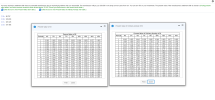
In this case, the discounting factor is 14%. Given that the cash flow occur at the end of each year, we will have to use the cash flow with appropriate discount factor at the end of each year. We will have to use the "present value of $1 table" to arrive at the present value of cash flows of investment A and B. Take the present value factor @14% from the table.
The detailed working is summarised in the below table:
| in $ | |||||
| Year | Investment | Discounting Factor @14% | Present value | ||
| A | B | Investment A | Investment B | ||
| a | b | c | d | e=b*d | f=c*d |
| 1 | 6,000 | 6,000 | 0.877 | 5,262 | 5,262 |
| 2 | 5,000 | 6,000 | 0.769 | 3,845 | 4,614 |
| 3 | 7,000 | 6,000 | 0.679 | 4,753 | 4,074 |
| Total | 18,000 | 18,000 | 13,860 | 13,950 | |
Answer
The present value of investment opportunity A is $ 13,860 and B is $13,950.
Investment opportunity B should be chosen because the present value of cash flows in investment B is higher than the present value of investment opportunity in A
Add Answer to:
annual cash flows
Annual cash flows from two competing investment opportunities are given. Each investment opportunity...
Annual cash flows from two competing investment opportunities are given. Each investment opportunity will require the...
 Annual cash flows from two competing investment opportunities
are given. Each investment opportunity will require the same
initial investment. LOADING...(Click the icon to view the
competing investment opportunities.) LOADING...(Click the icon to
view the Present Value of $1 table.) LOADING...(Click the icon to
view the Present Value of Annuity of $1 table.) Requirement 1.
Assuming a 14% interest rate, which investment opportunity would
you choose? Begin by computing the present value of each
investment opportunity. (Assume that the annual cash...
Annual cash flows from two competing investment opportunities
are given. Each investment opportunity will require the same
initial investment. LOADING...(Click the icon to view the
competing investment opportunities.) LOADING...(Click the icon to
view the Present Value of $1 table.) LOADING...(Click the icon to
view the Present Value of Annuity of $1 table.) Requirement 1.
Assuming a 14% interest rate, which investment opportunity would
you choose? Begin by computing the present value of each
investment opportunity. (Assume that the annual cash...
Annual cash inflows from two competing investment opportunities are given below. Each investment opportunity will require...
 Annual cash inflows from two competing investment opportunities are given below. Each investment opportunity will require the same initial investment. Investment Investment Year 1 Year 2 Year 3 Year 4 $ 3,000 4,000 5,000 6.000 $6,000 5,000 4,000 3,000 Total $18,000 $18,000 Click here to view Exhibit 11B-1, to determine the appropriate discount factor(s) using tables. Required: Compute the present value of the cash inflows for each investment using a 11% discount rate. (Round discount factor(s) to 3 decimal places,...
Annual cash Inflows from two competing Investment opportunities are given below. Each Investment opportunity will r...
 Annual cash Inflows from two competing Investment opportunities are given below. Each Investment opportunity will require the same initial Investment. Year 1 Year 2 Year 3 Year 4 Investment Xinvestment Y $ 5,000 $ 8,000 6 ,000 7,000 7,000 6,000 8,000 5,000 Total $20,000 $26,000 Click here to view Exhibit 11B-1, to determine the appropriate discount factor(s) using tables. Required: Compute the present value of the cash Inflows for each Investment using a 11% discount rate. (Round discount factor(s) to...
Annual cash inflows from two competing investment opportunities are given below. Each investment opportunity will require...
 Annual cash inflows from two competing investment opportunities are given below. Each investment opportunity will require the same initial investment. Year 1 Year 2 Year 3 Year 4 Investment X Investment y $ 3,000 $ 6,000 4,000 5,000 5,000 4.000 6,000 3,000 Total $ 18,000 $18,000 Click here to view Exhibit 11B-1, to determine the appropriate discount factor(s) using tables. Required: Compute the present value of the cash inflows for each investment using a 10% discount rate. (Round discount factor(s)...
Graded Problems Saved Help Annual cash inflows from two competing Investment opportunities are given below. Each...
 Graded Problems Saved Help Annual cash inflows from two competing Investment opportunities are given below. Each investment opportunity will require the same initial investment. Investment Investment Year 1 Year 2 Year 3 Year 4 $3,000 4,000 5 ,000 6,000 $6,000 5,000 4,000 3,000 Total $18,000 $18,000 Click here to view Exhibit 118-1, to determine the appropriate discount factor(s) using tables Required: Compute the present value of the cash inflows for each investment using a 8% discount rate. (Round discount factor(s)...
Calculate the present value of the following amounts: 1. $14 comma 00014,000 at the end of...
 Calculate the present value of the following amounts:
1.
$14 comma 00014,000
at the end of
tenten
years at
88%
2.
$14 comma 00014,000
a year at the end of the next
tenten
years at
88%
(If using present value tables, use factor amounts rounded to
three decimal places, X.XXX. Round your final answers to the
nearest whole dollar.)
LOADING...
(Click the icon to view Present Value of $1 table.)
LOADING...
(Click the icon to view Present Value of Ordinary...
Calculate the present value of the following amounts:
1.
$14 comma 00014,000
at the end of
tenten
years at
88%
2.
$14 comma 00014,000
a year at the end of the next
tenten
years at
88%
(If using present value tables, use factor amounts rounded to
three decimal places, X.XXX. Round your final answers to the
nearest whole dollar.)
LOADING...
(Click the icon to view Present Value of $1 table.)
LOADING...
(Click the icon to view Present Value of Ordinary...
Annual cash inflows from two competing investment opportunities are given below. Each investment opportunity will require...
 Annual cash inflows from two competing investment opportunities are given below. Each investment opportunity will require the same initial investment. Compute the present value of the cash inflows for each investment using a 7% discount rate. (PLEASE ROUND EACH DISCOUNTED CASH FLOW TO THE NEAREST CENT) Year Investment X Investment Y 1 $2,500 4,000 2 3,000 3,500 3 3,500 3,000 4,000 2,500 Total $13,000 $13,000 4 1. (Total: 6 marks; 3 marks for X and Y each)
Annual cash inflows from two competing investment opportunities are given below. Each investment opportunity will require...
Annual cash inflows from two competing investment opportunities are given below. Each investment opportunity will require the same initial investment. Compute the present value of the cash inflows for each investment using a 7% discount rate. (PLEASE ROUND EACH DISCOUNTED CASH FLOW TO THE NEAREST CENT) Year Investment X Investment Y 1 $2,500 4,000 2 3,000 3,500 3 3,500 3,000 4 4,000 2,500 Total $13,000 $13,000 (Total: 6 marks; 3 marks for X and Y each)
Annual cash inflows from two competing investment opportunities are given below. Each investment opportunity will require...
Annual cash inflows from two competing investment opportunities are given below. Each investment opportunity will require the same initial investment. Compute the present value of the cash inflows for each investment using a 9% discount rate. (PLEASE ROUND EACH DISCOUNTED CASH FLOW TO THE NEAREST CENT) Year Investment X Investment Y 1 $2,500 4,000 2 3,000 3,500 3 3,500 3,000 4 4,000 2,500 Total $13,000 $13,000 (Total: 6 marks; 3 marks for X and Y each)
You have received a settlement offer from an automobile manufacturer due to mechanical problems with your...
 You have received a settlement offer from an automobile
manufacturer due to mechanical problems with your automobile. The
manufacturer will pay you $ 19 comma 000 in one lump sum ten years
from now. You can earn 8% on your investments. The present value
of the manufacturer's settlement offer is closest to (If using
present value tables, use factor amounts rounded to three decimal
places, X.XXX. Round your final answer to the nearest whole
dollar.) LOADING...(Click the icon to view...
You have received a settlement offer from an automobile
manufacturer due to mechanical problems with your automobile. The
manufacturer will pay you $ 19 comma 000 in one lump sum ten years
from now. You can earn 8% on your investments. The present value
of the manufacturer's settlement offer is closest to (If using
present value tables, use factor amounts rounded to three decimal
places, X.XXX. Round your final answer to the nearest whole
dollar.) LOADING...(Click the icon to view...
 Annual cash flows from two competing investment opportunities
are given. Each investment opportunity will require the same
initial investment. LOADING...(Click the icon to view the
competing investment opportunities.) LOADING...(Click the icon to
view the Present Value of $1 table.) LOADING...(Click the icon to
view the Present Value of Annuity of $1 table.) Requirement 1.
Assuming a 14% interest rate, which investment opportunity would
you choose? Begin by computing the present value of each
investment opportunity. (Assume that the annual cash...
Annual cash flows from two competing investment opportunities
are given. Each investment opportunity will require the same
initial investment. LOADING...(Click the icon to view the
competing investment opportunities.) LOADING...(Click the icon to
view the Present Value of $1 table.) LOADING...(Click the icon to
view the Present Value of Annuity of $1 table.) Requirement 1.
Assuming a 14% interest rate, which investment opportunity would
you choose? Begin by computing the present value of each
investment opportunity. (Assume that the annual cash...
 Annual cash inflows from two competing investment opportunities are given below. Each investment opportunity will require the same initial investment. Investment Investment Year 1 Year 2 Year 3 Year 4 $ 3,000 4,000 5,000 6.000 $6,000 5,000 4,000 3,000 Total $18,000 $18,000 Click here to view Exhibit 11B-1, to determine the appropriate discount factor(s) using tables. Required: Compute the present value of the cash inflows for each investment using a 11% discount rate. (Round discount factor(s) to 3 decimal places,...
 Annual cash Inflows from two competing Investment opportunities are given below. Each Investment opportunity will require the same initial Investment. Year 1 Year 2 Year 3 Year 4 Investment Xinvestment Y $ 5,000 $ 8,000 6 ,000 7,000 7,000 6,000 8,000 5,000 Total $20,000 $26,000 Click here to view Exhibit 11B-1, to determine the appropriate discount factor(s) using tables. Required: Compute the present value of the cash Inflows for each Investment using a 11% discount rate. (Round discount factor(s) to...
 Annual cash inflows from two competing investment opportunities are given below. Each investment opportunity will require the same initial investment. Year 1 Year 2 Year 3 Year 4 Investment X Investment y $ 3,000 $ 6,000 4,000 5,000 5,000 4.000 6,000 3,000 Total $ 18,000 $18,000 Click here to view Exhibit 11B-1, to determine the appropriate discount factor(s) using tables. Required: Compute the present value of the cash inflows for each investment using a 10% discount rate. (Round discount factor(s)...
 Graded Problems Saved Help Annual cash inflows from two competing Investment opportunities are given below. Each investment opportunity will require the same initial investment. Investment Investment Year 1 Year 2 Year 3 Year 4 $3,000 4,000 5 ,000 6,000 $6,000 5,000 4,000 3,000 Total $18,000 $18,000 Click here to view Exhibit 118-1, to determine the appropriate discount factor(s) using tables Required: Compute the present value of the cash inflows for each investment using a 8% discount rate. (Round discount factor(s)...
 Calculate the present value of the following amounts:
1.
$14 comma 00014,000
at the end of
tenten
years at
88%
2.
$14 comma 00014,000
a year at the end of the next
tenten
years at
88%
(If using present value tables, use factor amounts rounded to
three decimal places, X.XXX. Round your final answers to the
nearest whole dollar.)
LOADING...
(Click the icon to view Present Value of $1 table.)
LOADING...
(Click the icon to view Present Value of Ordinary...
Calculate the present value of the following amounts:
1.
$14 comma 00014,000
at the end of
tenten
years at
88%
2.
$14 comma 00014,000
a year at the end of the next
tenten
years at
88%
(If using present value tables, use factor amounts rounded to
three decimal places, X.XXX. Round your final answers to the
nearest whole dollar.)
LOADING...
(Click the icon to view Present Value of $1 table.)
LOADING...
(Click the icon to view Present Value of Ordinary...
 Annual cash inflows from two competing investment opportunities are given below. Each investment opportunity will require the same initial investment. Compute the present value of the cash inflows for each investment using a 7% discount rate. (PLEASE ROUND EACH DISCOUNTED CASH FLOW TO THE NEAREST CENT) Year Investment X Investment Y 1 $2,500 4,000 2 3,000 3,500 3 3,500 3,000 4,000 2,500 Total $13,000 $13,000 4 1. (Total: 6 marks; 3 marks for X and Y each)
 You have received a settlement offer from an automobile
manufacturer due to mechanical problems with your automobile. The
manufacturer will pay you $ 19 comma 000 in one lump sum ten years
from now. You can earn 8% on your investments. The present value
of the manufacturer's settlement offer is closest to (If using
present value tables, use factor amounts rounded to three decimal
places, X.XXX. Round your final answer to the nearest whole
dollar.) LOADING...(Click the icon to view...
You have received a settlement offer from an automobile
manufacturer due to mechanical problems with your automobile. The
manufacturer will pay you $ 19 comma 000 in one lump sum ten years
from now. You can earn 8% on your investments. The present value
of the manufacturer's settlement offer is closest to (If using
present value tables, use factor amounts rounded to three decimal
places, X.XXX. Round your final answer to the nearest whole
dollar.) LOADING...(Click the icon to view...
Most questions answered within 3 hours.
-
Where is the error in this code sequence?
String s1 = "Hello";
String s2 = "ello";...
asked 10 months ago -
Financial data for Joel de Paris, Inc., for last year
follow:
Joel de Paris, Inc.
Balance...
asked 10 months ago -
Consider this reaction:
Al2(SO4)3 (aq)+ BaCl3
(aq) Al2Cl6 (aq)- +
3BaSO4(s) . What is the...
asked 10 months ago -
Suppose that Savneet is considering increasing her
recent random sample from 20 car rentals to 40...
asked 10 months ago -
Trucks arrive at an unloading terminal at an average rate of 120
per hour.
Trucks arrive...
asked 10 months ago -
Why are methanol and ethanol completely soluble in water while
octanol is not very little soluble....
asked 10 months ago -
A facilities manager at a university reads in a research report
that the mean amount of...
asked 10 months ago -
When the CuSO4 is rehydrated by adding water to the anhydrous
compound, is this an endothermic...
asked 10 months ago -
A ray of sunlight is passing from diamond into crown glass; the
angle of incidence is...
asked 10 months ago -
A block of mass 0.249 kg is placed on top of a light, vertical
spring of...
asked 10 months ago -
how do the kidneys compensate in the presences of acidosis
a) trigger hyperventilate
b) reserve acid...
asked 10 months ago -
Question 501 pts
The rental rate of capital to the firm increases. Which of the
following...
asked 10 months ago