Greta, an elderly investor, has a degree of risk aversion of A = 3 when applied...
Greta, an elderly investor, has a degree of risk aversion of A = 3 when applied to return on wealth over a one-year horizon. She is pondering two portfolios, the S&P 500 and a hedge fund, as well as a number of one-year strategies. (All rates are annual and continuously compounded.) The S&P 500 risk premium is estimated at 8.2% per year, with a SD of 23.2%. The hedge fund risk premium is estimated at 13.2% with a SD of 38.2%. The returns on both of these portfolios in any particular year are uncorrelated with its own returns in other years. They are also uncorrelated with the returns of the other portfolio in other years. The hedge fund claims the correlation coefficient between the annual returns on the S&P 500 and the hedge fund in the same year is zero, but Greta is not fully convinced by this claim.
What should be Greta’s capital allocation? (Do not round your intermediate calculations. Round your answers to 2 decimal places.)
Homework Answers
Please refer to below spreadsheet for calculation and answer. Cell reference also provided.
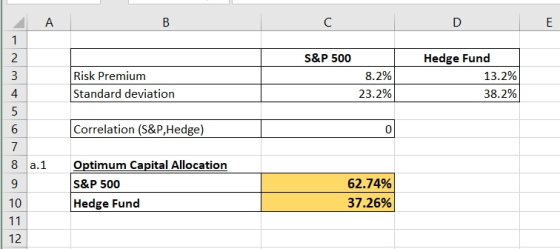
Cell reference -
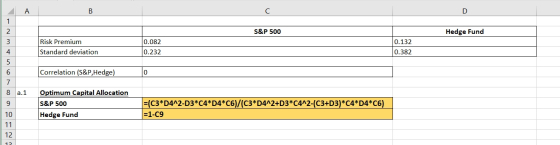
Please note:
We can compute the allocation of assets in optimal portfolio (Two- Assets) with following equation:

where,
RP = Risk premium
a = First asset (here, S&P 500)
b = Second asset (here, Hedge fund)


Hope this will help, please do comment if you need any further explanation. Your feedback would be highly appreciated.
Add Answer to:
Greta, an elderly investor, has a degree of risk aversion of
A = 3 when applied...
Problem 7-24 Greta, an elderly investor, has a degree of risk aversion of A=3 when applied...
 Problem 7-24 Greta, an elderly investor, has a degree of risk aversion of A=3 when applied to return on wealth over a one year horizon. She is pondering two portfolios, the S&P 500 and a hedge fund, as well as a number of one-year strategies. (All rates are annual and continuously compounded) The S&P 500 risk premium is estimated at 8.2% per year, with a SD of 23.2%. The hedge fund nisk premium is estimated at 13.2% with a SD...
Greta, an elderly investor, has a degree of risk aversion of A = 3 when applied...
Greta, an elderly investor, has a degree of risk aversion of A = 3 when applied to return on wealth over a one-year horizon. She is pondering two portfolios, the S&P 500 and a hedge fund, as well as a number of one-year strategies. (All rates are annual and continuously compounded.) The S&P 500 risk premium is estimated at 7.2% per year, with a SD of 22.2%. The hedge fund risk premium is estimated at 12.2% with a SD of...
Greta, an elderly investor, has a degree of risk aversion of A = 3 when applied...
Greta, an elderly investor, has a degree of risk aversion of A = 3 when applied to return on wealth over a one-year horizon. She is pondering two portfolios, the S&P 500 and a hedge fund, as well as a number of one-year strategies. (All rates are annual and continuously compounded.) The S&P 500 risk premium is estimated at 6.6% per year, with a SD of 21.6%. The hedge fund risk premium is estimated at 11.6% with a SD of...
Greta, an elderly investor, has a degree of risk aversion of A = 3 when applied...
 Greta, an elderly investor, has a degree of risk
aversion of A = 3 when applied to return on wealth over a one-year
horizon. She is pondering two portfolios, the S&P 500 and a
hedge fund, as well as a number of one-year strategies. (All rates
are annual and continuously compounded.) The S&P 500 risk
premium is estimated at 8.4% per year, with a SD of 23.4%. The
hedge fund risk premium is estimated at 13.4% with a SD of...
Greta, an elderly investor, has a degree of risk
aversion of A = 3 when applied to return on wealth over a one-year
horizon. She is pondering two portfolios, the S&P 500 and a
hedge fund, as well as a number of one-year strategies. (All rates
are annual and continuously compounded.) The S&P 500 risk
premium is estimated at 8.4% per year, with a SD of 23.4%. The
hedge fund risk premium is estimated at 13.4% with a SD of...
Greta, an elderly investor, has a degree of risk aversion of A = 3 when applied...
Greta, an elderly investor, has a degree of risk aversion of A = 3 when applied to return on wealth over a one-year horizon. She is pondering two portfolios, the S&P/TSX Composite Index and a hedge fund, as well as a number of one-year strategies. (All rates are annual and continuously compounded.) The S&P/TSX Composite risk premium is estimated at 6% per year, with a SD of 21%. The hedge fund risk premium is estimated at 9% with a SD...
Greta, an elderly investor, has a degree of risk aversion of A = 5 when applied...
 Greta, an elderly investor, has a degree of risk
aversion of A = 5 when applied to return on wealth over a one-year
horizon. She is pondering two portfolios, the S&P 500 and a
hedge fund, as well as a number of one-year strategies. (All rates
are annual and continuously compounded.) The S&P 500 risk
premium is estimated at 5% per year, with a SD of 20%. The hedge
fund risk premium is estimated at 12% with a SD of...
Greta, an elderly investor, has a degree of risk
aversion of A = 5 when applied to return on wealth over a one-year
horizon. She is pondering two portfolios, the S&P 500 and a
hedge fund, as well as a number of one-year strategies. (All rates
are annual and continuously compounded.) The S&P 500 risk
premium is estimated at 5% per year, with a SD of 20%. The hedge
fund risk premium is estimated at 12% with a SD of...
Greta, an elderly investor, has a degree of risk aversion of A = 3 when applied...
 Greta, an elderly investor, has a degree of risk aversion of A =
3 when applied to return on wealth over a one-year horizon. She is
pondering two portfolios, the S&P 500 and a hedge fund, as well
as a number of one-year strategies. (All rates are annual and
continuously compounded.) The S&P 500 risk premium is estimated
at 7.2% per year, with a SD of 22.2%. The hedge fund risk premium
is estimated at 12.2% with a SD of...
Greta, an elderly investor, has a degree of risk aversion of A =
3 when applied to return on wealth over a one-year horizon. She is
pondering two portfolios, the S&P 500 and a hedge fund, as well
as a number of one-year strategies. (All rates are annual and
continuously compounded.) The S&P 500 risk premium is estimated
at 7.2% per year, with a SD of 22.2%. The hedge fund risk premium
is estimated at 12.2% with a SD of...
Greta, an elderly investor, has a degree of risk aversion of A = 3 when applied...
 Greta, an elderly investor, has a degree of risk aversion of A = 3 when applied to return on wealth over a one-year horizon. She is pondering two portfolios, the S&P 500 and a hedge fund, as well as a number of one-year strategies. All rates are annual and continuously compounded.) The S&P 500 risk premium is estimated at 6.6% per year, with a SD of 21.6%. The hedge fund risk premium is estimated at 11.6% with a SD of...
Greta, an elderly investor, has a degree of risk aversion of A = 3 when applied...
 Greta, an elderly investor, has a degree of risk aversion of A = 3 when applied to return on wealth over a one-year horizon. She is pondering two portfolios, the S&P 500 and a hedge fund, as well as a number of one-year strategies. (All rates are annual and continuously compounded.) The S&P 500 risk premium is estimated at 6.2% per year, with a SD of 21.2%. The hedge fund risk premium is estimated at 11.2% with a SD of...
Greta, an elderly investor, has a degree of risk aversion of A = 3 when applied...
Greta, an elderly investor, has a degree of risk aversion of A = 3 when applied to return on wealth over a one-year horizon. She is pondering two portfolios, the S&P 500 and a hedge fund, as well as a number of one-year strategies. (All rates are annual and continuously compounded.) The S&P 500 risk premium is estimated at 9% per year, with a SD of 23%. The hedge fund risk premium is estimated at 7% with a SD of...
 Problem 7-24 Greta, an elderly investor, has a degree of risk aversion of A=3 when applied to return on wealth over a one year horizon. She is pondering two portfolios, the S&P 500 and a hedge fund, as well as a number of one-year strategies. (All rates are annual and continuously compounded) The S&P 500 risk premium is estimated at 8.2% per year, with a SD of 23.2%. The hedge fund nisk premium is estimated at 13.2% with a SD...
 Greta, an elderly investor, has a degree of risk
aversion of A = 3 when applied to return on wealth over a one-year
horizon. She is pondering two portfolios, the S&P 500 and a
hedge fund, as well as a number of one-year strategies. (All rates
are annual and continuously compounded.) The S&P 500 risk
premium is estimated at 8.4% per year, with a SD of 23.4%. The
hedge fund risk premium is estimated at 13.4% with a SD of...
Greta, an elderly investor, has a degree of risk
aversion of A = 3 when applied to return on wealth over a one-year
horizon. She is pondering two portfolios, the S&P 500 and a
hedge fund, as well as a number of one-year strategies. (All rates
are annual and continuously compounded.) The S&P 500 risk
premium is estimated at 8.4% per year, with a SD of 23.4%. The
hedge fund risk premium is estimated at 13.4% with a SD of...
 Greta, an elderly investor, has a degree of risk
aversion of A = 5 when applied to return on wealth over a one-year
horizon. She is pondering two portfolios, the S&P 500 and a
hedge fund, as well as a number of one-year strategies. (All rates
are annual and continuously compounded.) The S&P 500 risk
premium is estimated at 5% per year, with a SD of 20%. The hedge
fund risk premium is estimated at 12% with a SD of...
Greta, an elderly investor, has a degree of risk
aversion of A = 5 when applied to return on wealth over a one-year
horizon. She is pondering two portfolios, the S&P 500 and a
hedge fund, as well as a number of one-year strategies. (All rates
are annual and continuously compounded.) The S&P 500 risk
premium is estimated at 5% per year, with a SD of 20%. The hedge
fund risk premium is estimated at 12% with a SD of...
 Greta, an elderly investor, has a degree of risk aversion of A =
3 when applied to return on wealth over a one-year horizon. She is
pondering two portfolios, the S&P 500 and a hedge fund, as well
as a number of one-year strategies. (All rates are annual and
continuously compounded.) The S&P 500 risk premium is estimated
at 7.2% per year, with a SD of 22.2%. The hedge fund risk premium
is estimated at 12.2% with a SD of...
Greta, an elderly investor, has a degree of risk aversion of A =
3 when applied to return on wealth over a one-year horizon. She is
pondering two portfolios, the S&P 500 and a hedge fund, as well
as a number of one-year strategies. (All rates are annual and
continuously compounded.) The S&P 500 risk premium is estimated
at 7.2% per year, with a SD of 22.2%. The hedge fund risk premium
is estimated at 12.2% with a SD of...
 Greta, an elderly investor, has a degree of risk aversion of A = 3 when applied to return on wealth over a one-year horizon. She is pondering two portfolios, the S&P 500 and a hedge fund, as well as a number of one-year strategies. All rates are annual and continuously compounded.) The S&P 500 risk premium is estimated at 6.6% per year, with a SD of 21.6%. The hedge fund risk premium is estimated at 11.6% with a SD of...
 Greta, an elderly investor, has a degree of risk aversion of A = 3 when applied to return on wealth over a one-year horizon. She is pondering two portfolios, the S&P 500 and a hedge fund, as well as a number of one-year strategies. (All rates are annual and continuously compounded.) The S&P 500 risk premium is estimated at 6.2% per year, with a SD of 21.2%. The hedge fund risk premium is estimated at 11.2% with a SD of...
Most questions answered within 3 hours.
-
Where is the error in this code sequence?
String s1 = "Hello";
String s2 = "ello";...
asked 11 months ago -
Financial data for Joel de Paris, Inc., for last year
follow:
Joel de Paris, Inc.
Balance...
asked 11 months ago -
Consider this reaction:
Al2(SO4)3 (aq)+ BaCl3
(aq) Al2Cl6 (aq)- +
3BaSO4(s) . What is the...
asked 11 months ago -
Suppose that Savneet is considering increasing her
recent random sample from 20 car rentals to 40...
asked 11 months ago -
Trucks arrive at an unloading terminal at an average rate of 120
per hour.
Trucks arrive...
asked 11 months ago -
Why are methanol and ethanol completely soluble in water while
octanol is not very little soluble....
asked 11 months ago -
A facilities manager at a university reads in a research report
that the mean amount of...
asked 11 months ago -
When the CuSO4 is rehydrated by adding water to the anhydrous
compound, is this an endothermic...
asked 11 months ago -
A ray of sunlight is passing from diamond into crown glass; the
angle of incidence is...
asked 11 months ago -
A block of mass 0.249 kg is placed on top of a light, vertical
spring of...
asked 11 months ago -
how do the kidneys compensate in the presences of acidosis
a) trigger hyperventilate
b) reserve acid...
asked 11 months ago -
Question 501 pts
The rental rate of capital to the firm increases. Which of the
following...
asked 11 months ago