a. How much does aggregate demand need to increase to restore the economy to its long-run equilibrium?
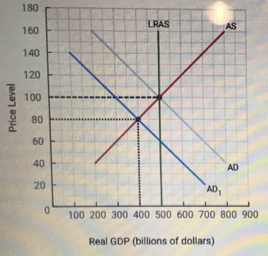
Instructions: Enter your answers as a whole number.
a. How much does aggregate demand need to increase to restore the economy to its long-run equilibrium?
b. If the MPC is 0.6, how much does golemment purchases need to increase to shift aggregate demand by the amount you found in part a?
Suppose instead that the MPC is 0.5.
c. How much does aggregate demand and government purchases need to increase to restore the economy to its long run equilibrium?
Aggregate demand needs to increase by _______ billion and government purchases need to increase by _______ billion.
Homework Answers


Add Answer to:
a. How much does aggregate demand need to increase to restore the economy to its long-run equilibrium?
The graph below depicts an economy where a decline in aggregate demand has caused a recession....
 The graph below depicts an economy where a decline in aggregate demand has caused a recession. Assume the government decides to conduct fiscal policy by increasing government purchases to reduce the burden of this recession. Fiscal Policy LRAS Price Level 100 200 300 400 500 600 700 800 900 Real GDP (billions of dollars) Instructions: Enter your answers as a whole number. a. How much does aggregate demand need to increase to restore the economy to its long-run equilibrium? O...
The graph below depicts an economy where a decline in aggregate demand has caused a recession....
 The graph below depicts an economy where a decline in aggregate demand has caused a recession. Assume the government decides to conduct fiscal policy by increasing government purchases to reduce the burden of this recession. Fiscal Policy 180 LRAS AS 160 140 120 100 Price Level 80 60 40 AD 20 AD 0 100 200 300 400 500 600 700 800 900 Real GDP (billions of dollars) Instructions: Enter your answers as a whole number. a. How much does aggregate...
Instructions: Enter your answers as a whole number. a. How much does aggregate demand need to...
 Instructions: Enter your answers as a whole
number.
a. How much does aggregate demand need to change to restore the
economy to its long-run equilibrium?
$ ___________ billion
b. If the MPC is 0.75, how much does government purchases need
to change to shift aggregate demand by the amount you found in part
a?
$ ___________ billion
Suppose instead that the MPC is 0.8.
c. How much does aggregate demand and government purchases need
to change to restore the economy...
Instructions: Enter your answers as a whole
number.
a. How much does aggregate demand need to change to restore the
economy to its long-run equilibrium?
$ ___________ billion
b. If the MPC is 0.75, how much does government purchases need
to change to shift aggregate demand by the amount you found in part
a?
$ ___________ billion
Suppose instead that the MPC is 0.8.
c. How much does aggregate demand and government purchases need
to change to restore the economy...
The graph below depicts an economy where a dcline in aggregate demand has caused a recession....
 The graph below depicts an economy where a dcline in aggregate demand has caused a recession. Assume the government decides to conduct fiscal policy by increasing government purchases to reduce the burden of this recession Fiscal Policy Price Level 80 160 240 320 400 480 560 640 720 800 Real GDP (billions of dollars) Instructions: Enter your answers as a whole number How much does aggregate demand need to change to restore the economy to il long-run equilibrium billion of...
The graph below depicts an economy where a decline in aggregate demand has caused a recession....
 The graph below depicts an economy where a decline in aggregate demand has caused a recession. Assume the government decides to conduct fiscal policy by increasing government purchases to reduce the burden of this recession. Fiscal Policy LRAS Price Level 80 160 240 320 400 480 560 640 720 800 Real GDP (billions of dollars) Instructions: Enter your answers as a whole number. a. How much does aggregate demand need to change to restore the economy to its long-run equilibrium?...
The graph below depicts an economy where a decline in aggregate demand has caused a recession
 The graph below depicts an economy where a decline in aggregate demand has caused a recession. Assume the government decides to conduct fiscal policy by changing taxes to reduce the burden of this recession.Instructions: Enter your answers as a whole number. If you are entering any negative numbers be sure to include a negative sign (-) in front of those numbers.a. How much does aggregate demand need to change to restore the economy to its long-run equilibrium? b. If the MPC...
The graph below depicts an economy where a decline in aggregate demand has caused a recession....
 The graph below depicts an economy where a decline in aggregate demand has caused a recession. Assume the government decides to conduct fiscal policy by changing taxes to reduce the burden of this recession. Fiscal Policy 150 LRAS Price Level 0 80 160 240 320 400 480 560 640 720 800 Real GDP (billions of dollars) Instructions: Enter your answers as a whole number. If you are entering any negative numbers be sure to include a negative sign (-) in...
Initially, the economy is in long-run equilibrium. The aggregate demand curve then shifts $80 billion to...
Initially, the economy is in long-run equilibrium. The aggregate demand curve then shifts $80 billion to the left. The government wants to change spending to offset this decrease in demand. The MPC is 0.75. Suppose the effect on aggregate demand of a tax change is 3/4 as strong as the effect of a change in government expenditure. There is no crowding out and no accelerator effect. What should the government do if it wants to offset the decrease in real...
1. The economy is in long-run equilibrium. Technological change shifts the long-run aggregate supply curve $60...
1. The economy is in long-run equilibrium. Technological change shifts the long-run aggregate supply curve $60 billions to the right. At the same time, government purchases increase by$30 billion. If the MPC equals 0.8 and the crowding-out effect of the government expenditures would reduce aggregate demand by $60 billion, we would expect that in the long-run, A. both real GDP and the price level would be higher. B. both real GDP and the price level would be lower. C. real...
The graph below depicts an economy where an increase in aggregate demand has caused inflation. The...
 The graph below depicts an economy where an increase in aggregate demand has caused inflation. The economy's current level of real GDP (Y) is above its long-run equilibrium. This is illustrated by the long-run aggregate supply curve (LRAS) and a price level 2) above the equilibrium value of Pe Fiscal Policy Price Level Real GDP Which of the following is an example of an automatic stabilizer that would help this economy move toward full employment again A reduced need for...
 The graph below depicts an economy where a decline in aggregate demand has caused a recession. Assume the government decides to conduct fiscal policy by increasing government purchases to reduce the burden of this recession. Fiscal Policy LRAS Price Level 100 200 300 400 500 600 700 800 900 Real GDP (billions of dollars) Instructions: Enter your answers as a whole number. a. How much does aggregate demand need to increase to restore the economy to its long-run equilibrium? O...
 The graph below depicts an economy where a decline in aggregate demand has caused a recession. Assume the government decides to conduct fiscal policy by increasing government purchases to reduce the burden of this recession. Fiscal Policy 180 LRAS AS 160 140 120 100 Price Level 80 60 40 AD 20 AD 0 100 200 300 400 500 600 700 800 900 Real GDP (billions of dollars) Instructions: Enter your answers as a whole number. a. How much does aggregate...
 Instructions: Enter your answers as a whole
number.
a. How much does aggregate demand need to change to restore the
economy to its long-run equilibrium?
$ ___________ billion
b. If the MPC is 0.75, how much does government purchases need
to change to shift aggregate demand by the amount you found in part
a?
$ ___________ billion
Suppose instead that the MPC is 0.8.
c. How much does aggregate demand and government purchases need
to change to restore the economy...
Instructions: Enter your answers as a whole
number.
a. How much does aggregate demand need to change to restore the
economy to its long-run equilibrium?
$ ___________ billion
b. If the MPC is 0.75, how much does government purchases need
to change to shift aggregate demand by the amount you found in part
a?
$ ___________ billion
Suppose instead that the MPC is 0.8.
c. How much does aggregate demand and government purchases need
to change to restore the economy...
 The graph below depicts an economy where a dcline in aggregate demand has caused a recession. Assume the government decides to conduct fiscal policy by increasing government purchases to reduce the burden of this recession Fiscal Policy Price Level 80 160 240 320 400 480 560 640 720 800 Real GDP (billions of dollars) Instructions: Enter your answers as a whole number How much does aggregate demand need to change to restore the economy to il long-run equilibrium billion of...
 The graph below depicts an economy where a decline in aggregate demand has caused a recession. Assume the government decides to conduct fiscal policy by increasing government purchases to reduce the burden of this recession. Fiscal Policy LRAS Price Level 80 160 240 320 400 480 560 640 720 800 Real GDP (billions of dollars) Instructions: Enter your answers as a whole number. a. How much does aggregate demand need to change to restore the economy to its long-run equilibrium?...
 The graph below depicts an economy where a decline in aggregate demand has caused a recession. Assume the government decides to conduct fiscal policy by changing taxes to reduce the burden of this recession. Fiscal Policy 150 LRAS Price Level 0 80 160 240 320 400 480 560 640 720 800 Real GDP (billions of dollars) Instructions: Enter your answers as a whole number. If you are entering any negative numbers be sure to include a negative sign (-) in...
 The graph below depicts an economy where an increase in aggregate demand has caused inflation. The economy's current level of real GDP (Y) is above its long-run equilibrium. This is illustrated by the long-run aggregate supply curve (LRAS) and a price level 2) above the equilibrium value of Pe Fiscal Policy Price Level Real GDP Which of the following is an example of an automatic stabilizer that would help this economy move toward full employment again A reduced need for...
Most questions answered within 3 hours.
-
Where is the error in this code sequence?
String s1 = "Hello";
String s2 = "ello";...
asked 11 months ago -
Financial data for Joel de Paris, Inc., for last year
follow:
Joel de Paris, Inc.
Balance...
asked 11 months ago -
Consider this reaction:
Al2(SO4)3 (aq)+ BaCl3
(aq) Al2Cl6 (aq)- +
3BaSO4(s) . What is the...
asked 11 months ago -
Suppose that Savneet is considering increasing her
recent random sample from 20 car rentals to 40...
asked 11 months ago -
Trucks arrive at an unloading terminal at an average rate of 120
per hour.
Trucks arrive...
asked 11 months ago -
Why are methanol and ethanol completely soluble in water while
octanol is not very little soluble....
asked 11 months ago -
A facilities manager at a university reads in a research report
that the mean amount of...
asked 11 months ago -
When the CuSO4 is rehydrated by adding water to the anhydrous
compound, is this an endothermic...
asked 11 months ago -
A ray of sunlight is passing from diamond into crown glass; the
angle of incidence is...
asked 11 months ago -
A block of mass 0.249 kg is placed on top of a light, vertical
spring of...
asked 11 months ago -
how do the kidneys compensate in the presences of acidosis
a) trigger hyperventilate
b) reserve acid...
asked 11 months ago -
Question 501 pts
The rental rate of capital to the firm increases. Which of the
following...
asked 11 months ago