
Homework Answers

Add Answer to:
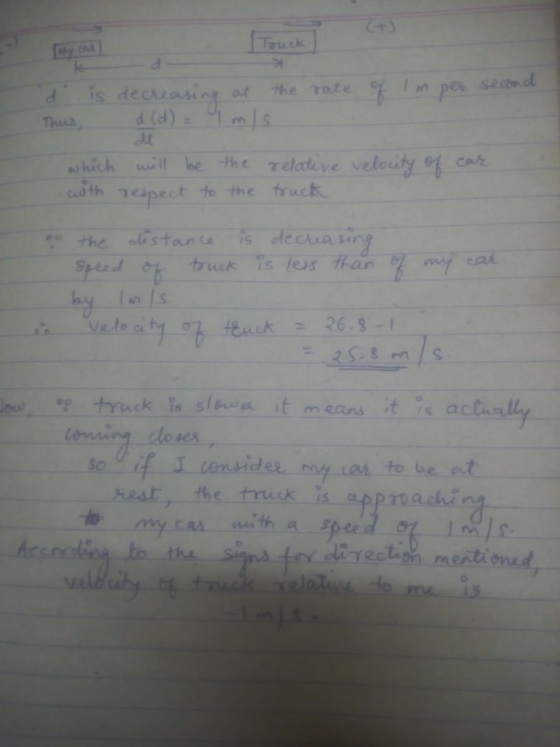
1. You are driving down the freeway at a constant 60 mph (26.8 m/s)·There is a...
An airplane is flying at 250 m/s due north, relative to air. There is a strong...
An airplane is flying at 250 m/s due north, relative to air. There is a strong wind of 65 m/s blowing in a due east direction. Sketch a Vector Diagram showing the velocity of the airplane relative to the air, the velocity of the wind, and the final velocity of the plane relative to the ground. Use it to help you determine the magnitude and direction of the velocity of the plane relative to the ground.
An airplane is flying North with a airspeed of 200 m/s (i.e. the velocity relative to...
An airplane is flying North with a airspeed of 200 m/s (i.e. the velocity relative to the air). A strong wind is blowing East at 50 m/s. What is the airplane’s resultant velocity (magnitude and direction) relative to the ground?
A plane is flying 192 m/s north relative to the air. The wind is blowing 171...
A plane is flying 192 m/s north relative to the air. The wind is blowing 171 m/s west relative to the ground. Determine the plane's velocity relative to the ground. Velocity (relative to the ground) magnitude = Velocity (relative to the ground) direction = ° N of W
2D Kinematics Question: A plane is flying 162 m/s west relative to the air. The wind...
2D Kinematics Question: A plane is flying 162 m/s west relative to the air. The wind is blowing 23 m/s north relative to the ground. Determine the plane's velocity relative to the ground. Velocity relative to the ground (magnitude)= Velocity relative to the ground direction = degrees W of N
(1 pt) A plane is heading due west: its nose points towards the west direction, but its trajector...
 plz dont skip steps
(1 pt) A plane is heading due west: its nose points towards the west direction, but its trajectory on the ground deviates from the west direction due to a sideways component of the wind. The plane is also climbing at the rate of 120 km/h (height increase per unit time). If the plane's airspeed is 550 km/h and there is a wind blowing 90 km/h to the northwest, what is the ground speed of the plane?...
plz dont skip steps
(1 pt) A plane is heading due west: its nose points towards the west direction, but its trajectory on the ground deviates from the west direction due to a sideways component of the wind. The plane is also climbing at the rate of 120 km/h (height increase per unit time). If the plane's airspeed is 550 km/h and there is a wind blowing 90 km/h to the northwest, what is the ground speed of the plane?...
1. If an airplane, with airspeed = 100 m/s, is traveling directly against a wind of...
1. If an airplane, with airspeed = 100 m/s, is traveling directly against a wind of 20 m/s (relative to the Earth), how long does it take to travel from city A to city B if the cities are 40000 m apart? 2. If the wind in question #1 was perpendicular to the velocity of the plane relative to the air, what would the speed of the plane be relative to the Earth?
You are driving at a velocity of 95 MPH (42.5 m/s) when you hear a police...
You are driving at a velocity of 95 MPH (42.5 m/s) when you hear a police siren behind you. From your previous run-ins with the law, you know that at a particular point in the sound, the police sirens on the police cars in your town emit a frequency of 751.255 Hz. You hear the sound at a frequency of 752.551 Hz. How fast the the police car going (in m/s)? (Assume that the speed of sound is 343 m/s.)
A small airplane is flying at a constant altitude with a ground speed of 75 m/s....
A small airplane is flying at a constant altitude with a ground speed of 75 m/s. The pilot needs to reach a point exactly 100 km north of her current location. However, there is a cross wind blowing at 20 m/s in a direction 30 degrees north of east. a. In what direction should the pilot point the plane so that she arrives at her destination as directly as possible. b. How long does it take to complete this part...
You are driving down the road at 15.6 m/s (35 mph) when an ambulance passes you...
You are driving down the road at 15.6 m/s (35 mph) when an ambulance passes you with its siren blaring. The ambulance siren produces a frequency of 700 Hz. As the ambulance approaches you from behind, you hear a frequency of 730 Hz . The speed of sound in air is 344 m/s. What is the speed of the ambulance? The positive direction points from your car (listener) toward the ambulance (source). Express your answer in meters per second.
A model airplane competition has the following rules: Each plane must fly to a point 1...
 A model airplane competition has the following rules: Each plane must fly to a point 1 km from the start and then back again. The point km winner is the plane with the shortest round-trip time. The contestants are free to launch their planes in any direction, so long as the plane travels exactly 1 km out and then returns. On the day of the race, a steady wind blows from the north at 8.5 m/s. Your plane can maintain...
 plz dont skip steps
(1 pt) A plane is heading due west: its nose points towards the west direction, but its trajectory on the ground deviates from the west direction due to a sideways component of the wind. The plane is also climbing at the rate of 120 km/h (height increase per unit time). If the plane's airspeed is 550 km/h and there is a wind blowing 90 km/h to the northwest, what is the ground speed of the plane?...
plz dont skip steps
(1 pt) A plane is heading due west: its nose points towards the west direction, but its trajectory on the ground deviates from the west direction due to a sideways component of the wind. The plane is also climbing at the rate of 120 km/h (height increase per unit time). If the plane's airspeed is 550 km/h and there is a wind blowing 90 km/h to the northwest, what is the ground speed of the plane?...
 A model airplane competition has the following rules: Each plane must fly to a point 1 km from the start and then back again. The point km winner is the plane with the shortest round-trip time. The contestants are free to launch their planes in any direction, so long as the plane travels exactly 1 km out and then returns. On the day of the race, a steady wind blows from the north at 8.5 m/s. Your plane can maintain...
Most questions answered within 3 hours.
-
Where is the error in this code sequence?
String s1 = "Hello";
String s2 = "ello";...
asked 10 months ago -
Financial data for Joel de Paris, Inc., for last year
follow:
Joel de Paris, Inc.
Balance...
asked 10 months ago -
Consider this reaction:
Al2(SO4)3 (aq)+ BaCl3
(aq) Al2Cl6 (aq)- +
3BaSO4(s) . What is the...
asked 10 months ago -
Suppose that Savneet is considering increasing her
recent random sample from 20 car rentals to 40...
asked 10 months ago -
Trucks arrive at an unloading terminal at an average rate of 120
per hour.
Trucks arrive...
asked 10 months ago -
Why are methanol and ethanol completely soluble in water while
octanol is not very little soluble....
asked 10 months ago -
A facilities manager at a university reads in a research report
that the mean amount of...
asked 10 months ago -
When the CuSO4 is rehydrated by adding water to the anhydrous
compound, is this an endothermic...
asked 10 months ago -
A ray of sunlight is passing from diamond into crown glass; the
angle of incidence is...
asked 10 months ago -
A block of mass 0.249 kg is placed on top of a light, vertical
spring of...
asked 10 months ago -
how do the kidneys compensate in the presences of acidosis
a) trigger hyperventilate
b) reserve acid...
asked 10 months ago -
Question 501 pts
The rental rate of capital to the firm increases. Which of the
following...
asked 10 months ago