--
Assume that your father is now 50 years old, plans to retire in 10
years, and expects to live for 25 years after he retires - that is,
until age 85. He wants his first retirement payment to have the
same purchasing power at the time he retires as $50,000 has today.
He wants all his subsequent retirement payments to be equal to his
first retirement payment. (Do not let the retirement payments grow
with inflation: Your father realizes that if inflation occurs the
real value of his retirement income will decline year by year after
he retires). His retirement income will begin the day he retires,
10 years from today, and he will then receive 24 additional annual
payments. Inflation is expected to be 4% per year from today
forward. He currently has $150,000 saved and expects to earn a
return on his savings of 8% per year with annual compounding.
How much must he save during each of the next 10 years (with equal
deposits being made at the end of each year, beginning a year from
today) to meet his retirement goal? (Note: Neither the amount he
saves nor the amount he withdraws upon retirement is a growing
annuity.) Do not round intermediate calculations. Round your answer
to the nearest dollar.
$ ________
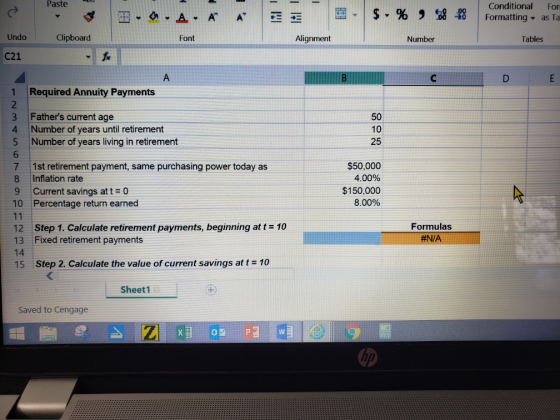
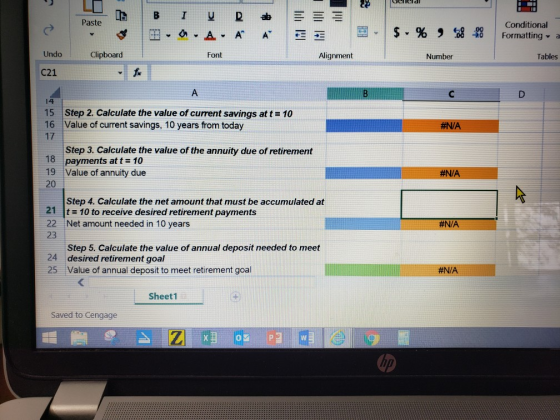
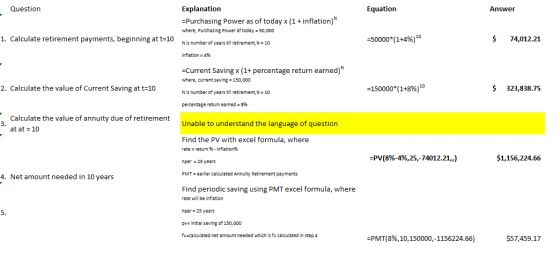
spreadsheet photos just for reference. I need to find
the highlighted number above
Homework Answers
Add Answer to:
--
Assume that your father is now 50 years old, plans to retire in 10
years,...
-- Assume that your father is now 50 years old, plans to retire in 10 years,...
 --
Assume that your father is now 50 years old, plans to retire in 10
years, and expects to live for 25 years after he retires - that is,
until age 85. He wants his first retirement payment to have the
same purchasing power at the time he retires as $50,000 has today.
He wants all his subsequent retirement payments to be equal to his
first retirement payment. (Do not let the retirement payments grow
with inflation: Your father realizes...
--
Assume that your father is now 50 years old, plans to retire in 10
years, and expects to live for 25 years after he retires - that is,
until age 85. He wants his first retirement payment to have the
same purchasing power at the time he retires as $50,000 has today.
He wants all his subsequent retirement payments to be equal to his
first retirement payment. (Do not let the retirement payments grow
with inflation: Your father realizes...
Assume that your father is now 50 years old, plans to retire in 10 years, and...
Assume that your father is now 50 years old, plans to retire in 10 years, and expects to live for 25 years after he retires - that is, until age 85. He wants his first retirement payment to have the same purchasing power at the time he retires as $45,000 has today. He wants all his subsequent retirement payments to be equal to his first retirement payment. (Do not let the retirement payments grow with inflation: Your father realizes that...
Assume that your father is now 50 years old, plans to retire in 10 years, and...
Assume that your father is now 50 years old, plans to retire in 10 years, and expects to live for 25 years after he retires - that is, until age 85. He wants his first retirement payment to have the same purchasing power at the time he retires as $50,000 has today. He wants all of his subsequent retirement payments to be equal to his first retirement payment. (Do not let the retirement payments grow with inflation: Your father realizes...
Assume that your father is now 50 years old, plans to retire in 10 years, and...
Assume that your father is now 50 years old, plans to retire in 10 years, and expects to live for 25 years after he retires - that is, until age 85. He wants his first retirement payment to have the same purchasing power at the time he retires as $40,000 has today. He wants all of his subsequent retirement payments to be equal to his first retirement payment. (Do not let the retirement payments grow with inflation: Your father realizes...
Assume that your father is now 50 years old, plans to retire in 10 years, and...
 Assume that your father is now 50 years old, plans to retire in 10 years, and expects to live for 25 years after he retires - that is, until age 85. He wants his first retirement payment to have the same purchasing power at the time he retires as $50,000 has today. He wants all his subsequent retirement payments to be equal to his first retirement payment. (Do not let the retirement payments grow with inflation: Your father realizes that...
Your father is 50 years old and will retire in 10 years. He expects to live...
 Your father is 50 years old and will retire in 10 years. He expects to live for 25 years after he retires, until he is 85. He wants a fixed retirement income that has the same purchasing power at the time he retires as $40,000 has today. (The real value of his retirement income will decline annually after he retires.) His retirement income will begin the day he retires, 10 years from today, at which time he will receive 24...
Excel Online Structured Activity: Required annuity payments Your father is 50 years old and will retire...
 Excel Online Structured Activity: Required annuity payments Your father is 50 years old and will retire in 10 years. He expects to live for 25 years after he retires, until he is 85. He wants a fixed retirement income that has the same purchasing power at the time he retires as $50,000 has today. (The real value of his retirement income will decline annually after he retires.) His retirement income will begin the day he retires, 10 years from today,...
Excel Online Structured Activity: Required annuity payments Your father is 50 years old and will retire...
 Excel Online Structured Activity: Required annuity payments Your father is 50 years old and will retire in 10 years. He expects to live for 25 years after he retires, until he is 85. He wants a foxed retirement income that has the same purchasing power at the time he retires as $35,000 has today. (The real value of his retirement income will decline annually after he retires.) His retirement income will begin the day he retires, 10 years from today,...
Video Excel Online Structured Activity: Required annuity payments Your father is 50 years old and will retire in 10 yea...
 Video Excel Online Structured Activity: Required annuity payments Your father is 50 years old and will retire in 10 years. He expects to live for 25 years after he retires, until he is 85. He wants a fixed retirement income that has the same purchasing power at the time he retires as $40,000 has today. (The real value of his retirement income will decline annually after he retires.) His retirement income will begin the day he retires, 10 years from...
Your father is 50 years old and will retire in 10 years. He expects to live for 25 years after he...
 Your father is 50 years old and will retire in 10 years. He
expects to live for 25 years after he retires, until he is 85. He
wants a fixed retirement income that has the same purchasing power
at the time he retires as $50,000 has today. (The real value of his
retirement income will decline annually after he retires.) His
retirement income will begin the day he retires, 10 years
from today, at which time he will receive 24...
Your father is 50 years old and will retire in 10 years. He
expects to live for 25 years after he retires, until he is 85. He
wants a fixed retirement income that has the same purchasing power
at the time he retires as $50,000 has today. (The real value of his
retirement income will decline annually after he retires.) His
retirement income will begin the day he retires, 10 years
from today, at which time he will receive 24...
 --
Assume that your father is now 50 years old, plans to retire in 10
years, and expects to live for 25 years after he retires - that is,
until age 85. He wants his first retirement payment to have the
same purchasing power at the time he retires as $50,000 has today.
He wants all his subsequent retirement payments to be equal to his
first retirement payment. (Do not let the retirement payments grow
with inflation: Your father realizes...
--
Assume that your father is now 50 years old, plans to retire in 10
years, and expects to live for 25 years after he retires - that is,
until age 85. He wants his first retirement payment to have the
same purchasing power at the time he retires as $50,000 has today.
He wants all his subsequent retirement payments to be equal to his
first retirement payment. (Do not let the retirement payments grow
with inflation: Your father realizes...
 Assume that your father is now 50 years old, plans to retire in 10 years, and expects to live for 25 years after he retires - that is, until age 85. He wants his first retirement payment to have the same purchasing power at the time he retires as $50,000 has today. He wants all his subsequent retirement payments to be equal to his first retirement payment. (Do not let the retirement payments grow with inflation: Your father realizes that...
 Your father is 50 years old and will retire in 10 years. He expects to live for 25 years after he retires, until he is 85. He wants a fixed retirement income that has the same purchasing power at the time he retires as $40,000 has today. (The real value of his retirement income will decline annually after he retires.) His retirement income will begin the day he retires, 10 years from today, at which time he will receive 24...
 Excel Online Structured Activity: Required annuity payments Your father is 50 years old and will retire in 10 years. He expects to live for 25 years after he retires, until he is 85. He wants a fixed retirement income that has the same purchasing power at the time he retires as $50,000 has today. (The real value of his retirement income will decline annually after he retires.) His retirement income will begin the day he retires, 10 years from today,...
 Excel Online Structured Activity: Required annuity payments Your father is 50 years old and will retire in 10 years. He expects to live for 25 years after he retires, until he is 85. He wants a foxed retirement income that has the same purchasing power at the time he retires as $35,000 has today. (The real value of his retirement income will decline annually after he retires.) His retirement income will begin the day he retires, 10 years from today,...
 Video Excel Online Structured Activity: Required annuity payments Your father is 50 years old and will retire in 10 years. He expects to live for 25 years after he retires, until he is 85. He wants a fixed retirement income that has the same purchasing power at the time he retires as $40,000 has today. (The real value of his retirement income will decline annually after he retires.) His retirement income will begin the day he retires, 10 years from...
 Your father is 50 years old and will retire in 10 years. He
expects to live for 25 years after he retires, until he is 85. He
wants a fixed retirement income that has the same purchasing power
at the time he retires as $50,000 has today. (The real value of his
retirement income will decline annually after he retires.) His
retirement income will begin the day he retires, 10 years
from today, at which time he will receive 24...
Your father is 50 years old and will retire in 10 years. He
expects to live for 25 years after he retires, until he is 85. He
wants a fixed retirement income that has the same purchasing power
at the time he retires as $50,000 has today. (The real value of his
retirement income will decline annually after he retires.) His
retirement income will begin the day he retires, 10 years
from today, at which time he will receive 24...
Most questions answered within 3 hours.
-
Where is the error in this code sequence?
String s1 = "Hello";
String s2 = "ello";...
asked 11 months ago -
Financial data for Joel de Paris, Inc., for last year
follow:
Joel de Paris, Inc.
Balance...
asked 11 months ago -
Consider this reaction:
Al2(SO4)3 (aq)+ BaCl3
(aq) Al2Cl6 (aq)- +
3BaSO4(s) . What is the...
asked 11 months ago -
Suppose that Savneet is considering increasing her
recent random sample from 20 car rentals to 40...
asked 11 months ago -
Trucks arrive at an unloading terminal at an average rate of 120
per hour.
Trucks arrive...
asked 11 months ago -
Why are methanol and ethanol completely soluble in water while
octanol is not very little soluble....
asked 11 months ago -
A facilities manager at a university reads in a research report
that the mean amount of...
asked 11 months ago -
When the CuSO4 is rehydrated by adding water to the anhydrous
compound, is this an endothermic...
asked 11 months ago -
A ray of sunlight is passing from diamond into crown glass; the
angle of incidence is...
asked 11 months ago -
A block of mass 0.249 kg is placed on top of a light, vertical
spring of...
asked 11 months ago -
how do the kidneys compensate in the presences of acidosis
a) trigger hyperventilate
b) reserve acid...
asked 11 months ago -
Question 501 pts
The rental rate of capital to the firm increases. Which of the
following...
asked 11 months ago