
Homework Answers
Add Answer to:
Name: Date: Quiz 2 A person going for a walk follows the path shown in the...
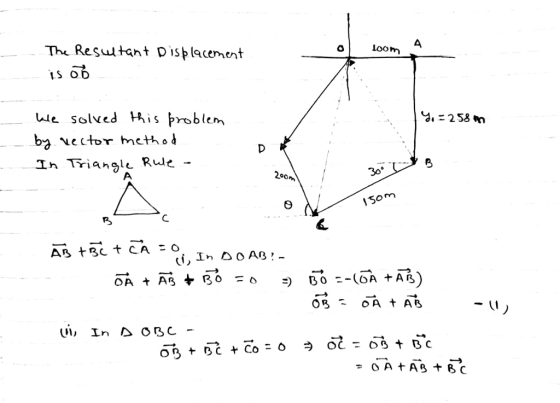
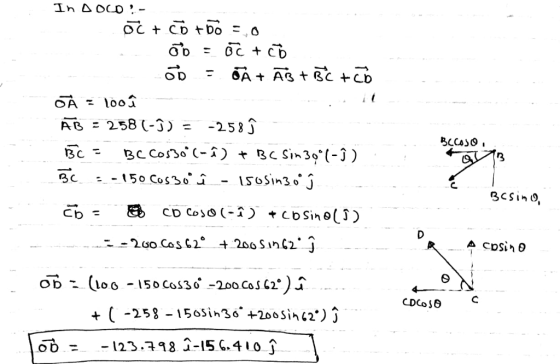
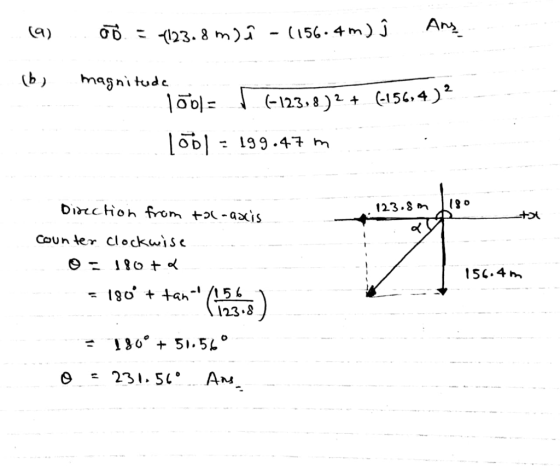
Quiz 2 A person going for a walk follows the path shown in the figure, where...
 Quiz 2 A person going for a walk follows the path shown in the figure, where y The total trip consists of four straight-line paths. At the end of the walk, calculate the person's resultant displacement measured from the starting point 258 m and -62.0. Start 100 m a) b) (10 points) in unit vector notation (10 points) magnitude and direction? yi End 200 m
2. (5 pts.) A person going for a walk follows the path shown in the figure....
 2. (5 pts.) A person going for a walk follows the path shown in the figure. The total trip consists of four straight-line paths. Use the component method of vector addition to calculate the person's resultant displacement measured from the starting point a) in unit vector notation b) magnitude and direction. 300 m 100 600 250 m m
A person going for a walk follows the path shown in the figure, where y1-306 m...
 A person going for a walk follows the path shown in the figure, where y1-306 m and θ-63.00. The total trip consists of four straight-line paths. At the end of the walk, what is the person's resultant displacement measured from the starting point? (Assume values in figure are accurate to 3 significant figures.) 236 m 지어 -121 I。(from the +x axis) art 100 End 200 m 303 150 m
A person going for a walk follows the path shown in the figure, where y_1 =...
 A person going for a walk follows the path shown in the figure, where y_1 = 345 m and theta = 58.0degree. The total trip consists of four straight-line paths. At the end of the walk, what is the person's resultant displacement measured from the starting point? (Assume values in figure are accurate to 3 significant figures.) Your response differs from the correct answer by more than 10%. Double check your calculations.
A person going for a walk follows the path shown in the figure, where y1 =...
 A person going for a walk follows the path shown in the figure,
where
y1 = 334 m
and
θ = 66.0°.
The total trip consists of four straight-line paths. At the end
of the walk, what is the person's resultant displacement measured
from the starting point?
magnitude
m
direction
° counterclockwise from the
+x axis
enoro pon poing for a walk follows the path shown lin the figure, where y, 334 m and 8-60The total bri measured from the...
A person going for a walk follows the path shown in the figure,
where
y1 = 334 m
and
θ = 66.0°.
The total trip consists of four straight-line paths. At the end
of the walk, what is the person's resultant displacement measured
from the starting point?
magnitude
m
direction
° counterclockwise from the
+x axis
enoro pon poing for a walk follows the path shown lin the figure, where y, 334 m and 8-60The total bri measured from the...
Consider the three displacement vectors A = (3i - 3j) m, B = (i - 4j)...
 Consider the three displacement vectors A = (3i - 3j) m, B = (i - 4j) m, and C = (2i + 5j) m. Use the component method to determine (a) the magnitude direction of the vector D = A + B + C and (b) the magnitude and direction of E = -A - B + C. A person going for a walk follows the path shown in Figure P1.51. The total trip consists of four straight-line paths. At...
A person poing for a walk folows the pth shown in the figure, where y-20 m...
 A person poing for a walk folows the pth shown in the figure, where y-20 m and The totaltipcoists of four streight line pthis. At the end of measured from the starting point? magnitude direction ecounterclockwise from the +x axis yi End 200 m
2. General Motion with Unit Vectors and Components An object undergoes the following consecutive displacements: s...
 2.
General Motion with Unit Vectors and Components An object undergoes the following consecutive displacements: s (2i +3j +5k)m,s2 (6i-91+ 2krn, and s,-(10i + 8j-km a) Find the resultant displacement in terms of unit vectors and components. b) State the magnitude of the resultant displacement. 2. Suppose a hiker travels 5 km southwest from their camp. Then, the hiker travels 2 km 75° north of east. a) Find the displacement of the hiker form their camp. b) If the hiker...
2.
General Motion with Unit Vectors and Components An object undergoes the following consecutive displacements: s (2i +3j +5k)m,s2 (6i-91+ 2krn, and s,-(10i + 8j-km a) Find the resultant displacement in terms of unit vectors and components. b) State the magnitude of the resultant displacement. 2. Suppose a hiker travels 5 km southwest from their camp. Then, the hiker travels 2 km 75° north of east. a) Find the displacement of the hiker form their camp. b) If the hiker...
Name: Date: Problems: 1. The dimensions of a reservoir are as follows: 2-m long, 3-m wide...
 Name: Date: Problems: 1. The dimensions of a reservoir are as follows: 2-m long, 3-m wide & 4-m high. a) What is the area of the reservoir? b) What is the volume of the reservoir? c) How many gallons of water the reservoir can hold? (Hint: 1 cubic decimeter = 1 liter & 1 gallon = 3.786 liters) 2. A cube has a certain volume. If the dimension of each side is tripled, by what factor will the volume increase?...
Name of All Group members Section At the end of this activity you will be able...
 Name of All Group members Section At the end of this activity you will be able to: a. Add and Subtract vectors b. Resolve vectors into horizontal and vertical components c. Apply vector components to solve kinematic problems. Rank the magnitudes of the vectors from greatest to least. If two or more vectors have the same magnitude, the sequence in which you list them does not matter. 7Least Greatest 1 2 3 , 4 2. List all of the vectors...
 Quiz 2 A person going for a walk follows the path shown in the figure, where y The total trip consists of four straight-line paths. At the end of the walk, calculate the person's resultant displacement measured from the starting point 258 m and -62.0. Start 100 m a) b) (10 points) in unit vector notation (10 points) magnitude and direction? yi End 200 m
 2. (5 pts.) A person going for a walk follows the path shown in the figure. The total trip consists of four straight-line paths. Use the component method of vector addition to calculate the person's resultant displacement measured from the starting point a) in unit vector notation b) magnitude and direction. 300 m 100 600 250 m m
 A person going for a walk follows the path shown in the figure, where y1-306 m and θ-63.00. The total trip consists of four straight-line paths. At the end of the walk, what is the person's resultant displacement measured from the starting point? (Assume values in figure are accurate to 3 significant figures.) 236 m 지어 -121 I。(from the +x axis) art 100 End 200 m 303 150 m
 A person going for a walk follows the path shown in the figure, where y_1 = 345 m and theta = 58.0degree. The total trip consists of four straight-line paths. At the end of the walk, what is the person's resultant displacement measured from the starting point? (Assume values in figure are accurate to 3 significant figures.) Your response differs from the correct answer by more than 10%. Double check your calculations.
 A person going for a walk follows the path shown in the figure,
where
y1 = 334 m
and
θ = 66.0°.
The total trip consists of four straight-line paths. At the end
of the walk, what is the person's resultant displacement measured
from the starting point?
magnitude
m
direction
° counterclockwise from the
+x axis
enoro pon poing for a walk follows the path shown lin the figure, where y, 334 m and 8-60The total bri measured from the...
A person going for a walk follows the path shown in the figure,
where
y1 = 334 m
and
θ = 66.0°.
The total trip consists of four straight-line paths. At the end
of the walk, what is the person's resultant displacement measured
from the starting point?
magnitude
m
direction
° counterclockwise from the
+x axis
enoro pon poing for a walk follows the path shown lin the figure, where y, 334 m and 8-60The total bri measured from the...
 Consider the three displacement vectors A = (3i - 3j) m, B = (i - 4j) m, and C = (2i + 5j) m. Use the component method to determine (a) the magnitude direction of the vector D = A + B + C and (b) the magnitude and direction of E = -A - B + C. A person going for a walk follows the path shown in Figure P1.51. The total trip consists of four straight-line paths. At...
 A person poing for a walk folows the pth shown in the figure, where y-20 m and The totaltipcoists of four streight line pthis. At the end of measured from the starting point? magnitude direction ecounterclockwise from the +x axis yi End 200 m
 2.
General Motion with Unit Vectors and Components An object undergoes the following consecutive displacements: s (2i +3j +5k)m,s2 (6i-91+ 2krn, and s,-(10i + 8j-km a) Find the resultant displacement in terms of unit vectors and components. b) State the magnitude of the resultant displacement. 2. Suppose a hiker travels 5 km southwest from their camp. Then, the hiker travels 2 km 75° north of east. a) Find the displacement of the hiker form their camp. b) If the hiker...
2.
General Motion with Unit Vectors and Components An object undergoes the following consecutive displacements: s (2i +3j +5k)m,s2 (6i-91+ 2krn, and s,-(10i + 8j-km a) Find the resultant displacement in terms of unit vectors and components. b) State the magnitude of the resultant displacement. 2. Suppose a hiker travels 5 km southwest from their camp. Then, the hiker travels 2 km 75° north of east. a) Find the displacement of the hiker form their camp. b) If the hiker...
 Name: Date: Problems: 1. The dimensions of a reservoir are as follows: 2-m long, 3-m wide & 4-m high. a) What is the area of the reservoir? b) What is the volume of the reservoir? c) How many gallons of water the reservoir can hold? (Hint: 1 cubic decimeter = 1 liter & 1 gallon = 3.786 liters) 2. A cube has a certain volume. If the dimension of each side is tripled, by what factor will the volume increase?...
 Name of All Group members Section At the end of this activity you will be able to: a. Add and Subtract vectors b. Resolve vectors into horizontal and vertical components c. Apply vector components to solve kinematic problems. Rank the magnitudes of the vectors from greatest to least. If two or more vectors have the same magnitude, the sequence in which you list them does not matter. 7Least Greatest 1 2 3 , 4 2. List all of the vectors...
Most questions answered within 3 hours.
-
Where is the error in this code sequence?
String s1 = "Hello";
String s2 = "ello";...
asked 10 months ago -
Financial data for Joel de Paris, Inc., for last year
follow:
Joel de Paris, Inc.
Balance...
asked 10 months ago -
Consider this reaction:
Al2(SO4)3 (aq)+ BaCl3
(aq) Al2Cl6 (aq)- +
3BaSO4(s) . What is the...
asked 10 months ago -
Suppose that Savneet is considering increasing her
recent random sample from 20 car rentals to 40...
asked 10 months ago -
Trucks arrive at an unloading terminal at an average rate of 120
per hour.
Trucks arrive...
asked 10 months ago -
Why are methanol and ethanol completely soluble in water while
octanol is not very little soluble....
asked 10 months ago -
A facilities manager at a university reads in a research report
that the mean amount of...
asked 10 months ago -
When the CuSO4 is rehydrated by adding water to the anhydrous
compound, is this an endothermic...
asked 10 months ago -
A ray of sunlight is passing from diamond into crown glass; the
angle of incidence is...
asked 10 months ago -
A block of mass 0.249 kg is placed on top of a light, vertical
spring of...
asked 10 months ago -
how do the kidneys compensate in the presences of acidosis
a) trigger hyperventilate
b) reserve acid...
asked 10 months ago -
Question 501 pts
The rental rate of capital to the firm increases. Which of the
following...
asked 10 months ago