 5. Japanese labor productivity
is on average about the same as that of the United States in the
manufacturing sector (higher in some industries, lower in others).
On the other hand, the United States is considerably more
productive in the service sector than Japan. Unfortunately, most
services are nontraded. American comparative advantage lies in
things that they cannot sell to Japan. Some analysts have argued
that this poses a disadvantage for the United States. There are two
types of arguments: (1) As the US has comparative advantage in the
goods that it cannot sell to Japan, the US cannot gain from trade
with Japan. On the other hand Japan’s comparative advantage lies in
goods that are tradable, which it can sell to the US and gains from
trade. Therefore it is a disadvantage for the US (compared with
Japan). (2) Since the US cannot sell things produced from sectors
in which it has greatest comparative advantage (services in this
case), the US has to sell other goods to the Japan, in which it has
less comparative advantage, and therefore it is a disadvantage for
the US (compared with Japan). You can interpret “disadvantage for
the US” to be “negative impact on average American living
standard”. a. Do you agree with argument (1)? Why? b. Do you agree
with argument (2)? Why? c. What is the implication of this
difference in productivity patterns on the relative living standard
of the US to that of Japan?
5. Japanese labor productivity
is on average about the same as that of the United States in the
manufacturing sector (higher in some industries, lower in others).
On the other hand, the United States is considerably more
productive in the service sector than Japan. Unfortunately, most
services are nontraded. American comparative advantage lies in
things that they cannot sell to Japan. Some analysts have argued
that this poses a disadvantage for the United States. There are two
types of arguments: (1) As the US has comparative advantage in the
goods that it cannot sell to Japan, the US cannot gain from trade
with Japan. On the other hand Japan’s comparative advantage lies in
goods that are tradable, which it can sell to the US and gains from
trade. Therefore it is a disadvantage for the US (compared with
Japan). (2) Since the US cannot sell things produced from sectors
in which it has greatest comparative advantage (services in this
case), the US has to sell other goods to the Japan, in which it has
less comparative advantage, and therefore it is a disadvantage for
the US (compared with Japan). You can interpret “disadvantage for
the US” to be “negative impact on average American living
standard”. a. Do you agree with argument (1)? Why? b. Do you agree
with argument (2)? Why? c. What is the implication of this
difference in productivity patterns on the relative living standard
of the US to that of Japan?
Homework Answers
a. no it is not a complete disadvantage. because the USA is still getting the stuff at a lower price in which Japan has a comparative advantage. hence the US is still saving some cost here. though not optimal, still we cannot say that the USA is losing in terms of living standard.
b. yes compared to Japan USA is in a disadvantage. because of
i. Japan is selling the products they have a comparative advantage but is the US is not.
ii. Japan is buying something they have disadvantage on(from US) at a lower price(otherwise they won't buy) hence Japan is winning in this regard but US again is losing by not trading the most advantageous products.
c. this means that Japan's gain in the living standard will go up more rapidly than the US. why?
because Japan is selling something they have a comparative advantage on and buying something they have disadvantage on but USA is not being able to sell their product with their own comparative advantage.
Give a thumbs up to the answer.
Add Answer to:
5. Japanese labor productivity
is on average about the same as that of the United States...
Japanese labor productivity is roughly the same as that of the US in the manufacturing sector,...
Japanese labor productivity is roughly the same as that of the US in the manufacturing sector, while the US is more productive in the service sector. But most services are non-tradable. Some have argued that this poses a problem for the US, because US’s comparative advantage lies in things US cannot sell on world markets. ” To evaluate this statement, develop a small Ricardian model: Suppose that Japan has roughly half the population of the United States, so set L=...
Using the same amount of resources, the United States and Canada can both produce lumberjack shirts...
 Using the same amount of resources, the United States and Canada can both produce lumberjack shirts and lumberjack boots, as shown in the production possibilities frontiers in the figure to the right Canada has a comparsative advantage in producing lumberjack boots. The United States has a comparative advantage in producing lumberjack shirts 26 44PPF.s Does either country have an absolute advantage in producing both goods? A Neither country has an absolute advantage in both goods because Canada can produce more...
To produce output, a firm in the United States uses a series of inputs indexed by...
 To produce output, a firm in the United States uses a series of inputs indexed by x, where x ranges from 0 to 1. These labels describe the "sophistication of an input, such that x=0 is the "least sophisticated" input, x=0.5 is the input of median sophistication, and x = 1 is the most sophisticated" input. To produce one unit of output, the US firm requires one unit of each input. There are two countries that can supply inputs, the...
An American worker can produce either 5 cars or 8 tons of grain a year. A...
 An American worker can produce either 5 cars or 8 tons of grain a year. A lapanese worker can produce either 4 cars or 9 tons of grain a year. To keep things simple, assume that each country has 100 million workers Complete the foflowing table with the number of workers needed to make one car or 1 ton of grain in the United States and Japan. Workers Needed to Make 1 Car 1 Ton of Grain United StatesY Japan...
2. Problems and Applications Q2 An American worker can produce either 5 cars or 9 tons...
 2. Problems and Applications Q2 An American worker can produce either 5 cars or 9 tons of grain a year. A Japanese worker can produce either 3 cars or 9 tons of grain a year. To keep things simple, assume that each country has 100 million workers. Complete the following table with the number of workers needed to make one car or 1 ton of grain in the United States and Japan. Workers Needed to Make 1 Car1 Ton of...
2. Problems and Applications Q2 An American worker can produce either 5 cars or 9 tons...
 2. Problems and Applications Q2 An American worker can produce either 5 cars or 9 tons of grain a year. A Japanese worker can produce either 3 cars or 9 tons of grain a year. To keep things simple, assume that each country has 100 million workers. Complete the following table with the number of workers needed to make one car or 1 ton of grain in the United States and Japan. Workers Needed to Make 1 Car 1 Ton...
The United States will have 0 additional shirt(s) after the trade (enter a numeric response using...
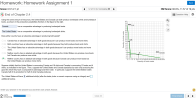 The United States will have 0 additional
shirt(s) after the trade (enter a numeric response using an
integer) and __ additional boot(s).
At the same time, Canada will be able to consume ___ additional
shirt(s) as a result of the trade and ___ additional boot(s).
Homework: Homework Assignment 1 Save Score: 0.57 of 1 pt 12 of 19 (12 complete) HW Score: 60.9%, 11.57 of 19 pts % End of Chapter 2.4 :3Question Help • Using the same amount of...
The United States will have 0 additional
shirt(s) after the trade (enter a numeric response using an
integer) and __ additional boot(s).
At the same time, Canada will be able to consume ___ additional
shirt(s) as a result of the trade and ___ additional boot(s).
Homework: Homework Assignment 1 Save Score: 0.57 of 1 pt 12 of 19 (12 complete) HW Score: 60.9%, 11.57 of 19 pts % End of Chapter 2.4 :3Question Help • Using the same amount of...
Problems: 50 points 1. (10 points) Labor Inputs 100 120 Wheat Clothing Country United States Brazil...
 Problems: 50 points 1. (10 points) Labor Inputs 100 120 Wheat Clothing Country United States Brazil Answer the following: a. Who has the absolute advantage in which good? b. What is the opportunity cost of wheat in the US? in Brazil? c. What is the opportunity cost of clothing in the US? in Brazil? d. Who has the comparative advantage in which good? e. What are the limits of the post-trade relative price of wheat? Suppose the actual post-trade relative...
Please help me with my economics homework? 1. The United States and Brazil each produce only...
 Please help me with my economics homework?
1. The United States and Brazil each produce only cheese and wine. Domestic prices are given in the following table United States $5 per pound Brazil 8 BRL per pound 15 BRL per bottle Wine $8 per bottle On April 1, the London exchange listed an exchange rate of $1-1 BRL According to the table, (1) production of wine has an absolute advantage in the production of cheese and (2) has an absolute...
Please help me with my economics homework?
1. The United States and Brazil each produce only cheese and wine. Domestic prices are given in the following table United States $5 per pound Brazil 8 BRL per pound 15 BRL per bottle Wine $8 per bottle On April 1, the London exchange listed an exchange rate of $1-1 BRL According to the table, (1) production of wine has an absolute advantage in the production of cheese and (2) has an absolute...
Please help me with Economics Homework? 3. Great Britain and the United States produce cheddar cheese...
 Please help me with Economics
Homework?
3. Great Britain and the United States produce cheddar cheese and blue cheese. Current domestic prices per pound for each type of cheese are given in the following table: Great Britain 210 £20 States Blue cheese $50 Suppose the exchange rate is £1-$1 If the price ratios within each country relect resource use, (1) has a comparative advantage in the production of cheddar cheese. (2)- has a comparative advantage in the producton of blue...
Please help me with Economics
Homework?
3. Great Britain and the United States produce cheddar cheese and blue cheese. Current domestic prices per pound for each type of cheese are given in the following table: Great Britain 210 £20 States Blue cheese $50 Suppose the exchange rate is £1-$1 If the price ratios within each country relect resource use, (1) has a comparative advantage in the production of cheddar cheese. (2)- has a comparative advantage in the producton of blue...
 Using the same amount of resources, the United States and Canada can both produce lumberjack shirts and lumberjack boots, as shown in the production possibilities frontiers in the figure to the right Canada has a comparsative advantage in producing lumberjack boots. The United States has a comparative advantage in producing lumberjack shirts 26 44PPF.s Does either country have an absolute advantage in producing both goods? A Neither country has an absolute advantage in both goods because Canada can produce more...
 To produce output, a firm in the United States uses a series of inputs indexed by x, where x ranges from 0 to 1. These labels describe the "sophistication of an input, such that x=0 is the "least sophisticated" input, x=0.5 is the input of median sophistication, and x = 1 is the most sophisticated" input. To produce one unit of output, the US firm requires one unit of each input. There are two countries that can supply inputs, the...
 An American worker can produce either 5 cars or 8 tons of grain a year. A lapanese worker can produce either 4 cars or 9 tons of grain a year. To keep things simple, assume that each country has 100 million workers Complete the foflowing table with the number of workers needed to make one car or 1 ton of grain in the United States and Japan. Workers Needed to Make 1 Car 1 Ton of Grain United StatesY Japan...
 2. Problems and Applications Q2 An American worker can produce either 5 cars or 9 tons of grain a year. A Japanese worker can produce either 3 cars or 9 tons of grain a year. To keep things simple, assume that each country has 100 million workers. Complete the following table with the number of workers needed to make one car or 1 ton of grain in the United States and Japan. Workers Needed to Make 1 Car1 Ton of...
 2. Problems and Applications Q2 An American worker can produce either 5 cars or 9 tons of grain a year. A Japanese worker can produce either 3 cars or 9 tons of grain a year. To keep things simple, assume that each country has 100 million workers. Complete the following table with the number of workers needed to make one car or 1 ton of grain in the United States and Japan. Workers Needed to Make 1 Car 1 Ton...
 The United States will have 0 additional
shirt(s) after the trade (enter a numeric response using an
integer) and __ additional boot(s).
At the same time, Canada will be able to consume ___ additional
shirt(s) as a result of the trade and ___ additional boot(s).
Homework: Homework Assignment 1 Save Score: 0.57 of 1 pt 12 of 19 (12 complete) HW Score: 60.9%, 11.57 of 19 pts % End of Chapter 2.4 :3Question Help • Using the same amount of...
The United States will have 0 additional
shirt(s) after the trade (enter a numeric response using an
integer) and __ additional boot(s).
At the same time, Canada will be able to consume ___ additional
shirt(s) as a result of the trade and ___ additional boot(s).
Homework: Homework Assignment 1 Save Score: 0.57 of 1 pt 12 of 19 (12 complete) HW Score: 60.9%, 11.57 of 19 pts % End of Chapter 2.4 :3Question Help • Using the same amount of...
 Problems: 50 points 1. (10 points) Labor Inputs 100 120 Wheat Clothing Country United States Brazil Answer the following: a. Who has the absolute advantage in which good? b. What is the opportunity cost of wheat in the US? in Brazil? c. What is the opportunity cost of clothing in the US? in Brazil? d. Who has the comparative advantage in which good? e. What are the limits of the post-trade relative price of wheat? Suppose the actual post-trade relative...
 Please help me with my economics homework?
1. The United States and Brazil each produce only cheese and wine. Domestic prices are given in the following table United States $5 per pound Brazil 8 BRL per pound 15 BRL per bottle Wine $8 per bottle On April 1, the London exchange listed an exchange rate of $1-1 BRL According to the table, (1) production of wine has an absolute advantage in the production of cheese and (2) has an absolute...
Please help me with my economics homework?
1. The United States and Brazil each produce only cheese and wine. Domestic prices are given in the following table United States $5 per pound Brazil 8 BRL per pound 15 BRL per bottle Wine $8 per bottle On April 1, the London exchange listed an exchange rate of $1-1 BRL According to the table, (1) production of wine has an absolute advantage in the production of cheese and (2) has an absolute...
 Please help me with Economics
Homework?
3. Great Britain and the United States produce cheddar cheese and blue cheese. Current domestic prices per pound for each type of cheese are given in the following table: Great Britain 210 £20 States Blue cheese $50 Suppose the exchange rate is £1-$1 If the price ratios within each country relect resource use, (1) has a comparative advantage in the production of cheddar cheese. (2)- has a comparative advantage in the producton of blue...
Please help me with Economics
Homework?
3. Great Britain and the United States produce cheddar cheese and blue cheese. Current domestic prices per pound for each type of cheese are given in the following table: Great Britain 210 £20 States Blue cheese $50 Suppose the exchange rate is £1-$1 If the price ratios within each country relect resource use, (1) has a comparative advantage in the production of cheddar cheese. (2)- has a comparative advantage in the producton of blue...
Most questions answered within 3 hours.
-
Where is the error in this code sequence?
String s1 = "Hello";
String s2 = "ello";...
asked 10 months ago -
Financial data for Joel de Paris, Inc., for last year
follow:
Joel de Paris, Inc.
Balance...
asked 10 months ago -
Consider this reaction:
Al2(SO4)3 (aq)+ BaCl3
(aq) Al2Cl6 (aq)- +
3BaSO4(s) . What is the...
asked 10 months ago -
Suppose that Savneet is considering increasing her
recent random sample from 20 car rentals to 40...
asked 10 months ago -
Trucks arrive at an unloading terminal at an average rate of 120
per hour.
Trucks arrive...
asked 10 months ago -
Why are methanol and ethanol completely soluble in water while
octanol is not very little soluble....
asked 10 months ago -
A facilities manager at a university reads in a research report
that the mean amount of...
asked 10 months ago -
When the CuSO4 is rehydrated by adding water to the anhydrous
compound, is this an endothermic...
asked 10 months ago -
A ray of sunlight is passing from diamond into crown glass; the
angle of incidence is...
asked 10 months ago -
A block of mass 0.249 kg is placed on top of a light, vertical
spring of...
asked 10 months ago -
how do the kidneys compensate in the presences of acidosis
a) trigger hyperventilate
b) reserve acid...
asked 10 months ago -
Question 501 pts
The rental rate of capital to the firm increases. Which of the
following...
asked 10 months ago