Answer: The cost of debt is usually lower than cost of equity, so why do firms...
Homework Answers
Add Answer to:
Answer:
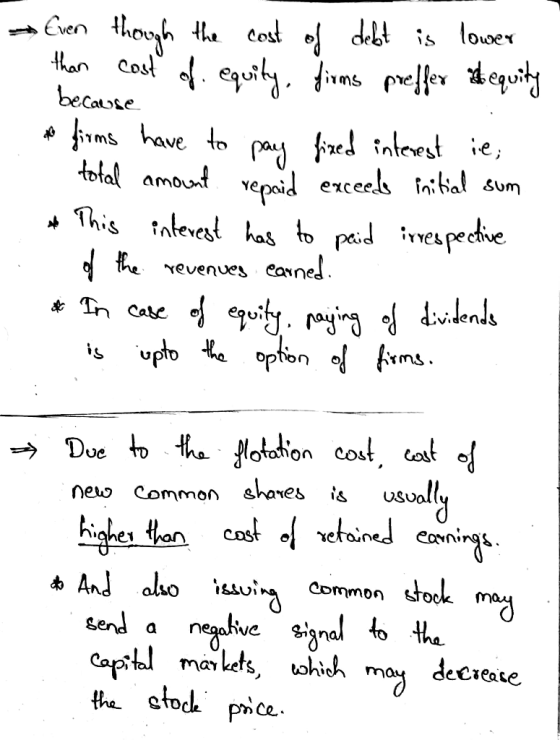
The cost of debt is usually lower than cost of equity, so why do
firms...
The cost of debt is usually lower than the cost of equity. The reason firms don't...
 The cost of debt is usually lower than the cost of equity. The reason firms don't use only debt financing is: Multiple Choice as the use of debt increases, the cost of debt decreases until no debt financing is available as the use of debes, so does the cost of equity as the use of debt increases, so does the tax rebate that the firm receives as the use of debt increases, government regulation increases
5. Cost of new common stock Flotation costs represent the fees that firms pay to investment...
 5. Cost of new common stock Flotation costs represent the fees that firms pay to investment bankers to help them issue new common stock. True or False: The following statement accurately describes how firms make decisions related to issuing new common stock. The cost of issuing new common stock is calculated the same way as the cost of raising equity capital from retained earnings. False: Flotation costs need to be taken into account when calculating the cost of issuing new...
True or False: The following statement accurately describes how firms make decisions related to issuing new...
 True or False: The following statement accurately describes how firms make decisions related to issuing new common stock. If a firm needs additional capital from equity sources once its retained earnings breakpoint is reached, it will have to raise the capital by issuing new common stock. O True: Firms will raise all the equity they can from retained earnings before issuing new common stock, because capital from retained earnings is cheaper than capital raised from issuing new common stock. False:...
True or False: The following statement accurately describes how firms make decisions related to issuing new...
 True or False: The following statement accurately describes how firms make decisions related to issuing new common stock If a firm needs additional capital from equity sources once its retained earnings breakpoint is reached, it will have to raise the capital by issuing new common stock. O True: Firms will raise all the equity they can from retained earnings before issuing new common stock, because capital from retained earnings is cheaper than capital raised from issuing new common stock. O...
True or False: The following statement accurately describes how firms make decisions related to issuing new...
 True or False: The following statement accurately describes how firms make decisions related to issuing new common stock. If a firm needs additional capital from equity sources once its retained earnings breakpoint is reached, it will have to raise the capital by issuing new common stock. True: Firms will raise all the equity they can from retained earnings before issuing new common stock, because capital from retained earnings is cheaper than capital raised from issuing new common stock. False: Firms...
The cost of issuing new common stock is calculated the same way as the cost of raising equity capital from retained ear...
 The cost of issuing new common stock is calculated the same way as the cost of raising equity capital from retained earnings. True: The cost of retained earnings and the cost of new common stock are calculated in the same manner, except that the cost of retained earnings is based on the firm's existing common equity, while the cost of new common stock is based on the value of the firm's share price net of its flotation cost. False: Flotation...
6. Cost of new common stock 6. Cost of new common stock Aa Aa E True...
 6. Cost of new common stock
 Aa Aa E True or False: The following statement accurately describes how firms make decisions related to issuing new common stock. If a firm needs additional capital from equity sources once its retained earnings breakpoint is reached, it will have to raise the capital by issuing new common stock. True: Firms will raise all the equity they can from retained earnings before issuing new common stock because capital...
6. Cost of new common stock
6. Cost of new common stock Aa Aa E True or False: The following statement accurately describes how firms make decisions related to issuing new common stock. If a firm needs additional capital from equity sources once its retained earnings breakpoint is reached, it will have to raise the capital by issuing new common stock. True: Firms will raise all the equity they can from retained earnings before issuing new common stock because capital...
5. Flotation costs and the costs of new debt and equity capital Aa Aa Read each...
 5. Flotation costs and the costs of new debt and equity capital Aa Aa Read each of the following statements, and indicate whether each statement is true or false. False True O Statement The cost of retained earnings and the cost of new common stock are calculated in the same manner, except that the cost of the new shares is based on the value of the firm's share price net of its flotation cost, while the cost of a firm's...
Cost of new common stock A firm needs to take flotation costs into account when it...
Cost of new common stock A firm needs to take flotation costs into account when it is raising capital fromissuing new common stock . True or False: The following statement accurately describes how firms make decisions related to issuing new common stock. If a firm needs additional capital from equity sources once the retained earnings breakpoint is reached, it will have to raise the capital by issuing new common stock. True: Firms will raise all the equity they can from...
5. The cost of new common stock True or False: The following statement accurately describes how...
5. The cost of new common stock True or False: The following statement accurately describes how firms make decisions related to issuing new common stock. The cost of issuing new common stock is calculated the same way as the cost of raising equity capital from retained earnings. False: Flotation costs need to be taken into account when calculating the cost of issuing new common stock, but they do not need to be taken into account when raising capital from retained...
 The cost of debt is usually lower than the cost of equity. The reason firms don't use only debt financing is: Multiple Choice as the use of debt increases, the cost of debt decreases until no debt financing is available as the use of debes, so does the cost of equity as the use of debt increases, so does the tax rebate that the firm receives as the use of debt increases, government regulation increases
 5. Cost of new common stock Flotation costs represent the fees that firms pay to investment bankers to help them issue new common stock. True or False: The following statement accurately describes how firms make decisions related to issuing new common stock. The cost of issuing new common stock is calculated the same way as the cost of raising equity capital from retained earnings. False: Flotation costs need to be taken into account when calculating the cost of issuing new...
 True or False: The following statement accurately describes how firms make decisions related to issuing new common stock. If a firm needs additional capital from equity sources once its retained earnings breakpoint is reached, it will have to raise the capital by issuing new common stock. O True: Firms will raise all the equity they can from retained earnings before issuing new common stock, because capital from retained earnings is cheaper than capital raised from issuing new common stock. False:...
 True or False: The following statement accurately describes how firms make decisions related to issuing new common stock If a firm needs additional capital from equity sources once its retained earnings breakpoint is reached, it will have to raise the capital by issuing new common stock. O True: Firms will raise all the equity they can from retained earnings before issuing new common stock, because capital from retained earnings is cheaper than capital raised from issuing new common stock. O...
 True or False: The following statement accurately describes how firms make decisions related to issuing new common stock. If a firm needs additional capital from equity sources once its retained earnings breakpoint is reached, it will have to raise the capital by issuing new common stock. True: Firms will raise all the equity they can from retained earnings before issuing new common stock, because capital from retained earnings is cheaper than capital raised from issuing new common stock. False: Firms...
 The cost of issuing new common stock is calculated the same way as the cost of raising equity capital from retained earnings. True: The cost of retained earnings and the cost of new common stock are calculated in the same manner, except that the cost of retained earnings is based on the firm's existing common equity, while the cost of new common stock is based on the value of the firm's share price net of its flotation cost. False: Flotation...
 6. Cost of new common stock
 Aa Aa E True or False: The following statement accurately describes how firms make decisions related to issuing new common stock. If a firm needs additional capital from equity sources once its retained earnings breakpoint is reached, it will have to raise the capital by issuing new common stock. True: Firms will raise all the equity they can from retained earnings before issuing new common stock because capital...
6. Cost of new common stock
6. Cost of new common stock Aa Aa E True or False: The following statement accurately describes how firms make decisions related to issuing new common stock. If a firm needs additional capital from equity sources once its retained earnings breakpoint is reached, it will have to raise the capital by issuing new common stock. True: Firms will raise all the equity they can from retained earnings before issuing new common stock because capital...
 5. Flotation costs and the costs of new debt and equity capital Aa Aa Read each of the following statements, and indicate whether each statement is true or false. False True O Statement The cost of retained earnings and the cost of new common stock are calculated in the same manner, except that the cost of the new shares is based on the value of the firm's share price net of its flotation cost, while the cost of a firm's...
Most questions answered within 3 hours.
-
Where is the error in this code sequence?
String s1 = "Hello";
String s2 = "ello";...
asked 10 months ago -
Financial data for Joel de Paris, Inc., for last year
follow:
Joel de Paris, Inc.
Balance...
asked 10 months ago -
Consider this reaction:
Al2(SO4)3 (aq)+ BaCl3
(aq) Al2Cl6 (aq)- +
3BaSO4(s) . What is the...
asked 10 months ago -
Suppose that Savneet is considering increasing her
recent random sample from 20 car rentals to 40...
asked 10 months ago -
Trucks arrive at an unloading terminal at an average rate of 120
per hour.
Trucks arrive...
asked 10 months ago -
Why are methanol and ethanol completely soluble in water while
octanol is not very little soluble....
asked 10 months ago -
A facilities manager at a university reads in a research report
that the mean amount of...
asked 10 months ago -
When the CuSO4 is rehydrated by adding water to the anhydrous
compound, is this an endothermic...
asked 10 months ago -
A ray of sunlight is passing from diamond into crown glass; the
angle of incidence is...
asked 10 months ago -
A block of mass 0.249 kg is placed on top of a light, vertical
spring of...
asked 10 months ago -
how do the kidneys compensate in the presences of acidosis
a) trigger hyperventilate
b) reserve acid...
asked 10 months ago -
Question 501 pts
The rental rate of capital to the firm increases. Which of the
following...
asked 10 months ago