
Homework Answers
Only systematic risk
In well diversified portfolio, due to diversification unsystematic risk reduces to zero and systematic risk remains.
Add Answer to:
Question 19 1 pts A well-diversified portfolio is most likely to have: Only systematic risk Both,...
Question 19 1 pts A well-diversified portfolio is most likely to have: Both, systematic and unsystematic...
 Question 19 1 pts A well-diversified portfolio is most likely to have: Both, systematic and unsystematic risk Only systematic risk Only unsystematic risk
What type of risk can be eliminated in a well diversified portfolio? unsystematic market undiversifiable systematic
What type of risk can be eliminated in a well diversified portfolio? unsystematic market undiversifiable systematic
QUESTION 8 If an Fls trading portfolio of stock is not well-diversified, the additional risk that...
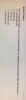 QUESTION 8 If an Fls trading portfolio of stock is not well-diversified, the additional risk that must be taken into account is O unsystematic risk. O default risk. O timing risk. O interest rate risk. O systematic risk
In well diversified portfolio, which part of the risk of individual assets is likely to be...
 In well diversified portfolio, which part of the risk of individual assets is likely to be diversified away? The unique risk The systematic risk The market-related risk The Markowitz risk All of the above will be diversified away.
QUESTION 37 A well-informed institutional investor would most likely use standard deviation to measure: a. Total...
QUESTION 37 A well-informed institutional investor would most likely use standard deviation to measure: a. Total risk. b. Systematic risk. c. Unsystematic risk. d. Equity risk premium. QUESTION 38 A well-informed individual investor would most likely use beta to measure: a. Total risk. b. Systematic risk. c. Unsystematic risk. d. Equity risk premium.
QUESTIONS 1. What is the difference between nondiversifiable (systematic) risk and diversifabe (unsystematic) risk?...
 QUESTIONS 1. What is the difference between nondiversifiable (systematic) risk and diversifabe (unsystematic) risk? 2. What is a diversified portfolio? What type of risk is reduced through diversifice tion? How many securities are necessary to achieve this reduction in risk? Whz characteristics must these securitics poss?
QUESTIONS 1. What is the difference between nondiversifiable (systematic) risk and diversifabe (unsystematic) risk? 2. What is a diversified portfolio? What type of risk is reduced through diversifice tion? How many securities are necessary...
QUESTIONS 1. What is the difference between nondiversifiable (systematic) risk and diversifabe (unsystematic) risk? 2. What is a diversified portfolio? What type of risk is reduced through diversifice tion? How many securities are necessary to achieve this reduction in risk? Whz characteristics must these securitics poss?
QUESTIONS 1. What is the difference between nondiversifiable (systematic) risk and diversifabe (unsystematic) risk? 2. What is a diversified portfolio? What type of risk is reduced through diversifice tion? How many securities are necessary...
Question 6 0/5 pts Assume that both X and Y are well-diversified portfolios and the risk-free...
 Question 6 0/5 pts Assume that both X and Y are well-diversified portfolios and the risk-free rate is 4%. Portfolio Expected Return 8.75% 10% Beta 0.75 1.00 If you wish to take a $100,000 arbitrage position, how much money would you o $1,000.00 O$500.00 O $750.0o O $250.00
Part II Question 1: You invest in a portfolio of 5 stocks with an equal investment...
Part II Question 1: You invest in a portfolio of 5 stocks with an equal investment in each one. The betas of the 5 stocks are as follows: .8, -1.3, .95, 1.2 and 1.4. The risk-free return is 3% and the market return is 7%. Compute the beta of the portfolio. Compute the required return of the portfolio. Question 2: You are given the following probability distribution for a stock: Probability Outcome .5 -6% .5 18% A) Compute the...
To solve this problem, note that a well-diversified portfolio should lie on the Capital Market Line....
 To solve this problem, note that a well-diversified portfolio should lie on the Capital Market Line. The market portfolio has an expected return of 11.5 percent and a standard deviation of 19 percent. The risk-free rate is 4.1 percent. a. What is the expected return on a well-diversified portfolio with a standard deviation of 9 percent? b. What is the standard deviation of a well-diversified portfolio with an expected return of 20 percent?
Question 1 1 pts Select the statement below that is correct: After a portfolio has about...
 Question 1 1 pts Select the statement below that is correct: After a portfolio has about 20 stocks, adding additional stocks will not reduce its risk at all. The higher the correlation between the stocks in a portfolio, the lower risk inherent in the portfolio. An investor can eliminate almost all diversifiable risk if they hold a large well-diversified portfolio of stocks. An investor can eliminate almost all non-diversifiable risk if they hold a large well-diversified portfolio of stocks. An...
 Question 19 1 pts A well-diversified portfolio is most likely to have: Both, systematic and unsystematic risk Only systematic risk Only unsystematic risk
 QUESTION 8 If an Fls trading portfolio of stock is not well-diversified, the additional risk that must be taken into account is O unsystematic risk. O default risk. O timing risk. O interest rate risk. O systematic risk
 In well diversified portfolio, which part of the risk of individual assets is likely to be diversified away? The unique risk The systematic risk The market-related risk The Markowitz risk All of the above will be diversified away.
 QUESTIONS 1. What is the difference between nondiversifiable (systematic) risk and diversifabe (unsystematic) risk? 2. What is a diversified portfolio? What type of risk is reduced through diversifice tion? How many securities are necessary to achieve this reduction in risk? Whz characteristics must these securitics poss?
QUESTIONS 1. What is the difference between nondiversifiable (systematic) risk and diversifabe (unsystematic) risk? 2. What is a diversified portfolio? What type of risk is reduced through diversifice tion? How many securities are necessary...
QUESTIONS 1. What is the difference between nondiversifiable (systematic) risk and diversifabe (unsystematic) risk? 2. What is a diversified portfolio? What type of risk is reduced through diversifice tion? How many securities are necessary to achieve this reduction in risk? Whz characteristics must these securitics poss?
QUESTIONS 1. What is the difference between nondiversifiable (systematic) risk and diversifabe (unsystematic) risk? 2. What is a diversified portfolio? What type of risk is reduced through diversifice tion? How many securities are necessary...
 Question 6 0/5 pts Assume that both X and Y are well-diversified portfolios and the risk-free rate is 4%. Portfolio Expected Return 8.75% 10% Beta 0.75 1.00 If you wish to take a $100,000 arbitrage position, how much money would you o $1,000.00 O$500.00 O $750.0o O $250.00
 To solve this problem, note that a well-diversified portfolio should lie on the Capital Market Line. The market portfolio has an expected return of 11.5 percent and a standard deviation of 19 percent. The risk-free rate is 4.1 percent. a. What is the expected return on a well-diversified portfolio with a standard deviation of 9 percent? b. What is the standard deviation of a well-diversified portfolio with an expected return of 20 percent?
 Question 1 1 pts Select the statement below that is correct: After a portfolio has about 20 stocks, adding additional stocks will not reduce its risk at all. The higher the correlation between the stocks in a portfolio, the lower risk inherent in the portfolio. An investor can eliminate almost all diversifiable risk if they hold a large well-diversified portfolio of stocks. An investor can eliminate almost all non-diversifiable risk if they hold a large well-diversified portfolio of stocks. An...
Most questions answered within 3 hours.
-
Where is the error in this code sequence?
String s1 = "Hello";
String s2 = "ello";...
asked 10 months ago -
Financial data for Joel de Paris, Inc., for last year
follow:
Joel de Paris, Inc.
Balance...
asked 10 months ago -
Consider this reaction:
Al2(SO4)3 (aq)+ BaCl3
(aq) Al2Cl6 (aq)- +
3BaSO4(s) . What is the...
asked 10 months ago -
Suppose that Savneet is considering increasing her
recent random sample from 20 car rentals to 40...
asked 10 months ago -
Trucks arrive at an unloading terminal at an average rate of 120
per hour.
Trucks arrive...
asked 10 months ago -
Why are methanol and ethanol completely soluble in water while
octanol is not very little soluble....
asked 10 months ago -
A facilities manager at a university reads in a research report
that the mean amount of...
asked 10 months ago -
When the CuSO4 is rehydrated by adding water to the anhydrous
compound, is this an endothermic...
asked 10 months ago -
A ray of sunlight is passing from diamond into crown glass; the
angle of incidence is...
asked 10 months ago -
A block of mass 0.249 kg is placed on top of a light, vertical
spring of...
asked 10 months ago -
how do the kidneys compensate in the presences of acidosis
a) trigger hyperventilate
b) reserve acid...
asked 10 months ago -
Question 501 pts
The rental rate of capital to the firm increases. Which of the
following...
asked 10 months ago