
Homework Answers
Answer:
Given:
q = $1,000
Is = $290
Ih = $1,490
E(I) = $1,280
Expected income, E(I) = Is * probability of being sick + Ih * probability of being healthy
Of course, probability of being healthy = 1 - probability of being sick
E(I) = 1280 = 290*P + 1490*(1 - P)
1280 = 290*P + 1490 - 1490*P
(1490 - 290)*P = 1490 - 1280
1200*P = 210
So, P = 210/1200 = 0.175
P = 17.5%
Hence Correct option is 17.5%
Add Answer to:
solve for p
UTHEN Question 6 For 6-9 Given: q = $1,000 Is = $290 1x...
Please include the steps on how to solve for P, I cannot find any instructions from...
Please include the steps on how to solve for P, I cannot find any instructions from any other resources, thank you. 1. Given IS = 290, IH = 1,490, E(I) = 1,280, solve for P (probability of being sick)
11. Given IS = $200, IH = $1,200 and probability of being sick = 21%, solve...
11. Given IS = $200, IH = $1,200 and probability of being sick = 21%, solve for expected income (E(I)) 12. Given IS = $290, IH = $1,490, E(I) = $1,280. Solve for p. Given the numbers in 12, now consider premium (r) = $210 and benefits (q) = $1,200. Solve for 1. IH‘ 2. IS’ The given values assumed here yield a situation of full insurance. So based on your answers, Discuss the relationships among q, IH and...
(d) Solve for p and q in terms of a, b, c, d given q-ap+b and...
 (d) Solve for p and q in terms of a, b, c, d given q-ap+b and q cp+d (e) If in the previous problem p stood for price, under what circumstances would the market clearing price (i.e. the p you solved for) be positive? (What are the restrictions on a, b, c,d that would ensure that p is positive?
E O words </> Question 6 5 pts The demand for watches is given by: Q...
 E O words </> Question 6 5 pts The demand for watches is given by: Q (p) = 160 - 4p, where p is the price of a watch. Calculate the revenue maximizing price for the firm that sells watches to charge for watches. D Question 7 5 pts The demand function for watches is: Q (P) = 160 - 4p, where p is the price of a watch. Calculate the marginal revenue at output level () equal to 20.
Suppose we have a market demand Q = 18 – P and a cost C(Q) 9)...
 Suppose we have a market demand Q = 18 – P and a cost C(Q) 9) = 3Q?. (10 points) Suppose the two firms cannot collude and instead compete in the Cournot Model in the market described in question 1 (market demand is still Q 18 – P) with the same cost (C(q) = -23. 2 a. Set up firm 1's profit maximization. b. Solve for firm 1's best response function. C. Solve for firm 1's quantity, firm 2's quantity,...
Question 6 1 poi Given the following tree diagram: 0.85 θ.45 0.3 0.7 Q: Find P(B...
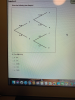 Question 6 1 poi Given the following tree diagram: 0.85 θ.45 0.3 0.7 Q: Find P(B nc) a. 40 b..15 c. 4026 d. .135 e. .7825
Suppose marginal benefit is given by P-9 Q, marginal private cost is given by P-2Q, and...
 Suppose marginal benefit is given by P-9 Q, marginal private cost is given by P-2Q, and marginal external cost 1S 2 What is the socially optimal price? 5. What is the deadweight loss? 6. How much would a corrective (Pigouvian) tax need to be to move the market equilibrium to the socially optimal equilibrium?
Solve for the general solution on question number 6. 9 5 -1) Cion of the given...
 Solve for the general solution on question number 6.
9 5 -1) Cion of the given initial value problem. 4. X = -3 0 6. x' = 1 -1 0x -2 - 1 4 RC; si (b) solution (c) (d) 13. 0 are line (a efficien eigenve
Solve for the general solution on question number 6.
9 5 -1) Cion of the given initial value problem. 4. X = -3 0 6. x' = 1 -1 0x -2 - 1 4 RC; si (b) solution (c) (d) 13. 0 are line (a efficien eigenve
The supply curve in a market is given by P = 6 + 1.75(Q). The first...
 The supply curve in a market is given by P = 6 + 1.75(Q). The
first demand curve (D 1) is P = 48 - 2.0(Q), while the second
demand curve (D 2) is P = 33.6 - 2.0(Q).
T-Mobile Wi-Fi @f 12%( O. 7:38 AM abbhosted.cuny.edu Home Take Test: Online Assignment 1 50 40 30 20 10 D1 D2 10 20 The change in price is a decrease of$_ A. S29.18 S6.40 S2.56 S4.35 E. S5.12
The supply curve in a market is given by P = 6 + 1.75(Q). The
first demand curve (D 1) is P = 48 - 2.0(Q), while the second
demand curve (D 2) is P = 33.6 - 2.0(Q).
T-Mobile Wi-Fi @f 12%( O. 7:38 AM abbhosted.cuny.edu Home Take Test: Online Assignment 1 50 40 30 20 10 D1 D2 10 20 The change in price is a decrease of$_ A. S29.18 S6.40 S2.56 S4.35 E. S5.12
Draw circuits representing the following statement as they are given. Simplify if possible. 14-~9(-p q) &-p...
 Draw circuits representing the following statement as they are given. Simplify if possible. 14-~9(-p q) &-p → (-pv-q) Draw circuits representing the following statement as they are given. Simplify if possible. 13- [(-PA~q)V~q] A(-p Ar)
 (d) Solve for p and q in terms of a, b, c, d given q-ap+b and q cp+d (e) If in the previous problem p stood for price, under what circumstances would the market clearing price (i.e. the p you solved for) be positive? (What are the restrictions on a, b, c,d that would ensure that p is positive?
 E O words </> Question 6 5 pts The demand for watches is given by: Q (p) = 160 - 4p, where p is the price of a watch. Calculate the revenue maximizing price for the firm that sells watches to charge for watches. D Question 7 5 pts The demand function for watches is: Q (P) = 160 - 4p, where p is the price of a watch. Calculate the marginal revenue at output level () equal to 20.
 Suppose we have a market demand Q = 18 – P and a cost C(Q) 9) = 3Q?. (10 points) Suppose the two firms cannot collude and instead compete in the Cournot Model in the market described in question 1 (market demand is still Q 18 – P) with the same cost (C(q) = -23. 2 a. Set up firm 1's profit maximization. b. Solve for firm 1's best response function. C. Solve for firm 1's quantity, firm 2's quantity,...
 Question 6 1 poi Given the following tree diagram: 0.85 θ.45 0.3 0.7 Q: Find P(B nc) a. 40 b..15 c. 4026 d. .135 e. .7825
 Suppose marginal benefit is given by P-9 Q, marginal private cost is given by P-2Q, and marginal external cost 1S 2 What is the socially optimal price? 5. What is the deadweight loss? 6. How much would a corrective (Pigouvian) tax need to be to move the market equilibrium to the socially optimal equilibrium?
 Solve for the general solution on question number 6.
9 5 -1) Cion of the given initial value problem. 4. X = -3 0 6. x' = 1 -1 0x -2 - 1 4 RC; si (b) solution (c) (d) 13. 0 are line (a efficien eigenve
Solve for the general solution on question number 6.
9 5 -1) Cion of the given initial value problem. 4. X = -3 0 6. x' = 1 -1 0x -2 - 1 4 RC; si (b) solution (c) (d) 13. 0 are line (a efficien eigenve
 The supply curve in a market is given by P = 6 + 1.75(Q). The
first demand curve (D 1) is P = 48 - 2.0(Q), while the second
demand curve (D 2) is P = 33.6 - 2.0(Q).
T-Mobile Wi-Fi @f 12%( O. 7:38 AM abbhosted.cuny.edu Home Take Test: Online Assignment 1 50 40 30 20 10 D1 D2 10 20 The change in price is a decrease of$_ A. S29.18 S6.40 S2.56 S4.35 E. S5.12
The supply curve in a market is given by P = 6 + 1.75(Q). The
first demand curve (D 1) is P = 48 - 2.0(Q), while the second
demand curve (D 2) is P = 33.6 - 2.0(Q).
T-Mobile Wi-Fi @f 12%( O. 7:38 AM abbhosted.cuny.edu Home Take Test: Online Assignment 1 50 40 30 20 10 D1 D2 10 20 The change in price is a decrease of$_ A. S29.18 S6.40 S2.56 S4.35 E. S5.12
 Draw circuits representing the following statement as they are given. Simplify if possible. 14-~9(-p q) &-p → (-pv-q) Draw circuits representing the following statement as they are given. Simplify if possible. 13- [(-PA~q)V~q] A(-p Ar)
Most questions answered within 3 hours.
-
Where is the error in this code sequence?
String s1 = "Hello";
String s2 = "ello";...
asked 11 months ago -
Financial data for Joel de Paris, Inc., for last year
follow:
Joel de Paris, Inc.
Balance...
asked 11 months ago -
Consider this reaction:
Al2(SO4)3 (aq)+ BaCl3
(aq) Al2Cl6 (aq)- +
3BaSO4(s) . What is the...
asked 11 months ago -
Suppose that Savneet is considering increasing her
recent random sample from 20 car rentals to 40...
asked 11 months ago -
Trucks arrive at an unloading terminal at an average rate of 120
per hour.
Trucks arrive...
asked 11 months ago -
Why are methanol and ethanol completely soluble in water while
octanol is not very little soluble....
asked 11 months ago -
A facilities manager at a university reads in a research report
that the mean amount of...
asked 11 months ago -
When the CuSO4 is rehydrated by adding water to the anhydrous
compound, is this an endothermic...
asked 11 months ago -
A ray of sunlight is passing from diamond into crown glass; the
angle of incidence is...
asked 11 months ago -
A block of mass 0.249 kg is placed on top of a light, vertical
spring of...
asked 11 months ago -
how do the kidneys compensate in the presences of acidosis
a) trigger hyperventilate
b) reserve acid...
asked 11 months ago -
Question 501 pts
The rental rate of capital to the firm increases. Which of the
following...
asked 11 months ago