
Homework Answers
Add Answer to:
Attempts: Score: /2 1. Pollution Demand - I Scenario: This set of questions translates a supply...
Table 1 shows the demand schedule for electricity from a coal burning utility. Table 2 shows...
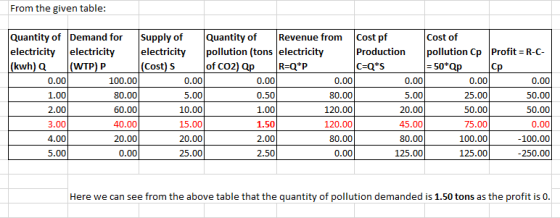
Table 1 shows the demand schedule for electricity from a coal burning utility. Table 2 shows the utility's cost of producing electricity and the external cost of the pollution created. If the government levies a pollution tax such that the utility generates the efficient quantity of electricity, calculate the quantity of electricity generated, the price of electricity, the size of the pollution tax, and the tax revenue. The quantity of electricity generated is nothing kilowatts a day and the price...
7. Correcting for negative externalities - Taxes versus tradable permits Power stations emit sulfur dioxide as...
 7. Correcting for negative externalities - Taxes versus tradable permits Power stations emit sulfur dioxide as a waste product. This generates a cost to society that is not paid for by the firm; therefore, pollution is a negative externality of power production. Suppose the U.S. government wants to correct this market failure by getting firms to internalize the cost of pollution. To do this, the government can charge firms for pollution rights (the right to emit a given quantity of...
7. Correcting for negative externalities - Taxes versus tradablepermits Power stations emit sulfur dioxide as a...
 7. Correcting for negative externalities - Taxes versus tradablepermits Power stations emit sulfur dioxide as a waste product. This generates a cost to society that is not paid for by the firm; therefore, pollution is a negative externality of power production. Suppose the U.S. government wants to correct this market failure by getting firms to internalize the cost of pollution. To do this, the government can charge firms for pollution rights (the right to emit a given quantity of sulfur...
Correcting for negative externalities - Taxes versus tradable permits Power stations emit sulfur dioxide as a...
 Correcting for negative externalities - Taxes versus
tradable permits
Power stations emit sulfur dioxide as a waste product. This
generates a cost to society that is not paid for by the firm;
therefore, pollution is a negative externality of power production.
Suppose the U.S. government wants to correct this market failure by
getting firms to internalize the cost of pollution. To do this, the
government can charge firms for pollution rights (the right to emit
a given quantity of sulfur...
Correcting for negative externalities - Taxes versus
tradable permits
Power stations emit sulfur dioxide as a waste product. This
generates a cost to society that is not paid for by the firm;
therefore, pollution is a negative externality of power production.
Suppose the U.S. government wants to correct this market failure by
getting firms to internalize the cost of pollution. To do this, the
government can charge firms for pollution rights (the right to emit
a given quantity of sulfur...
Power stations emit sulfur dioxide as a waste product. This generates a cost to society that...
 Power stations emit sulfur dioxide as a waste product. This generates a cost to society that is not paid for by the firm; therefore, pollution is a negative externality of power production. Suppose the U.S. government wants to correct this market failure by getting firms to internalize the cost of pollution. To do this, the government can charge firms for pollution rights (the right to emit a given quantity of sulfur dioxide). The following graph shows the daily demand for...
7. Correcting for negative externalities - Taxes versus tradablepermits Paper factories emit chemicals as a waste...
 7. Correcting for negative externalities - Taxes versus
tradablepermits
Paper factories emit chemicals as a waste product. This
generates a cost to society that is not paid for by the firm;
therefore, pollution is a negative externality of paper production.
Suppose the U.S. government wants to correct this market failure by
getting firms to internalize the cost of pollution. To do this, the
government can charge firms for pollution rights (the right to emit
a given quantity of chemicals). The...
7. Correcting for negative externalities - Taxes versus
tradablepermits
Paper factories emit chemicals as a waste product. This
generates a cost to society that is not paid for by the firm;
therefore, pollution is a negative externality of paper production.
Suppose the U.S. government wants to correct this market failure by
getting firms to internalize the cost of pollution. To do this, the
government can charge firms for pollution rights (the right to emit
a given quantity of chemicals). The...
Scenario 1: Supply and Demand. Suppose demand is given by the equation PD = 120 −...
Scenario 1: Supply and Demand. Suppose demand is given by the equation PD = 120 − 1.5QD and supply is given by the equation PS = 40 + 2.5QS. Price is in dollars, quantity is in units. Refer to Scenario 1: Supply and Demand. What is the deadweight loss associated with a tax of $20 per unit? $10 $50 $150 $300 can you please be thorough in your explanation. I'm not sure how to go about this question. Thanks.
consider the following supply and demand schedules for steel Price ($/ton) Quantity demanded Quantity supplied Quantity...
consider the following supply and demand schedules for steel Price ($/ton) Quantity demanded Quantity supplied Quantity supplied (accounting for Social Cost) 0 160 0 ? 20 140 20 ? 40 120 40 ? 60 100 60 ? 80 80 80 ? 100 60 100 ? 120 40 120 ? 140 20 140 ? 160 0 160 ? 180 0 180 ? Pollution from steel production is estimated to create an external cost of $40 per ton. Based on this information...
Paper factories emit chemicals as a waste product. This generates a cost to society that is...
 Paper factories emit chemicals as a waste product. This generates a cost to society that is not paid for by the firm; therefore, pollution is a negative externality of paper production. Suppose the U.S. government wants to correct this market failure by getting firms to internalize the cost of pollution. To do this, the government can charge firms for pollution rights (the right to emit a given quantity of chemicals). The following graph shows the daily demand for pollution rights....
7. Correcting for negative externalities - Taxes versus tradable permits Power stations emit sulfur dioxide as...
 7. Correcting for negative externalities - Taxes versus tradable permits Power stations emit sulfur dioxide as a waste product. This generates a cost to society that is not paid for by the firm, therefore, pollution is a negative externality of power production Suppose the U.S. government wants to correct this market failure by getting firms to internalize the cost of pollution. To do this, the government can charge firms for pollution rights the right to emit a given quantity of...
 7. Correcting for negative externalities - Taxes versus tradable permits Power stations emit sulfur dioxide as a waste product. This generates a cost to society that is not paid for by the firm; therefore, pollution is a negative externality of power production. Suppose the U.S. government wants to correct this market failure by getting firms to internalize the cost of pollution. To do this, the government can charge firms for pollution rights (the right to emit a given quantity of...
 7. Correcting for negative externalities - Taxes versus tradablepermits Power stations emit sulfur dioxide as a waste product. This generates a cost to society that is not paid for by the firm; therefore, pollution is a negative externality of power production. Suppose the U.S. government wants to correct this market failure by getting firms to internalize the cost of pollution. To do this, the government can charge firms for pollution rights (the right to emit a given quantity of sulfur...
 Correcting for negative externalities - Taxes versus
tradable permits
Power stations emit sulfur dioxide as a waste product. This
generates a cost to society that is not paid for by the firm;
therefore, pollution is a negative externality of power production.
Suppose the U.S. government wants to correct this market failure by
getting firms to internalize the cost of pollution. To do this, the
government can charge firms for pollution rights (the right to emit
a given quantity of sulfur...
Correcting for negative externalities - Taxes versus
tradable permits
Power stations emit sulfur dioxide as a waste product. This
generates a cost to society that is not paid for by the firm;
therefore, pollution is a negative externality of power production.
Suppose the U.S. government wants to correct this market failure by
getting firms to internalize the cost of pollution. To do this, the
government can charge firms for pollution rights (the right to emit
a given quantity of sulfur...
 Power stations emit sulfur dioxide as a waste product. This generates a cost to society that is not paid for by the firm; therefore, pollution is a negative externality of power production. Suppose the U.S. government wants to correct this market failure by getting firms to internalize the cost of pollution. To do this, the government can charge firms for pollution rights (the right to emit a given quantity of sulfur dioxide). The following graph shows the daily demand for...
 7. Correcting for negative externalities - Taxes versus
tradablepermits
Paper factories emit chemicals as a waste product. This
generates a cost to society that is not paid for by the firm;
therefore, pollution is a negative externality of paper production.
Suppose the U.S. government wants to correct this market failure by
getting firms to internalize the cost of pollution. To do this, the
government can charge firms for pollution rights (the right to emit
a given quantity of chemicals). The...
7. Correcting for negative externalities - Taxes versus
tradablepermits
Paper factories emit chemicals as a waste product. This
generates a cost to society that is not paid for by the firm;
therefore, pollution is a negative externality of paper production.
Suppose the U.S. government wants to correct this market failure by
getting firms to internalize the cost of pollution. To do this, the
government can charge firms for pollution rights (the right to emit
a given quantity of chemicals). The...
 Paper factories emit chemicals as a waste product. This generates a cost to society that is not paid for by the firm; therefore, pollution is a negative externality of paper production. Suppose the U.S. government wants to correct this market failure by getting firms to internalize the cost of pollution. To do this, the government can charge firms for pollution rights (the right to emit a given quantity of chemicals). The following graph shows the daily demand for pollution rights....
 7. Correcting for negative externalities - Taxes versus tradable permits Power stations emit sulfur dioxide as a waste product. This generates a cost to society that is not paid for by the firm, therefore, pollution is a negative externality of power production Suppose the U.S. government wants to correct this market failure by getting firms to internalize the cost of pollution. To do this, the government can charge firms for pollution rights the right to emit a given quantity of...
Most questions answered within 3 hours.
-
Where is the error in this code sequence?
String s1 = "Hello";
String s2 = "ello";...
asked 10 months ago -
Financial data for Joel de Paris, Inc., for last year
follow:
Joel de Paris, Inc.
Balance...
asked 10 months ago -
Consider this reaction:
Al2(SO4)3 (aq)+ BaCl3
(aq) Al2Cl6 (aq)- +
3BaSO4(s) . What is the...
asked 10 months ago -
Suppose that Savneet is considering increasing her
recent random sample from 20 car rentals to 40...
asked 10 months ago -
Trucks arrive at an unloading terminal at an average rate of 120
per hour.
Trucks arrive...
asked 10 months ago -
Why are methanol and ethanol completely soluble in water while
octanol is not very little soluble....
asked 10 months ago -
A facilities manager at a university reads in a research report
that the mean amount of...
asked 10 months ago -
When the CuSO4 is rehydrated by adding water to the anhydrous
compound, is this an endothermic...
asked 10 months ago -
A ray of sunlight is passing from diamond into crown glass; the
angle of incidence is...
asked 10 months ago -
A block of mass 0.249 kg is placed on top of a light, vertical
spring of...
asked 10 months ago -
how do the kidneys compensate in the presences of acidosis
a) trigger hyperventilate
b) reserve acid...
asked 10 months ago -
Question 501 pts
The rental rate of capital to the firm increases. Which of the
following...
asked 10 months ago