


Homework Answers
a).
Consider the market for Denim Jeans, as the labor cost associated with the production of denim jeans fall, => the supply of jeans increases, => the supply curve will shifts to the right side given the demand, => the equilibrium quantity increases and the price decreases.
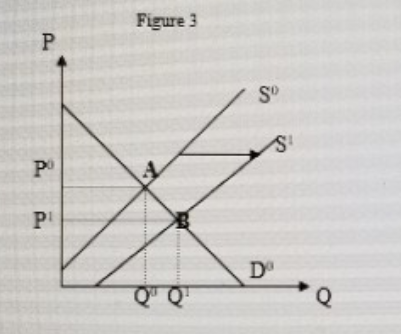
In the later date consumers preferences for jeans decline, => the demand shift to the left given the supply curve, => the equilibrium quantity decreases and price also decrease.
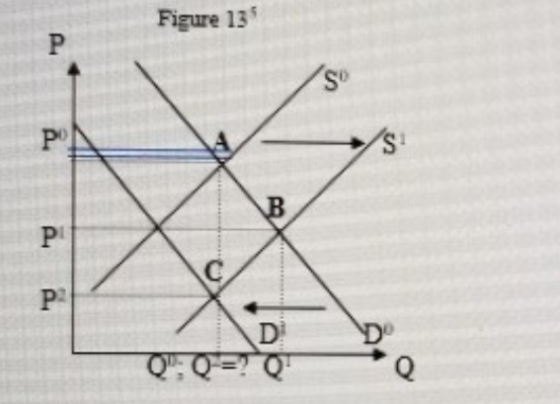
So, ultimately the equilibrium quantity is indeterminate and the price decreases.
B).
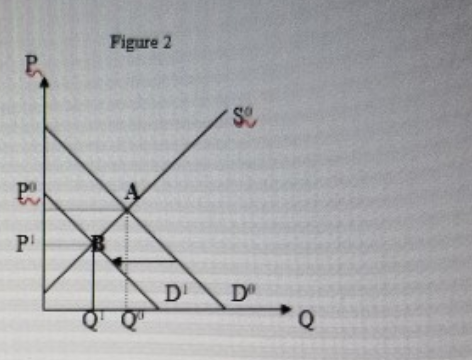
Consider the market for used cars, as the automobile insurance rates fall, => the demand of cars decreases, => the demand curve will shifts to the left side given the demand, => the equilibrium quantity and price both decreases.
In the later date new technology lower the cost of selling a used car, => the supply of cars increases, => supply will shift to the right given the new demand curve, => the equilibrium quantity increases and price further decreases.
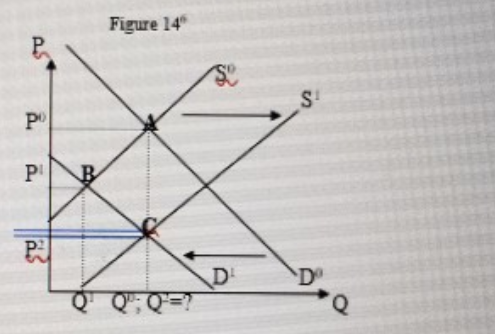
So, ultimately the equilibrium quantity is indeterminate and the price decreases.
c).
Consider the market for beef, the immediate shift in preference toward beef, => the demand for beef increases, => the demand curve will shifts to the right side given the supply, => the equilibrium quantity and price both increases.
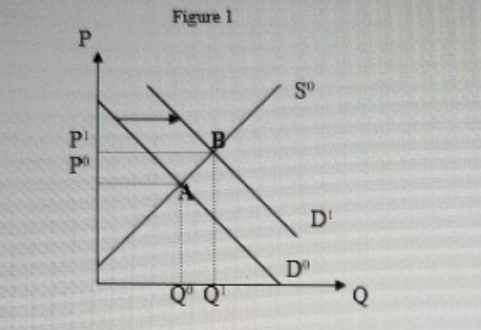
In the later date higher feed prices increases the cost of raising cattle, => the supply of beef decreases, => supply will shift to the left given the new demand curve, => the equilibrium quantity decreases and price further increases.
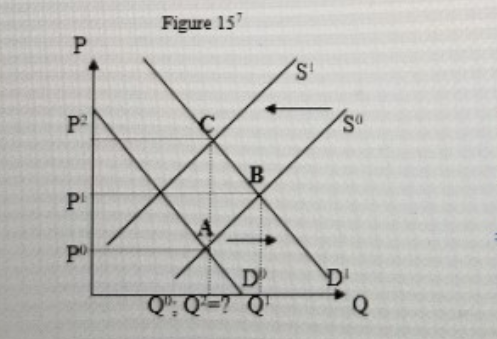
So, ultimately the equilibrium quantity is indeterminate and the price decreases.
d).
Consider the bubble gum market, the sagging bubble gum demand causes the demand for bubble gum to decreases, => the demand curve will shifts to the left side given the supply, => the equilibrium quantity and price both decreases. Eventually many bubble gum producers leave the industry, => the supply of bubble gum decreases, => supply will shift to the left given the new demand curve, => the equilibrium quantity decreases and price increases.
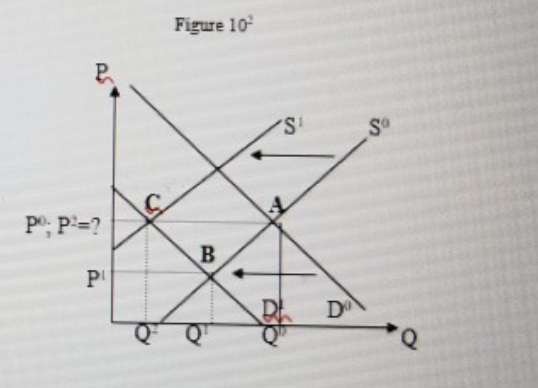
So, ultimately the equilibrium quantity decreases and the price is indeterminate.
Add Answer to:
2. For each of listed events, identify the figure above [i.e. Figures 1-16) that best represents...
lil Quantity ultimately decreases [Q'to Q'l (i] Price is ultimately indeterminate [P ?: the...
 lil Quantity ultimately decreases [Q'to Q'l (i] Price is ultimately indeterminate [P ?: the magnitude of the curve shifts determine whether price increases, decreases, or remains the same-while the diagram illustrates "equal" curve shifts, the context of the question provides insufficient information to determine the actual shift magnitudes]. la] Lumber market in North America "New house construction slows significantly in the United States. At the same time, changes in international trade agreements result in greater lumber imports into North America."...
1. Consider the market for oranges in North America. For each of the events listed here,...
 1. Consider the market for oranges in North America. For each of the events listed here, identify the figure above [i.e. Figures 1-16) which best represents the outcome in the orange market. Hints: See pp. 76-83 in Chapter 4 of the course text book. See also Sections 4.2 and 4.3 in the Chapter 4 Student Package, along with TYU Problems and Applications and their answers. Example: Average household income increases in the ice cream market. Answer: Figure 1 [i.e. an...
16) . the same results as would exist if a 16) The oligopolistic model in which firms produce exactly called the model B) price monopolist controlled the entire industry is A) collusion Q maximin...
 16) . the same results as would exist if a 16) The oligopolistic model in which firms produce exactly called the model B) price monopolist controlled the entire industry is A) collusion Q maximin strategy D) Coumot the output that would be produced if the would be produced if the industry was 17) 17) In the Cournot model the final level of output is industry was a monopoly, and is the output that perfectly competitive. A) equal to; less than...
Question 4. Choose the correct answer for each of the following 1) The above figure shows...
 Question 4.
Choose the correct answer for each of the following
1) The above figure shows the supply
and demand curves for rice in the U.S. and Japan. Assume there is
no trade between the two countries. If bad weather causes the
supply curves in each country to shift leftward by the same amount,
then
the price will increase in both countries.
the price will decrease in both countries.
the change in price cannot be determined.
None of the above....
Question 4.
Choose the correct answer for each of the following
1) The above figure shows the supply
and demand curves for rice in the U.S. and Japan. Assume there is
no trade between the two countries. If bad weather causes the
supply curves in each country to shift leftward by the same amount,
then
the price will increase in both countries.
the price will decrease in both countries.
the change in price cannot be determined.
None of the above....
Price Controls and Taxes: Price A P Supply 2 в Е н G Demand Quantity 0 23) In the figure shown above, if pri...
 Price Controls and Taxes: Price A P Supply 2 в Е н G Demand Quantity 0 23) In the figure shown above, if prices go from P1 to P3, what could this be due to? There is a tax imposed on suppliers per unit sold. Demand for the good increases due to an increase in people's incom5. There is a sales tax imposed on consumers. d. a. b. с. a binding price floor is imposed Both c and d are...
MULTIPLE CHOICE. Choose the one alternative that best completes the statement or answers the question. 1)...
MULTIPLE CHOICE. Choose the one alternative that best completes the statement or answers the question. 1) The LM curve represents A) the single level of output where the goods market is in equilibrium. B) the combinations of output and the interest rate where the goods market is in equilibrium. C) the single level of output where financial markets are in equilibrium. D) the combinations of output and the interest rate where the money market is in equilibrium. E) none of...
MULTIPLE CHOICE. Choose the one alternative that best completes the statement or answers the question. 1) The...
MULTIPLE CHOICE. Choose the one alternative that best completes the statement or answers the question. 1) The LM curve represents A) the single level of output where the goods market is in equilibrium. B) the combinations of output and the interest rate where the goods market is in equilibrium. C) the single level of output where financial markets are in equilibrium. D) the combinations of output and the interest rate where the money market is in equilibrium. E) none of the...
Question 50 (1 point) A(n) _____ in oil prices and a(n) _____ in taxes will shift...
Question 50 (1 point) A(n) _____ in oil prices and a(n) _____ in taxes will shift short-run aggregate supply to the left. Question 50 options: a) decrease; increase b) decrease; decrease c) increase; decrease d) increase; increase Question 51 (1 point) Which of the following events will shift the aggregate demand curve to the right? Question 51 options: a) an increase in household debt b) a catastrophic hurricane hitting the northeastern United States c) a decrease in taxes d) a...
Chapter overview 1. Reasons for international trade Resources reasons Economic reasons Other reasons 2. Difference between...
Chapter overview 1. Reasons for international trade Resources reasons Economic reasons Other reasons 2. Difference between international trade and domestic trade More complex context More difficult and risky Higher management skills required 3. Basic concept s relating to international trade Visible trade & invisible trade Favorable trade & unfavorable trade General trade system & special trade system Volume of international trade & quantum of international trade Commodity composition of international trade Geographical composition of international trade Degree / ratio of...
 lil Quantity ultimately decreases [Q'to Q'l (i] Price is ultimately indeterminate [P ?: the magnitude of the curve shifts determine whether price increases, decreases, or remains the same-while the diagram illustrates "equal" curve shifts, the context of the question provides insufficient information to determine the actual shift magnitudes]. la] Lumber market in North America "New house construction slows significantly in the United States. At the same time, changes in international trade agreements result in greater lumber imports into North America."...
 1. Consider the market for oranges in North America. For each of the events listed here, identify the figure above [i.e. Figures 1-16) which best represents the outcome in the orange market. Hints: See pp. 76-83 in Chapter 4 of the course text book. See also Sections 4.2 and 4.3 in the Chapter 4 Student Package, along with TYU Problems and Applications and their answers. Example: Average household income increases in the ice cream market. Answer: Figure 1 [i.e. an...
 16) . the same results as would exist if a 16) The oligopolistic model in which firms produce exactly called the model B) price monopolist controlled the entire industry is A) collusion Q maximin strategy D) Coumot the output that would be produced if the would be produced if the industry was 17) 17) In the Cournot model the final level of output is industry was a monopoly, and is the output that perfectly competitive. A) equal to; less than...
 Question 4.
Choose the correct answer for each of the following
1) The above figure shows the supply
and demand curves for rice in the U.S. and Japan. Assume there is
no trade between the two countries. If bad weather causes the
supply curves in each country to shift leftward by the same amount,
then
the price will increase in both countries.
the price will decrease in both countries.
the change in price cannot be determined.
None of the above....
Question 4.
Choose the correct answer for each of the following
1) The above figure shows the supply
and demand curves for rice in the U.S. and Japan. Assume there is
no trade between the two countries. If bad weather causes the
supply curves in each country to shift leftward by the same amount,
then
the price will increase in both countries.
the price will decrease in both countries.
the change in price cannot be determined.
None of the above....
 Price Controls and Taxes: Price A P Supply 2 в Е н G Demand Quantity 0 23) In the figure shown above, if prices go from P1 to P3, what could this be due to? There is a tax imposed on suppliers per unit sold. Demand for the good increases due to an increase in people's incom5. There is a sales tax imposed on consumers. d. a. b. с. a binding price floor is imposed Both c and d are...
Most questions answered within 3 hours.
-
Where is the error in this code sequence?
String s1 = "Hello";
String s2 = "ello";...
asked 11 months ago -
Financial data for Joel de Paris, Inc., for last year
follow:
Joel de Paris, Inc.
Balance...
asked 11 months ago -
Consider this reaction:
Al2(SO4)3 (aq)+ BaCl3
(aq) Al2Cl6 (aq)- +
3BaSO4(s) . What is the...
asked 11 months ago -
Suppose that Savneet is considering increasing her
recent random sample from 20 car rentals to 40...
asked 11 months ago -
Trucks arrive at an unloading terminal at an average rate of 120
per hour.
Trucks arrive...
asked 11 months ago -
Why are methanol and ethanol completely soluble in water while
octanol is not very little soluble....
asked 11 months ago -
A facilities manager at a university reads in a research report
that the mean amount of...
asked 11 months ago -
When the CuSO4 is rehydrated by adding water to the anhydrous
compound, is this an endothermic...
asked 11 months ago -
A ray of sunlight is passing from diamond into crown glass; the
angle of incidence is...
asked 11 months ago -
A block of mass 0.249 kg is placed on top of a light, vertical
spring of...
asked 11 months ago -
how do the kidneys compensate in the presences of acidosis
a) trigger hyperventilate
b) reserve acid...
asked 11 months ago -
Question 501 pts
The rental rate of capital to the firm increases. Which of the
following...
asked 11 months ago