number and percentage in the medicaid gap in the U.S in 2018
Homework Answers
Medicaid gap
Medicaid is the US Government system for providing medical assistance to persons unable to afford medical treatments.
Medicaid gap or Medicaid coverage gap means the number of people or the group of people who are not insured , in the states which comes under Affordable Care Act's Medicaid expansion. These people are either ineligible under the rules and regulations of Affordable Care Act or Obama Care or people, those who are below middle class and poor , not eligible for subsidies and credits under ACA .
number and Percentage
28.6 million people ( 2018)
8.9% (2018)
The number of people coming under Medicaid gap is 28.6 million, according to 2018 statistics. The percentage 8.9 % and the percentage is increasing each year.
This question relates to the decision by the U.S. Supreme Court about expansion of Medicaid in the Affordable Care Act (...
This question relates to the decision by the U.S. Supreme Court about expansion of Medicaid in the Affordable Care Act (ACA). Which of the following statements, if any, correctly states the decision of the U.S. Supreme Court on the issue of Medicaid expansion in the ACA? A) The federal government can withdraw existing Medicaid funds from states that decline to participate in the ACA’s expansion of Medicaid. B) The federal government cannot withdraw existing Medicaid funds from states that decline...
How do a high percentage of Medicaid patients influence a hospital's prices?
How do a high percentage of Medicaid patients influence a hospital's prices?
This chart shows the output gap in the U.S. from 1949 to 1973. what was the output gap in 1973?
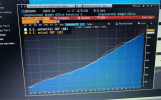 This chart shows the output gap in the U.S. from 1949 to 1973. what
was the output gap in 1973?-80 -3.2% +160 +3.0%
This chart shows the output gap in the U.S. from 1949 to 1973. what
was the output gap in 1973?-80 -3.2% +160 +3.0%
There seems to be a gender gap in national elections in the U.S. Women tend to...
There seems to be a gender gap in national elections in the U.S. Women tend to favor the Democratic presidential candidates while men tend to prefer the Republican. Why do you suppose the gender gap exists? What additional information (variables) do you think are important to explore the gap further? (Please answer the entire question)
The great divergence does NOT A)the widening U.S. trade deficit. B)the growing gap between rich and...
 The great divergence does NOT A)the widening U.S. trade deficit. B)the growing gap between rich and poor workers. C)the growing Chinese trade surplus. D)the gap between the power of the United States and that of the Euro area.
U.S. Federal Spending Fiscal Year 2009 Other discretionary Medicare and Medicaid 18.7% 16.3% Defense 21.7% Social...
 U.S. Federal Spending Fiscal Year 2009 Other discretionary Medicare and Medicaid 18.7% 16.3% Defense 21.7% Social Security 18.8% Interest on the debt 5.2% Other mandatory 19.3% What is the relative frequency for the category "Interest on the debt?
The Fed can close a recessionary gap by _____ Group of answer choices selling U.S. government...
The Fed can close a recessionary gap by _____ Group of answer choices selling U.S. government bonds. increasing fiscal expenditure. lowering the interest rate. increasing taxes. decreasing taxes.
1. Which is the largest financing source for long-term care in the U.S.? Medicare Medicaid (Medi-Cal...
1. Which is the largest financing source for long-term care in the U.S.? Medicare Medicaid (Medi-Cal in California)* Money Follows the Person (MFP) programs Private insurance 2. A skilled nursing facility is prohibited by regulations to have an assisted living section. True False 3. Registered nurses (RNs) typically function as directors of nursing (DONs) and team leaders in skilled nursing facilities. True False 4. Most Americans over the age of 50 believe that the federal government should ________. pay for...
U.S. Federal Spending- Fiscal Year 2009 Other discretionary Medicare and Medicaid 18.7% 16.3% Defense 21.7% Social...
 U.S. Federal Spending- Fiscal Year 2009 Other discretionary Medicare and Medicaid 18.7% 16.3% Defense 21.7% Social Security 18.8% Interest on the debt 5.2% Other mandatory 19.3% Interest on the debt and Other discretionary spending combined make up more of the budget than Defense spending. True False
Recall that Medicaid is a joint federal and state entitlement health insurance program. The ACA of...
Recall that Medicaid is a joint federal and state entitlement health insurance program. The ACA of 2010 required all states to eliminate the use of categories to determine eligibility and expand the Medicaid program to all persons younger than age 65 with incomes at or below 138% of the federal poverty level. However, in June 2012, the U.S. Supreme Court ruled that requiring states to expand their Medicaid programs was unconstitutional: Each state could make its own decision on whether...
 This chart shows the output gap in the U.S. from 1949 to 1973. what
was the output gap in 1973?-80 -3.2% +160 +3.0%
This chart shows the output gap in the U.S. from 1949 to 1973. what
was the output gap in 1973?-80 -3.2% +160 +3.0%
 The great divergence does NOT A)the widening U.S. trade deficit. B)the growing gap between rich and poor workers. C)the growing Chinese trade surplus. D)the gap between the power of the United States and that of the Euro area.
 U.S. Federal Spending Fiscal Year 2009 Other discretionary Medicare and Medicaid 18.7% 16.3% Defense 21.7% Social Security 18.8% Interest on the debt 5.2% Other mandatory 19.3% What is the relative frequency for the category "Interest on the debt?
 U.S. Federal Spending- Fiscal Year 2009 Other discretionary Medicare and Medicaid 18.7% 16.3% Defense 21.7% Social Security 18.8% Interest on the debt 5.2% Other mandatory 19.3% Interest on the debt and Other discretionary spending combined make up more of the budget than Defense spending. True False
Most questions answered within 3 hours.
-
Where is the error in this code sequence?
String s1 = "Hello";
String s2 = "ello";...
asked 11 months ago -
Financial data for Joel de Paris, Inc., for last year
follow:
Joel de Paris, Inc.
Balance...
asked 11 months ago -
Consider this reaction:
Al2(SO4)3 (aq)+ BaCl3
(aq) Al2Cl6 (aq)- +
3BaSO4(s) . What is the...
asked 11 months ago -
Suppose that Savneet is considering increasing her
recent random sample from 20 car rentals to 40...
asked 11 months ago -
Trucks arrive at an unloading terminal at an average rate of 120
per hour.
Trucks arrive...
asked 11 months ago -
Why are methanol and ethanol completely soluble in water while
octanol is not very little soluble....
asked 11 months ago -
A facilities manager at a university reads in a research report
that the mean amount of...
asked 11 months ago -
When the CuSO4 is rehydrated by adding water to the anhydrous
compound, is this an endothermic...
asked 11 months ago -
A ray of sunlight is passing from diamond into crown glass; the
angle of incidence is...
asked 11 months ago -
A block of mass 0.249 kg is placed on top of a light, vertical
spring of...
asked 11 months ago -
how do the kidneys compensate in the presences of acidosis
a) trigger hyperventilate
b) reserve acid...
asked 11 months ago -
Question 501 pts
The rental rate of capital to the firm increases. Which of the
following...
asked 11 months ago