Please explain the rationale for ordering a lipid panel, HGBA1C, liver function tests, and fasting blood...
Please explain the rationale for ordering a lipid panel, HGBA1C, liver function tests, and fasting blood sugars for patients who are taking antipsychotics
Homework Answers
Antipsychotics are a group medications used in the management of psychosis . The are effective in tratment of delusions, hallucinations, paranoia or disordered thought.They are mainly of two types, atypical and atypical antibiotics.
It is necessary to monitor certain laboratory values while patients are treated with antipsychotic drugs because they can interfere with the bodies normal metabolism and alter it. Some anipsychotics can cause metabolic syndrome which cause weight gain, high blood glucose level, high triglyceride levels, low HDL level and liver damage. Thus periodic monitoring of these laboratory parameters are necessary. The antipsychotics have antagonist effect on M3 muscarinic receptors on pancreatic cells and dopamine D2 receptors in brain which leads to insulin resistance and type 2 diabetes mellitus. The metabolic disturbances and obesity contribute to dyslipidemia . Thus it is necessary to check the fasting blood sugar and HBA1c, and lipid profile. Drug induced liver injury is on eof the adverse effects of antipsychotic drugs because these drugs are metabolized in the liver. Thus Liver function test to me monitored.
Add Answer to:
Please explain the rationale for ordering a lipid panel, HGBA1C,
liver function tests, and fasting blood...
As effective as antipsychotic medications can be, they can also have serious side effects. Please explain...
As effective as antipsychotic medications can be, they can also have serious side effects. Please explain the rationale for ordering a lipid panel, HGBA1C, liver function tests, and fasting blood sugars for patients who are taking antipsychotics. Also, please describe at least one screening tool that could be used to assess side effects in patients who are taking antipsychotic medications (include a link if available online).
Maria is a 46-year-old woman who presents for her yearly physical examination. Her medical history is...
Maria is a 46-year-old woman who presents for her yearly physical examination. Her medical history is notable for mild depression and moderate obesity. Six months ago her fasting lipid profile was normal. Maria report that her mother and brother have diabetes and hypertension. She reports that she knows she should be on a low calorie, low fat diet and exercising but with her full-time job and four children, she finds it difficult to exercise, and she eats out most of...
im having a hard time undertsbading ghe rationale behind the asnwers (highlighted in pink). Please explain...
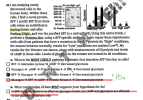 im having a hard time undertsbading ghe rationale behind the
asnwers (highlighted in pink). Please explain in detail an
pathways/regukators that lead to the three answers, thank
you!
M Low High Low Glycolysis CASALS 03. I am studying newly discovered cells in the human body. Within these cells, I find a novel protein, BFF. I purify BFF from these 50 KD - cells when an individual is 20 KD - fasting (Low), and after Low High Low Low High Low...
im having a hard time undertsbading ghe rationale behind the
asnwers (highlighted in pink). Please explain in detail an
pathways/regukators that lead to the three answers, thank
you!
M Low High Low Glycolysis CASALS 03. I am studying newly discovered cells in the human body. Within these cells, I find a novel protein, BFF. I purify BFF from these 50 KD - cells when an individual is 20 KD - fasting (Low), and after Low High Low Low High Low...
Explain and answer question B please! Aspirin prevents blood from clotting and so helps prevent strokes. The Second Eur...
 Explain and answer question B please!
Aspirin prevents blood from clotting and so helps prevent strokes. The Second European Stroke Prevention Study asked whether adding another anticlotting drug named dipyridamole would be more effective for patients who had already had a stroke. Here are the data on strokes collected during the two years of the study: Stroke No Stroke Total Aspirin alone 203 1446 1649 Aspirin + dipyridamole 156 1494 1650 Is there a significant difference in the proportion of...
Explain and answer question B please!
Aspirin prevents blood from clotting and so helps prevent strokes. The Second European Stroke Prevention Study asked whether adding another anticlotting drug named dipyridamole would be more effective for patients who had already had a stroke. Here are the data on strokes collected during the two years of the study: Stroke No Stroke Total Aspirin alone 203 1446 1649 Aspirin + dipyridamole 156 1494 1650 Is there a significant difference in the proportion of...
please answer questions 4,5,6 only; if possible! thank you! 4. In patients with severe COVID-19, explain...
 please answer questions 4,5,6 only; if possible! thank
you!
4. In patients with severe COVID-19, explain how having fewer of the cell type identified in question 3 could result in more severe symptoms of the disease. woolrollo enolhogona older 5. Briefly explain the function of the following proteins found in Table 2: a. C-reactive protein (CRP) b. Tumor necrosis factor-a (TNF-a) c. Interleukin 6 (IL-6) 6. Increased expression one of these three proteins (CRP, TNF-a, IL-6) may be responsible for...
please answer questions 4,5,6 only; if possible! thank
you!
4. In patients with severe COVID-19, explain how having fewer of the cell type identified in question 3 could result in more severe symptoms of the disease. woolrollo enolhogona older 5. Briefly explain the function of the following proteins found in Table 2: a. C-reactive protein (CRP) b. Tumor necrosis factor-a (TNF-a) c. Interleukin 6 (IL-6) 6. Increased expression one of these three proteins (CRP, TNF-a, IL-6) may be responsible for...
Need help with questions 1,3 and 5 please C I NE CLINICALLY: Be S.M.A.R.T. About Cases...
 Need help with questions 1,3 and 5 please
C I NE CLINICALLY: Be S.M.A.R.T. About Cases w throughout the book edd levels Current SD car d comotion for Gu y and cardiovascular probleThe main of the pisto blood to the b lood that the patient will suffer from ang l ic h by the to w y , chcel and triglycerides Cornstarch is a dietary supplement for regulating Wood cose levels in OSD patients in a polysaccharide that like yco-...
Need help with questions 1,3 and 5 please
C I NE CLINICALLY: Be S.M.A.R.T. About Cases w throughout the book edd levels Current SD car d comotion for Gu y and cardiovascular probleThe main of the pisto blood to the b lood that the patient will suffer from ang l ic h by the to w y , chcel and triglycerides Cornstarch is a dietary supplement for regulating Wood cose levels in OSD patients in a polysaccharide that like yco-...
Case Study 9 Name Class/Group Date Group Members INSTRUCTIONS: All questions apply to this case study....
 Case Study 9 Name Class/Group Date Group Members INSTRUCTIONS: All questions apply to this case study. Your responses should be brief and to the point. Adequate space has been provided for answers. When asked to provide several answers, they should be listed in order of priority or significance. Do not asume information that is not provided. Please print or write clearly. If your response is not legible, it will be marked as ? and you will need to rewrite it....
PLEASE DO NOT GUESS AND PLEASE TYPE THANK YOU :) Module 7 Virtual Experience: Case Management...
 PLEASE DO NOT GUESS AND PLEASE TYPE THANK YOU :)
Module 7 Virtual Experience: Case Management - Transitions of Care: Primary Care Clinic Which of the following are possible results of ineffective transitions of care? (Select all that apply.) a) Fewer lab/diagnostic tests b) Increased severity of complications c) Decreased burden on healthcare providers d) Increased readmission e) Lower cost A client needs to quit smoking as part of his overall plan to become healthier. The community/public health nurse knows...
PLEASE DO NOT GUESS AND PLEASE TYPE THANK YOU :)
Module 7 Virtual Experience: Case Management - Transitions of Care: Primary Care Clinic Which of the following are possible results of ineffective transitions of care? (Select all that apply.) a) Fewer lab/diagnostic tests b) Increased severity of complications c) Decreased burden on healthcare providers d) Increased readmission e) Lower cost A client needs to quit smoking as part of his overall plan to become healthier. The community/public health nurse knows...
ID: A Date: Class: Name: Medical Ethics - Case Studies You are drawing a specimen of...
 ID: A Date: Class: Name: Medical Ethics - Case Studies You are drawing a specimen of blood on Emma Helm, who says she doesn't like having blood d o she tells you that the sight of blood makes her "queasy." You attempt to make her feel relaxed by Guin talking to her as you help her onto a chair. While you are taking her blood specimen, che hints and hits he head against the side of a cabinet 1. Are...
Mary is a 44-year-old African American female who is reporting to her primary care provider for...
Mary is a 44-year-old African American female who is reporting to her primary care provider for a follow-up visit for evaluation of her diabetes, hypertension and dyslipidemia. During her last visit 3 months ago, her provider increased the dosage of one anti-hypertensive medication and added a second anti-hypertensive medication to her regimen due to her blood pressures hanging around 160/100. A second agent to assist with the management of her diabetes was also added to her plan of care at...
 im having a hard time undertsbading ghe rationale behind the
asnwers (highlighted in pink). Please explain in detail an
pathways/regukators that lead to the three answers, thank
you!
M Low High Low Glycolysis CASALS 03. I am studying newly discovered cells in the human body. Within these cells, I find a novel protein, BFF. I purify BFF from these 50 KD - cells when an individual is 20 KD - fasting (Low), and after Low High Low Low High Low...
im having a hard time undertsbading ghe rationale behind the
asnwers (highlighted in pink). Please explain in detail an
pathways/regukators that lead to the three answers, thank
you!
M Low High Low Glycolysis CASALS 03. I am studying newly discovered cells in the human body. Within these cells, I find a novel protein, BFF. I purify BFF from these 50 KD - cells when an individual is 20 KD - fasting (Low), and after Low High Low Low High Low...
 Explain and answer question B please!
Aspirin prevents blood from clotting and so helps prevent strokes. The Second European Stroke Prevention Study asked whether adding another anticlotting drug named dipyridamole would be more effective for patients who had already had a stroke. Here are the data on strokes collected during the two years of the study: Stroke No Stroke Total Aspirin alone 203 1446 1649 Aspirin + dipyridamole 156 1494 1650 Is there a significant difference in the proportion of...
Explain and answer question B please!
Aspirin prevents blood from clotting and so helps prevent strokes. The Second European Stroke Prevention Study asked whether adding another anticlotting drug named dipyridamole would be more effective for patients who had already had a stroke. Here are the data on strokes collected during the two years of the study: Stroke No Stroke Total Aspirin alone 203 1446 1649 Aspirin + dipyridamole 156 1494 1650 Is there a significant difference in the proportion of...
 please answer questions 4,5,6 only; if possible! thank
you!
4. In patients with severe COVID-19, explain how having fewer of the cell type identified in question 3 could result in more severe symptoms of the disease. woolrollo enolhogona older 5. Briefly explain the function of the following proteins found in Table 2: a. C-reactive protein (CRP) b. Tumor necrosis factor-a (TNF-a) c. Interleukin 6 (IL-6) 6. Increased expression one of these three proteins (CRP, TNF-a, IL-6) may be responsible for...
please answer questions 4,5,6 only; if possible! thank
you!
4. In patients with severe COVID-19, explain how having fewer of the cell type identified in question 3 could result in more severe symptoms of the disease. woolrollo enolhogona older 5. Briefly explain the function of the following proteins found in Table 2: a. C-reactive protein (CRP) b. Tumor necrosis factor-a (TNF-a) c. Interleukin 6 (IL-6) 6. Increased expression one of these three proteins (CRP, TNF-a, IL-6) may be responsible for...
 Need help with questions 1,3 and 5 please
C I NE CLINICALLY: Be S.M.A.R.T. About Cases w throughout the book edd levels Current SD car d comotion for Gu y and cardiovascular probleThe main of the pisto blood to the b lood that the patient will suffer from ang l ic h by the to w y , chcel and triglycerides Cornstarch is a dietary supplement for regulating Wood cose levels in OSD patients in a polysaccharide that like yco-...
Need help with questions 1,3 and 5 please
C I NE CLINICALLY: Be S.M.A.R.T. About Cases w throughout the book edd levels Current SD car d comotion for Gu y and cardiovascular probleThe main of the pisto blood to the b lood that the patient will suffer from ang l ic h by the to w y , chcel and triglycerides Cornstarch is a dietary supplement for regulating Wood cose levels in OSD patients in a polysaccharide that like yco-...
 Case Study 9 Name Class/Group Date Group Members INSTRUCTIONS: All questions apply to this case study. Your responses should be brief and to the point. Adequate space has been provided for answers. When asked to provide several answers, they should be listed in order of priority or significance. Do not asume information that is not provided. Please print or write clearly. If your response is not legible, it will be marked as ? and you will need to rewrite it....
 PLEASE DO NOT GUESS AND PLEASE TYPE THANK YOU :)
Module 7 Virtual Experience: Case Management - Transitions of Care: Primary Care Clinic Which of the following are possible results of ineffective transitions of care? (Select all that apply.) a) Fewer lab/diagnostic tests b) Increased severity of complications c) Decreased burden on healthcare providers d) Increased readmission e) Lower cost A client needs to quit smoking as part of his overall plan to become healthier. The community/public health nurse knows...
PLEASE DO NOT GUESS AND PLEASE TYPE THANK YOU :)
Module 7 Virtual Experience: Case Management - Transitions of Care: Primary Care Clinic Which of the following are possible results of ineffective transitions of care? (Select all that apply.) a) Fewer lab/diagnostic tests b) Increased severity of complications c) Decreased burden on healthcare providers d) Increased readmission e) Lower cost A client needs to quit smoking as part of his overall plan to become healthier. The community/public health nurse knows...
 ID: A Date: Class: Name: Medical Ethics - Case Studies You are drawing a specimen of blood on Emma Helm, who says she doesn't like having blood d o she tells you that the sight of blood makes her "queasy." You attempt to make her feel relaxed by Guin talking to her as you help her onto a chair. While you are taking her blood specimen, che hints and hits he head against the side of a cabinet 1. Are...
Most questions answered within 3 hours.
-
Where is the error in this code sequence?
String s1 = "Hello";
String s2 = "ello";...
asked 11 months ago -
Financial data for Joel de Paris, Inc., for last year
follow:
Joel de Paris, Inc.
Balance...
asked 11 months ago -
Consider this reaction:
Al2(SO4)3 (aq)+ BaCl3
(aq) Al2Cl6 (aq)- +
3BaSO4(s) . What is the...
asked 11 months ago -
Suppose that Savneet is considering increasing her
recent random sample from 20 car rentals to 40...
asked 11 months ago -
Trucks arrive at an unloading terminal at an average rate of 120
per hour.
Trucks arrive...
asked 11 months ago -
Why are methanol and ethanol completely soluble in water while
octanol is not very little soluble....
asked 11 months ago -
A facilities manager at a university reads in a research report
that the mean amount of...
asked 11 months ago -
When the CuSO4 is rehydrated by adding water to the anhydrous
compound, is this an endothermic...
asked 11 months ago -
A ray of sunlight is passing from diamond into crown glass; the
angle of incidence is...
asked 11 months ago -
A block of mass 0.249 kg is placed on top of a light, vertical
spring of...
asked 11 months ago -
how do the kidneys compensate in the presences of acidosis
a) trigger hyperventilate
b) reserve acid...
asked 11 months ago -
Question 501 pts
The rental rate of capital to the firm increases. Which of the
following...
asked 11 months ago