


Homework Answers
a-1. In case the equal population variance is
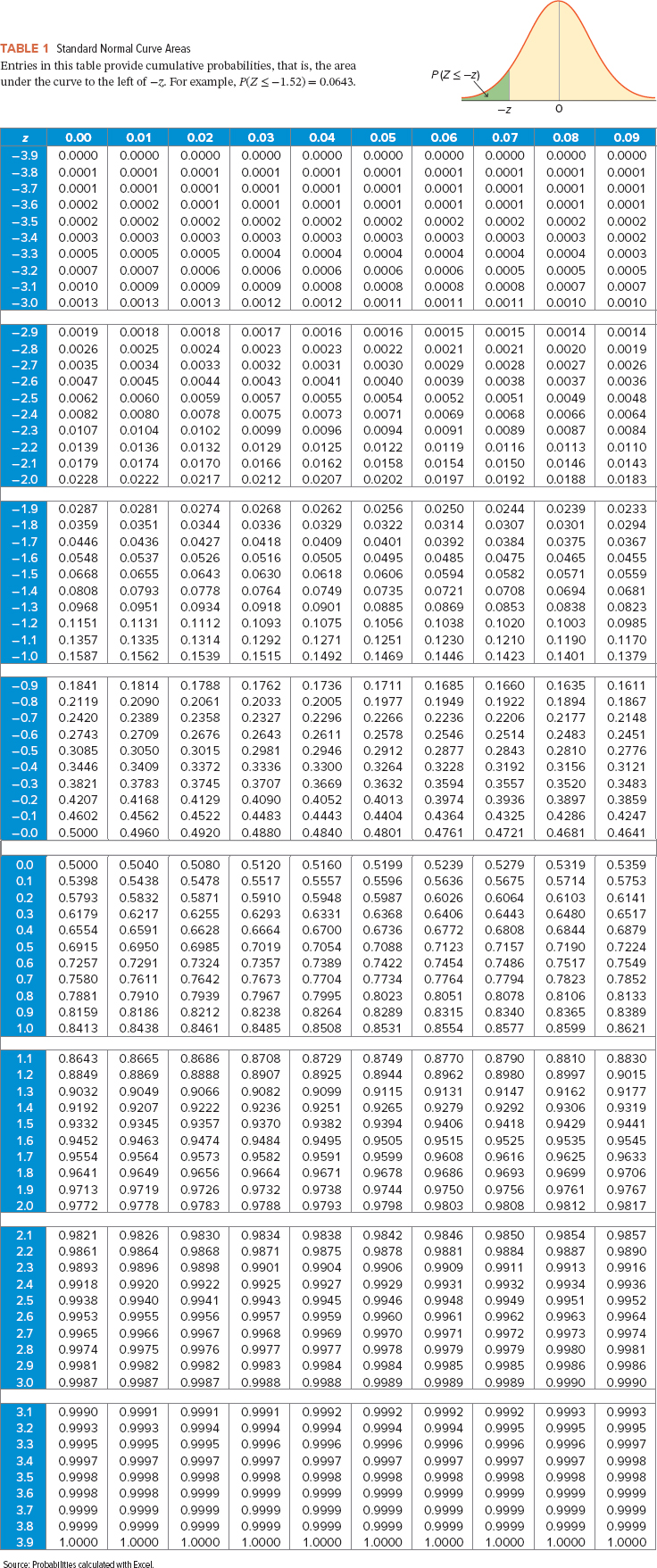
assumed, the test statistic would be 


The degree of freedom is 2n-2 or 12.
a-2. The test would be a left tailed-test. The
p-value would be 
a-3. As the p-value is higher than 0.01 alpha
level, we fail to reject the null, and conclude that 

- No, since the value of the p-value is greater than the significance level.
a-4. The correct option would be
- We cannot conclude that population mean 1 is less than population mean 2.
The reason being that we fail to reject the null which is


b-1. The test statistic assuming that
population variances are unknown would be 


b-2. The p-value would be the same as before,
ie 
b-3. As before, the p-value is higher than 0.01
alpha level, we fail to reject the null, and conclude that


- No, since the value of the p-value is greater than the significance level.
b-4. The correct option would be
- We cannot conclude that population mean 1 is less than population mean 2.
The result and reasons remains same as before, since the test
statistic and conclusion doesn't change. We again fail to reject
the null, which is 
Add Answer to:
Consider the following competing hypotheses and accompanying sample data drawn independently from normally distributed populations. (You...
Consider the following competing hypotheses and accompanying sample data drawn independently from normally distributed populations. (You may find it useful to reference the appropriate table: z table or t table)
 Consider the following competing hypotheses and accompanying sample data drawn independently from normally distributed populations. (You may find it useful to reference the appropriate table: z table or t table) H0: μ1 − μ2 ≥ 0HA: μ1 − μ2 < 0 x¯1x¯1= 249x−2x−2= 262s1 = 35s2 = 23n1 = 10n2 = 10a-1. Calculate the value of the test statistic under the assumption that the population variances are equal. (Negative values should be indicated by a minus sign. Round all intermediate calculations to at least 4 decimal places and final answer to 3 decimal places.) a-2. Find the p-value. multiple choice 1p-value < 0.010.01 ≤ p-value...
Consider the following competing hypotheses and accompanying sample data (You may find it useful to reference...
 Consider the following competing hypotheses and accompanying sample data (You may find it useful to reference the appropriate table: z table or t table) Ho: Pi - P22 MA: P1 - P2 @ X1 - 238 nu - 425 X2 - 263 n2 - 425 a. Calculate the value of the test statistic (Negative value should be indicated by a minus sign. Round intermediate calculations to at least 4 decimal places and final answer to 2 decimal places.) Test statistic...
Consider the following competing hypotheses and accompanying sample data. (You may find it useful to reference...
Consider the following competing hypotheses and accompanying sample data. (You may find it useful to reference the appropriate table: z table or t table) H0: p1 − p2 ≥ 0 HA: p1 − p2 < 0 x1 = 250 x2 = 275 n1 = 400 n2 = 400 a. Calculate the value of the test statistic. (Negative value should be indicated by a minus sign. Round intermediate calculations to at least 4 decimal places and final answer to 2 decimal...
Consider the following hypotheses: He: μ28e The population is normally distributed. A sample produces the following...
 Consider the following hypotheses: He: μ28e The population is normally distributed. A sample produces the following observations: 56 67 62 81 8366 Conduct the test at the 1% level of significance. (You may find lt useful to reference the appropriate table: table or Цеье o. Calculate the value of the test statistic. (Negative value should be Indicated by a minus sign. Round Intermedlate caleulatlons to at least 4 declmal places and final answer to 2 declmal places.) Test statistic b....
Consider the following hypotheses: Hot 208 RAM 208 A sample of 74 observations results in a...
 Consider the following hypotheses: Hot 208 RAM 208 A sample of 74 observations results in a sample mean of 202. The population standard deviation is known to be 26. (You may find it useful to reference the appropriate table: z table or table) a-1. Calculate the value of the test statistic. (Negative value should be indicated by a minus sign. Round intermediate calculations to at least 4 decimal places and final answer to 2 decimal places.) Test statistic a-2. Find...
A random sample of five observations from three normally distributed populations produced the following data: (You...
 A random sample of five observations from three normally distributed populations produced the following data: (You may find it useful to reference the F table.) Treatments A C 20 1 9 25 25 22 27 21 24 24 26 2.1 22 23 19 XR - 23 SR6.5 S 4.5 S 4.5 Click here for the Excel Data File f. At the 5% significance level, what is the conclusion to the test? Reject Ho since the p-value is less than significance...
Consider the following hypotheses: H0: μ ≥ 160 HA: μ < 160 The population is normally...
Consider the following hypotheses: H0: μ ≥ 160 HA: μ < 160 The population is normally distributed. A sample produces the following observations: 152 138 151 144 151 142 Conduct the test at the 1% level of significance. (You may find it useful to reference the appropriate table: z table or t table) a. Calculate the value of the test statistic. (Negative value should be indicated by a minus sign. Round intermediate calculations to at least 4 decimal places and...
Consider the following competing hypotheses and accompanying sample data drawn independently from normally distributed populations. (Note:...
Consider the following competing hypotheses and accompanying sample data drawn independently from normally distributed populations. (Note: the automated question following this one will ask you confidence interval questions for this same data, so jot down your work.) H0: μ1 − μ2 = 0 HA: μ1 − μ2 ≠ 0 x−1x−1 = 60 x−2x−2 = 56 σ1 = 1.62 σ2 = 10.20 n1 = 25 n2 = 25 Calculate the value of the test statistic. (Negative values should be indicated by...
Consider the following hypotheses: HO: > 220 HA: U <220 A sample of 72 observations results...
 Consider the following hypotheses: HO: > 220 HA: U <220 A sample of 72 observations results in a sample mean of 209. The population standard deviation is known to be 18. (You may find it useful to reference the appropriate table: z table or t table) a-1. Calculate the value of the test statistic. (Negative value should be indicated by a minus sign. Round intermediate calculations to at least 4 decimal places and final answer to 2 decimal places.) Test...
Consider the following hypotheses: H0: μ ≥ 220 HA: μ < 220 A sample of 72...
Consider the following hypotheses: H0: μ ≥ 220 HA: μ < 220 A sample of 72 observations results in a sample mean of 209. The population standard deviation is known to be 18. (You may find it useful to reference the appropriate table: z table or t table) a-1. Calculate the value of the test statistic. (Negative value should be indicated by a minus sign. Round intermediate calculations to at least 4 decimal places and final answer to 2 decimal...
 Consider the following competing hypotheses and accompanying sample data (You may find it useful to reference the appropriate table: z table or t table) Ho: Pi - P22 MA: P1 - P2 @ X1 - 238 nu - 425 X2 - 263 n2 - 425 a. Calculate the value of the test statistic (Negative value should be indicated by a minus sign. Round intermediate calculations to at least 4 decimal places and final answer to 2 decimal places.) Test statistic...
 Consider the following hypotheses: He: μ28e The population is normally distributed. A sample produces the following observations: 56 67 62 81 8366 Conduct the test at the 1% level of significance. (You may find lt useful to reference the appropriate table: table or Цеье o. Calculate the value of the test statistic. (Negative value should be Indicated by a minus sign. Round Intermedlate caleulatlons to at least 4 declmal places and final answer to 2 declmal places.) Test statistic b....
 Consider the following hypotheses: Hot 208 RAM 208 A sample of 74 observations results in a sample mean of 202. The population standard deviation is known to be 26. (You may find it useful to reference the appropriate table: z table or table) a-1. Calculate the value of the test statistic. (Negative value should be indicated by a minus sign. Round intermediate calculations to at least 4 decimal places and final answer to 2 decimal places.) Test statistic a-2. Find...
 A random sample of five observations from three normally distributed populations produced the following data: (You may find it useful to reference the F table.) Treatments A C 20 1 9 25 25 22 27 21 24 24 26 2.1 22 23 19 XR - 23 SR6.5 S 4.5 S 4.5 Click here for the Excel Data File f. At the 5% significance level, what is the conclusion to the test? Reject Ho since the p-value is less than significance...
 Consider the following hypotheses: HO: > 220 HA: U <220 A sample of 72 observations results in a sample mean of 209. The population standard deviation is known to be 18. (You may find it useful to reference the appropriate table: z table or t table) a-1. Calculate the value of the test statistic. (Negative value should be indicated by a minus sign. Round intermediate calculations to at least 4 decimal places and final answer to 2 decimal places.) Test...
Most questions answered within 3 hours.
-
Where is the error in this code sequence?
String s1 = "Hello";
String s2 = "ello";...
asked 10 months ago -
Financial data for Joel de Paris, Inc., for last year
follow:
Joel de Paris, Inc.
Balance...
asked 10 months ago -
Consider this reaction:
Al2(SO4)3 (aq)+ BaCl3
(aq) Al2Cl6 (aq)- +
3BaSO4(s) . What is the...
asked 10 months ago -
Suppose that Savneet is considering increasing her
recent random sample from 20 car rentals to 40...
asked 10 months ago -
Trucks arrive at an unloading terminal at an average rate of 120
per hour.
Trucks arrive...
asked 10 months ago -
Why are methanol and ethanol completely soluble in water while
octanol is not very little soluble....
asked 10 months ago -
A facilities manager at a university reads in a research report
that the mean amount of...
asked 10 months ago -
When the CuSO4 is rehydrated by adding water to the anhydrous
compound, is this an endothermic...
asked 10 months ago -
A ray of sunlight is passing from diamond into crown glass; the
angle of incidence is...
asked 10 months ago -
A block of mass 0.249 kg is placed on top of a light, vertical
spring of...
asked 10 months ago -
how do the kidneys compensate in the presences of acidosis
a) trigger hyperventilate
b) reserve acid...
asked 10 months ago -
Question 501 pts
The rental rate of capital to the firm increases. Which of the
following...
asked 10 months ago