
Homework Answers

Add Answer to:
Write a chemical name for any 10 of the foll awarded for correctly answering more than...
9. Carry out the transformation below. More than one step will be required. Use any reagents...
 9. Carry out the transformation below. More than one step will be required. Use any reagents you need. Show all reagents and intermediate structures. (4 points) OH Br 10. Carry out the transformation below. More than one step will be required. Use any reagents you need. Show all reagents and intermediate structures. (4 points) BE
V. Chemical Nomenclature A. For each formula, write the name for each compound (Don't forget Roman...
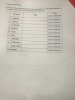 V. Chemical Nomenclature A. For each formula, write the name for each compound (Don't forget Roman Numerals, if necessary.), and circle if the compound is Ionic or Molecular. Circle Compound Name Ionic or Molecular 1 Fe(NO2)2 Ionic or Molecular K2Cr2O Ionic or Molecular (NH2POs Ionic or Molecular 4 Ba(OH)2 Ionic or Molecular Ionic or Molecular 6 H2O Ionic or Molecular HsPO(aq) 7 Ionic or Molecular HC2H3O2(aq) Ionic or Molecular 9 CaSO4-6H2O Ionic or Molecular 10 NHs(aq) Ionic or Molecular 14
10. Carry out the transformation below. More than one step will be required. Use any reagents...
 10. Carry out the transformation below. More than one step will
be required. Use any reagents you need. Show all reagents and
intermediate structures. (4 points)
10. Carry out the transformation below. More than one step will be required. Use any reagents you need. Show all reagents and intermediate structures. (4 points) Br
10. Carry out the transformation below. More than one step will
be required. Use any reagents you need. Show all reagents and
intermediate structures. (4 points)
10. Carry out the transformation below. More than one step will be required. Use any reagents you need. Show all reagents and intermediate structures. (4 points) Br
LAB IX. TYPES OF REACTIONS DATA SHEET NAME(S): SECTION: Write and balance cach chemical equation. Write...
 LAB IX. TYPES OF REACTIONS DATA SHEET NAME(S): SECTION: Write and balance cach chemical equation. Write what type of reaction occurred. I reaction does not fit the five major types, write "other." PART A. 1. Description of the steel wool (Fe): 2. Description of the sulfur (S): 3. Description of the product iron (II) sulfide, FeS 4. Write and balance the chemical equation: after heating: 5. Type of reaction: PART B. 6. Description of NaOH(aq) after the phenolphthalein added: 7a....
Please answer #10-14 & clearly explain your reasoning and indicate which # you are answering. Thank...
Please answer #10-14 & clearly explain your reasoning and indicate which # you are answering. Thank you so much! 10. DNA is more ____________ than RNA due to the absence of ______ group in the ribose. A. unstable, 3'-OH B. stable, 3'-OH C. unstable, 2'-OH D. stable, 2'-OH E. none of the above 11. The nucleotide that is present in RNA but not DNA is A. thymine. B. uracil. C. adenine. D. cytosine. E. guanine 12. Which of the following...
PART 2. Written Short Answers. (58 points) 22. (10 points) Write the full chemical name for...
 PART 2. Written Short Answers. (58 points) 22. (10 points) Write the full chemical name for each of the compounds listed below: a) MgF2 b Feo, diom trioxidlX c) HiPOs (ag) d) H,N (ag) 23. (10 points) Write the correct chemical formula for each of the compounds listed below N(n) a) nitrous acid b) ithium bicarbonateLiCn x CaBr X c) caleium bromide d)gold(I) oxide- e) tetraphosphorus trisulfideTy (BONUS) sodium bromite 24. (12 points) Write the complete and balanced chemical equation...
At the turn of the 20th century, electric automobiles were more popular than gasoline-fueled cars. Thomas...
At the turn of the 20th century, electric automobiles were more popular than gasoline-fueled cars. Thomas Edison, the prolific American inventor, was interested in electric automobiles and developed an iron-nickel (Fe-Ni) battery to power them. He claimed that, due to their higher energy density, his batteries were superior to the lead-acid batteries then being used in automobiles. Today, the Edison battery is available in various voltages up to 48 V. It is used in London subway locomotives, in New York...
1) Write a Total lonic Equation and a Net lonic Equation that matches each balanced chemical...
 1) Write a Total lonic Equation and a Net lonic Equation that matches each balanced chemical equation written below. Rememer to show charges on any dissociated ions. 2 Na co + Pb(OH), + Pb(CO) + NaOH (10) a) Total lonic EON: Net lonic EQN b) 3 Mg + 2 Fe(C,H,O:)) - 3 Mg(C,H,O,2 – 2 Fe Total lonic EQN: Net lonic EQN: 2) Complete each statement by filling in the correct value or term in the blank provided. (5) a)...
2. Write the chemical formulas for the following: b. aluminum a. copper c. hydrochloric acid e....
 2. Write the chemical formulas for the following: b. aluminum a. copper c. hydrochloric acid e. copper(II) chloride g. sodium hydroxide i. hydrogen k. carbon dioxide m. calcium carbonate o. aluminum chloride q. calcium chloride d. magnesium sulfate – f. sodium bicarbonate h. methane j. sodium chloride 1. oxygen n. magnesium hydroxide p. sodium carbonate — r. water t. carbon monoxide S. sodium v. iron u. sulfur w.iron (II) sulfide y. sulfuric acid x. magnesium chloride z. sodium sulfate 3....
Exercises: Experiment 9 25 pts Name 1. Write the net ionic equations for the reactions which...
 Exercises: Experiment 9 25 pts Name 1. Write the net ionic equations for the reactions which occurred when aqueous KOH was initially added to: 12 pts a. Al(NO3), (aq) b. Fe(NO3)2 (aq) 000000004AAAAAAAAA c. Ni (NO3)2 (aq) AAAAAAUUU 2. How do the results you observed when excess KOH was added illustrate the amphoteric nature of aluminum hydroxide? Explain! 5 pts 3. Refer to your results in the solubility rule experiment (Experiment 5) to predict what would happen if the initial...
 9. Carry out the transformation below. More than one step will be required. Use any reagents you need. Show all reagents and intermediate structures. (4 points) OH Br 10. Carry out the transformation below. More than one step will be required. Use any reagents you need. Show all reagents and intermediate structures. (4 points) BE
 V. Chemical Nomenclature A. For each formula, write the name for each compound (Don't forget Roman Numerals, if necessary.), and circle if the compound is Ionic or Molecular. Circle Compound Name Ionic or Molecular 1 Fe(NO2)2 Ionic or Molecular K2Cr2O Ionic or Molecular (NH2POs Ionic or Molecular 4 Ba(OH)2 Ionic or Molecular Ionic or Molecular 6 H2O Ionic or Molecular HsPO(aq) 7 Ionic or Molecular HC2H3O2(aq) Ionic or Molecular 9 CaSO4-6H2O Ionic or Molecular 10 NHs(aq) Ionic or Molecular 14
 10. Carry out the transformation below. More than one step will
be required. Use any reagents you need. Show all reagents and
intermediate structures. (4 points)
10. Carry out the transformation below. More than one step will be required. Use any reagents you need. Show all reagents and intermediate structures. (4 points) Br
10. Carry out the transformation below. More than one step will
be required. Use any reagents you need. Show all reagents and
intermediate structures. (4 points)
10. Carry out the transformation below. More than one step will be required. Use any reagents you need. Show all reagents and intermediate structures. (4 points) Br
 LAB IX. TYPES OF REACTIONS DATA SHEET NAME(S): SECTION: Write and balance cach chemical equation. Write what type of reaction occurred. I reaction does not fit the five major types, write "other." PART A. 1. Description of the steel wool (Fe): 2. Description of the sulfur (S): 3. Description of the product iron (II) sulfide, FeS 4. Write and balance the chemical equation: after heating: 5. Type of reaction: PART B. 6. Description of NaOH(aq) after the phenolphthalein added: 7a....
 PART 2. Written Short Answers. (58 points) 22. (10 points) Write the full chemical name for each of the compounds listed below: a) MgF2 b Feo, diom trioxidlX c) HiPOs (ag) d) H,N (ag) 23. (10 points) Write the correct chemical formula for each of the compounds listed below N(n) a) nitrous acid b) ithium bicarbonateLiCn x CaBr X c) caleium bromide d)gold(I) oxide- e) tetraphosphorus trisulfideTy (BONUS) sodium bromite 24. (12 points) Write the complete and balanced chemical equation...
 1) Write a Total lonic Equation and a Net lonic Equation that matches each balanced chemical equation written below. Rememer to show charges on any dissociated ions. 2 Na co + Pb(OH), + Pb(CO) + NaOH (10) a) Total lonic EON: Net lonic EQN b) 3 Mg + 2 Fe(C,H,O:)) - 3 Mg(C,H,O,2 – 2 Fe Total lonic EQN: Net lonic EQN: 2) Complete each statement by filling in the correct value or term in the blank provided. (5) a)...
 2. Write the chemical formulas for the following: b. aluminum a. copper c. hydrochloric acid e. copper(II) chloride g. sodium hydroxide i. hydrogen k. carbon dioxide m. calcium carbonate o. aluminum chloride q. calcium chloride d. magnesium sulfate – f. sodium bicarbonate h. methane j. sodium chloride 1. oxygen n. magnesium hydroxide p. sodium carbonate — r. water t. carbon monoxide S. sodium v. iron u. sulfur w.iron (II) sulfide y. sulfuric acid x. magnesium chloride z. sodium sulfate 3....
 Exercises: Experiment 9 25 pts Name 1. Write the net ionic equations for the reactions which occurred when aqueous KOH was initially added to: 12 pts a. Al(NO3), (aq) b. Fe(NO3)2 (aq) 000000004AAAAAAAAA c. Ni (NO3)2 (aq) AAAAAAUUU 2. How do the results you observed when excess KOH was added illustrate the amphoteric nature of aluminum hydroxide? Explain! 5 pts 3. Refer to your results in the solubility rule experiment (Experiment 5) to predict what would happen if the initial...
Most questions answered within 3 hours.
-
Where is the error in this code sequence?
String s1 = "Hello";
String s2 = "ello";...
asked 11 months ago -
Financial data for Joel de Paris, Inc., for last year
follow:
Joel de Paris, Inc.
Balance...
asked 11 months ago -
Consider this reaction:
Al2(SO4)3 (aq)+ BaCl3
(aq) Al2Cl6 (aq)- +
3BaSO4(s) . What is the...
asked 11 months ago -
Suppose that Savneet is considering increasing her
recent random sample from 20 car rentals to 40...
asked 11 months ago -
Trucks arrive at an unloading terminal at an average rate of 120
per hour.
Trucks arrive...
asked 11 months ago -
Why are methanol and ethanol completely soluble in water while
octanol is not very little soluble....
asked 11 months ago -
A facilities manager at a university reads in a research report
that the mean amount of...
asked 11 months ago -
When the CuSO4 is rehydrated by adding water to the anhydrous
compound, is this an endothermic...
asked 11 months ago -
A ray of sunlight is passing from diamond into crown glass; the
angle of incidence is...
asked 11 months ago -
A block of mass 0.249 kg is placed on top of a light, vertical
spring of...
asked 11 months ago -
how do the kidneys compensate in the presences of acidosis
a) trigger hyperventilate
b) reserve acid...
asked 11 months ago -
Question 501 pts
The rental rate of capital to the firm increases. Which of the
following...
asked 11 months ago