If 10% of urban youth are arrested before they reach the age of 18, what is...
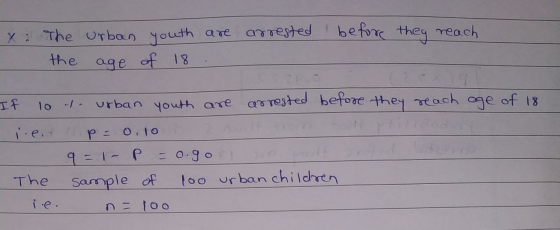
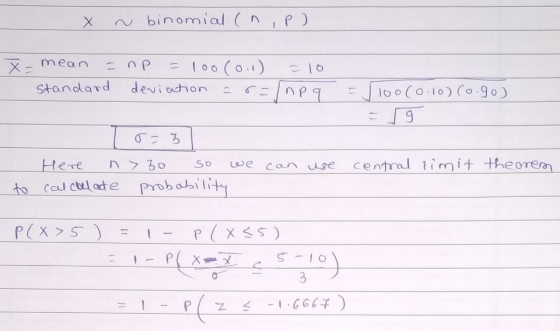
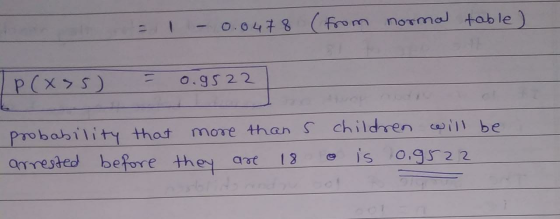
If 10% of urban youth are arrested before they reach the age of 18, what is the probability that in a sample of 100 urban children, more than 5 children will be arrested before they are 18?
Homework Answers
Add Answer to:
If 10% of urban youth are arrested before they reach the age of
18, what is...
A medical researcher claims that 5% of children under 18 years of age have asthma. In...
A medical researcher claims that 5% of children under 18 years of age have asthma. In a random sample of 300 children under 18 years of age, 24 children had asthma. Is this evidence that more than 5% of children under 18 years of age have asthma? The null and alternative Hypotheses for the Test are: HO : p = 0.05 HA : p > 0.05 The P-value for this test is 0.0086. Using a significance level of 0.10( α...
Thi a previous pol, 29% of adults with children under the age of 18 reported that...
 Thi a previous pol, 29% of adults with children under the age of 18 reported that their family ate dinner together seven nights a week. Suppose that, in a more recent poll..300 of 1096 adults with children under the age of 18 reported that their family to dinner together seven nights a week. Is there sufficient evidence that the aroportion of families with children under the age of 18 who eat dinner together seven nights a week has decreased? Use...
statistics question about smoking before 18 years of age According to an almanac, 70% of adult smokers started smokin...
 statistics question about smoking before 18 years of ageAccording to an almanac, 70% of adult smokers started smoking before turning 18 years oh When technology is used, use the Tech Help button for further assistance. (a) Compute the mean and standard deviation of the random variable X, the number of smokers who started before 18 in 100 trials of the probability experiment (b) Interpret the mean.(c) Would it be unusual to observe 80 smokers who started smoking before turning 18 years old...
A random sample of 40 adults with no children under the age of 18 years results...
 A random sample of 40 adults with no children under the age of 18 years results in a mean daily leisure time of 5.09 hours, with a standard deviation of 2.29 hours. A random sample of 40 adults with children under the age of 18 results in a mean daily leisure time of 4.31 hours, with a standard deviation of 1.65 hours. Construct and interpret a 95% confidence interval for the mean difference in leisure time between adults with no...
In a previous poll, 36% of adults with children under the age of 18 reported that...
 In a previous poll, 36% of adults with children under the age of 18 reported that their family ate dinner together seven nights a week. Suppose that, in a more recent poll, 378 of 1108 adults with children under the age of 18 reported that their family ate dinner together seven nights a week. Is there sufficient evidence that the proportion of families with children under the age of 18 who eat dinner together seven nights a week has decreased?...
14. A random sample of 40 adults with no children under the age of 18 years results in a mean dai...
 14. A random sample of 40 adults with no children under the age of 18 years results in a mean daily leisure time of 5.23 hours, with a standard deviation of 2.25 hours. A random sample of 40 adults with children under the age of 18 results in a mean daily leisure difference in leisure time between adults with no children and adults with children (1-H2 H represent the adults with children under the age of 18 The e0% (Round...
A random sample of 40 adults with no children under the age of 18 years results...
 A random sample of 40 adults with no children under the age of 18 years results in a mean daily leisure time of 5.57 hours, with a standard deviation of 241 hours. A random sample of 40 adults with children under the age of 18 results in a meandaly leisure time of 424 hours, with a standard deviation of 1.73 hours. Construct and interpreta 90% confidence interval for the mean difference in leisure time between adults with no children and...
A random sample of 40 adults with no children under the age of 18 years results...
 A random sample of 40 adults with no children under the age of 18 years results in a meandaly leisure time of 5.92 hours, with a standard deviation of 2.33 hours. A random sample of 40 adults with children under the age of 18 results in a mean daily leisure time of 4.26 hours, with a standard deviation of 1.61 hours. Construct and interpret a 95% confidence interval for the mean difference in leisure time between adults with no children...
A random sample of 40 adults with no children under the age of 18 years results...
 A random sample of 40 adults with no children under the age of 18 years results in a meandaly leisure time of 522 hours, with a standard deviation of 2.34 hours. A random sample of 40 adults with children under the age of 18 results in a mean daily leisure time of 4.37 hours, with a standard deviation of 1.52 hours. Construct and interpreta 95% confidence interval for the mean difference in leisure time belwoon adults with no children and...
A random sample of 40 adults with no children under the age of 18 years results...
 A random sample of 40 adults with no children under the age of 18 years results in a mean daily leisure time of 5.16 hours, with a standard deviation of 2.42 hours. A random sample of 40 adults with children under the age of 18 results in a mean daily leisure time of 4.16 hours, with a standard deviation of 1.58 hours. Construct and interpret a 90% confidence interval for the mean difference in leisure time between adults with no...
 Thi a previous pol, 29% of adults with children under the age of 18 reported that their family ate dinner together seven nights a week. Suppose that, in a more recent poll..300 of 1096 adults with children under the age of 18 reported that their family to dinner together seven nights a week. Is there sufficient evidence that the aroportion of families with children under the age of 18 who eat dinner together seven nights a week has decreased? Use...
 statistics question about smoking before 18 years of ageAccording to an almanac, 70% of adult smokers started smoking before turning 18 years oh When technology is used, use the Tech Help button for further assistance. (a) Compute the mean and standard deviation of the random variable X, the number of smokers who started before 18 in 100 trials of the probability experiment (b) Interpret the mean.(c) Would it be unusual to observe 80 smokers who started smoking before turning 18 years old...
 A random sample of 40 adults with no children under the age of 18 years results in a mean daily leisure time of 5.09 hours, with a standard deviation of 2.29 hours. A random sample of 40 adults with children under the age of 18 results in a mean daily leisure time of 4.31 hours, with a standard deviation of 1.65 hours. Construct and interpret a 95% confidence interval for the mean difference in leisure time between adults with no...
 In a previous poll, 36% of adults with children under the age of 18 reported that their family ate dinner together seven nights a week. Suppose that, in a more recent poll, 378 of 1108 adults with children under the age of 18 reported that their family ate dinner together seven nights a week. Is there sufficient evidence that the proportion of families with children under the age of 18 who eat dinner together seven nights a week has decreased?...
 14. A random sample of 40 adults with no children under the age of 18 years results in a mean daily leisure time of 5.23 hours, with a standard deviation of 2.25 hours. A random sample of 40 adults with children under the age of 18 results in a mean daily leisure difference in leisure time between adults with no children and adults with children (1-H2 H represent the adults with children under the age of 18 The e0% (Round...
 A random sample of 40 adults with no children under the age of 18 years results in a mean daily leisure time of 5.57 hours, with a standard deviation of 241 hours. A random sample of 40 adults with children under the age of 18 results in a meandaly leisure time of 424 hours, with a standard deviation of 1.73 hours. Construct and interpreta 90% confidence interval for the mean difference in leisure time between adults with no children and...
 A random sample of 40 adults with no children under the age of 18 years results in a meandaly leisure time of 5.92 hours, with a standard deviation of 2.33 hours. A random sample of 40 adults with children under the age of 18 results in a mean daily leisure time of 4.26 hours, with a standard deviation of 1.61 hours. Construct and interpret a 95% confidence interval for the mean difference in leisure time between adults with no children...
 A random sample of 40 adults with no children under the age of 18 years results in a meandaly leisure time of 522 hours, with a standard deviation of 2.34 hours. A random sample of 40 adults with children under the age of 18 results in a mean daily leisure time of 4.37 hours, with a standard deviation of 1.52 hours. Construct and interpreta 95% confidence interval for the mean difference in leisure time belwoon adults with no children and...
 A random sample of 40 adults with no children under the age of 18 years results in a mean daily leisure time of 5.16 hours, with a standard deviation of 2.42 hours. A random sample of 40 adults with children under the age of 18 results in a mean daily leisure time of 4.16 hours, with a standard deviation of 1.58 hours. Construct and interpret a 90% confidence interval for the mean difference in leisure time between adults with no...
Most questions answered within 3 hours.
-
Where is the error in this code sequence?
String s1 = "Hello";
String s2 = "ello";...
asked 11 months ago -
Financial data for Joel de Paris, Inc., for last year
follow:
Joel de Paris, Inc.
Balance...
asked 11 months ago -
Consider this reaction:
Al2(SO4)3 (aq)+ BaCl3
(aq) Al2Cl6 (aq)- +
3BaSO4(s) . What is the...
asked 11 months ago -
Suppose that Savneet is considering increasing her
recent random sample from 20 car rentals to 40...
asked 11 months ago -
Trucks arrive at an unloading terminal at an average rate of 120
per hour.
Trucks arrive...
asked 11 months ago -
Why are methanol and ethanol completely soluble in water while
octanol is not very little soluble....
asked 11 months ago -
A facilities manager at a university reads in a research report
that the mean amount of...
asked 11 months ago -
When the CuSO4 is rehydrated by adding water to the anhydrous
compound, is this an endothermic...
asked 11 months ago -
A ray of sunlight is passing from diamond into crown glass; the
angle of incidence is...
asked 11 months ago -
A block of mass 0.249 kg is placed on top of a light, vertical
spring of...
asked 11 months ago -
how do the kidneys compensate in the presences of acidosis
a) trigger hyperventilate
b) reserve acid...
asked 11 months ago -
Question 501 pts
The rental rate of capital to the firm increases. Which of the
following...
asked 11 months ago