
Homework Answers

Provide an efticient synthesis tor each of the tollowing transtormations: OCH3 OH CN 1 N 2....
 Provide an efticient synthesis tor each of the tollowing transtormations: OCH3 OH CN 1 N 2. OH H 3. Br 4. Но 5. кCN. HСІ но LO
Provide an efticient synthesis tor each of the tollowing transtormations: OCH3 OH CN 1 N 2. OH H 3. Br 4. Но 5. кCN. HСІ но LO
Provide an efticient synthesis tor each of the tollowing transtormations: OCH3 OH CN 1 N 2. OH H 3. Br 4. Но 5. кCN. HСІ но LO
1. For each of the following complexes, give the electron configurations of the d-type M Os,...
 1. For each of the following complexes, give the electron configurations of the d-type M Os, for tetrahedral complexes. Also ie ) (e) for octahedral complexes and (e( ch complex in units of the Bohr , Fe(CN) 3, CoCl , Ni(CO)4, Ti(H2O) +, magnet n f.в Co ( NH3) 3+, Co(FLO)r", Fe(CN) V Fa". Cu(H2O) г., CuCl? , V(CO), Cr(CO) each octahedral complex is high-spi the ligand field theory notes). ust use your judgment as to whether n or low-spin...
No No What is the most likely mechanism for the reaction below? (HỤC HC-N-CH(CH4)2 Oswa Os...
 No No What is the most likely mechanism for the reaction below? (HỤC HC-N-CH(CH4)2 Oswa Os o sul What is the most likely mechanism for the reaction below? Br (H3C)HC-N-CH(CH3)2 O SN²
CH 3 CH 2 13 CH3 CH 3 CH 2 and ан = = Br and...
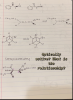 CH 3 CH 2 13 CH3 CH 3 CH 2 and ан = = Br and t Optically Stereochemistry active? What is the CN-OH relationship? но- N Homme HONG 2010
3. Assign E or Z configuration of the following alkenes; CH CH OH non CH CH,...
 3. Assign E or Z configuration of the following alkenes; CH CH OH non CH CH, CH COOCH3 c) CHO CH, CH,CH CH.CH NC CHINH Сс OCH CH-CO-HN CH NHCH
The E? values for two low-spin iron complexes in acidic solution are as follows: [Fe(o?phen)3]3+(aq)+e? ?[Fe(o?phen)3...
The E? values for two low-spin iron complexes in acidic solution are as follows: [Fe(o?phen)3]3+(aq)+e? ?[Fe(o?phen)3]2+(aq) E?=1.12V [Fe(CN)6]3?(aq)+e? ?[Fe(CN)6]4?(aq) E?=0.36V Part A Which complex is more difficult to reduce? [Fe(o-phen)3]3+ [Fe(CN)6]3? PArt B Is it thermodynamically favorable to reduce both Fe(III) complexes to their Fe(II) analogs? yes no
Calculate E, AG®, and K for each of the following reactions. (The Faraday's constant is 9.64853399 x 10⁴ Coulombs/mole....
 Calculate E, AG®, and K for each of the following reactions. (The Faraday's constant is 9.64853399 x 10⁴ Coulombs/mole.) compound E* (volts) 1.92 Co 3+ og 1.2291 Ag(S203)23- Fe(CN)63- 0.017 0.356 (a) 4 CO3+ (aq) + 2 H20(I) = 4 Co2+ (aq) + O2(g) + 4H+(aq) AGⓇ 4.9.) Enter a number with the correct number of significant figures. (Enter your answer to 3 significant figures.) (b) Ag(S203)23-(aq) + Fe(CN)64-(aq) = Ag(s) + 2 52032-(aq) + Fe(CN)63-(aq) AGⓇ 49) K 49)...
A natural gas containing 82 mole% CH, and the balance C2H6 is used as a fuel...
 A natural gas containing 82 mole% CH, and the balance C2H6 is used as a fuel to generate steam in an industrial plant (Figure 2). The natural gas is fed into a furnace at 25°C and burned at a rate of 10.000 mol/hr with 20% excess air. The heat transferred from the furnace is used to convert a liquid feed water at 25 °C into a saturated steam at 30 bar. During the combustion of natural gas, all the CH,...
3. Assign E or Z configuration of the following alkenes; CH,OH CH-CH, COOCH, CH b) CH_CH...
 3. Assign E or Z configuration of the following alkenes; CH,OH CH-CH, COOCH, CH b) CH_CH CH " CH, CHCHOL OH NC 2 CHÁNH, " OCH CH-CO-HN CH NHCH CH 4. Draw structures corresponding to the following systematic names; a) 1-isopropyl-4-methylcyclohexene b) 3-butyl-2-heptene c) 4-methyl-1,2- hexadiene d) trans-3,3-dimethyl-4-propyl-1,5-octadiene e) (42) -2,4-diethyl-1,4-hexadiene 1) 1.2-propadiene g) (32,5E) -2,6-dimethyl-1,3,5,7-octatetraene h) cis-2,2,5,5- tetramethyl-3-hexene i) Methylenecyclohexane j) trans- 1,2 divinylcyclohexane
Date: 1117 mework 10 - Ch. 21-23 A) CN B)NO c)r D) CO Name: E ) en 24. Place the ligands, CN-, Br., H2O, and OH-in o...
 Date: 1117 mework 10 - Ch. 21-23 A) CN B)NO c)r D) CO Name: E ) en 24. Place the ligands, CN-, Br., H2O, and OH-in order from least to greatest according ability to split the d orbital energy level. A) CN-, OH, H2O, Br- C) Br,H20, CN-, OH- B) Br., OH, H2O, CN- D) None of the above 25. The charge on the central metal ion in (Cr(NH3)(CO3)2+ is A)-1. B) 0. C) 1. D) 3. E) 5 26....
 Provide an efticient synthesis tor each of the tollowing transtormations: OCH3 OH CN 1 N 2. OH H 3. Br 4. Но 5. кCN. HСІ но LO
Provide an efticient synthesis tor each of the tollowing transtormations: OCH3 OH CN 1 N 2. OH H 3. Br 4. Но 5. кCN. HСІ но LO
Provide an efticient synthesis tor each of the tollowing transtormations: OCH3 OH CN 1 N 2. OH H 3. Br 4. Но 5. кCN. HСІ но LO
 1. For each of the following complexes, give the electron configurations of the d-type M Os, for tetrahedral complexes. Also ie ) (e) for octahedral complexes and (e( ch complex in units of the Bohr , Fe(CN) 3, CoCl , Ni(CO)4, Ti(H2O) +, magnet n f.в Co ( NH3) 3+, Co(FLO)r", Fe(CN) V Fa". Cu(H2O) г., CuCl? , V(CO), Cr(CO) each octahedral complex is high-spi the ligand field theory notes). ust use your judgment as to whether n or low-spin...
 No No What is the most likely mechanism for the reaction below? (HỤC HC-N-CH(CH4)2 Oswa Os o sul What is the most likely mechanism for the reaction below? Br (H3C)HC-N-CH(CH3)2 O SN²
 CH 3 CH 2 13 CH3 CH 3 CH 2 and ан = = Br and t Optically Stereochemistry active? What is the CN-OH relationship? но- N Homme HONG 2010
 3. Assign E or Z configuration of the following alkenes; CH CH OH non CH CH, CH COOCH3 c) CHO CH, CH,CH CH.CH NC CHINH Сс OCH CH-CO-HN CH NHCH
 Calculate E, AG®, and K for each of the following reactions. (The Faraday's constant is 9.64853399 x 10⁴ Coulombs/mole.) compound E* (volts) 1.92 Co 3+ og 1.2291 Ag(S203)23- Fe(CN)63- 0.017 0.356 (a) 4 CO3+ (aq) + 2 H20(I) = 4 Co2+ (aq) + O2(g) + 4H+(aq) AGⓇ 4.9.) Enter a number with the correct number of significant figures. (Enter your answer to 3 significant figures.) (b) Ag(S203)23-(aq) + Fe(CN)64-(aq) = Ag(s) + 2 52032-(aq) + Fe(CN)63-(aq) AGⓇ 49) K 49)...
 A natural gas containing 82 mole% CH, and the balance C2H6 is used as a fuel to generate steam in an industrial plant (Figure 2). The natural gas is fed into a furnace at 25°C and burned at a rate of 10.000 mol/hr with 20% excess air. The heat transferred from the furnace is used to convert a liquid feed water at 25 °C into a saturated steam at 30 bar. During the combustion of natural gas, all the CH,...
 3. Assign E or Z configuration of the following alkenes; CH,OH CH-CH, COOCH, CH b) CH_CH CH " CH, CHCHOL OH NC 2 CHÁNH, " OCH CH-CO-HN CH NHCH CH 4. Draw structures corresponding to the following systematic names; a) 1-isopropyl-4-methylcyclohexene b) 3-butyl-2-heptene c) 4-methyl-1,2- hexadiene d) trans-3,3-dimethyl-4-propyl-1,5-octadiene e) (42) -2,4-diethyl-1,4-hexadiene 1) 1.2-propadiene g) (32,5E) -2,6-dimethyl-1,3,5,7-octatetraene h) cis-2,2,5,5- tetramethyl-3-hexene i) Methylenecyclohexane j) trans- 1,2 divinylcyclohexane
 Date: 1117 mework 10 - Ch. 21-23 A) CN B)NO c)r D) CO Name: E ) en 24. Place the ligands, CN-, Br., H2O, and OH-in order from least to greatest according ability to split the d orbital energy level. A) CN-, OH, H2O, Br- C) Br,H20, CN-, OH- B) Br., OH, H2O, CN- D) None of the above 25. The charge on the central metal ion in (Cr(NH3)(CO3)2+ is A)-1. B) 0. C) 1. D) 3. E) 5 26....
Most questions answered within 3 hours.
-
Where is the error in this code sequence?
String s1 = "Hello";
String s2 = "ello";...
asked 10 months ago -
Financial data for Joel de Paris, Inc., for last year
follow:
Joel de Paris, Inc.
Balance...
asked 10 months ago -
Consider this reaction:
Al2(SO4)3 (aq)+ BaCl3
(aq) Al2Cl6 (aq)- +
3BaSO4(s) . What is the...
asked 10 months ago -
Suppose that Savneet is considering increasing her
recent random sample from 20 car rentals to 40...
asked 10 months ago -
Trucks arrive at an unloading terminal at an average rate of 120
per hour.
Trucks arrive...
asked 10 months ago -
Why are methanol and ethanol completely soluble in water while
octanol is not very little soluble....
asked 10 months ago -
A facilities manager at a university reads in a research report
that the mean amount of...
asked 10 months ago -
When the CuSO4 is rehydrated by adding water to the anhydrous
compound, is this an endothermic...
asked 10 months ago -
A ray of sunlight is passing from diamond into crown glass; the
angle of incidence is...
asked 10 months ago -
A block of mass 0.249 kg is placed on top of a light, vertical
spring of...
asked 10 months ago -
how do the kidneys compensate in the presences of acidosis
a) trigger hyperventilate
b) reserve acid...
asked 10 months ago -
Question 501 pts
The rental rate of capital to the firm increases. Which of the
following...
asked 10 months ago