

Homework Answers


Add Answer to:
b) Assume that 100 and the op amp is ideal except for finite gain a the...
Problem 1. Assume the op-amp in the following circuit is ideal. The op-amp supply voltages are:...
 Problem 1. Assume the op-amp in the following circuit is ideal. The op-amp supply voltages are: +V-15V and -Va-15V Use the node voltage method to find the following quantities: a) a b) Va c) Vo (you should get Vo -6.5 V) 50k Ω 30k Ω 10k Ω 10k Ω 0.5 v
Problem 2: In the circuit shown assume the Op-Amp is ideal. A) Find vo as a...
 Problem 2: In the circuit shown assume the Op-Amp is ideal. A) Find vo as a function of vi and vs. B) Next assume the Op-Amp is ideal, except its low frequency gain is Ao= 100 V/V. Now find vo as a function of vi and v2. C) The Op-Amp has a terminal frequency of fi 10° Hz, find the -3 dB (corner) frequency of the output signal w2 10K
In Figure 7, VBE(ON)-.7v, Vee(SAT)-.lu, β-100 and the Op-Amp is ideal. Find VO V2 R2 R1...
 In Figure 7, VBE(ON)-.7v, Vee(SAT)-.lu, β-100 and the Op-Amp is ideal. Find VO V2 R2 R1 1k 100k U2 V1 Q1 Q2 Vo 16V 10k R5 OPAMP .5k 20k Figure 9
Assuming an ideal op-amp, find the voltage gain G Two Question Plz!!!!!!!!!!!!!!!!!!!! 1. Assuming an ideal...
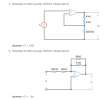 Assuming an ideal op-amp, find the voltage gain G
Two Question Plz!!!!!!!!!!!!!!!!!!!!
1. Assuming an ideal op-amp, find the voltage gain G 0 0 Answer: G 1.03 2. Assuming an ideal op-amp, find the voltage gain G 18 kΩ 100 Ω 150 Ω 0 Answer: G-24
Assuming an ideal op-amp, find the voltage gain G
Two Question Plz!!!!!!!!!!!!!!!!!!!!
1. Assuming an ideal op-amp, find the voltage gain G 0 0 Answer: G 1.03 2. Assuming an ideal op-amp, find the voltage gain G 18 kΩ 100 Ω 150 Ω 0 Answer: G-24
Can you solve this exercise? I) 20pts Given the following circuit oscillator. Assume an ideal Op Amp. R1 Vo Cl Vf R2 C2...
 Can you solve this exercise?
I) 20pts Given the following circuit oscillator. Assume an ideal Op Amp. R1 Vo Cl Vf R2 C2 R' I) a-What is the nature of this oscillator b- Identify on the circuit the amplifier circuit and the feedback circuit. 2) a- Express the gain of the amplifier A -Vo/Vf b- Express the feedback fraction B Vf/Vo -e-Find and draw the modulus and phase angle of B in terms of ω 3) a- Write the oscillation...
Can you solve this exercise?
I) 20pts Given the following circuit oscillator. Assume an ideal Op Amp. R1 Vo Cl Vf R2 C2 R' I) a-What is the nature of this oscillator b- Identify on the circuit the amplifier circuit and the feedback circuit. 2) a- Express the gain of the amplifier A -Vo/Vf b- Express the feedback fraction B Vf/Vo -e-Find and draw the modulus and phase angle of B in terms of ω 3) a- Write the oscillation...
56 kO io The following op amp is ideal Calculate the closed-loop gain, vo , vi...
 56 kO io The following op amp is ideal Calculate the closed-loop gain, vo , vi At what value of vi does the amplifier saturate? Find vo and 'o for vi = 0.5 V and Vi = 2 V 22 kΩ Vo Vi 100 Ω
Problem 4 : The op amp is ideal, if the closed - loop gain of the...
 Problem 4
:
The
op amp is ideal, if the closed
-
loop gain of the
following circuit is G=v
0
/v
s
=
-
5
0
, calculate
the value of the unknown resistor R
x
.
Figure 4
Problem 4: The op amp is ideal, if the closed-loop gain of the following circuit is G-Vo/vis 50, calculate e value of the unknown resistor Rx 5 ΚΩ 50 KS2 2 ΚΩ Figure 4
Problem 4
:
The
op amp is ideal, if the closed
-
loop gain of the
following circuit is G=v
0
/v
s
=
-
5
0
, calculate
the value of the unknown resistor R
x
.
Figure 4
Problem 4: The op amp is ideal, if the closed-loop gain of the following circuit is G-Vo/vis 50, calculate e value of the unknown resistor Rx 5 ΚΩ 50 KS2 2 ΚΩ Figure 4
Problem 2 In the circuit shown, assume that the op-amp is not ideal but has a...
 Problem 2 In the circuit shown, assume that the op-amp is not ideal but has a finite gain Aod. Determine the expression of the current I as a function of Vi and Aod. 2.
You have an otherwise ideal op-amp with an open-loop gain of 20. Design an inverting amplifier...
You have an otherwise ideal op-amp with an open-loop gain of 20. Design an inverting amplifier with this single op-amp so that it has a DC gain of -5 ±0.1. Also, please explain how this design works in words.
1. Find the operating point of the circuit below assuming the op amp is ideal 2. Estimate the midband voltage gain Avs-...
 1. Find the operating point of the circuit below assuming the op amp is ideal 2. Estimate the midband voltage gain Avs-vo v, 3. Choose values for C1 and C2 so that the pole frequency associated with Ci is 1 Hz and the pole frequency associated with C is 400 Hz. 4. At what frequency fz does a zero occur? 6. Why does the amplifier's gain drop at high frequencies? C2 R1 R2 99K C2] 2K param C2 0.1uF U1...
 Problem 1. Assume the op-amp in the following circuit is ideal. The op-amp supply voltages are: +V-15V and -Va-15V Use the node voltage method to find the following quantities: a) a b) Va c) Vo (you should get Vo -6.5 V) 50k Ω 30k Ω 10k Ω 10k Ω 0.5 v
 Problem 2: In the circuit shown assume the Op-Amp is ideal. A) Find vo as a function of vi and vs. B) Next assume the Op-Amp is ideal, except its low frequency gain is Ao= 100 V/V. Now find vo as a function of vi and v2. C) The Op-Amp has a terminal frequency of fi 10° Hz, find the -3 dB (corner) frequency of the output signal w2 10K
 In Figure 7, VBE(ON)-.7v, Vee(SAT)-.lu, β-100 and the Op-Amp is ideal. Find VO V2 R2 R1 1k 100k U2 V1 Q1 Q2 Vo 16V 10k R5 OPAMP .5k 20k Figure 9
 Assuming an ideal op-amp, find the voltage gain G
Two Question Plz!!!!!!!!!!!!!!!!!!!!
1. Assuming an ideal op-amp, find the voltage gain G 0 0 Answer: G 1.03 2. Assuming an ideal op-amp, find the voltage gain G 18 kΩ 100 Ω 150 Ω 0 Answer: G-24
Assuming an ideal op-amp, find the voltage gain G
Two Question Plz!!!!!!!!!!!!!!!!!!!!
1. Assuming an ideal op-amp, find the voltage gain G 0 0 Answer: G 1.03 2. Assuming an ideal op-amp, find the voltage gain G 18 kΩ 100 Ω 150 Ω 0 Answer: G-24
 Can you solve this exercise?
I) 20pts Given the following circuit oscillator. Assume an ideal Op Amp. R1 Vo Cl Vf R2 C2 R' I) a-What is the nature of this oscillator b- Identify on the circuit the amplifier circuit and the feedback circuit. 2) a- Express the gain of the amplifier A -Vo/Vf b- Express the feedback fraction B Vf/Vo -e-Find and draw the modulus and phase angle of B in terms of ω 3) a- Write the oscillation...
Can you solve this exercise?
I) 20pts Given the following circuit oscillator. Assume an ideal Op Amp. R1 Vo Cl Vf R2 C2 R' I) a-What is the nature of this oscillator b- Identify on the circuit the amplifier circuit and the feedback circuit. 2) a- Express the gain of the amplifier A -Vo/Vf b- Express the feedback fraction B Vf/Vo -e-Find and draw the modulus and phase angle of B in terms of ω 3) a- Write the oscillation...
 56 kO io The following op amp is ideal Calculate the closed-loop gain, vo , vi At what value of vi does the amplifier saturate? Find vo and 'o for vi = 0.5 V and Vi = 2 V 22 kΩ Vo Vi 100 Ω
 Problem 4
:
The
op amp is ideal, if the closed
-
loop gain of the
following circuit is G=v
0
/v
s
=
-
5
0
, calculate
the value of the unknown resistor R
x
.
Figure 4
Problem 4: The op amp is ideal, if the closed-loop gain of the following circuit is G-Vo/vis 50, calculate e value of the unknown resistor Rx 5 ΚΩ 50 KS2 2 ΚΩ Figure 4
Problem 4
:
The
op amp is ideal, if the closed
-
loop gain of the
following circuit is G=v
0
/v
s
=
-
5
0
, calculate
the value of the unknown resistor R
x
.
Figure 4
Problem 4: The op amp is ideal, if the closed-loop gain of the following circuit is G-Vo/vis 50, calculate e value of the unknown resistor Rx 5 ΚΩ 50 KS2 2 ΚΩ Figure 4
 Problem 2 In the circuit shown, assume that the op-amp is not ideal but has a finite gain Aod. Determine the expression of the current I as a function of Vi and Aod. 2.
 1. Find the operating point of the circuit below assuming the op amp is ideal 2. Estimate the midband voltage gain Avs-vo v, 3. Choose values for C1 and C2 so that the pole frequency associated with Ci is 1 Hz and the pole frequency associated with C is 400 Hz. 4. At what frequency fz does a zero occur? 6. Why does the amplifier's gain drop at high frequencies? C2 R1 R2 99K C2] 2K param C2 0.1uF U1...
Most questions answered within 3 hours.
-
Where is the error in this code sequence?
String s1 = "Hello";
String s2 = "ello";...
asked 10 months ago -
Financial data for Joel de Paris, Inc., for last year
follow:
Joel de Paris, Inc.
Balance...
asked 10 months ago -
Consider this reaction:
Al2(SO4)3 (aq)+ BaCl3
(aq) Al2Cl6 (aq)- +
3BaSO4(s) . What is the...
asked 10 months ago -
Suppose that Savneet is considering increasing her
recent random sample from 20 car rentals to 40...
asked 10 months ago -
Trucks arrive at an unloading terminal at an average rate of 120
per hour.
Trucks arrive...
asked 10 months ago -
Why are methanol and ethanol completely soluble in water while
octanol is not very little soluble....
asked 10 months ago -
A facilities manager at a university reads in a research report
that the mean amount of...
asked 10 months ago -
When the CuSO4 is rehydrated by adding water to the anhydrous
compound, is this an endothermic...
asked 10 months ago -
A ray of sunlight is passing from diamond into crown glass; the
angle of incidence is...
asked 10 months ago -
A block of mass 0.249 kg is placed on top of a light, vertical
spring of...
asked 10 months ago -
how do the kidneys compensate in the presences of acidosis
a) trigger hyperventilate
b) reserve acid...
asked 10 months ago -
Question 501 pts
The rental rate of capital to the firm increases. Which of the
following...
asked 10 months ago