
Homework Answers

![30x sa Yout(s) Vines) [5+ 40 st the 300k] : Vout(s) VinLs) 30 .5. T5 + nost te 300k Givey poles, s=-10 + 1100 sto s & t 300k](http://img.homeworklib.com/questions/84803d60-a4fe-11ea-9e9e-59f87d0152f7.png?x-oss-process=image/resize,w_560)

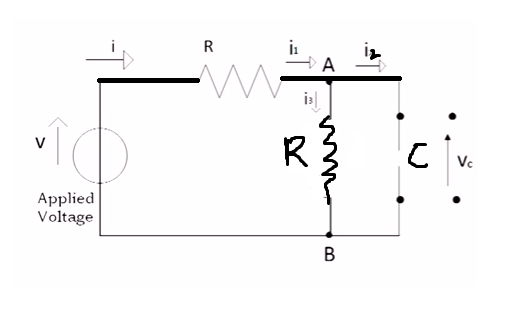
Find the transfer function of the given electrical circuit shown below
Add Answer to:
Questions 11 - 14: For the circuit shown below find the following. 11.) The transfer function...
Q11 (20pts.): For the circuit shown below Derive the transfer function, H(s) assuming the OPAMP's transfer...
 Q11 (20pts.): For the circuit shown below Derive the transfer function, H(s) assuming the OPAMP's transfer function is. If you like you can assumeA 106 Plot the bode plot of H(s) Derive the time domain step response. Plot the time domain step response This is a tricky problem! The LTspice file can be found here. .tran 2 V1 U1 out V2 R1 R2 in V3 1k 10k PULSE(-5 50 1102)
1. Consider the circuit shown below. Cl e, (0) c, e。(t) Find the transfer function below using t...
 Please help with this dynamics circuit
analysis.
Please show work and explain.
Thank you!!
1. Consider the circuit shown below. Cl e, (0) c, e。(t) Find the transfer function below using time-domain and impedance methods. (a) Determine the differential equation for the relationship between eo(1) and e(1) (b) Find the transfer function E, (s)/E,(s) and determine the system time constant in terms of the circuit element values C, C, and R 17 2 (c) Find the transfer function E, (s)/E,...
Please help with this dynamics circuit
analysis.
Please show work and explain.
Thank you!!
1. Consider the circuit shown below. Cl e, (0) c, e。(t) Find the transfer function below using time-domain and impedance methods. (a) Determine the differential equation for the relationship between eo(1) and e(1) (b) Find the transfer function E, (s)/E,(s) and determine the system time constant in terms of the circuit element values C, C, and R 17 2 (c) Find the transfer function E, (s)/E,...
5. Draw the magnitude characteristic of the Bode plot of the following transfer function: H(s)10(10s +11...
 5. Draw the magnitude characteristic of the Bode plot of the following transfer function: H(s)10(10s +11 (S + 200)2 Identify the poles and zeros Sketch the magnitude plot. The y-axis should be in dB. The x-axis should logarithmic, but labeled in rad/sec e) f) g) Use MATLAB to draw the complete Bode plot and check your answer. h) If the input current is VIN(t)-10 cos(t+35"),what is the output voltage. Use your MATLAB Bode plot to answer this.
6. The circuit shown below is common in radio receivers. The dependent source is created using...
 6. The circuit shown below is common in radio receivers. The dependent source is created using a device known as a transistor. R2 VX VOUT - RS 9m Vx R = 5002 R2 = 20000 9m = 0.0385 A/V C = 2.3374nF L = 1nH Ry = 100k 22 a) Determine the transfer function H(s) = OUT. It should have the form: VIN Vout aus? + ans + do H(S) = 1 VIN b2s2 + bis + 1 Provide the...
MATLAB question. Please answer all the questions and also upload the code by MATLAB. Thanks. Down vote if no code provided. For the circuit shown above, at the moment t = 0, the switch is closed, fin...
 MATLAB question. Please answer all the questions and also upload
the code by MATLAB. Thanks. Down vote if no code provided.
For the circuit shown above, at the moment t = 0, the switch is closed, find w(t) for 120, No energy is stored in the capacitor and inductor at moment t-0 1. Write the dynamic model for RLC circuit after t> 0? a. Show all vour work and calculations b. Write down the characteristic equation of the transfer function...
MATLAB question. Please answer all the questions and also upload
the code by MATLAB. Thanks. Down vote if no code provided.
For the circuit shown above, at the moment t = 0, the switch is closed, find w(t) for 120, No energy is stored in the capacitor and inductor at moment t-0 1. Write the dynamic model for RLC circuit after t> 0? a. Show all vour work and calculations b. Write down the characteristic equation of the transfer function...
PROBLEM 1 Consider the transfer function T(S) =s5 +2s4 + 2s3 + 4s2 + s + 2 a) Using the Routh-Hurwitz method, determine whether the system is stable. If it is not stable, how many poles are in the...
 PROBLEM 1 Consider the transfer function T(S) =s5 +2s4 + 2s3 + 4s2 + s + 2 a) Using the Routh-Hurwitz method, determine whether the system is stable. If it is not stable, how many poles are in the right-half plane? b) Using MATLAB, compute the poles of T(s) and verify the result in part a) c) Plot the unit step response and discuss the results. (Report should include: Code, Figure 1.Unit step response, answers and conclusion)
PROBLEM 1 Consider...
PROBLEM 1 Consider the transfer function T(S) =s5 +2s4 + 2s3 + 4s2 + s + 2 a) Using the Routh-Hurwitz method, determine whether the system is stable. If it is not stable, how many poles are in the right-half plane? b) Using MATLAB, compute the poles of T(s) and verify the result in part a) c) Plot the unit step response and discuss the results. (Report should include: Code, Figure 1.Unit step response, answers and conclusion)
PROBLEM 1 Consider...
Use MATLAB to find the step response (plot) of a system with the following transfer function:...
 Use MATLAB to find the step response (plot) of a system with the following transfer function: G(S) = (s + 1) (s + 2) (s2 + 5s + 8) Copy and paste your MATLAB commands. Copy and paste the step response plot.
Problem 1: (Time Response) Derive the transfer function (s) of the electrical circuit shown below. Then...
 Problem 1: (Time Response) Derive the transfer function (s) of the electrical circuit shown below. Then obtain the response e (0) when the input (1) is a unit step of magnitude E, (i.e., e(t) = E, (t)). Assume that the initial charge in the capacitor is zero. e/o)
Consider the automobile cruise-control system shown below: Engine ActuatorCarburetor 0.833 and load 40 3s +1 Compensator R(s)E(s) Ge(s) s +1 -t e(t) Sensor 0.03 1) Derive the closed-loop transfer fun...
 Consider the automobile cruise-control system shown below: Engine ActuatorCarburetor 0.833 and load 40 3s +1 Compensator R(s)E(s) Ge(s) s +1 -t e(t) Sensor 0.03 1) Derive the closed-loop transfer function of V(s)/R(s) when Gc(s)-1 2) Derive the closed-loop transfer function of E(s)/R(s) when Ge(s)-1 3) Plot the time history of the error e(t) of the closed-loop system when r(t) is a unit step input. 4) Plot the root-loci of the uncompensated system (when Gc(s)-1). Mark the closed-loop complex poles on...
QUESTION #2 PLEASE 1. Derive the transfer function for the circuit shown below. Plot H(s) versus...
 QUESTION #2 PLEASE
1. Derive the transfer function for the circuit shown below. Plot H(s) versus frequency in Hertz, on a semilog scale. Ri 11.3 k Ri 22.6 k R R = 68.1 kN R3 C C 0.01 uF R2 Vout(s) Vin(s) C2 10 (s+5) H(s) = (s+100)(s5000) , (a) draw the magnitude Bode plot 2. For the transfer function and find the approximate maximum value of (H(jw) in dB, (b) find the value of w where 1 for w>5...
QUESTION #2 PLEASE
1. Derive the transfer function for the circuit shown below. Plot H(s) versus frequency in Hertz, on a semilog scale. Ri 11.3 k Ri 22.6 k R R = 68.1 kN R3 C C 0.01 uF R2 Vout(s) Vin(s) C2 10 (s+5) H(s) = (s+100)(s5000) , (a) draw the magnitude Bode plot 2. For the transfer function and find the approximate maximum value of (H(jw) in dB, (b) find the value of w where 1 for w>5...
 Q11 (20pts.): For the circuit shown below Derive the transfer function, H(s) assuming the OPAMP's transfer function is. If you like you can assumeA 106 Plot the bode plot of H(s) Derive the time domain step response. Plot the time domain step response This is a tricky problem! The LTspice file can be found here. .tran 2 V1 U1 out V2 R1 R2 in V3 1k 10k PULSE(-5 50 1102)
 Please help with this dynamics circuit
analysis.
Please show work and explain.
Thank you!!
1. Consider the circuit shown below. Cl e, (0) c, e。(t) Find the transfer function below using time-domain and impedance methods. (a) Determine the differential equation for the relationship between eo(1) and e(1) (b) Find the transfer function E, (s)/E,(s) and determine the system time constant in terms of the circuit element values C, C, and R 17 2 (c) Find the transfer function E, (s)/E,...
Please help with this dynamics circuit
analysis.
Please show work and explain.
Thank you!!
1. Consider the circuit shown below. Cl e, (0) c, e。(t) Find the transfer function below using time-domain and impedance methods. (a) Determine the differential equation for the relationship between eo(1) and e(1) (b) Find the transfer function E, (s)/E,(s) and determine the system time constant in terms of the circuit element values C, C, and R 17 2 (c) Find the transfer function E, (s)/E,...
 5. Draw the magnitude characteristic of the Bode plot of the following transfer function: H(s)10(10s +11 (S + 200)2 Identify the poles and zeros Sketch the magnitude plot. The y-axis should be in dB. The x-axis should logarithmic, but labeled in rad/sec e) f) g) Use MATLAB to draw the complete Bode plot and check your answer. h) If the input current is VIN(t)-10 cos(t+35"),what is the output voltage. Use your MATLAB Bode plot to answer this.
 6. The circuit shown below is common in radio receivers. The dependent source is created using a device known as a transistor. R2 VX VOUT - RS 9m Vx R = 5002 R2 = 20000 9m = 0.0385 A/V C = 2.3374nF L = 1nH Ry = 100k 22 a) Determine the transfer function H(s) = OUT. It should have the form: VIN Vout aus? + ans + do H(S) = 1 VIN b2s2 + bis + 1 Provide the...
 MATLAB question. Please answer all the questions and also upload
the code by MATLAB. Thanks. Down vote if no code provided.
For the circuit shown above, at the moment t = 0, the switch is closed, find w(t) for 120, No energy is stored in the capacitor and inductor at moment t-0 1. Write the dynamic model for RLC circuit after t> 0? a. Show all vour work and calculations b. Write down the characteristic equation of the transfer function...
MATLAB question. Please answer all the questions and also upload
the code by MATLAB. Thanks. Down vote if no code provided.
For the circuit shown above, at the moment t = 0, the switch is closed, find w(t) for 120, No energy is stored in the capacitor and inductor at moment t-0 1. Write the dynamic model for RLC circuit after t> 0? a. Show all vour work and calculations b. Write down the characteristic equation of the transfer function...
 PROBLEM 1 Consider the transfer function T(S) =s5 +2s4 + 2s3 + 4s2 + s + 2 a) Using the Routh-Hurwitz method, determine whether the system is stable. If it is not stable, how many poles are in the right-half plane? b) Using MATLAB, compute the poles of T(s) and verify the result in part a) c) Plot the unit step response and discuss the results. (Report should include: Code, Figure 1.Unit step response, answers and conclusion)
PROBLEM 1 Consider...
PROBLEM 1 Consider the transfer function T(S) =s5 +2s4 + 2s3 + 4s2 + s + 2 a) Using the Routh-Hurwitz method, determine whether the system is stable. If it is not stable, how many poles are in the right-half plane? b) Using MATLAB, compute the poles of T(s) and verify the result in part a) c) Plot the unit step response and discuss the results. (Report should include: Code, Figure 1.Unit step response, answers and conclusion)
PROBLEM 1 Consider...
 Use MATLAB to find the step response (plot) of a system with the following transfer function: G(S) = (s + 1) (s + 2) (s2 + 5s + 8) Copy and paste your MATLAB commands. Copy and paste the step response plot.
 Problem 1: (Time Response) Derive the transfer function (s) of the electrical circuit shown below. Then obtain the response e (0) when the input (1) is a unit step of magnitude E, (i.e., e(t) = E, (t)). Assume that the initial charge in the capacitor is zero. e/o)
 Consider the automobile cruise-control system shown below: Engine ActuatorCarburetor 0.833 and load 40 3s +1 Compensator R(s)E(s) Ge(s) s +1 -t e(t) Sensor 0.03 1) Derive the closed-loop transfer function of V(s)/R(s) when Gc(s)-1 2) Derive the closed-loop transfer function of E(s)/R(s) when Ge(s)-1 3) Plot the time history of the error e(t) of the closed-loop system when r(t) is a unit step input. 4) Plot the root-loci of the uncompensated system (when Gc(s)-1). Mark the closed-loop complex poles on...
 QUESTION #2 PLEASE
1. Derive the transfer function for the circuit shown below. Plot H(s) versus frequency in Hertz, on a semilog scale. Ri 11.3 k Ri 22.6 k R R = 68.1 kN R3 C C 0.01 uF R2 Vout(s) Vin(s) C2 10 (s+5) H(s) = (s+100)(s5000) , (a) draw the magnitude Bode plot 2. For the transfer function and find the approximate maximum value of (H(jw) in dB, (b) find the value of w where 1 for w>5...
QUESTION #2 PLEASE
1. Derive the transfer function for the circuit shown below. Plot H(s) versus frequency in Hertz, on a semilog scale. Ri 11.3 k Ri 22.6 k R R = 68.1 kN R3 C C 0.01 uF R2 Vout(s) Vin(s) C2 10 (s+5) H(s) = (s+100)(s5000) , (a) draw the magnitude Bode plot 2. For the transfer function and find the approximate maximum value of (H(jw) in dB, (b) find the value of w where 1 for w>5...
Most questions answered within 3 hours.
-
Where is the error in this code sequence?
String s1 = "Hello";
String s2 = "ello";...
asked 10 months ago -
Financial data for Joel de Paris, Inc., for last year
follow:
Joel de Paris, Inc.
Balance...
asked 10 months ago -
Consider this reaction:
Al2(SO4)3 (aq)+ BaCl3
(aq) Al2Cl6 (aq)- +
3BaSO4(s) . What is the...
asked 10 months ago -
Suppose that Savneet is considering increasing her
recent random sample from 20 car rentals to 40...
asked 10 months ago -
Trucks arrive at an unloading terminal at an average rate of 120
per hour.
Trucks arrive...
asked 10 months ago -
Why are methanol and ethanol completely soluble in water while
octanol is not very little soluble....
asked 10 months ago -
A facilities manager at a university reads in a research report
that the mean amount of...
asked 10 months ago -
When the CuSO4 is rehydrated by adding water to the anhydrous
compound, is this an endothermic...
asked 10 months ago -
A ray of sunlight is passing from diamond into crown glass; the
angle of incidence is...
asked 10 months ago -
A block of mass 0.249 kg is placed on top of a light, vertical
spring of...
asked 10 months ago -
how do the kidneys compensate in the presences of acidosis
a) trigger hyperventilate
b) reserve acid...
asked 10 months ago -
Question 501 pts
The rental rate of capital to the firm increases. Which of the
following...
asked 10 months ago