1) In the figure below, assume the pipe diameter is 4-inches, (f = 0.035), Distance from BC is 18-feet, distance DE is 187-feet and ∆ z = 69-feet. The elevation of C is 14-feet above the lower water surface. If the pressure head @ C is to be no less than (–) 20 feet, what is the maximum flow rate that can be pumped? (Flow rate in GPM)
2) If the pump from the previous problem has 63% efficiency, what horsepower must be supplied to the pump in order to convey flow through the system?
(Kent = .8) Assume a submerged
exit.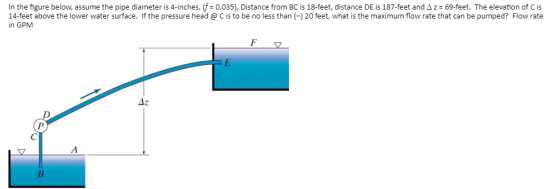

Homework Answers
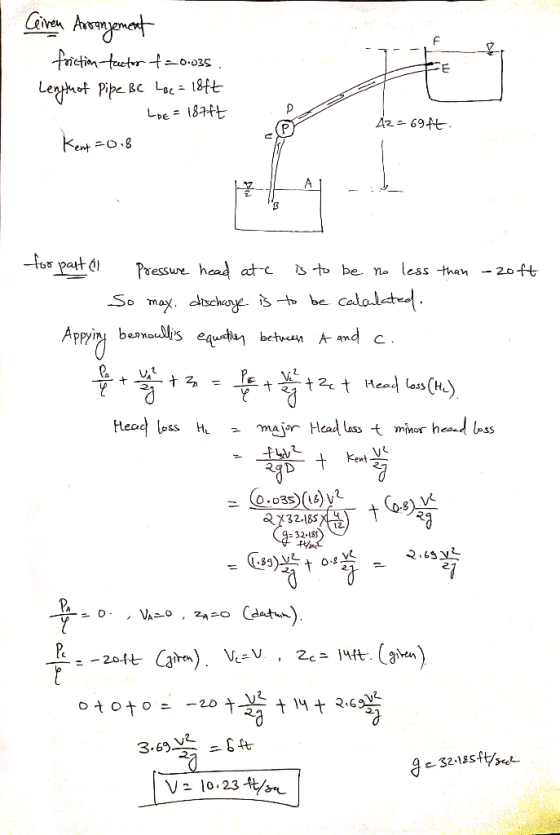
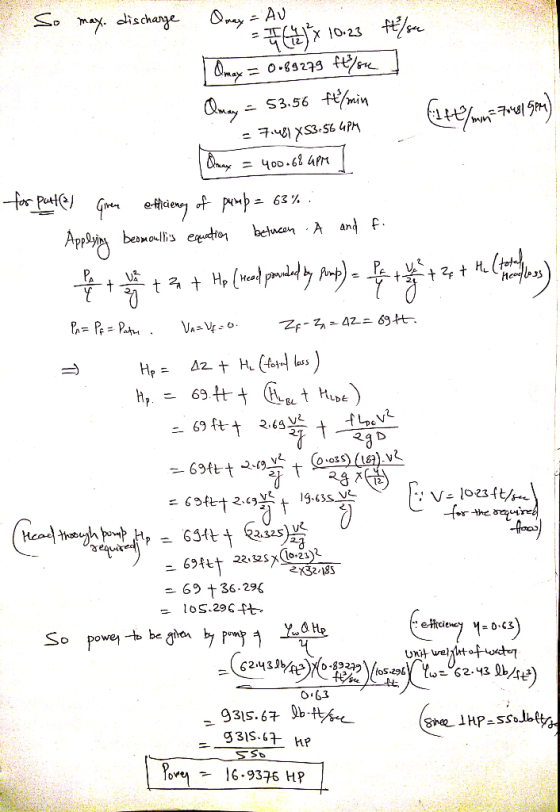
For Part 2 Option B is Correct and the variation between the answer is coming due to approximation in calculation otherwise procedure is correct.
Add Answer to:
1) In the figure below, assume the pipe diameter is 4-inches,
(f = 0.035), Distance from...
A 38-in pump is installed for the system below. The pipe (100- cm diameter) has a...
 A 38-in pump is installed for the system below. The pipe (100- cm diameter) has a friction factor of 0.012 and a total length of 20 km. Given that K = 0.5 (pipe entrance) and K. = 1.0 (pipe exit). For water at 80 degrees Fahrenheit, estimate the flow rate (in gpm), the power required (in horsepower, HP), and the net positive suction head required (in ft) to avoid cavitation for the system when the pump running. Elevation = 180...
A 38-in pump is installed for the system below. The pipe (100-cm diameter) has a friction...
 A 38-in pump is installed for the system below. The pipe (100-cm diameter) has a friction factor of 0.012 and a total length of 20 km. Given that Ke = 0.5 (pipe entrance) and Kε = 1.0 (pipe exit). For water at 80 degrees Fahrenheit, estimate the flow rate (in gpm), the power required in horsepower, HP), and the net positive suction head required (in ft) to avoid cavitation for the system when the pump running. Elevation = 180 m...
A 38-in pump is installed for the system below. The pipe (100-cm diameter) has a friction...
 A 38-in pump is installed for the system below. The pipe (100-cm diameter) has a friction factor of 0.012 and a total length of 20 km. Given that Ke = 0.5 (pipe entrance) and Ke = 1.0 (pipe exit). For water at 80 degrees Fahrenheit, estimate the flow rate (in gpm), the power required (in horsepower, HP), and the net positive suction head required (in ft) to avoid cavitation for the system when the pump running. Elevation = 180 m...
A 38-in pump is installed for the system below. The pipe (100-cm diameter) has a friction...
 A 38-in pump is installed for the system below. The pipe (100-cm diameter) has a friction factor of 0.012 and a total length of 20 km. Given that Ke = 0.5 (pipe entrance) and Ke = 1.0 (pipe exit). For water at 80 degrees Fahrenheit, estimate the flow rate (in gpm), the power required (in horsepower, HP), and the net positive suction head required (in ft) to avoid cavitation for the system when the pump running. Elevation = 180 m...
A 38-in pump is installed for the system below. The pipe (100-cm diameter) has a friction...
 A 38-in pump is installed for the system below. The pipe (100-cm diameter) has a friction factor of 0.012 and a total length of 20 km. Given that Ke = 0.5 (pipe entrance) and Ke = 1.0 (pipe exit). For water at 80 degrees Fahrenheit, estimate the flow rate (in grm), the power required (in horsepower, HP), and the net positive suction head required (in ft) to avoid cavitation for the system when the pump running. Elevation = 180 m...
08 % Problem 4 (25 points) A 38-in pump is installed for the system below. The...
 08 % Problem 4 (25 points) A 38-in pump is installed for the system below. The pipe (100-cm diameter) has a friction factor of 0.012 and a total length of 20 km. Given that Ke = 0.5 (pipe entrance) and Ke = 1.0 (pipe exit). For water at 80 degrees Fahrenheit, estimate the flow rate (in gpm), the power required (in horsepower, HP), and the net positive suction head required (in ft) to avoid cavitation for the system when the...
The following figure depicts a pipe system connecting two reservoirs. No minor losses should be considered...
 The following figure depicts a pipe system connecting two reservoirs. No minor losses should be considered in this problem. Assume that y=62.4 lb/ft. The water surface elevation at Reservoir A is 24 feet, and at Reservoir Dthe water surface elevation is 100 feet. The pump supplies a head of He=100 feet. The pipe system consists of pipes in series with the following characteristics: Pipe ABBCCD Diameter (in) 18 18 Length (ft) 4,000 1,000 2,000 Darcyf 0.015 0.020 0.015 la) Calculate...
2 Underground water is to be pumped by a 80 percent efficient 10-kW submerged pump to a pool whose free surface is X m above the underground water level (see Figure 2). The diameter of the pipe is 10...
 2 Underground water is to be pumped by a 80 percent efficient 10-kW submerged pump to a pool whose free surface is X m above the underground water level (see Figure 2). The diameter of the pipe is 10 cm on the intake side and 8 cm on the discharge side. Determine (a) the maximum flow rate of water and (b) the pressure difference across the pump. Assume the elevation difference between the pump inlet and the outlet and the...
A 38-in pump is installed for the system below. The pipe (100-cm diameter) has a friction...
 A 38-in pump is installed for the system below. The pipe (100-cm diameter) has a friction factor of 0.012 and a total length of 20 km. Given that Ke-0.5 (pipe entrance) and K = 1.0 (pipe exit). For water at 80 degrees Fahrenheit, estimate the flow rate (in gpm), the power required (in horsepower, HP), and the net positive suction head required (in ft) to avoid cavitation for the system when the pump running. 180 m Elevation V Elevation =...
4. An old, rough-surfaced, 2-m-diameter concrete pipe with a Manning coefficient of 0.025 carries water at...
 4. An old, rough-surfaced, 2-m-diameter concrete pipe with a Manning coefficient of 0.025 carries water at a rate of 5.0 m'/s when it is half ful. This pipe is to be replaced by a new smooth pipe with a Manning coefficient of 0.012. Determine the diameter of the new pipe if it also is to flow half full with a flow rate of 5.0 m'/s Water initially flowing in the horizontal section of pipe of diameter 12.00 cm shown in...
 A 38-in pump is installed for the system below. The pipe (100- cm diameter) has a friction factor of 0.012 and a total length of 20 km. Given that K = 0.5 (pipe entrance) and K. = 1.0 (pipe exit). For water at 80 degrees Fahrenheit, estimate the flow rate (in gpm), the power required (in horsepower, HP), and the net positive suction head required (in ft) to avoid cavitation for the system when the pump running. Elevation = 180...
 A 38-in pump is installed for the system below. The pipe (100-cm diameter) has a friction factor of 0.012 and a total length of 20 km. Given that Ke = 0.5 (pipe entrance) and Kε = 1.0 (pipe exit). For water at 80 degrees Fahrenheit, estimate the flow rate (in gpm), the power required in horsepower, HP), and the net positive suction head required (in ft) to avoid cavitation for the system when the pump running. Elevation = 180 m...
 A 38-in pump is installed for the system below. The pipe (100-cm diameter) has a friction factor of 0.012 and a total length of 20 km. Given that Ke = 0.5 (pipe entrance) and Ke = 1.0 (pipe exit). For water at 80 degrees Fahrenheit, estimate the flow rate (in gpm), the power required (in horsepower, HP), and the net positive suction head required (in ft) to avoid cavitation for the system when the pump running. Elevation = 180 m...
 A 38-in pump is installed for the system below. The pipe (100-cm diameter) has a friction factor of 0.012 and a total length of 20 km. Given that Ke = 0.5 (pipe entrance) and Ke = 1.0 (pipe exit). For water at 80 degrees Fahrenheit, estimate the flow rate (in gpm), the power required (in horsepower, HP), and the net positive suction head required (in ft) to avoid cavitation for the system when the pump running. Elevation = 180 m...
 A 38-in pump is installed for the system below. The pipe (100-cm diameter) has a friction factor of 0.012 and a total length of 20 km. Given that Ke = 0.5 (pipe entrance) and Ke = 1.0 (pipe exit). For water at 80 degrees Fahrenheit, estimate the flow rate (in grm), the power required (in horsepower, HP), and the net positive suction head required (in ft) to avoid cavitation for the system when the pump running. Elevation = 180 m...
 08 % Problem 4 (25 points) A 38-in pump is installed for the system below. The pipe (100-cm diameter) has a friction factor of 0.012 and a total length of 20 km. Given that Ke = 0.5 (pipe entrance) and Ke = 1.0 (pipe exit). For water at 80 degrees Fahrenheit, estimate the flow rate (in gpm), the power required (in horsepower, HP), and the net positive suction head required (in ft) to avoid cavitation for the system when the...
 The following figure depicts a pipe system connecting two reservoirs. No minor losses should be considered in this problem. Assume that y=62.4 lb/ft. The water surface elevation at Reservoir A is 24 feet, and at Reservoir Dthe water surface elevation is 100 feet. The pump supplies a head of He=100 feet. The pipe system consists of pipes in series with the following characteristics: Pipe ABBCCD Diameter (in) 18 18 Length (ft) 4,000 1,000 2,000 Darcyf 0.015 0.020 0.015 la) Calculate...
 2 Underground water is to be pumped by a 80 percent efficient 10-kW submerged pump to a pool whose free surface is X m above the underground water level (see Figure 2). The diameter of the pipe is 10 cm on the intake side and 8 cm on the discharge side. Determine (a) the maximum flow rate of water and (b) the pressure difference across the pump. Assume the elevation difference between the pump inlet and the outlet and the...
 A 38-in pump is installed for the system below. The pipe (100-cm diameter) has a friction factor of 0.012 and a total length of 20 km. Given that Ke-0.5 (pipe entrance) and K = 1.0 (pipe exit). For water at 80 degrees Fahrenheit, estimate the flow rate (in gpm), the power required (in horsepower, HP), and the net positive suction head required (in ft) to avoid cavitation for the system when the pump running. 180 m Elevation V Elevation =...
 4. An old, rough-surfaced, 2-m-diameter concrete pipe with a Manning coefficient of 0.025 carries water at a rate of 5.0 m'/s when it is half ful. This pipe is to be replaced by a new smooth pipe with a Manning coefficient of 0.012. Determine the diameter of the new pipe if it also is to flow half full with a flow rate of 5.0 m'/s Water initially flowing in the horizontal section of pipe of diameter 12.00 cm shown in...
Most questions answered within 3 hours.
-
Where is the error in this code sequence?
String s1 = "Hello";
String s2 = "ello";...
asked 10 months ago -
Financial data for Joel de Paris, Inc., for last year
follow:
Joel de Paris, Inc.
Balance...
asked 10 months ago -
Consider this reaction:
Al2(SO4)3 (aq)+ BaCl3
(aq) Al2Cl6 (aq)- +
3BaSO4(s) . What is the...
asked 10 months ago -
Suppose that Savneet is considering increasing her
recent random sample from 20 car rentals to 40...
asked 10 months ago -
Trucks arrive at an unloading terminal at an average rate of 120
per hour.
Trucks arrive...
asked 10 months ago -
Why are methanol and ethanol completely soluble in water while
octanol is not very little soluble....
asked 10 months ago -
A facilities manager at a university reads in a research report
that the mean amount of...
asked 10 months ago -
When the CuSO4 is rehydrated by adding water to the anhydrous
compound, is this an endothermic...
asked 10 months ago -
A ray of sunlight is passing from diamond into crown glass; the
angle of incidence is...
asked 10 months ago -
A block of mass 0.249 kg is placed on top of a light, vertical
spring of...
asked 10 months ago -
how do the kidneys compensate in the presences of acidosis
a) trigger hyperventilate
b) reserve acid...
asked 10 months ago -
Question 501 pts
The rental rate of capital to the firm increases. Which of the
following...
asked 10 months ago