Please do it by type not pics. 1.Consider the following three tables, primary and foreign keys....
Please do it by type not pics.
1.Consider the following three tables, primary and foreign keys.
Table Name SalesPeople
Attribute Name Type Key Type
EmployeeNumber Number Primary Key
Name Character
JobTitle Character
Address Character
PhoneNumber Character
YearsInPosition Number
Table Name ProductDescription
Attribute Name Type Key Type
ProductNumber Number Primary Key
ProductName Character
ProductPrice Number
Table Name SalesOrder
Attribute Name Type Key Type
SalesOrderNumber Number Primary Key
ProductNumber Number Foreign Key
EmployeeNumber Number Foreign Key
SalesOrderDate Date
Assume that you draw up a new sales order for each product sold.
Develop the following queries and submit them as a picture or document:
a. All the Sales People with less than three years in position who have sold Product Number 1167.
b. All the Products with the word “bracket” in the Product Name.
c. All the Sales Orders for products with a price of more than $33.
Homework Answers
a. Select SalesPeople.EmployeeNumber from SalesPeople, SalesOrder where SalesPeople.EmployeeNumber = SalesOrder.EmployeeNumber and SalesPeople.YearsInPosition < 3 and SalesOrder.ProductNumber = 1167
In this case we have joined the SalesPeople and SalesOrder table and used the required conditions.
b. Select ProductDescription.ProductNumber from ProductDescription where ProductDescriptuon.ProductName like '%bracket%'.
Product number with product name containing bracket is displayed.
c. Select SalesOrder.SalesOrderNumber from SalesOrder, ProductDescription where SalesOrder.ProductNumber = ProductDescription.ProductNumber and ProductPrice > 33
Sales order and Product description table are joined and the required conditions are applied.
Add Answer to:
Please do it by type not pics.
1.Consider the following three tables, primary and foreign
keys....
Consider the following three tables, primary and foreign keys. Table Name SalesPeople Attribute Name  
Consider the following three tables, primary and foreign keys. Table Name SalesPeople Attribute Name Type Key Type EmployeeNumber Number Primary Key Name Character JobTitle Character Address Character PhoneNumber Character YearsInPosition Number Table Name ProductDescription Attribute Name Type Key Type ProductNumber Number Primary Key ProductName Character ProductPrice Number Table Name SalesOrder Attribute Name Type Key Type SalesOrderNumber Number Primary Key ProductNumber Number Foreign Key EmployeeNumber Number Foreign Key SalesOrderDate Date Assume...
SQL queries and procedures TABLE: Employees Business Rules: EmployeeID is defined as the primary key. Address...
SQL queries and procedures TABLE: Employees Business Rules: EmployeeID is defined as the primary key. Address has been denormalized to include City and State for performance reasons. DeptNbr is a foreign key that references DeptNbr in the Department table Manager is a foreign key that references EmployeeID in the Employees table Data Structure: (EmployeeId, LastName, FirstName, Street, City, State, Zip, DateOfHire, DateOfBirth, JobTitle, Salary, DeptNbr(fk), Manager(fk)) TABLE: Department Business Rules: DeptNbr is defined as the primary key. Data Structure: (DeptNbr,...
these are all tables please see the tables and questions are mentioned below please see that...
 these are all tables please see the tables and
questions are mentioned below
please see that all and I need answers asap
please write proper answer it's an easy task and don't take much
time please do it fast
thanks in advance
EMPLOYEE Remark Column Name EmployeeNumberINT Primary Key Yes No CHAR (25 CHAR (35 CHAR 25 NUMERIC INT CHAR (12 CHAR Name in the DEPARTMENT table Position No Number in the EMPLOYEE table Su OfficePhone EmailAddress No No No...
these are all tables please see the tables and
questions are mentioned below
please see that all and I need answers asap
please write proper answer it's an easy task and don't take much
time please do it fast
thanks in advance
EMPLOYEE Remark Column Name EmployeeNumberINT Primary Key Yes No CHAR (25 CHAR (35 CHAR 25 NUMERIC INT CHAR (12 CHAR Name in the DEPARTMENT table Position No Number in the EMPLOYEE table Su OfficePhone EmailAddress No No No...
NEED THE SQL QUERIES ASAP PLEASE(LIKE 1 HOUR) THE ONES WITH ID ARE PRIMARY KEYS OR...
NEED THE SQL QUERIES ASAP PLEASE(LIKE 1 HOUR) THE ONES WITH ID ARE PRIMARY KEYS OR FOREIGN etc Customer [ CustID, LastName, FirstName, Address, City, State, Zip, Phone, Fax, Email] Product [ ProdID, Description, Color, Size, Pack] Sales [ TransID, CustID, ProdID, Price, Quantity, Amount] Write SQL statement to produce a list of unique products and their prices from the Sales table. Please ensure that the products do not repeat. Write an SQL statement to list ProdID and Description for...
Please help I promise positive feedback Part IV. Formulate SQL queries that follow for the database...
Please help I promise positive feedback Part IV. Formulate SQL queries that follow for the database with the following tables: CUSTOMER, PRODUCT, SALES, and ITEM-SOLD. Table: CUSTOMER Primary Key: Account-No Account-No Customer-Name Customer-City 1 A NYC 2 B NYC 3 C MIA Table: PRODUCT Primary Key: Item-No Item-No Price 1 $1.00 2 $2.00 3 $3.00 4 $4.00 Table: SALES Primary Key: Receipt-No Foreign Key: Account-No References CUSTOMER Receipt-No Account-No Sales-Person 1 1 S1 2 1 S1 3 2 S2 4...
SQL problem solving help; First 3 tables are finnished; Need help understanding on how to do...
 SQL problem solving help; First 3 tables are finnished; Need
help understanding on how to do steps after.
First 3 tables are after the first 2 images for reference if
needed.
//1//
CREATE TABLE kr_customer (
Name VARCHAR(40) NOT NULL PRIMARY KEY,
City VARCHAR(20),
Status CHAR(1)
);
//2//
CREATE TABLE kr_salesperson (
Name VARCHAR(40) NOT NULL PRIMARY KEY,
Age INT,
Salary DECIMAL(8, 2)
);
//3//
CREATE TABLE kr_order (
Order_Number number(3) NOT NULL PRIMARY KEY,
Customer_Name VARCHAR(40),
Salesperson_Name VARCHAR(40),
Amount...
SQL problem solving help; First 3 tables are finnished; Need
help understanding on how to do steps after.
First 3 tables are after the first 2 images for reference if
needed.
//1//
CREATE TABLE kr_customer (
Name VARCHAR(40) NOT NULL PRIMARY KEY,
City VARCHAR(20),
Status CHAR(1)
);
//2//
CREATE TABLE kr_salesperson (
Name VARCHAR(40) NOT NULL PRIMARY KEY,
Age INT,
Salary DECIMAL(8, 2)
);
//3//
CREATE TABLE kr_order (
Order_Number number(3) NOT NULL PRIMARY KEY,
Customer_Name VARCHAR(40),
Salesperson_Name VARCHAR(40),
Amount...
Learning Objectives: Learn to define constraints on tables Lean to define primary keys and foreign keys...
Learning Objectives: Learn to define constraints on tables Lean to define primary keys and foreign keys Exercise In Lab 09, we will continue the practice of creating tables. You will need to write SQL statements for the tasks specified below. After you complete them, submit your SQL script (in one *.sql file) to Blackboard by 11:59pm Nov. 16 (Friday). Include your name as a comment in the SQL script submitted. The creation statement for each table is worth one point,...
Fundamentals of Database Systems Consider the following data. Arrows show the functional dependency Product Item ld...
 Fundamentals of Database Systems
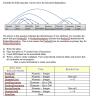
Consider the following data. Arrows show the functional dependency Product Item ld QuantityItem Used uct Receipt Quantity Sales ription Number Num Description Date The arrows in this question indicated the determination of two attributes. For example, the arrow that goes ProductID to ProductDescription indicates that ProductID determines the ProductDescription, This in turn means that Productld can be considered as primary key for ProductDescription a) Write the tables b) Place the tables in 3rd normal form (if...
Fundamentals of Database Systems
Consider the following data. Arrows show the functional dependency Product Item ld QuantityItem Used uct Receipt Quantity Sales ription Number Num Description Date The arrows in this question indicated the determination of two attributes. For example, the arrow that goes ProductID to ProductDescription indicates that ProductID determines the ProductDescription, This in turn means that Productld can be considered as primary key for ProductDescription a) Write the tables b) Place the tables in 3rd normal form (if...
using SQL Assume the relations shown below (underlined attributes are primary and foreign keys): merchants(mid, name,...
using SQL Assume the relations shown below (underlined attributes are primary and foreign keys): merchants(mid, name, city, state) products(pid, name, category, description) sell(mid, pid, price, quantity_available) orders(oid, shipping_method, shipping_cost) contain(oid,pid) customers(cid, fullname, city, state) place(cid, oid, order_date) For each of the following questions write a SQL query: List names and sellers of products that are no longer available (quantity=0) List names and descriptions of products that are not sold. How many customers bought SATA drives but not any routers between 2009...
Consider the following relational database to manage concert and ticket sales. The relations are artist, concert,...
Consider the following relational database to manage concert and ticket sales. The relations are artist, concert, venue, seat, ticket, and fan. The schemas for these relations (with primary key attributes underlined) are: Artist-schema = (artistname, type, salary) Concert-schema = (artistname, date, venuename, artistfees) Venue-schema = (venuename, address, seating_capacity) Seat-schema=(venuename, row, seatnumber) Ticket-schema = (fanID, date, venuename, row, seatnumber) Fan-schema = (fanID, name, address, creditcardno) Where: • artistname is a unique name for the artist (because of trademark/copyright rules no two...
 these are all tables please see the tables and
questions are mentioned below
please see that all and I need answers asap
please write proper answer it's an easy task and don't take much
time please do it fast
thanks in advance
EMPLOYEE Remark Column Name EmployeeNumberINT Primary Key Yes No CHAR (25 CHAR (35 CHAR 25 NUMERIC INT CHAR (12 CHAR Name in the DEPARTMENT table Position No Number in the EMPLOYEE table Su OfficePhone EmailAddress No No No...
these are all tables please see the tables and
questions are mentioned below
please see that all and I need answers asap
please write proper answer it's an easy task and don't take much
time please do it fast
thanks in advance
EMPLOYEE Remark Column Name EmployeeNumberINT Primary Key Yes No CHAR (25 CHAR (35 CHAR 25 NUMERIC INT CHAR (12 CHAR Name in the DEPARTMENT table Position No Number in the EMPLOYEE table Su OfficePhone EmailAddress No No No...
 SQL problem solving help; First 3 tables are finnished; Need
help understanding on how to do steps after.
First 3 tables are after the first 2 images for reference if
needed.
//1//
CREATE TABLE kr_customer (
Name VARCHAR(40) NOT NULL PRIMARY KEY,
City VARCHAR(20),
Status CHAR(1)
);
//2//
CREATE TABLE kr_salesperson (
Name VARCHAR(40) NOT NULL PRIMARY KEY,
Age INT,
Salary DECIMAL(8, 2)
);
//3//
CREATE TABLE kr_order (
Order_Number number(3) NOT NULL PRIMARY KEY,
Customer_Name VARCHAR(40),
Salesperson_Name VARCHAR(40),
Amount...
SQL problem solving help; First 3 tables are finnished; Need
help understanding on how to do steps after.
First 3 tables are after the first 2 images for reference if
needed.
//1//
CREATE TABLE kr_customer (
Name VARCHAR(40) NOT NULL PRIMARY KEY,
City VARCHAR(20),
Status CHAR(1)
);
//2//
CREATE TABLE kr_salesperson (
Name VARCHAR(40) NOT NULL PRIMARY KEY,
Age INT,
Salary DECIMAL(8, 2)
);
//3//
CREATE TABLE kr_order (
Order_Number number(3) NOT NULL PRIMARY KEY,
Customer_Name VARCHAR(40),
Salesperson_Name VARCHAR(40),
Amount...
 Fundamentals of Database Systems
Consider the following data. Arrows show the functional dependency Product Item ld QuantityItem Used uct Receipt Quantity Sales ription Number Num Description Date The arrows in this question indicated the determination of two attributes. For example, the arrow that goes ProductID to ProductDescription indicates that ProductID determines the ProductDescription, This in turn means that Productld can be considered as primary key for ProductDescription a) Write the tables b) Place the tables in 3rd normal form (if...
Fundamentals of Database Systems
Consider the following data. Arrows show the functional dependency Product Item ld QuantityItem Used uct Receipt Quantity Sales ription Number Num Description Date The arrows in this question indicated the determination of two attributes. For example, the arrow that goes ProductID to ProductDescription indicates that ProductID determines the ProductDescription, This in turn means that Productld can be considered as primary key for ProductDescription a) Write the tables b) Place the tables in 3rd normal form (if...
Most questions answered within 3 hours.
-
Where is the error in this code sequence?
String s1 = "Hello";
String s2 = "ello";...
asked 10 months ago -
Financial data for Joel de Paris, Inc., for last year
follow:
Joel de Paris, Inc.
Balance...
asked 10 months ago -
Consider this reaction:
Al2(SO4)3 (aq)+ BaCl3
(aq) Al2Cl6 (aq)- +
3BaSO4(s) . What is the...
asked 10 months ago -
Suppose that Savneet is considering increasing her
recent random sample from 20 car rentals to 40...
asked 10 months ago -
Trucks arrive at an unloading terminal at an average rate of 120
per hour.
Trucks arrive...
asked 10 months ago -
Why are methanol and ethanol completely soluble in water while
octanol is not very little soluble....
asked 10 months ago -
A facilities manager at a university reads in a research report
that the mean amount of...
asked 10 months ago -
When the CuSO4 is rehydrated by adding water to the anhydrous
compound, is this an endothermic...
asked 10 months ago -
A ray of sunlight is passing from diamond into crown glass; the
angle of incidence is...
asked 10 months ago -
A block of mass 0.249 kg is placed on top of a light, vertical
spring of...
asked 10 months ago -
how do the kidneys compensate in the presences of acidosis
a) trigger hyperventilate
b) reserve acid...
asked 10 months ago -
Question 501 pts
The rental rate of capital to the firm increases. Which of the
following...
asked 10 months ago