Fix the code below to make it so that it is not vulernable to stack buffer overflow
![void gctinp (ohar *inp, int siz) puts (Input value: ) fgets (inp, siz, stdin) printf(buffer3 getinp read %s\n, inp); void display (char val) char tmp [16]; sprintf(tmp, read val : puts (tmp); %s\n, val); int main(int argc, char *argv []) char buf [16]; getinp (buf, sizeof (buf)) display (buf); printf (buffer3 done In)](http://img.homeworklib.com/questions/62d55ae0-b01f-11ea-8fa1-83f29f20acc6.png?x-oss-process=image/resize,w_560)
Homework Answers
Program code screenshot:
 Sample output:
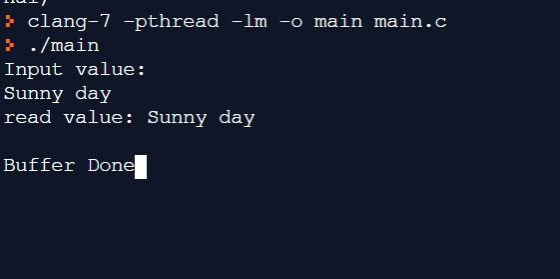
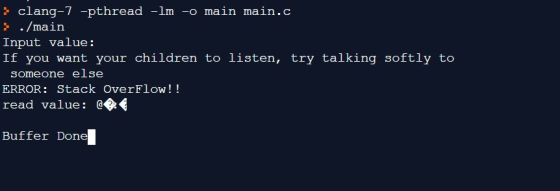
Program code to copy:
// Declare the required header file
#include <stdio.h>
#include <string.h>
#include <stdlib.h>
// ****** Modify this function ******* //
// Declare the get input function
void gctinp(char * inp, int siz)
{
// Declare the required variables
char * input_string;
int count = 0;
char c;
// Ask from the user to
// prompt the input value
puts("Input value: ");
scanf("%c", &c);
// while loop to check the condition
while(c != '\n')
{
// check the stack count is equal to 16
if(count == 16)
{
// Display the message stack is over floe
printf("ERROR: Stack OverFlow!!\n");
return;
}
// When stack is zero
if (count == 0)
{
// input the string size
input_string = (char *)malloc(sizeof(char)*1);
}
// otherwise
else
{
// increment the stack size
input_string = (char*)realloc(input_string, sizeof(char)*count+1);
}
// assign the stack char
input_string[count] = c;
// increment the stack
count++;
// display the stack
scanf("%c", &c);
}
// copy the stack size
strcpy(inp, input_string);
}
// Create a display function
void display(char * val)
{
// Declare the required char array temp
char temp[16];
// Display the message
sprintf(temp,"read value: %s \n",val);
// puts the temp value
puts(temp);
}
// Create a main function of the program
int main()
{
// Declare the required variables
char buf[16];
// call the gctinp function
gctinp(buf,sizeof(buf));
// Display the function
display(buf);
// Display message buffer is done
printf("Buffer Done");
}
Add Answer to:
Fix the code below to make it so that it is not vulernable to
stack buffer...
8. Rewrite the function shown below so that it is no longer vulnerable to a stack...
 8. Rewrite the function shown below so that it is no longer vulnerable to a stack buffer overflow i void gctinp (ohar *inp, int siz) puts (" Input value "); fgets (inp, siz, stdin); printf("buffer3 getinp read %s\n", inp); 3 4 6 7 void display (char *val) 8 9 10 char tmp [16]; sprintf(tmp, "read val: puts (tmp); %s\n", val); 12 13 int main(int argc, char *argv []) 14 15 16 char buf [16]; getinp (buf, sizeof (buf)); 17 18...
Combine two codes (code 1) to get names with(code 2) to get info: Code 1: #include<unistd.h>...
Combine two codes (code 1) to get names with(code 2) to get info: Code 1: #include<unistd.h> #include<sys/types.h> #include<sys/stat.h> #include<fcntl.h> #include<dirent.h> #include<stdio.h> #include<stdlib.h> void do_ls(char []); int main(int argc,char *argv[]) { if(argc == 1) do_ls("."); else while(--argc){ printf("%s:\n",*++argv); do_ls(*argv); } } void do_ls(char dirname[]) { DIR *dir_ptr; struct dirent *direntp; if((dir_ptr = opendir(dirname)) == NULL) fprintf(stderr,"ls1:cannot open %s\n",dirname); else { while((direntp = readdir(dir_ptr)) != NULL) printf("%s\n",direntp->d_name); closedir(dir_ptr); } } ____________________________ code 2: #include <stdio.h> #include <sys/types.h> #include <sys/stat.h> void show_stat_info(char *,...
Run the code in Linux and provide the screenshot of the output and input #include <signal.h>...
Run the code in Linux and provide the screenshot of the output and input #include <signal.h> #include <stdio.h> #include <stdlib.h> #include <string.h> #include <unistd.h> #include <arpa/inet.h> #include <sys/types.h> #include <sys/socket.h> static void cleanup(); static void docleanup(int signum); static const char *SERVER_ADDR = "127.0.0.1"; static const int SERVER_PORT = 61234; static int cfd = -1; int main(int argc, char *argv[]) { struct sockaddr_in saddr; char buf[128]; int bufsize = 128, bytesread; struct sigaction sigact; printf("client starts running ...\n"); atexit(cleanup); sigact.sa_handler =...
How to create different files to test whether it passes the serial number checking. (Hint: need...
How to create different files to test whether it passes the serial number checking. (Hint: need a hex editor.) please provide two files, one pass, one cannot pass C code: ---------------------------------------------- #include <stdio.h> #include <string.h> int chkserial(char *s) { char buffer[16]; strcpy(buffer, s); return strcmp(buffer, "cs780880"); } void fullversion() { printf("Thanks for purchasing! Enjoy the full-version software!\n"); } void trialversion() { printf("This is a trial version. Please purchase the full version to enable all features!\n"); } int main(int argc, char...
Convert C to C++ I need these 4 C file code convert to C++. Please Convert...
Convert C to C++ I need these 4 C file code convert to C++. Please Convert it to C++ //////first C file: Wunzip.c #include int main(int argc, char* argv[]) { if(argc ==1){ printf("wunzip: file1 [file2 ...]\n"); return 1; } else{ for(int i =1; i< argc;i++){ int num=-1; int numout=-1; int c; int c1; FILE* file = fopen(argv[i],"rb"); if(file == NULL){ printf("Cannot Open File\n"); return 1; } else{ while(numout != 0){ numout = fread(&num, sizeof(int), 1, file); c...
Modify the client server system program given below so that instead of sendto() and recvfrom(), you...
Modify the client server system program given below so that instead of sendto() and recvfrom(), you use connect() and un-addresssed write() and read() calls. //Server.c #include #include #include #include #include #include #include #include #include #include # define PortNo 4567 # define BUFFER 1024 int main(int argc, char ** argv) { int ssd; int n; socklen_t len; char msg[BUFFER]; char clientmsg[BUFFER]; struct sockaddr_in server; struct sockaddr_in client; int max_iterations = 0; int count = 0, totalChar = 0, i = 0;...
The original code using the gets() function is written below. You need to do (a) change...
The original code using the gets() function is written below. You need to do (a) change the provided code so that you now use fgets() function to obtain input from the user instead of gets(), (b) make any other necessary changes in the code because of using fgets() function, and (c) fill in the code for the execute() function so that the whole program works as expected (a simple shell program). Note: part c is already done, and the execute...
Assume I don't understand C++ Can someone explain this program to me Line by Line? Basically...
Assume I don't understand C++ Can someone explain this program to me Line by Line? Basically what each line actually does? whats the function? whats the point? Don't tell me what the program does as a whole, I need to understand what each line does in this program. #include #include #include #include #include #define SERVER_PORT 5432 #define MAX_LINE 256 int main(int argc, char * argv[]) { FILE *fp; struct hostent *hp; struct sockaddr_in sin; char *host;...
Below is a basic implementation of the Linux command "cat". This command is used to print...
 Below is a basic implementation of the Linux command "cat". This command is used to print the contents of a file on the console/terminal window. #include <stdio.h> #include <stdlib.h> int main(int argc, char* argv[]) {FILE *fp; if(2 != argc) {priritf ("Usage: cat <filename>\n"); exit(1);} if ((fp = fopen(argv[1], "r")) == NULL) {fprintf (stderr, "Can't. open input file %s\n", argv[1]); exit (1);} char buffer[256]; while (fgets(X, 256, fp) != NULL) fprintf(Y, "%s", buffer); fclose(Z); return 0;} Which one of the following...
can someone help me with changing this to c++ language #include <stdlib.h> #include <stdio.h> #include <pthread.h>...
can someone help me with changing this to c++ language #include <stdlib.h> #include <stdio.h> #include <pthread.h> #include <string.h> #include <dirent.h> #include <sys/wait.h> #include <time.h> #include <sys/stat.h> #include <unistd.h> char *pathLog; char *pathRep; struct stat attr; int fileNum, curNum; char *create_logPath(char *directory); void *funcChecker(void *pathSub); void *funcprintTimeAndChanges(void *pathSub); void main(int argc, char *argv[]) { if(argc < 3) { printf("%s must be executed with exactly two additional arguments (pathRep, pathSub)!\n", argv[0]); printf("Typed count is %d\n", argc); printf("Aborted...
 8. Rewrite the function shown below so that it is no longer vulnerable to a stack buffer overflow i void gctinp (ohar *inp, int siz) puts (" Input value "); fgets (inp, siz, stdin); printf("buffer3 getinp read %s\n", inp); 3 4 6 7 void display (char *val) 8 9 10 char tmp [16]; sprintf(tmp, "read val: puts (tmp); %s\n", val); 12 13 int main(int argc, char *argv []) 14 15 16 char buf [16]; getinp (buf, sizeof (buf)); 17 18...
 Below is a basic implementation of the Linux command "cat". This command is used to print the contents of a file on the console/terminal window. #include <stdio.h> #include <stdlib.h> int main(int argc, char* argv[]) {FILE *fp; if(2 != argc) {priritf ("Usage: cat <filename>\n"); exit(1);} if ((fp = fopen(argv[1], "r")) == NULL) {fprintf (stderr, "Can't. open input file %s\n", argv[1]); exit (1);} char buffer[256]; while (fgets(X, 256, fp) != NULL) fprintf(Y, "%s", buffer); fclose(Z); return 0;} Which one of the following...
Most questions answered within 3 hours.
-
Where is the error in this code sequence?
String s1 = "Hello";
String s2 = "ello";...
asked 10 months ago -
Financial data for Joel de Paris, Inc., for last year
follow:
Joel de Paris, Inc.
Balance...
asked 10 months ago -
Consider this reaction:
Al2(SO4)3 (aq)+ BaCl3
(aq) Al2Cl6 (aq)- +
3BaSO4(s) . What is the...
asked 10 months ago -
Suppose that Savneet is considering increasing her
recent random sample from 20 car rentals to 40...
asked 10 months ago -
Trucks arrive at an unloading terminal at an average rate of 120
per hour.
Trucks arrive...
asked 10 months ago -
Why are methanol and ethanol completely soluble in water while
octanol is not very little soluble....
asked 10 months ago -
A facilities manager at a university reads in a research report
that the mean amount of...
asked 10 months ago -
When the CuSO4 is rehydrated by adding water to the anhydrous
compound, is this an endothermic...
asked 10 months ago -
A ray of sunlight is passing from diamond into crown glass; the
angle of incidence is...
asked 10 months ago -
A block of mass 0.249 kg is placed on top of a light, vertical
spring of...
asked 10 months ago -
how do the kidneys compensate in the presences of acidosis
a) trigger hyperventilate
b) reserve acid...
asked 10 months ago -
Question 501 pts
The rental rate of capital to the firm increases. Which of the
following...
asked 10 months ago