
Homework Answers
-------------------------------------------------------------------------------------------------------
Add Answer to:
Light of wavelength 440 nm passes through two slits of equal width, yielding an interference pattern...
lighr of wavelength 440 nm passws throufh a double slit, yieldinfa diffraction pattern whose graph of...
 lighr of wavelength 440 nm passws throufh a double slit,
yieldinfa diffraction pattern whose graph of intensity I versus
angular position
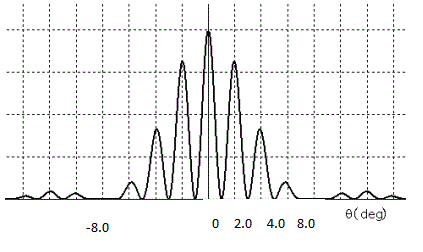
1) Light of wavelength 440 nm passes through a double slit, yielding a diffraction pattern whose graph of intensity I versus angular position is shown in the Figure below. Intensity (mW/cm") 0 5 8 (degrees) Calculate: (a) the slit width and (b) the slit separation. (e) Verify the displayed intensities of the m= 1 and m= 2 interference fringes.
lighr of wavelength 440 nm passws throufh a double slit,
yieldinfa diffraction pattern whose graph of intensity I versus
angular position
1) Light of wavelength 440 nm passes through a double slit, yielding a diffraction pattern whose graph of intensity I versus angular position is shown in the Figure below. Intensity (mW/cm") 0 5 8 (degrees) Calculate: (a) the slit width and (b) the slit separation. (e) Verify the displayed intensities of the m= 1 and m= 2 interference fringes.
Problem #4 (2 points) Double-slit interference and diffraction combined Light of wave length 440 nm passes...
 Problem #4 (2 points) Double-slit interference and diffraction combined Light of wave length 440 nm passes through a double slit, yielding the diffraction pattern of intensity | versus diffraction angle 0 as shown in the figure below. Calculate (a) the slit width and (b) the slit separation. (c) Verify the displayed intensities of the m=1 and m= 2 interference fringes. Intensity (mW/cm) oo Deflection (degrees)
Light of wavelength 519 nm passes through two slits. In the interference pattern on a screen...
 Light of wavelength 519 nm passes through two slits. In the interference pattern on a screen 4.6 m away, adjacent bright fringes are separated by 5.2 mm in the general vicinity of the center of the pattern. What is the separation of the two slits? Draw the slits • Draw the screen a distance L from the slits • Draw the paths from each slit • Mark the bright locations on the screen. Start with the double slit bright fringe...
Light of wavelength 519 nm passes through two slits. In the interference pattern on a screen...
Light of wavelength 519 nm passes through two slits. In the interference pattern on a screen 4.6 m away, adjacent bright fringes are separated by 5.2 mm in the general vicinity of the center of the pattern. What is the separation of the two slits? Draw the slits • Draw the screen a distance L from the slits • Draw the paths from each slit • Mark the bright locations on the screen. Start with the double slit bright fringe...
Problem Statement Light of wavelength 519 nm passes through two slits. In the interference pattern on...
 Problem Statement Light of wavelength 519 nm passes through two slits. In the interference pattern on a screen 4.6 m away, adjacent bright fringes are separated by 5.2 mm in the general vicinity of the center of the pattern. What is the separation of the two slits? Visual Representation • Draw the slits • Draw the screen a distance L from the slits • Draw the paths from each slit • Mark the bright locations on the screen.
Light of wavelength 519 nm passes through two slits. In the interference pattern on a screen...
Light of wavelength 519 nm passes through two slits. In the interference pattern on a screen 4.6 m away, adjacent bright fringes are separated by 5.2 mm in the general vicinity of the center of the pattern. What is the separation of the two slits? Please show equations and steps
Coherent light of wavelength 548 nm passes through two slits. In the resulting interference pattern on...
 Coherent light of wavelength 548 nm passes through two slits. In the resulting interference pattern on a screen 4.6 m away, adjacent bright fringes are 5.60 mm apart. What is the separation between the 2nd and the 3rd order maxima for light with a wavelength of 650 nm?
1a.). 486.1-nm and 434.0-nm light passes through two vertical slits producing an interference pattern on a...
1a.). 486.1-nm and 434.0-nm light passes through two vertical slits producing an interference pattern on a screen that is 125cm away. if the first order fringes (m=1) are 0.88 mm apart, what must be the slit separation d? 1b.) An appliance rated at 44W is plugged into a 115V line. How much current is drawn? if the appliance were an ohmic device what will be its resistance in omega?
4. Below is an image of the fringe pattern produced by two identical slits and light of wavelengt...
 4. Below is an image of the fringe pattern produced by two identical slits and light of wavelength, 600 nm. The pattern is produced on a screen 1.0 meters from the slits. Using the provided scale, determine the separation between the slits and the width of one individual slit. Explain your reasoning a) Separation between the two slits: b) Width of one individual slit:
4. Below is an image of the fringe pattern produced by two identical slits and light...
4. Below is an image of the fringe pattern produced by two identical slits and light of wavelength, 600 nm. The pattern is produced on a screen 1.0 meters from the slits. Using the provided scale, determine the separation between the slits and the width of one individual slit. Explain your reasoning a) Separation between the two slits: b) Width of one individual slit:
4. Below is an image of the fringe pattern produced by two identical slits and light...
An interference pattern is produced by light with a wavelength 590 nm from a distant source...
An interference pattern is produced by light with a wavelength 590 nm from a distant source incident on two identical parallel slits separated by a distance (between centers) of 0.570 mm . Part A If the slits are very narrow, what would be the angular position of the first-order, two-slit, interference maxima? θ1 θ1 = nothing radians SubmitRequest Answer Part B What would be the angular position of the second-order, two-slit, interference maxima in this case? θ2 θ2 = nothing...
 lighr of wavelength 440 nm passws throufh a double slit,
yieldinfa diffraction pattern whose graph of intensity I versus
angular position
1) Light of wavelength 440 nm passes through a double slit, yielding a diffraction pattern whose graph of intensity I versus angular position is shown in the Figure below. Intensity (mW/cm") 0 5 8 (degrees) Calculate: (a) the slit width and (b) the slit separation. (e) Verify the displayed intensities of the m= 1 and m= 2 interference fringes.
lighr of wavelength 440 nm passws throufh a double slit,
yieldinfa diffraction pattern whose graph of intensity I versus
angular position
1) Light of wavelength 440 nm passes through a double slit, yielding a diffraction pattern whose graph of intensity I versus angular position is shown in the Figure below. Intensity (mW/cm") 0 5 8 (degrees) Calculate: (a) the slit width and (b) the slit separation. (e) Verify the displayed intensities of the m= 1 and m= 2 interference fringes.
 Problem #4 (2 points) Double-slit interference and diffraction combined Light of wave length 440 nm passes through a double slit, yielding the diffraction pattern of intensity | versus diffraction angle 0 as shown in the figure below. Calculate (a) the slit width and (b) the slit separation. (c) Verify the displayed intensities of the m=1 and m= 2 interference fringes. Intensity (mW/cm) oo Deflection (degrees)
 Light of wavelength 519 nm passes through two slits. In the interference pattern on a screen 4.6 m away, adjacent bright fringes are separated by 5.2 mm in the general vicinity of the center of the pattern. What is the separation of the two slits? Draw the slits • Draw the screen a distance L from the slits • Draw the paths from each slit • Mark the bright locations on the screen. Start with the double slit bright fringe...
 Problem Statement Light of wavelength 519 nm passes through two slits. In the interference pattern on a screen 4.6 m away, adjacent bright fringes are separated by 5.2 mm in the general vicinity of the center of the pattern. What is the separation of the two slits? Visual Representation • Draw the slits • Draw the screen a distance L from the slits • Draw the paths from each slit • Mark the bright locations on the screen.
 Coherent light of wavelength 548 nm passes through two slits. In the resulting interference pattern on a screen 4.6 m away, adjacent bright fringes are 5.60 mm apart. What is the separation between the 2nd and the 3rd order maxima for light with a wavelength of 650 nm?
 4. Below is an image of the fringe pattern produced by two identical slits and light of wavelength, 600 nm. The pattern is produced on a screen 1.0 meters from the slits. Using the provided scale, determine the separation between the slits and the width of one individual slit. Explain your reasoning a) Separation between the two slits: b) Width of one individual slit:
4. Below is an image of the fringe pattern produced by two identical slits and light...
4. Below is an image of the fringe pattern produced by two identical slits and light of wavelength, 600 nm. The pattern is produced on a screen 1.0 meters from the slits. Using the provided scale, determine the separation between the slits and the width of one individual slit. Explain your reasoning a) Separation between the two slits: b) Width of one individual slit:
4. Below is an image of the fringe pattern produced by two identical slits and light...
Most questions answered within 3 hours.
-
Where is the error in this code sequence?
String s1 = "Hello";
String s2 = "ello";...
asked 11 months ago -
Financial data for Joel de Paris, Inc., for last year
follow:
Joel de Paris, Inc.
Balance...
asked 11 months ago -
Consider this reaction:
Al2(SO4)3 (aq)+ BaCl3
(aq) Al2Cl6 (aq)- +
3BaSO4(s) . What is the...
asked 11 months ago -
Suppose that Savneet is considering increasing her
recent random sample from 20 car rentals to 40...
asked 11 months ago -
Trucks arrive at an unloading terminal at an average rate of 120
per hour.
Trucks arrive...
asked 11 months ago -
Why are methanol and ethanol completely soluble in water while
octanol is not very little soluble....
asked 11 months ago -
A facilities manager at a university reads in a research report
that the mean amount of...
asked 11 months ago -
When the CuSO4 is rehydrated by adding water to the anhydrous
compound, is this an endothermic...
asked 11 months ago -
A ray of sunlight is passing from diamond into crown glass; the
angle of incidence is...
asked 11 months ago -
A block of mass 0.249 kg is placed on top of a light, vertical
spring of...
asked 11 months ago -
how do the kidneys compensate in the presences of acidosis
a) trigger hyperventilate
b) reserve acid...
asked 11 months ago -
Question 501 pts
The rental rate of capital to the firm increases. Which of the
following...
asked 11 months ago