
Homework Answers
Add Answer to:
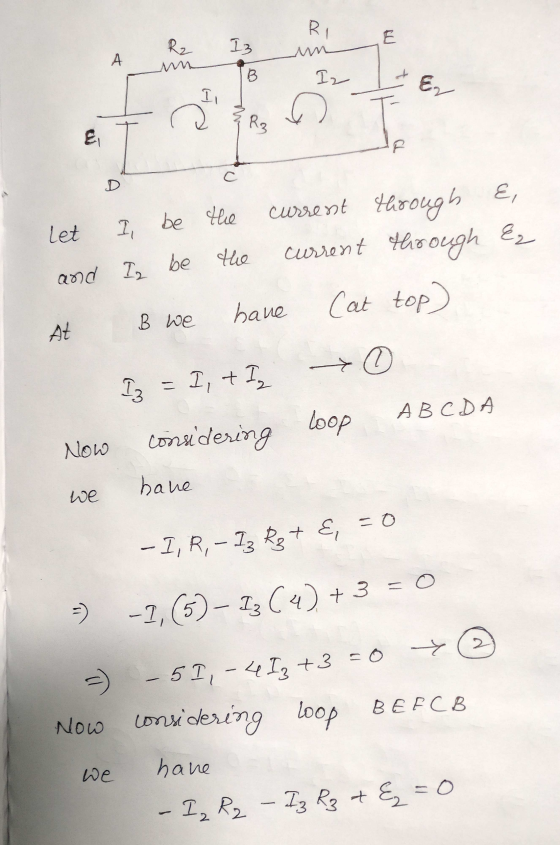
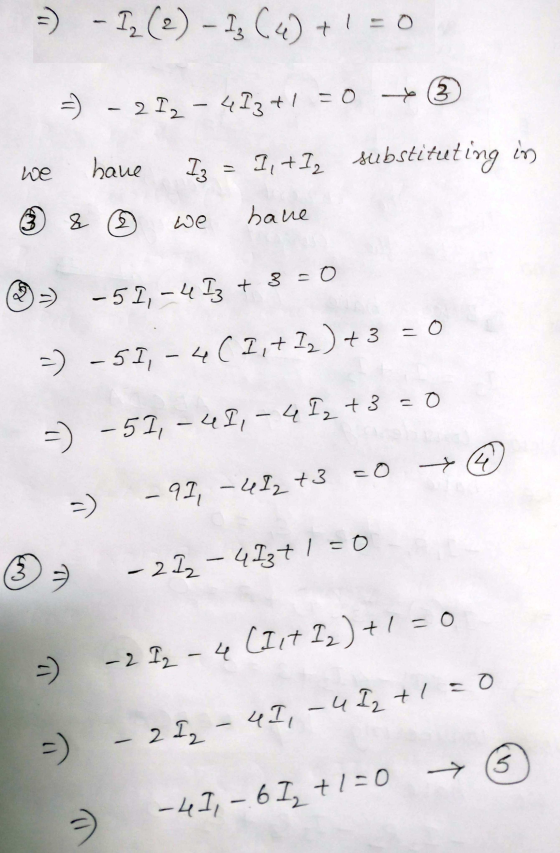
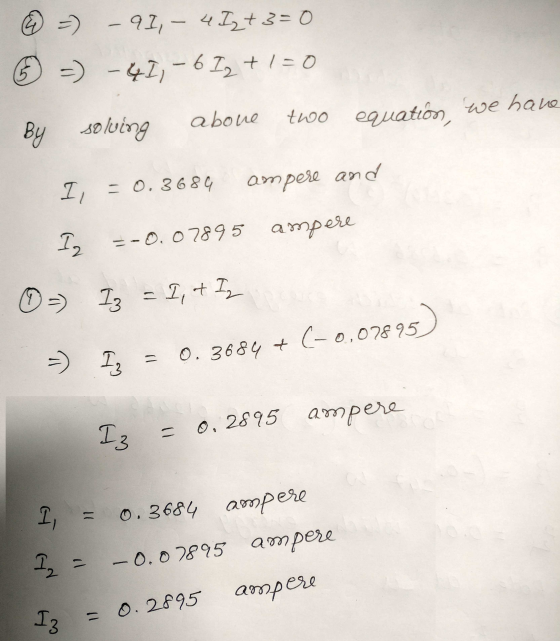
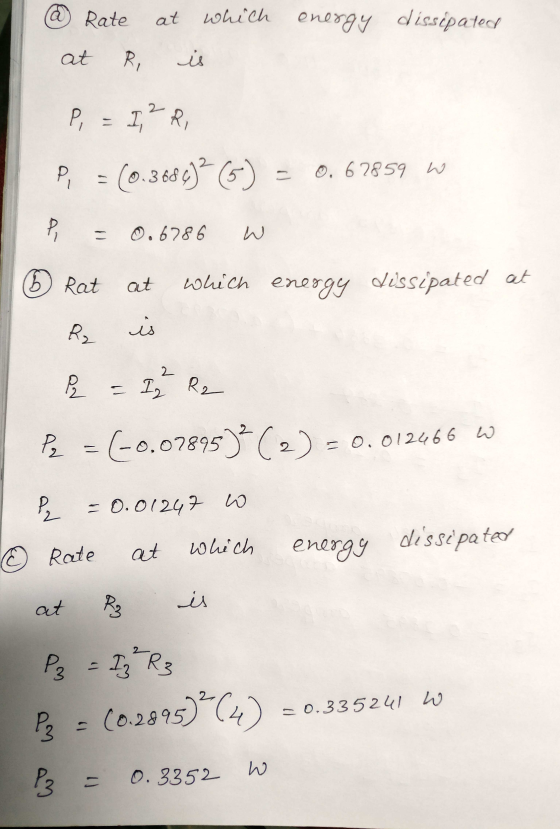
In the circuit shown below, what is the rate at which energy is dissipated in (a)...
In the circuit shown below, what is the rate at which energy is dissipated in (a)...
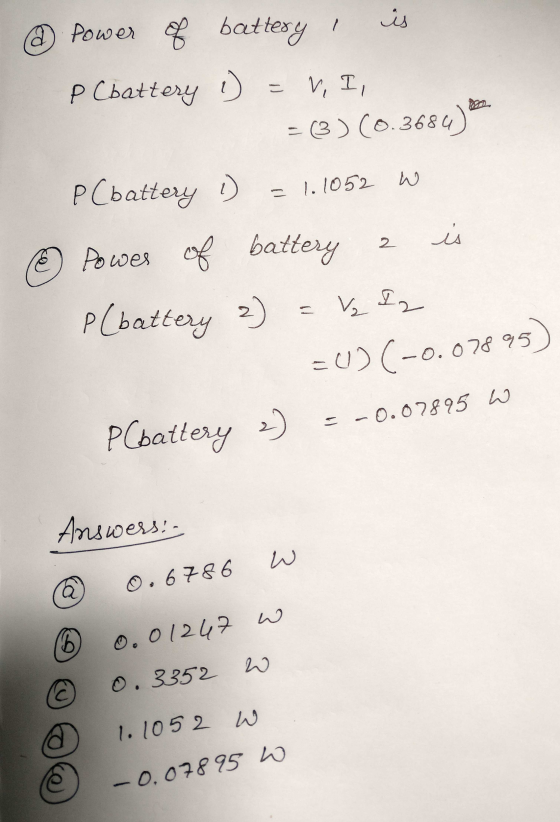
 In the circuit shown below, what is the rate at which energy
is dissipated in (a) R1, (b) R2, and (c) R3? What is the power of
(d) battery 1 and (e) battery 2? Put E1=3.0 V, E2=1.0 V, R1=5.0,
and R2=2.0, R3=4.0, both batteries are ideal. (Please show
steps!!)
hown beow, what is the rate at which energy is dissipated in (a) Ru. (b) R Ri = 5.0 Ω, and R2 = 2.0 Ω, R3-4.0 Ω, both batteries are...
In the circuit shown below, what is the rate at which energy
is dissipated in (a) R1, (b) R2, and (c) R3? What is the power of
(d) battery 1 and (e) battery 2? Put E1=3.0 V, E2=1.0 V, R1=5.0,
and R2=2.0, R3=4.0, both batteries are ideal. (Please show
steps!!)
hown beow, what is the rate at which energy is dissipated in (a) Ru. (b) R Ri = 5.0 Ω, and R2 = 2.0 Ω, R3-4.0 Ω, both batteries are...
I'm in hurry please In the electric circuit in the figure below, epsilon_1 = 9.0 V,...
 I'm in hurry please
In the electric circuit in the figure below, epsilon_1 = 9.0 V, epsilon_2 = 6.0V, R_1 = 12.0 ohm, R_2 = R_3 = 3.0 ohm Calculate the current going through resistor R_2 before the switch is closed. What is the direction of this current? Calculate the current through each resistor after the switch is closed. What is the direction of each current?
I'm in hurry please
In the electric circuit in the figure below, epsilon_1 = 9.0 V, epsilon_2 = 6.0V, R_1 = 12.0 ohm, R_2 = R_3 = 3.0 ohm Calculate the current going through resistor R_2 before the switch is closed. What is the direction of this current? Calculate the current through each resistor after the switch is closed. What is the direction of each current?
For the DC circuit shown below, what is the equivalent resistance of the network? What is...
 For the DC circuit shown below, what is the equivalent resistance of the network? What is the current in each resistor? Put R_1 = 100 Ohm, R_2 = R_3 = 50 Ohm, R_4 = 75 Ohm, and epsilon = 6.0 V; assume the battery is ideal.
The emfs and resistances in the circuit shown on the right have the following values: epsilon_1...
 The emfs and resistances in the circuit shown on the right have the following values: epsilon_1 = 5[V], epsilon_2 = 3[V], R_1 = 2[Ohm], R_2 = 1[Ohm] and R_3 = 5[Ohm]. What is the current i in the circuit and is the current in this circuit clockwise or counterclockwise? Explain, why the current direction makes sense! Write down all equations, you need to solve the problem: Document your calculation steps: Current (absolute value): [i] = _____ [A]. The direction of...
Consider the circuit shown below: R_1 = 670 Ohm R_2 = 190 Ohm R_3 = 780...
 Consider the circuit shown below: R_1 = 670 Ohm R_2 = 190 Ohm R_3 = 780 Ohm R_4 = 690 Ohm E = 6.0 V Calculate the potential difference across R_4. Correct, computer gets: 2.56e+00 V Calculate the power dissipated in R_3
In the circuit in the figure below, the batteries have negligible internal resistance. (Take R_1 =...
 In the circuit in the figure below, the batteries have negligible internal resistance. (Take R_1 = 2.40 Ohm, R_2 = 4.35 Ohm, and R_3 = 5.80 Ohm. Find the magnitude of the current in each resistor. Find the magnitude of the potential difference between points a and b. Find the power supplied by each battery. left battery right battery
In the figure the resistances are R_1 = 1.0 ohm and R_2 = 2.7 ohm, and...
 In the figure the resistances are R_1 = 1.0 ohm and R_2 = 2.7 ohm, and the ideal batteries have emfs = 2.8 V, and epsilon_2 = epsilon_3 = 6.0 V. What are the (a) current (in A) in battery 1, (b) the current (in A) in battery 2 and (c) the current (in A) in battery 3? (d) What is the potential difference V_a - V_b (in V)? Number Units Number Units Number Units Number Units
Three resistors are connected in the circuit shown below. The emf of the battery is 12.0...
 Three resistors are connected in the circuit shown below. The emf of the battery is 12.0 V and the resistors have the following values: R_1 = cR, and R_2 = R/c, where R = 29.0 Ohm and c is a positive number between 0 and infinity. R_3 is an unknown constant value. As the value of c approaches zero, the current through the battery approaches 0.200 A. What is the resistance of R_3? What does the value of the current...
Chapter 27, Problem 21. Find the current through each resistor in the circuit shown in Figure...
 Chapter 27, Problem 21. Find the current through each resistor in the circuit shown in Figure 27.P10 Find the potential difference between points A and H. Which point is at the higher potential? Use these values: epsilon_i - 12.0 V, epsilon_2 = 8.00 V. R_1 = 4.00 k Ohm, R_2 = 4.00 k Ohm, R_3 = 2.00 k Ohm
For the circuit shown in the following figure both meters are idealized, the battery has no...
 For the circuit shown in the following figure both meters are idealized, the battery has no appreciable internal resistance, and the ammeter reads 1.22 A. (Let R_1 = 47.0 ft, R_2 = 28.0 Ohm, and R_3 = R_4 = 18 Ohm.) What does the voltmeter read? What is the emf epsilon of the battery?
 In the circuit shown below, what is the rate at which energy
is dissipated in (a) R1, (b) R2, and (c) R3? What is the power of
(d) battery 1 and (e) battery 2? Put E1=3.0 V, E2=1.0 V, R1=5.0,
and R2=2.0, R3=4.0, both batteries are ideal. (Please show
steps!!)
hown beow, what is the rate at which energy is dissipated in (a) Ru. (b) R Ri = 5.0 Ω, and R2 = 2.0 Ω, R3-4.0 Ω, both batteries are...
In the circuit shown below, what is the rate at which energy
is dissipated in (a) R1, (b) R2, and (c) R3? What is the power of
(d) battery 1 and (e) battery 2? Put E1=3.0 V, E2=1.0 V, R1=5.0,
and R2=2.0, R3=4.0, both batteries are ideal. (Please show
steps!!)
hown beow, what is the rate at which energy is dissipated in (a) Ru. (b) R Ri = 5.0 Ω, and R2 = 2.0 Ω, R3-4.0 Ω, both batteries are...
 I'm in hurry please
In the electric circuit in the figure below, epsilon_1 = 9.0 V, epsilon_2 = 6.0V, R_1 = 12.0 ohm, R_2 = R_3 = 3.0 ohm Calculate the current going through resistor R_2 before the switch is closed. What is the direction of this current? Calculate the current through each resistor after the switch is closed. What is the direction of each current?
I'm in hurry please
In the electric circuit in the figure below, epsilon_1 = 9.0 V, epsilon_2 = 6.0V, R_1 = 12.0 ohm, R_2 = R_3 = 3.0 ohm Calculate the current going through resistor R_2 before the switch is closed. What is the direction of this current? Calculate the current through each resistor after the switch is closed. What is the direction of each current?
 For the DC circuit shown below, what is the equivalent resistance of the network? What is the current in each resistor? Put R_1 = 100 Ohm, R_2 = R_3 = 50 Ohm, R_4 = 75 Ohm, and epsilon = 6.0 V; assume the battery is ideal.
 The emfs and resistances in the circuit shown on the right have the following values: epsilon_1 = 5[V], epsilon_2 = 3[V], R_1 = 2[Ohm], R_2 = 1[Ohm] and R_3 = 5[Ohm]. What is the current i in the circuit and is the current in this circuit clockwise or counterclockwise? Explain, why the current direction makes sense! Write down all equations, you need to solve the problem: Document your calculation steps: Current (absolute value): [i] = _____ [A]. The direction of...
 Consider the circuit shown below: R_1 = 670 Ohm R_2 = 190 Ohm R_3 = 780 Ohm R_4 = 690 Ohm E = 6.0 V Calculate the potential difference across R_4. Correct, computer gets: 2.56e+00 V Calculate the power dissipated in R_3
 In the circuit in the figure below, the batteries have negligible internal resistance. (Take R_1 = 2.40 Ohm, R_2 = 4.35 Ohm, and R_3 = 5.80 Ohm. Find the magnitude of the current in each resistor. Find the magnitude of the potential difference between points a and b. Find the power supplied by each battery. left battery right battery
 In the figure the resistances are R_1 = 1.0 ohm and R_2 = 2.7 ohm, and the ideal batteries have emfs = 2.8 V, and epsilon_2 = epsilon_3 = 6.0 V. What are the (a) current (in A) in battery 1, (b) the current (in A) in battery 2 and (c) the current (in A) in battery 3? (d) What is the potential difference V_a - V_b (in V)? Number Units Number Units Number Units Number Units
 Three resistors are connected in the circuit shown below. The emf of the battery is 12.0 V and the resistors have the following values: R_1 = cR, and R_2 = R/c, where R = 29.0 Ohm and c is a positive number between 0 and infinity. R_3 is an unknown constant value. As the value of c approaches zero, the current through the battery approaches 0.200 A. What is the resistance of R_3? What does the value of the current...
 Chapter 27, Problem 21. Find the current through each resistor in the circuit shown in Figure 27.P10 Find the potential difference between points A and H. Which point is at the higher potential? Use these values: epsilon_i - 12.0 V, epsilon_2 = 8.00 V. R_1 = 4.00 k Ohm, R_2 = 4.00 k Ohm, R_3 = 2.00 k Ohm
 For the circuit shown in the following figure both meters are idealized, the battery has no appreciable internal resistance, and the ammeter reads 1.22 A. (Let R_1 = 47.0 ft, R_2 = 28.0 Ohm, and R_3 = R_4 = 18 Ohm.) What does the voltmeter read? What is the emf epsilon of the battery?
Most questions answered within 3 hours.
-
Where is the error in this code sequence?
String s1 = "Hello";
String s2 = "ello";...
asked 10 months ago -
Financial data for Joel de Paris, Inc., for last year
follow:
Joel de Paris, Inc.
Balance...
asked 10 months ago -
Consider this reaction:
Al2(SO4)3 (aq)+ BaCl3
(aq) Al2Cl6 (aq)- +
3BaSO4(s) . What is the...
asked 10 months ago -
Suppose that Savneet is considering increasing her
recent random sample from 20 car rentals to 40...
asked 10 months ago -
Trucks arrive at an unloading terminal at an average rate of 120
per hour.
Trucks arrive...
asked 10 months ago -
Why are methanol and ethanol completely soluble in water while
octanol is not very little soluble....
asked 10 months ago -
A facilities manager at a university reads in a research report
that the mean amount of...
asked 10 months ago -
When the CuSO4 is rehydrated by adding water to the anhydrous
compound, is this an endothermic...
asked 10 months ago -
A ray of sunlight is passing from diamond into crown glass; the
angle of incidence is...
asked 10 months ago -
A block of mass 0.249 kg is placed on top of a light, vertical
spring of...
asked 10 months ago -
how do the kidneys compensate in the presences of acidosis
a) trigger hyperventilate
b) reserve acid...
asked 10 months ago -
Question 501 pts
The rental rate of capital to the firm increases. Which of the
following...
asked 10 months ago