
Homework Answers
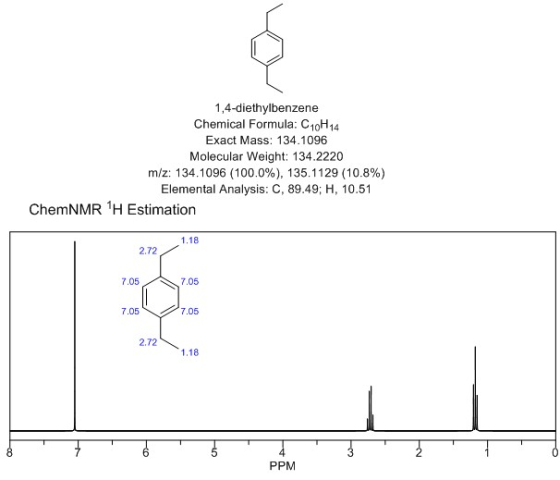
Since all 4 Aromatic hydrogen gives a singlet it shows all hydrogen are in same environment means which is having symmetry molecule
Add Answer to:
What's the compound?
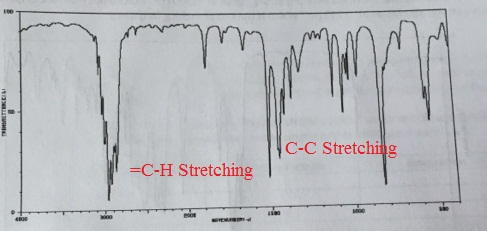
IR: Identify two peaks in the IR spectra. ^1H NMR: The ^1H NMR...
Identify each compound in the following questions and make assignments in the 1H NMR a) First...
 Identify each compound in the following questions and make
assignments in the 1H NMR
a) First spectra: Compound 1, 1H NMR given, and has a strong
absorbance in the IR at 1715 cm-1
b) Second spectra: Compound 2, a carboxylic acid of formula
C8H6O3Cl2 with 1H NMR given
c) Third spectra: Compound 3 with molecular formula of
C6H9ClO2, with 1H NMR given (the four signal from highest to lowest
chemical shift are quartet, quartet, double, and triplet)
d) Compound 4,...
Identify each compound in the following questions and make
assignments in the 1H NMR
a) First spectra: Compound 1, 1H NMR given, and has a strong
absorbance in the IR at 1715 cm-1
b) Second spectra: Compound 2, a carboxylic acid of formula
C8H6O3Cl2 with 1H NMR given
c) Third spectra: Compound 3 with molecular formula of
C6H9ClO2, with 1H NMR given (the four signal from highest to lowest
chemical shift are quartet, quartet, double, and triplet)
d) Compound 4,...
Identify all major functional groups in the IR spectra Identify all peaks in 1H- and isC-NMR...
 Identify all major functional groups in the IR spectra Identify all peaks in 1H- and isC-NMR spectra. Identify the molecular mass of the unknown from the mass spectrum Determine the pattern of fragmentation from the mass spectrum Generate a molecular formula Determine the Index of Hydrogen Deficiency Determine the structure of the unknown compound.
The 1H NMR, 13C NMR, mass and IR spectra of compound with a molecular formula (C9H11NO2) are given below.
 I need help identifying a compound based on the spectra. The compound contains an aromatic ring. The spectra are attached. I would appreciate an accurate description.The 1H NMR, 13C NMR, mass and IR spectra of compound with a molecular formula (C9H11NO2) are given below. Use the given spectroscopic data to provide rational interpretation (motivation) of all the spectral data to determine the structure of this compound.
11. (20 points) The 1H NMR, 13C NMR, Mass Spectra and IR spectra for a mystery...
 11. (20 points) The 1H NMR, 13C NMR, Mass Spectra and IR spectra
for a mystery compound with the formula C5H12O are shown below.
Please draw the structure for the compound in the box below. Note:
The numbers on top of the 1H NMR peaks are the number of protons
associated with that peak. A chart for 1H NMR, IR and 13C NMR
spectra shift values are on the following pages.
nts) The 'H NMR, "C NMR, Mass Spectra and...
11. (20 points) The 1H NMR, 13C NMR, Mass Spectra and IR spectra
for a mystery compound with the formula C5H12O are shown below.
Please draw the structure for the compound in the box below. Note:
The numbers on top of the 1H NMR peaks are the number of protons
associated with that peak. A chart for 1H NMR, IR and 13C NMR
spectra shift values are on the following pages.
nts) The 'H NMR, "C NMR, Mass Spectra and...
A compound with molecular formula C7H160 displays the following IR and 'H-NMR spectra. The 13C NMR...
 A compound with molecular formula C7H160 displays the following IR and 'H-NMR spectra. The 13C NMR data suggest that there is some symmetry within the molecule. a) Calculate the degrees of unsaturation (DU) for the compound in the space provided below. DU = b) Identify and label the two indicated peaks in the IR spectrum in the boxes provided. Identify and label ALL peaks in the 'H NMR spectrum below. The numbers given on the 'H NMR are integration values...
Assign as many peaks as possible in the IR, 1H NMR, and 13C NMR spectra. The...
 Assign as many peaks as possible in the IR, 1H NMR,
and 13C NMR spectra. The spectra are for
triphenylmethanol.
Assign as many peaks as possible in the IR, 1H NMR,
and 13C NMR spectra. The spectra are for
triphenylmethanol.
for the following 2 compounds, please calculate, and show the calculations for, the degree of unsaturation, assign the IR spectrum peaks, assign the 13C NMR peaks, assign the 1H NMR peaks, and draw th...
 for the following 2 compounds, please calculate, and
show the calculations for, the degree of unsaturation, assign the
IR spectrum peaks, assign the 13C NMR peaks, assign the 1H NMR
peaks, and draw the structure for the unknown compound.
CHIM 245 Spectroscopy Problem Set #2 In this problem set there are two unknown compounds. You are provided with the formula, IR spectrum, "C NMR spectrum, and 'H NMR spectrum for each compound. Each unknown is worth 10 points, with an...
for the following 2 compounds, please calculate, and
show the calculations for, the degree of unsaturation, assign the
IR spectrum peaks, assign the 13C NMR peaks, assign the 1H NMR
peaks, and draw the structure for the unknown compound.
CHIM 245 Spectroscopy Problem Set #2 In this problem set there are two unknown compounds. You are provided with the formula, IR spectrum, "C NMR spectrum, and 'H NMR spectrum for each compound. Each unknown is worth 10 points, with an...
On the attached image are 1H NMR, 13C NMR, and IR spectra of a compound with...
 On the attached image are 1H NMR, 13C NMR, and IR
spectra of a compound with the formula C4H8O. 1H NMR signal at 1.2
is caused by 3 hydrogens, the sigbal at 2.1 is caused by 3
hydrogens, and the signal at 2.5 is caused by 2 hydrogens. Identify
the compound.
CH 1110 9 8 7 6?4 Problem 6. 'H NMR spectrum of compound HsO Problem 6. 13C NMR spectrum of compound C4HsO 200 180 160 140 120 100 80...
On the attached image are 1H NMR, 13C NMR, and IR
spectra of a compound with the formula C4H8O. 1H NMR signal at 1.2
is caused by 3 hydrogens, the sigbal at 2.1 is caused by 3
hydrogens, and the signal at 2.5 is caused by 2 hydrogens. Identify
the compound.
CH 1110 9 8 7 6?4 Problem 6. 'H NMR spectrum of compound HsO Problem 6. 13C NMR spectrum of compound C4HsO 200 180 160 140 120 100 80...
A compound with molecular formula C7H160 displays the following IR and 'H-NMR spectra. The 13C NMR...
 A compound with molecular formula C7H160 displays the following IR and 'H-NMR spectra. The 13C NMR data suggest that there is some symmetry within the molecule. a) Calculate the degrees of unsaturation (DU) for the compound in the space provided below. DU = b) Identify and label the two indicated peaks in the IR spectrum in the boxes provided. Identify and label ALL peaks in the 'H NMR spectrum below. The numbers given on the 'H NMR are integration values...
3. (a) From the spectral data (1H, 13C NMR, IR, MS) you were given, identify the...
 3. (a)
From the spectral data (1H, 13C NMR, IR, MS) you were given,
identify the structure of your product. Explain why you chose your
particular product based on the spectroscopic data.
(b)
Fully assign the 1H NMR spectrum of your product (i.e. determine
which peaks in the 1H NMR correspond to which hydrogens in the
product)
(c) Now
work backwards (or consult the NMR spectra of the two reactants)
and determine the structure of the two unknown reactants.
Thank...
3. (a)
From the spectral data (1H, 13C NMR, IR, MS) you were given,
identify the structure of your product. Explain why you chose your
particular product based on the spectroscopic data.
(b)
Fully assign the 1H NMR spectrum of your product (i.e. determine
which peaks in the 1H NMR correspond to which hydrogens in the
product)
(c) Now
work backwards (or consult the NMR spectra of the two reactants)
and determine the structure of the two unknown reactants.
Thank...
 Identify each compound in the following questions and make
assignments in the 1H NMR
a) First spectra: Compound 1, 1H NMR given, and has a strong
absorbance in the IR at 1715 cm-1
b) Second spectra: Compound 2, a carboxylic acid of formula
C8H6O3Cl2 with 1H NMR given
c) Third spectra: Compound 3 with molecular formula of
C6H9ClO2, with 1H NMR given (the four signal from highest to lowest
chemical shift are quartet, quartet, double, and triplet)
d) Compound 4,...
Identify each compound in the following questions and make
assignments in the 1H NMR
a) First spectra: Compound 1, 1H NMR given, and has a strong
absorbance in the IR at 1715 cm-1
b) Second spectra: Compound 2, a carboxylic acid of formula
C8H6O3Cl2 with 1H NMR given
c) Third spectra: Compound 3 with molecular formula of
C6H9ClO2, with 1H NMR given (the four signal from highest to lowest
chemical shift are quartet, quartet, double, and triplet)
d) Compound 4,...
 Identify all major functional groups in the IR spectra Identify all peaks in 1H- and isC-NMR spectra. Identify the molecular mass of the unknown from the mass spectrum Determine the pattern of fragmentation from the mass spectrum Generate a molecular formula Determine the Index of Hydrogen Deficiency Determine the structure of the unknown compound.
 11. (20 points) The 1H NMR, 13C NMR, Mass Spectra and IR spectra
for a mystery compound with the formula C5H12O are shown below.
Please draw the structure for the compound in the box below. Note:
The numbers on top of the 1H NMR peaks are the number of protons
associated with that peak. A chart for 1H NMR, IR and 13C NMR
spectra shift values are on the following pages.
nts) The 'H NMR, "C NMR, Mass Spectra and...
11. (20 points) The 1H NMR, 13C NMR, Mass Spectra and IR spectra
for a mystery compound with the formula C5H12O are shown below.
Please draw the structure for the compound in the box below. Note:
The numbers on top of the 1H NMR peaks are the number of protons
associated with that peak. A chart for 1H NMR, IR and 13C NMR
spectra shift values are on the following pages.
nts) The 'H NMR, "C NMR, Mass Spectra and...
 A compound with molecular formula C7H160 displays the following IR and 'H-NMR spectra. The 13C NMR data suggest that there is some symmetry within the molecule. a) Calculate the degrees of unsaturation (DU) for the compound in the space provided below. DU = b) Identify and label the two indicated peaks in the IR spectrum in the boxes provided. Identify and label ALL peaks in the 'H NMR spectrum below. The numbers given on the 'H NMR are integration values...
 Assign as many peaks as possible in the IR, 1H NMR,
and 13C NMR spectra. The spectra are for
triphenylmethanol.
Assign as many peaks as possible in the IR, 1H NMR,
and 13C NMR spectra. The spectra are for
triphenylmethanol.
 for the following 2 compounds, please calculate, and
show the calculations for, the degree of unsaturation, assign the
IR spectrum peaks, assign the 13C NMR peaks, assign the 1H NMR
peaks, and draw the structure for the unknown compound.
CHIM 245 Spectroscopy Problem Set #2 In this problem set there are two unknown compounds. You are provided with the formula, IR spectrum, "C NMR spectrum, and 'H NMR spectrum for each compound. Each unknown is worth 10 points, with an...
for the following 2 compounds, please calculate, and
show the calculations for, the degree of unsaturation, assign the
IR spectrum peaks, assign the 13C NMR peaks, assign the 1H NMR
peaks, and draw the structure for the unknown compound.
CHIM 245 Spectroscopy Problem Set #2 In this problem set there are two unknown compounds. You are provided with the formula, IR spectrum, "C NMR spectrum, and 'H NMR spectrum for each compound. Each unknown is worth 10 points, with an...
 On the attached image are 1H NMR, 13C NMR, and IR
spectra of a compound with the formula C4H8O. 1H NMR signal at 1.2
is caused by 3 hydrogens, the sigbal at 2.1 is caused by 3
hydrogens, and the signal at 2.5 is caused by 2 hydrogens. Identify
the compound.
CH 1110 9 8 7 6?4 Problem 6. 'H NMR spectrum of compound HsO Problem 6. 13C NMR spectrum of compound C4HsO 200 180 160 140 120 100 80...
On the attached image are 1H NMR, 13C NMR, and IR
spectra of a compound with the formula C4H8O. 1H NMR signal at 1.2
is caused by 3 hydrogens, the sigbal at 2.1 is caused by 3
hydrogens, and the signal at 2.5 is caused by 2 hydrogens. Identify
the compound.
CH 1110 9 8 7 6?4 Problem 6. 'H NMR spectrum of compound HsO Problem 6. 13C NMR spectrum of compound C4HsO 200 180 160 140 120 100 80...
 A compound with molecular formula C7H160 displays the following IR and 'H-NMR spectra. The 13C NMR data suggest that there is some symmetry within the molecule. a) Calculate the degrees of unsaturation (DU) for the compound in the space provided below. DU = b) Identify and label the two indicated peaks in the IR spectrum in the boxes provided. Identify and label ALL peaks in the 'H NMR spectrum below. The numbers given on the 'H NMR are integration values...
 3. (a)
From the spectral data (1H, 13C NMR, IR, MS) you were given,
identify the structure of your product. Explain why you chose your
particular product based on the spectroscopic data.
(b)
Fully assign the 1H NMR spectrum of your product (i.e. determine
which peaks in the 1H NMR correspond to which hydrogens in the
product)
(c) Now
work backwards (or consult the NMR spectra of the two reactants)
and determine the structure of the two unknown reactants.
Thank...
3. (a)
From the spectral data (1H, 13C NMR, IR, MS) you were given,
identify the structure of your product. Explain why you chose your
particular product based on the spectroscopic data.
(b)
Fully assign the 1H NMR spectrum of your product (i.e. determine
which peaks in the 1H NMR correspond to which hydrogens in the
product)
(c) Now
work backwards (or consult the NMR spectra of the two reactants)
and determine the structure of the two unknown reactants.
Thank...
Most questions answered within 3 hours.
-
Where is the error in this code sequence?
String s1 = "Hello";
String s2 = "ello";...
asked 10 months ago -
Financial data for Joel de Paris, Inc., for last year
follow:
Joel de Paris, Inc.
Balance...
asked 10 months ago -
Consider this reaction:
Al2(SO4)3 (aq)+ BaCl3
(aq) Al2Cl6 (aq)- +
3BaSO4(s) . What is the...
asked 10 months ago -
Suppose that Savneet is considering increasing her
recent random sample from 20 car rentals to 40...
asked 10 months ago -
Trucks arrive at an unloading terminal at an average rate of 120
per hour.
Trucks arrive...
asked 10 months ago -
Why are methanol and ethanol completely soluble in water while
octanol is not very little soluble....
asked 10 months ago -
A facilities manager at a university reads in a research report
that the mean amount of...
asked 10 months ago -
When the CuSO4 is rehydrated by adding water to the anhydrous
compound, is this an endothermic...
asked 10 months ago -
A ray of sunlight is passing from diamond into crown glass; the
angle of incidence is...
asked 10 months ago -
A block of mass 0.249 kg is placed on top of a light, vertical
spring of...
asked 10 months ago -
how do the kidneys compensate in the presences of acidosis
a) trigger hyperventilate
b) reserve acid...
asked 10 months ago -
Question 501 pts
The rental rate of capital to the firm increases. Which of the
following...
asked 10 months ago