
Homework Answers
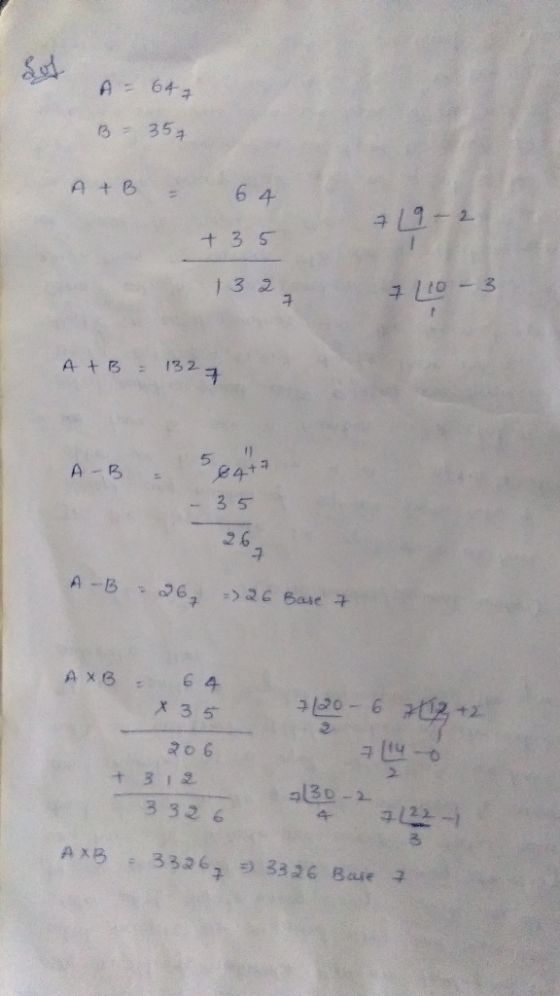
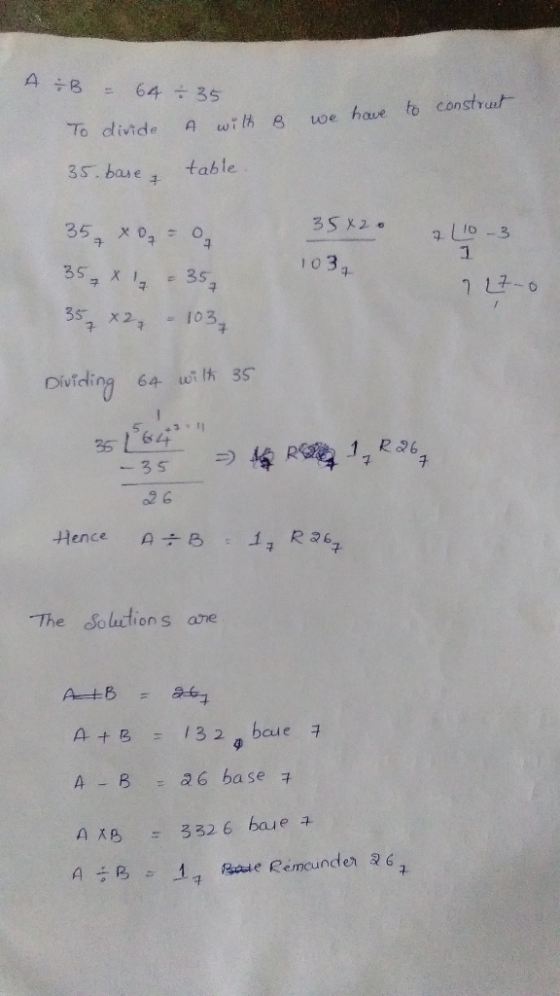
I have a program that was suppose to do the following: Compute their Cartesian product, AxB...
I have a program that was suppose to do the following: Compute their Cartesian product, AxB of two lists. Each list has no more than 10 numbers. For example, given the two input lists: A = [1,2] B = [3,4] then the Cartesian product output should be: AxB = [(1,3),(1,4),(2,3),(2,4)] *********** The code that I have is this: (Thanks to other great answerers like you all) What I need: Is for the code below to have the user prompted to...
5. If bxc-iand axb- 2j+k, then what is (a - bc) x b?
 5. If bxc-iand axb- 2j+k, then what is (a - bc) x b?
If a=i+j + 5k and b =i+j + 2k Compute the cross product a x b....
 If a=i+j + 5k and b =i+j + 2k Compute the cross product a x b. axb= i + j+ k
Show that A*(BxC) = B*(CxA) = C*(AxB) Using the Levi Civita symbol (A,B,C are all vectors).
Show that A*(BxC) = B*(CxA) = C*(AxB) Using the Levi Civita symbol (A,B,C are all vectors).
detailed work pls axb. Find the angle Let a, b 0 be vectors in R3 with...
 detailed work pls axb. Find the angle Let a, b 0 be vectors in R3 with angle between them #/7, and e 3. between each pair of vectors: c and b c and b x a b and b x c a and b x c axcand b xc
detailed work pls axb. Find the angle Let a, b 0 be vectors in R3 with angle between them #/7, and e 3. between each pair of vectors: c and b...
detailed work pls axb. Find the angle Let a, b 0 be vectors in R3 with angle between them #/7, and e 3. between each pair of vectors: c and b c and b x a b and b x c a and b x c axcand b xc
detailed work pls axb. Find the angle Let a, b 0 be vectors in R3 with angle between them #/7, and e 3. between each pair of vectors: c and b...
a=4i + k Calculate the vector product axb Check that a x b is normal to...
 a=4i + k Calculate the vector product axb Check that a x b is normal to a and to b Calculate exd and lexd Find a unit vector normal to the plane of the vectors b and d b- 2i-3j-k d--i+2j+k
How is A∧B = i(AxB)? Here the ^ means wedge product, i means imaginary part, and...
How is A∧B = i(AxB)? Here the ^ means wedge product, i means imaginary part, and x is the cross product between A and B on the right hand side.
B 357 m To find the distance AB across a river, a surveyor laid off a...
 B 357 m To find the distance AB across a river, a surveyor laid off a distance BC = 357 m on one side of the river. It is found that B = 114°30' and C = 14°20'. Find AB. 14°20 114°30 m The distance AB across the river is (Simplify your answer. Do not round until the final answer. Then round to the nearest whole number as needed.)
(4) Let F be a field and let a, b E F with a 0. Show that Fx/axb)F (4) Let F be a field and let a, b E F with a 0....
 (4) Let F be a field and let a, b E F with a 0. Show that Fx/axb)F
(4) Let F be a field and let a, b E F with a 0. Show that Fx/axb)F
(4) Let F be a field and let a, b E F with a 0. Show that Fx/axb)F
 5. If bxc-iand axb- 2j+k, then what is (a - bc) x b?
 If a=i+j + 5k and b =i+j + 2k Compute the cross product a x b. axb= i + j+ k
 detailed work pls axb. Find the angle Let a, b 0 be vectors in R3 with angle between them #/7, and e 3. between each pair of vectors: c and b c and b x a b and b x c a and b x c axcand b xc
detailed work pls axb. Find the angle Let a, b 0 be vectors in R3 with angle between them #/7, and e 3. between each pair of vectors: c and b...
detailed work pls axb. Find the angle Let a, b 0 be vectors in R3 with angle between them #/7, and e 3. between each pair of vectors: c and b c and b x a b and b x c a and b x c axcand b xc
detailed work pls axb. Find the angle Let a, b 0 be vectors in R3 with angle between them #/7, and e 3. between each pair of vectors: c and b...
 a=4i + k Calculate the vector product axb Check that a x b is normal to a and to b Calculate exd and lexd Find a unit vector normal to the plane of the vectors b and d b- 2i-3j-k d--i+2j+k
 B 357 m To find the distance AB across a river, a surveyor laid off a distance BC = 357 m on one side of the river. It is found that B = 114°30' and C = 14°20'. Find AB. 14°20 114°30 m The distance AB across the river is (Simplify your answer. Do not round until the final answer. Then round to the nearest whole number as needed.)
 (4) Let F be a field and let a, b E F with a 0. Show that Fx/axb)F
(4) Let F be a field and let a, b E F with a 0. Show that Fx/axb)F
(4) Let F be a field and let a, b E F with a 0. Show that Fx/axb)F
Most questions answered within 3 hours.
-
Where is the error in this code sequence?
String s1 = "Hello";
String s2 = "ello";...
asked 10 months ago -
Financial data for Joel de Paris, Inc., for last year
follow:
Joel de Paris, Inc.
Balance...
asked 10 months ago -
Consider this reaction:
Al2(SO4)3 (aq)+ BaCl3
(aq) Al2Cl6 (aq)- +
3BaSO4(s) . What is the...
asked 10 months ago -
Suppose that Savneet is considering increasing her
recent random sample from 20 car rentals to 40...
asked 10 months ago -
Trucks arrive at an unloading terminal at an average rate of 120
per hour.
Trucks arrive...
asked 10 months ago -
Why are methanol and ethanol completely soluble in water while
octanol is not very little soluble....
asked 10 months ago -
A facilities manager at a university reads in a research report
that the mean amount of...
asked 10 months ago -
When the CuSO4 is rehydrated by adding water to the anhydrous
compound, is this an endothermic...
asked 10 months ago -
A ray of sunlight is passing from diamond into crown glass; the
angle of incidence is...
asked 10 months ago -
A block of mass 0.249 kg is placed on top of a light, vertical
spring of...
asked 10 months ago -
how do the kidneys compensate in the presences of acidosis
a) trigger hyperventilate
b) reserve acid...
asked 10 months ago -
Question 501 pts
The rental rate of capital to the firm increases. Which of the
following...
asked 10 months ago