can you expline why the ans is b

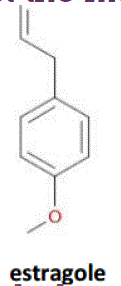
can you expline why the ans is b
Homework Answers
In the above case b option is the correct answer as we can see that the oxygen present will have two lone pairs which will have a dipole moment that too a strong one away from the oxygen so this would result in a net dipole moment perpendicular to the oxygen .
This is the reason why option B is the most valid one
Pls ans both a and b. pls remember to explain why pls answer this one also
 pls
ans both a and b. pls remember to explain why
pls answer this one also
s Phopose s lausihic ep Write a mechanism for the reaction shown below. You must show the activated complex for both brominated positions. Based on the stability of the activated complex, propose the expected product (c-2 or C-3 bromination). Br2 Br a) FeBr3 Br Only one product is formed. Which one? Why? CH2Cl2 b) AlCl 1, NaOCH3 2. H3O NO2 NO2 OCH3 Cl
s...
pls
ans both a and b. pls remember to explain why
pls answer this one also
s Phopose s lausihic ep Write a mechanism for the reaction shown below. You must show the activated complex for both brominated positions. Based on the stability of the activated complex, propose the expected product (c-2 or C-3 bromination). Br2 Br a) FeBr3 Br Only one product is formed. Which one? Why? CH2Cl2 b) AlCl 1, NaOCH3 2. H3O NO2 NO2 OCH3 Cl
s...
can you give me the answer and explain why?also can you explain why B is incorrect....
 can you give me the answer and explain why?also can you explain
why B is incorrect. thx
21. Which of the following is an attribute of the corporate form of business ownership? Unlimited liability. Higher tax rates. Limited resources. Difficulty in transferring ownership. None of the choices are correct.
can you give me the answer and explain why?also can you explain
why B is incorrect. thx
21. Which of the following is an attribute of the corporate form of business ownership? Unlimited liability. Higher tax rates. Limited resources. Difficulty in transferring ownership. None of the choices are correct.
can anyone please help with this electric potential problem? 5. To find : 1) Choose ro such that(usual: ro - infinity) 2) Integrate! Find V for the following areas: Ans: Ans: Ans: Hint: Ans: a...
 can anyone please help with this electric potential
problem?
5. To find : 1) Choose ro such that(usual: ro - infinity) 2) Integrate! Find V for the following areas: Ans: Ans: Ans: Hint: Ans: al < r < a2. Ans:
5. To find : 1) Choose ro such that(usual: ro - infinity) 2) Integrate! Find V for the following areas: Ans:
Ans: Ans: Hint: Ans: al
can anyone please help with this electric potential
problem?
5. To find : 1) Choose ro such that(usual: ro - infinity) 2) Integrate! Find V for the following areas: Ans: Ans: Ans: Hint: Ans: al < r < a2. Ans:
5. To find : 1) Choose ro such that(usual: ro - infinity) 2) Integrate! Find V for the following areas: Ans:
Ans: Ans: Hint: Ans: al
ANS: b. Which has the smallest value? ANS: Convert the following: a. 10 tsp = b....
 ANS: b. Which has the smallest value? ANS: Convert the following: a. 10 tsp = b. 10 mL = c. 10 L= ml 10. Your patient is receiving 500 mL of D5W at 50 ml/hr. How long will it take for the IV to completely infuse? ANS:
Ans: C Please explain why the answer is C. Thank you. 22. A scientist runs a...
 Ans: C
Please explain why the answer is C. Thank you.
22. A scientist runs a kinetic analysis and generates the following data 0 Reaction Progress She then proposes the following mechanism. Which rate law is consistent with these data and the proposed mechanism? Cl2 (g) + O2 (g) → Cl:O2 (g) CI202 (g) + N2 (g) → 2 ClNO (g) A. Rate Kobs Cl202]2 B. Rate = kobs[C12][02] C. Rate Kobs[Cl2]IO2][N2] D. Rate Kob2]N2] E. Rate Kobs CI O2]
Ans: C
Please explain why the answer is C. Thank you.
22. A scientist runs a kinetic analysis and generates the following data 0 Reaction Progress She then proposes the following mechanism. Which rate law is consistent with these data and the proposed mechanism? Cl2 (g) + O2 (g) → Cl:O2 (g) CI202 (g) + N2 (g) → 2 ClNO (g) A. Rate Kobs Cl202]2 B. Rate = kobs[C12][02] C. Rate Kobs[Cl2]IO2][N2] D. Rate Kob2]N2] E. Rate Kobs CI O2]
please help ans explain why: draw an arrow pushing mechanism to explain the formation of the...
 please help ans explain why: draw an arrow pushing mechanism
to explain the formation of the products shown
H2SO4 a. Br H3CO methanol b.
please help ans explain why: draw an arrow pushing mechanism
to explain the formation of the products shown
H2SO4 a. Br H3CO methanol b.
ans: (a) 2642 (b) 17.9
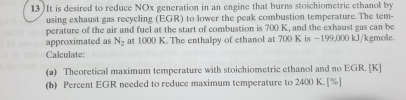 ans:
(a) 2642
(b) 17.9
ans:
(a) 2642
(b) 17.9
ANS is B 10. Ethene (ethylene, C2H4) can dimerize to produce cyclobutane (C4H8) in the presence...
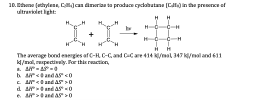 ANS is B
10. Ethene (ethylene, C2H4) can dimerize to produce cyclobutane (C4H8) in the presence of ultraviolet light: hvhH НН The average bond energies of C-H, C-C, and C C are 414 kj/mol, 347 k]/mol and 611 k]/mol, respectively. For this reaction, C. ΔΗΡ < 0 and AS° > 0
ANS is B
10. Ethene (ethylene, C2H4) can dimerize to produce cyclobutane (C4H8) in the presence of ultraviolet light: hvhH НН The average bond energies of C-H, C-C, and C C are 414 kj/mol, 347 k]/mol and 611 k]/mol, respectively. For this reaction, C. ΔΗΡ < 0 and AS° > 0
multiple choice questions! 11. What type of reaction would you predict the following to undergo? Ans....
 multiple choice questions!
11. What type of reaction would you predict the following to undergo? Ans. li + NH3 CH3CN ► ? (A) SN1 (B) E1 (C) E2 (D) SN2 12. Which of the following factors will NOT promote an SN1 reaction? Ans. (A) a polar, protic solvent (B) a 3º substrate (C) a strong nucleophile (D) a good leaving group 13. Which one of the following compounds can show cis/trans- isomerism? Ans. (A) 1,1-dimethylcyclopentane (B) 1-ethyl-2-methylcyclobutane (C) 1,1,4-trimethylcyclohexane (D)...
multiple choice questions!
11. What type of reaction would you predict the following to undergo? Ans. li + NH3 CH3CN ► ? (A) SN1 (B) E1 (C) E2 (D) SN2 12. Which of the following factors will NOT promote an SN1 reaction? Ans. (A) a polar, protic solvent (B) a 3º substrate (C) a strong nucleophile (D) a good leaving group 13. Which one of the following compounds can show cis/trans- isomerism? Ans. (A) 1,1-dimethylcyclopentane (B) 1-ethyl-2-methylcyclobutane (C) 1,1,4-trimethylcyclohexane (D)...
plz ans a&b a) Name three macrohardness tests and two microhardness tests. b) Suppose you are...
 plz ans a&b
a) Name three macrohardness tests and two microhardness tests. b) Suppose you are doing Vickers microhardness test at a load of 500 g-f which generated a square-shaped indentation with an average diagonal length of 25 micron. What is the Vickers Hardness Number (VHN)?
plz ans a&b
a) Name three macrohardness tests and two microhardness tests. b) Suppose you are doing Vickers microhardness test at a load of 500 g-f which generated a square-shaped indentation with an average diagonal length of 25 micron. What is the Vickers Hardness Number (VHN)?
 pls
ans both a and b. pls remember to explain why
pls answer this one also
s Phopose s lausihic ep Write a mechanism for the reaction shown below. You must show the activated complex for both brominated positions. Based on the stability of the activated complex, propose the expected product (c-2 or C-3 bromination). Br2 Br a) FeBr3 Br Only one product is formed. Which one? Why? CH2Cl2 b) AlCl 1, NaOCH3 2. H3O NO2 NO2 OCH3 Cl
s...
pls
ans both a and b. pls remember to explain why
pls answer this one also
s Phopose s lausihic ep Write a mechanism for the reaction shown below. You must show the activated complex for both brominated positions. Based on the stability of the activated complex, propose the expected product (c-2 or C-3 bromination). Br2 Br a) FeBr3 Br Only one product is formed. Which one? Why? CH2Cl2 b) AlCl 1, NaOCH3 2. H3O NO2 NO2 OCH3 Cl
s...
 can you give me the answer and explain why?also can you explain
why B is incorrect. thx
21. Which of the following is an attribute of the corporate form of business ownership? Unlimited liability. Higher tax rates. Limited resources. Difficulty in transferring ownership. None of the choices are correct.
can you give me the answer and explain why?also can you explain
why B is incorrect. thx
21. Which of the following is an attribute of the corporate form of business ownership? Unlimited liability. Higher tax rates. Limited resources. Difficulty in transferring ownership. None of the choices are correct.
 can anyone please help with this electric potential
problem?
5. To find : 1) Choose ro such that(usual: ro - infinity) 2) Integrate! Find V for the following areas: Ans: Ans: Ans: Hint: Ans: al < r < a2. Ans:
5. To find : 1) Choose ro such that(usual: ro - infinity) 2) Integrate! Find V for the following areas: Ans:
Ans: Ans: Hint: Ans: al
can anyone please help with this electric potential
problem?
5. To find : 1) Choose ro such that(usual: ro - infinity) 2) Integrate! Find V for the following areas: Ans: Ans: Ans: Hint: Ans: al < r < a2. Ans:
5. To find : 1) Choose ro such that(usual: ro - infinity) 2) Integrate! Find V for the following areas: Ans:
Ans: Ans: Hint: Ans: al
 ANS: b. Which has the smallest value? ANS: Convert the following: a. 10 tsp = b. 10 mL = c. 10 L= ml 10. Your patient is receiving 500 mL of D5W at 50 ml/hr. How long will it take for the IV to completely infuse? ANS:
 Ans: C
Please explain why the answer is C. Thank you.
22. A scientist runs a kinetic analysis and generates the following data 0 Reaction Progress She then proposes the following mechanism. Which rate law is consistent with these data and the proposed mechanism? Cl2 (g) + O2 (g) → Cl:O2 (g) CI202 (g) + N2 (g) → 2 ClNO (g) A. Rate Kobs Cl202]2 B. Rate = kobs[C12][02] C. Rate Kobs[Cl2]IO2][N2] D. Rate Kob2]N2] E. Rate Kobs CI O2]
Ans: C
Please explain why the answer is C. Thank you.
22. A scientist runs a kinetic analysis and generates the following data 0 Reaction Progress She then proposes the following mechanism. Which rate law is consistent with these data and the proposed mechanism? Cl2 (g) + O2 (g) → Cl:O2 (g) CI202 (g) + N2 (g) → 2 ClNO (g) A. Rate Kobs Cl202]2 B. Rate = kobs[C12][02] C. Rate Kobs[Cl2]IO2][N2] D. Rate Kob2]N2] E. Rate Kobs CI O2]
 please help ans explain why: draw an arrow pushing mechanism
to explain the formation of the products shown
H2SO4 a. Br H3CO methanol b.
please help ans explain why: draw an arrow pushing mechanism
to explain the formation of the products shown
H2SO4 a. Br H3CO methanol b.
 ans:
(a) 2642
(b) 17.9
ans:
(a) 2642
(b) 17.9
 ANS is B
10. Ethene (ethylene, C2H4) can dimerize to produce cyclobutane (C4H8) in the presence of ultraviolet light: hvhH НН The average bond energies of C-H, C-C, and C C are 414 kj/mol, 347 k]/mol and 611 k]/mol, respectively. For this reaction, C. ΔΗΡ < 0 and AS° > 0
ANS is B
10. Ethene (ethylene, C2H4) can dimerize to produce cyclobutane (C4H8) in the presence of ultraviolet light: hvhH НН The average bond energies of C-H, C-C, and C C are 414 kj/mol, 347 k]/mol and 611 k]/mol, respectively. For this reaction, C. ΔΗΡ < 0 and AS° > 0
 multiple choice questions!
11. What type of reaction would you predict the following to undergo? Ans. li + NH3 CH3CN ► ? (A) SN1 (B) E1 (C) E2 (D) SN2 12. Which of the following factors will NOT promote an SN1 reaction? Ans. (A) a polar, protic solvent (B) a 3º substrate (C) a strong nucleophile (D) a good leaving group 13. Which one of the following compounds can show cis/trans- isomerism? Ans. (A) 1,1-dimethylcyclopentane (B) 1-ethyl-2-methylcyclobutane (C) 1,1,4-trimethylcyclohexane (D)...
multiple choice questions!
11. What type of reaction would you predict the following to undergo? Ans. li + NH3 CH3CN ► ? (A) SN1 (B) E1 (C) E2 (D) SN2 12. Which of the following factors will NOT promote an SN1 reaction? Ans. (A) a polar, protic solvent (B) a 3º substrate (C) a strong nucleophile (D) a good leaving group 13. Which one of the following compounds can show cis/trans- isomerism? Ans. (A) 1,1-dimethylcyclopentane (B) 1-ethyl-2-methylcyclobutane (C) 1,1,4-trimethylcyclohexane (D)...
 plz ans a&b
a) Name three macrohardness tests and two microhardness tests. b) Suppose you are doing Vickers microhardness test at a load of 500 g-f which generated a square-shaped indentation with an average diagonal length of 25 micron. What is the Vickers Hardness Number (VHN)?
plz ans a&b
a) Name three macrohardness tests and two microhardness tests. b) Suppose you are doing Vickers microhardness test at a load of 500 g-f which generated a square-shaped indentation with an average diagonal length of 25 micron. What is the Vickers Hardness Number (VHN)?
Most questions answered within 3 hours.
-
Where is the error in this code sequence?
String s1 = "Hello";
String s2 = "ello";...
asked 10 months ago -
Financial data for Joel de Paris, Inc., for last year
follow:
Joel de Paris, Inc.
Balance...
asked 10 months ago -
Consider this reaction:
Al2(SO4)3 (aq)+ BaCl3
(aq) Al2Cl6 (aq)- +
3BaSO4(s) . What is the...
asked 10 months ago -
Suppose that Savneet is considering increasing her
recent random sample from 20 car rentals to 40...
asked 10 months ago -
Trucks arrive at an unloading terminal at an average rate of 120
per hour.
Trucks arrive...
asked 10 months ago -
Why are methanol and ethanol completely soluble in water while
octanol is not very little soluble....
asked 10 months ago -
A facilities manager at a university reads in a research report
that the mean amount of...
asked 10 months ago -
When the CuSO4 is rehydrated by adding water to the anhydrous
compound, is this an endothermic...
asked 10 months ago -
A ray of sunlight is passing from diamond into crown glass; the
angle of incidence is...
asked 10 months ago -
A block of mass 0.249 kg is placed on top of a light, vertical
spring of...
asked 10 months ago -
how do the kidneys compensate in the presences of acidosis
a) trigger hyperventilate
b) reserve acid...
asked 10 months ago -
Question 501 pts
The rental rate of capital to the firm increases. Which of the
following...
asked 10 months ago