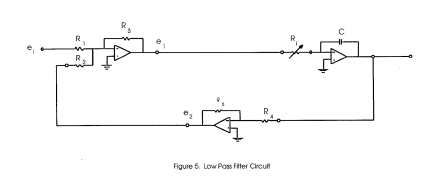
THE TIME CONSTANT IS RC FOR THE ABOVE CIRCUIT.
7. If we have a fast-moving input signal that we want the output to follow, would we want to have a time constant that is small or large?
8. If we have a slow-moving input signal that we want the output to follow, but a fast-moving noise on the input that we want to filter out, would we want to have a time constant that is small or large?
9. What does it mean if the dynamic system you are studying has a steady state gain greater than 1?
Homework Answers
This is totally a Qualitative Question.Conceptual one.So i will answer accordingly.
First of All we must understand what is the meaning of Time cknstant becuase this is the essence of the first two questions.
Time constant of any circuit signifies that in how much time the output of the system will be 63.2% of the final value,assymptotic final valye.If it is the case of discharging then the time taken to reach 36.8% of the initial value.
So it basically tells us how fast or slow the system response is.
Now in Question 7.We want to 'track' a fast moving input.So response must be fast.So time constant should be less,or lower, because lower time constant means system reaches its final value quickly.
In the second Question we have a slow moving input and a fast moving input noise..The output must follow input and should not follow the noise.We have to make the time constant large.So that system doesn't respond to The noise,but responds to the slow movinh input.
In question 9 if the steady state gain is greater than 1 then this means that ouput will be greater than the input in steady state.Basically means that the ouput will be amplified.
Hope this helps
Add Answer to:
THE TIME CONSTANT IS RC FOR THE ABOVE CIRCUIT.
7. If we have a fast-moving input...
Prelab Preparation: For the RC circuit shown in Figure 1, derive the modeling equation relating the output volta ge...
 Prelab Preparation: For the RC circuit shown in Figure 1, derive the modeling equation relating the output volta ge Vout to the input voltage vin. What is the transfer function? What is the time constant of the system? Vout Figure 1: RC Circuit What is the analytical step response solution in terms of vin, Rand C? For assumed values of R 1 K, and C 6.8 uF, perform a simulation using Matlab/Simulink assuming an input square wave signal of 5Vpp,...
this is a question from a review for a test. please help! An RC circuit with...
 this is a question from a review for a test. please
help!
An RC circuit with R = 10 Kilo-ohms and C = 40 nano-Farads is constructed to serve as an example of a first order system and as a filter. The capacitor is uncharged when the circuit is assembled. Two sources of input voltage to the circuit are possible, a DC power supply or a function generator. 1a) (6 points) • What input source would be used to determine...
this is a question from a review for a test. please
help!
An RC circuit with R = 10 Kilo-ohms and C = 40 nano-Farads is constructed to serve as an example of a first order system and as a filter. The capacitor is uncharged when the circuit is assembled. Two sources of input voltage to the circuit are possible, a DC power supply or a function generator. 1a) (6 points) • What input source would be used to determine...
Figure 3. Variable RC circuit A variable time constant circuit is shown above. The potentiometer (R2)...
 Figure 3. Variable RC circuit A variable time constant circuit is shown above. The potentiometer (R2) can change its resistance from 0 Ohms to 750 Ohms. R1 has a fixed value of 70 Ohms. The capacitor has a capacitance of 35 pF. a) Use the supplied MATLAB™ code Calc RC and function RC_Circ to find the time variation of voltage across the Capacitor, Ve, and the fixed resistor R1 for a steady voltage V1 = 5 Volts which is turned...
We have a filter and the bode diagram is shown as below figure. The input signal...
 We have a filter and the bode diagram is shown as below
figure.
The input signal is shown as below figure, What will be the
output signal in steady state?
Bode Diagram 0 -10 Magnitude (dB) -20 -30 -48 Phase (deg) 45 -90 10-2 10-1 100 101 102 Frequency (Hz) - Input 0.5 MT Voltage(V) -0.5 0.05 0.1 0.15 0.2 0.3 0.35 0.4 0.45 0.5 0.25 Time(s) Input Output 0.5 0 -0.5 -1 9.5 9.55 9.6 9.65 9.7 9.8 9.85...
We have a filter and the bode diagram is shown as below
figure.
The input signal is shown as below figure, What will be the
output signal in steady state?
Bode Diagram 0 -10 Magnitude (dB) -20 -30 -48 Phase (deg) 45 -90 10-2 10-1 100 101 102 Frequency (Hz) - Input 0.5 MT Voltage(V) -0.5 0.05 0.1 0.15 0.2 0.3 0.35 0.4 0.45 0.5 0.25 Time(s) Input Output 0.5 0 -0.5 -1 9.5 9.55 9.6 9.65 9.7 9.8 9.85...
A MOSFET is wired as a common-source amplifier as shown below. The input voltage vIN is...
 A MOSFET is wired as a common-source amplifier as shown below.
The input voltage vIN is the total of the source for
biasing the circuit at its operating point (vBIAS), and
a small signal ac source providing the signal that we want to
amplify (vin). The total output voltage is
vO.
a) Assume VDD = 5?, VIN = 2?, and ? = 4?Ω
in the circuit and the MOSFET parameters are K =
0.5??/?2, VTH 1?, and ? = 0.05V-1....
A MOSFET is wired as a common-source amplifier as shown below.
The input voltage vIN is the total of the source for
biasing the circuit at its operating point (vBIAS), and
a small signal ac source providing the signal that we want to
amplify (vin). The total output voltage is
vO.
a) Assume VDD = 5?, VIN = 2?, and ? = 4?Ω
in the circuit and the MOSFET parameters are K =
0.5??/?2, VTH 1?, and ? = 0.05V-1....
Objectives: To learn transient behavior of series RC circuits To observe of time constant and its...
 Objectives: To learn transient behavior of series RC circuits To observe of time constant and its effect on charging process of capacitor using pulse waveforms Equipment: Oscilloscope Function generator Resistors (1 k) Capacitors (1 uF) Breadboard Pre-Lab Questions A pulse is a voltage or current that changes from one level to the other and back again. If a waveform's high time equals its low time, it is called a square wave. The length of each cycle (one positive peak and...
1) Design a low-pass RC device with the following specifications: a) Input x(t) and output y(t)...
1) Design a low-pass RC device with the following specifications: a) Input x(t) and output y(t) b) Bandwidth which is defined as the range of frequencies (from 0 Hz to ??, the − 3dB point ) allowed to pass through without significant attenuation = 100Hz c) Static gain = 14dB d) The system has −20 dB/decade rolloff at high frequencies (thus first-order LP filter) Assume that you have one and only one resistor value available to you, and that resistance is...
The input to an envelope detector is a DSB-LC signal of the form (t) = A[1...
 The input to an envelope detector is a DSB-LC signal of the form (t) = A[1 + u cos 21 fmt] cos 2n fet where 0 <u < 1 and fc >> fm. If the envelope detector output is to follow the envelope of (t) at any time t, then the RC constant should satisfy the condition: 1+ u cos 21 fmt RC = 21fmu sin 21 fmt Show that for the above condition to be satisfied at all times,...
Problem 24: (18 points) 1. (6 points) Figure 2 shows an RC circuit with input f(t)...
 Problem 24: (18 points) 1. (6 points) Figure 2 shows an RC circuit with input f(t) and output y(t) Function Generator R, v, (r) y1) Figure 2: RC circuit. (a) (1 point) Sketch the circuit in the phasor domain by replacing the capacitor with its impedance represen- (b) (3 points) Using circuit analysis techniques, show that the frequency response function is Specify the DC gain, K, and the time constant, T, in terms of the parameters R, R, and C...
PLEASE DO IN MATLAB Problem 8 (PID feedback control). This problem is about Proportional-Integral-Derivative feedback control...
 PLEASE DO IN MATLAB
Problem 8 (PID feedback control). This problem is about Proportional-Integral-Derivative feedback control systems. The general setup of the system we are going to look at is given below: e(t) u(t) |C(s) y(t) P(s) r(t) Here the various signals are: signal/system r(t) y(t) e(t) P(s) C(s) и(t) meaning desired output signal actual output signal error signal r(t) y(t) Laplace transform of the (unstable) plant controller to be designed control signal Our goal is to design a controller...
PLEASE DO IN MATLAB
Problem 8 (PID feedback control). This problem is about Proportional-Integral-Derivative feedback control systems. The general setup of the system we are going to look at is given below: e(t) u(t) |C(s) y(t) P(s) r(t) Here the various signals are: signal/system r(t) y(t) e(t) P(s) C(s) и(t) meaning desired output signal actual output signal error signal r(t) y(t) Laplace transform of the (unstable) plant controller to be designed control signal Our goal is to design a controller...
 Prelab Preparation: For the RC circuit shown in Figure 1, derive the modeling equation relating the output volta ge Vout to the input voltage vin. What is the transfer function? What is the time constant of the system? Vout Figure 1: RC Circuit What is the analytical step response solution in terms of vin, Rand C? For assumed values of R 1 K, and C 6.8 uF, perform a simulation using Matlab/Simulink assuming an input square wave signal of 5Vpp,...
 this is a question from a review for a test. please
help!
An RC circuit with R = 10 Kilo-ohms and C = 40 nano-Farads is constructed to serve as an example of a first order system and as a filter. The capacitor is uncharged when the circuit is assembled. Two sources of input voltage to the circuit are possible, a DC power supply or a function generator. 1a) (6 points) • What input source would be used to determine...
this is a question from a review for a test. please
help!
An RC circuit with R = 10 Kilo-ohms and C = 40 nano-Farads is constructed to serve as an example of a first order system and as a filter. The capacitor is uncharged when the circuit is assembled. Two sources of input voltage to the circuit are possible, a DC power supply or a function generator. 1a) (6 points) • What input source would be used to determine...
 Figure 3. Variable RC circuit A variable time constant circuit is shown above. The potentiometer (R2) can change its resistance from 0 Ohms to 750 Ohms. R1 has a fixed value of 70 Ohms. The capacitor has a capacitance of 35 pF. a) Use the supplied MATLAB™ code Calc RC and function RC_Circ to find the time variation of voltage across the Capacitor, Ve, and the fixed resistor R1 for a steady voltage V1 = 5 Volts which is turned...
 We have a filter and the bode diagram is shown as below
figure.
The input signal is shown as below figure, What will be the
output signal in steady state?
Bode Diagram 0 -10 Magnitude (dB) -20 -30 -48 Phase (deg) 45 -90 10-2 10-1 100 101 102 Frequency (Hz) - Input 0.5 MT Voltage(V) -0.5 0.05 0.1 0.15 0.2 0.3 0.35 0.4 0.45 0.5 0.25 Time(s) Input Output 0.5 0 -0.5 -1 9.5 9.55 9.6 9.65 9.7 9.8 9.85...
We have a filter and the bode diagram is shown as below
figure.
The input signal is shown as below figure, What will be the
output signal in steady state?
Bode Diagram 0 -10 Magnitude (dB) -20 -30 -48 Phase (deg) 45 -90 10-2 10-1 100 101 102 Frequency (Hz) - Input 0.5 MT Voltage(V) -0.5 0.05 0.1 0.15 0.2 0.3 0.35 0.4 0.45 0.5 0.25 Time(s) Input Output 0.5 0 -0.5 -1 9.5 9.55 9.6 9.65 9.7 9.8 9.85...
 A MOSFET is wired as a common-source amplifier as shown below.
The input voltage vIN is the total of the source for
biasing the circuit at its operating point (vBIAS), and
a small signal ac source providing the signal that we want to
amplify (vin). The total output voltage is
vO.
a) Assume VDD = 5?, VIN = 2?, and ? = 4?Ω
in the circuit and the MOSFET parameters are K =
0.5??/?2, VTH 1?, and ? = 0.05V-1....
A MOSFET is wired as a common-source amplifier as shown below.
The input voltage vIN is the total of the source for
biasing the circuit at its operating point (vBIAS), and
a small signal ac source providing the signal that we want to
amplify (vin). The total output voltage is
vO.
a) Assume VDD = 5?, VIN = 2?, and ? = 4?Ω
in the circuit and the MOSFET parameters are K =
0.5??/?2, VTH 1?, and ? = 0.05V-1....
 Objectives: To learn transient behavior of series RC circuits To observe of time constant and its effect on charging process of capacitor using pulse waveforms Equipment: Oscilloscope Function generator Resistors (1 k) Capacitors (1 uF) Breadboard Pre-Lab Questions A pulse is a voltage or current that changes from one level to the other and back again. If a waveform's high time equals its low time, it is called a square wave. The length of each cycle (one positive peak and...
 The input to an envelope detector is a DSB-LC signal of the form (t) = A[1 + u cos 21 fmt] cos 2n fet where 0 <u < 1 and fc >> fm. If the envelope detector output is to follow the envelope of (t) at any time t, then the RC constant should satisfy the condition: 1+ u cos 21 fmt RC = 21fmu sin 21 fmt Show that for the above condition to be satisfied at all times,...
 Problem 24: (18 points) 1. (6 points) Figure 2 shows an RC circuit with input f(t) and output y(t) Function Generator R, v, (r) y1) Figure 2: RC circuit. (a) (1 point) Sketch the circuit in the phasor domain by replacing the capacitor with its impedance represen- (b) (3 points) Using circuit analysis techniques, show that the frequency response function is Specify the DC gain, K, and the time constant, T, in terms of the parameters R, R, and C...
 PLEASE DO IN MATLAB
Problem 8 (PID feedback control). This problem is about Proportional-Integral-Derivative feedback control systems. The general setup of the system we are going to look at is given below: e(t) u(t) |C(s) y(t) P(s) r(t) Here the various signals are: signal/system r(t) y(t) e(t) P(s) C(s) и(t) meaning desired output signal actual output signal error signal r(t) y(t) Laplace transform of the (unstable) plant controller to be designed control signal Our goal is to design a controller...
PLEASE DO IN MATLAB
Problem 8 (PID feedback control). This problem is about Proportional-Integral-Derivative feedback control systems. The general setup of the system we are going to look at is given below: e(t) u(t) |C(s) y(t) P(s) r(t) Here the various signals are: signal/system r(t) y(t) e(t) P(s) C(s) и(t) meaning desired output signal actual output signal error signal r(t) y(t) Laplace transform of the (unstable) plant controller to be designed control signal Our goal is to design a controller...
Most questions answered within 3 hours.
-
Where is the error in this code sequence?
String s1 = "Hello";
String s2 = "ello";...
asked 10 months ago -
Financial data for Joel de Paris, Inc., for last year
follow:
Joel de Paris, Inc.
Balance...
asked 10 months ago -
Consider this reaction:
Al2(SO4)3 (aq)+ BaCl3
(aq) Al2Cl6 (aq)- +
3BaSO4(s) . What is the...
asked 10 months ago -
Suppose that Savneet is considering increasing her
recent random sample from 20 car rentals to 40...
asked 10 months ago -
Trucks arrive at an unloading terminal at an average rate of 120
per hour.
Trucks arrive...
asked 10 months ago -
Why are methanol and ethanol completely soluble in water while
octanol is not very little soluble....
asked 10 months ago -
A facilities manager at a university reads in a research report
that the mean amount of...
asked 10 months ago -
When the CuSO4 is rehydrated by adding water to the anhydrous
compound, is this an endothermic...
asked 10 months ago -
A ray of sunlight is passing from diamond into crown glass; the
angle of incidence is...
asked 10 months ago -
A block of mass 0.249 kg is placed on top of a light, vertical
spring of...
asked 10 months ago -
how do the kidneys compensate in the presences of acidosis
a) trigger hyperventilate
b) reserve acid...
asked 10 months ago -
Question 501 pts
The rental rate of capital to the firm increases. Which of the
following...
asked 10 months ago