PLEASE COMPLETE ALL ANSWER. SHOW ALL WORK.
Homework Answers
Add Answer to:
PLEASE COMPLETE ALL ANSWER. SHOW ALL WORK.
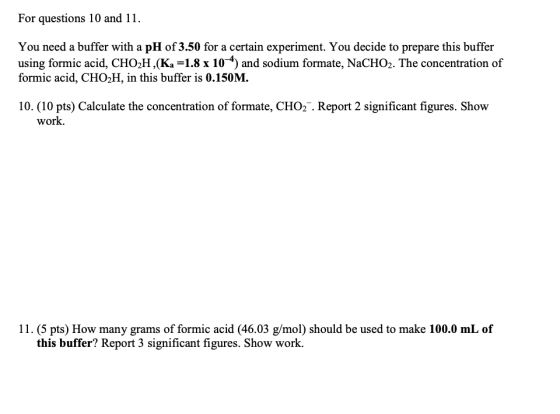
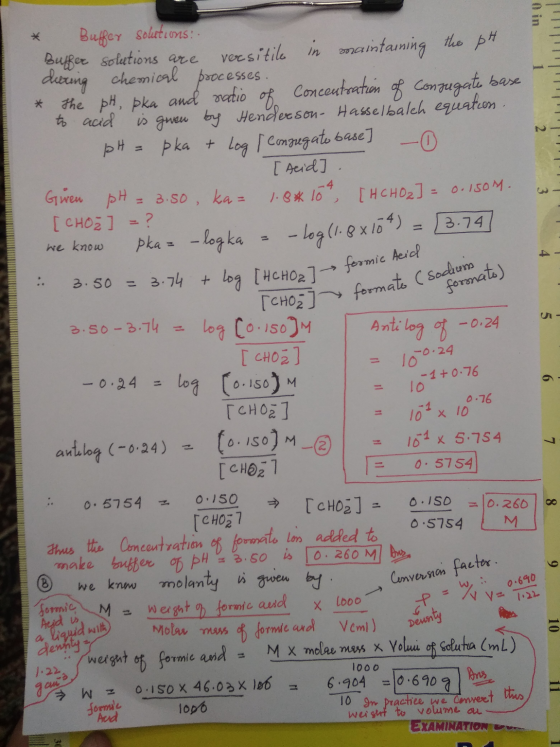
For questions 10 and 11. You need a buffer...
please answer 23 and 24 *please show all work and calculations * given temperature foart em...
 please answer 23 and 24
*please show all work and calculations *
given temperature foart em to reach equilibrium e con 15) Pure Solic and pure liquide are excluded from equilibrium constant pre Cheric £69 kg 19) If a reaction is endothermic, the reaction temperature results in an ineren 20) A solution of ammonia is 2.0% ionized at 25.0 °C. What was the original concentration in M) of the ammonia solution? The Kb at 25.0 °C for ammonia is 1.8...
please answer 23 and 24
*please show all work and calculations *
given temperature foart em to reach equilibrium e con 15) Pure Solic and pure liquide are excluded from equilibrium constant pre Cheric £69 kg 19) If a reaction is endothermic, the reaction temperature results in an ineren 20) A solution of ammonia is 2.0% ionized at 25.0 °C. What was the original concentration in M) of the ammonia solution? The Kb at 25.0 °C for ammonia is 1.8...
(4) 6 pts. A buffer contains 0.500 M of Formic acid (HCHO,) and 0.500 M of...
 (4) 6 pts. A buffer contains 0.500 M of Formic acid (HCHO,) and 0.500 M of sodium formate (NaCHO2). Formic acid is a weak acid that dissociates in water as following: HCHO2 (aq) + H20 (1) =H30+ (aq) + CHO2 (ag) The equilibrium constant: Ks = ([H30+1X[CH02:])/[HCH02] =1.8 x 10⁻⁴ Calculate the pH of the buffer solution.
1a. Which weak acid should be used to create a buffer at pH= 3.1 "Chloroacetic Acid,...
1a. Which weak acid should be used to create a buffer at pH= 3.1 "Chloroacetic Acid, CClH2O2H, Ka = 1.36×10⁻³" "Lactic Acid, C3H6O2, Ka = 1.38×10⁻⁴" "Acetic Acid, CH3O2H, Ka = 1.75×10⁻⁵" "Carbonic, H2CO3, Ka = 4.30×10⁻⁷" "Hypochlorous Acid, HOCl, , Ka = 3.50×10⁻⁸" "Hypobromous Acid, HOBr, Ka = 2.00×10⁻⁹" 1b. How many grams of sodium formate (NaCHO2) need to be dissolved in 151 mL of a 1.12 M formic acid (pKa= 3.75) solution, so that the concentration of formate...
please show work :) 7. You need to make a buffer to keep a solution at...
 please show work :)
7. You need to make a buffer to keep a solution at a pH of 2.50. You have several combinations of weak acids and their conjugate bases to choose from. 1. Chloroacetic acid (K4 = 1.40 x 10³) and sodium chloroacetate 2. Formic acid (Ka = 1.77 x 10⁻⁴) and sodium formate 3. Iodic acid (Ka = 1.60 x 10⁻¹) and sodium iodate 4. Phosphoric acid (K. = 7.52 x 10⁻³) and sodium phosphate 5. Propionic...
please show work :)
7. You need to make a buffer to keep a solution at a pH of 2.50. You have several combinations of weak acids and their conjugate bases to choose from. 1. Chloroacetic acid (K4 = 1.40 x 10³) and sodium chloroacetate 2. Formic acid (Ka = 1.77 x 10⁻⁴) and sodium formate 3. Iodic acid (Ka = 1.60 x 10⁻¹) and sodium iodate 4. Phosphoric acid (K. = 7.52 x 10⁻³) and sodium phosphate 5. Propionic...
You work in a research lab with a chemist who asks you to make 500.0 mL...
You work in a research lab with a chemist who asks you to make 500.0 mL of a formic acid/sodium formate buffer solution with pH = 4.10. Formic acid is HCOOH(aq); sodium formate is NaHCOO(s) and is soluble in water. The total concentration of formic acid + formate ion in the buffer is to be 0.120 M. Ka(HCOOH) = 1.77 × 10⁻⁴ (pKa = 3.75). In the storeroom, there are the following reagents: (i) solid sodium formate, (ii) a 3.00...
QUESTION 3 To make a buffer of formic acid (Ka = 1.8 x 10⁻⁴) with a...
 QUESTION 3 To make a buffer of formic acid (Ka = 1.8 x 10⁻⁴)
with a pH = 4.00, what ratio of formic acid to sodium formate is
required? (Notice that I am asking for the ratio of acid to base,
not base to acid!)
a) 1.25
b) 0.56
c) 0.82
d) 1.87
QUESTION 4 If you find that you need an acid to base ratio of
4.23 and you are using 50.00mL of a 1.00M acid solution, what
volume...
QUESTION 3 To make a buffer of formic acid (Ka = 1.8 x 10⁻⁴)
with a pH = 4.00, what ratio of formic acid to sodium formate is
required? (Notice that I am asking for the ratio of acid to base,
not base to acid!)
a) 1.25
b) 0.56
c) 0.82
d) 1.87
QUESTION 4 If you find that you need an acid to base ratio of
4.23 and you are using 50.00mL of a 1.00M acid solution, what
volume...
please show all work 17. Calculate the pH of a solution composed of 0.050 M formic...
 please show all work
17. Calculate the pH of a solution composed of 0.050 M formic acid (K.- 1.8 x 10") and 0.35 M sodium formate. (5 points)
please show all work
17. Calculate the pH of a solution composed of 0.050 M formic acid (K.- 1.8 x 10") and 0.35 M sodium formate. (5 points)
7. You need to make a buffer to keep a solution at a pH of 2.50....
 7. You need to make a buffer to keep a solution at a pH of 2.50. You have several combinations of weak acids and their conjugate bases to choose from. 1. Chloroacetic acid (K. = 1.40 x 10") and sodium chloroacetate 2. Formic acid (K= 1.77 x 10⁴) and sodium formate 3. Iodic acid (K-1.60 x 10-') and sodium iodate 4. Phosphoric acid (K, = 7.52 x 10%) and sodium phosphate 5. Propionic acid (K, - 1.34 x 10 %)...
can you please answer 1,2, and 3 and show the steps 1. Calculate the pH of...
 can you please answer 1,2, and 3 and show the steps
1. Calculate the pH of a buffer solution made by adding 20.0 mL of 0.200 M acetic acid solution with 10.0 mL of a 0.200 solution of sodium acetate. K, for acetic acid is 1.8 x 10⁹. Assume the total volume is 30.0 mL. 2. Calculate the pH of a buffer solution made by mixing 10.0 mL of 0.20 M ammonia with 15.0 mL of 0,15 M ammonium chloride...
can you please answer 1,2, and 3 and show the steps
1. Calculate the pH of a buffer solution made by adding 20.0 mL of 0.200 M acetic acid solution with 10.0 mL of a 0.200 solution of sodium acetate. K, for acetic acid is 1.8 x 10⁹. Assume the total volume is 30.0 mL. 2. Calculate the pH of a buffer solution made by mixing 10.0 mL of 0.20 M ammonia with 15.0 mL of 0,15 M ammonium chloride...
(Please show work) A 100.0 mLbuffer solution is 0.250 M in acetic acid (CH3COOH) and 0.250...
(Please show work) A 100.0 mLbuffer solution is 0.250 M in acetic acid (CH3COOH) and 0.250 M in sodium acetate (CH3COONa). [Acetic Acid (CH3COOH) Ka = 1.8 x 10⁻⁵] a)What is the pH of this buffer solution? b)What is the pH after addition of 0.0050 mol of HCl? c)What is the pH after addition of 0.0050 mol of NaOH?
 please answer 23 and 24
*please show all work and calculations *
given temperature foart em to reach equilibrium e con 15) Pure Solic and pure liquide are excluded from equilibrium constant pre Cheric £69 kg 19) If a reaction is endothermic, the reaction temperature results in an ineren 20) A solution of ammonia is 2.0% ionized at 25.0 °C. What was the original concentration in M) of the ammonia solution? The Kb at 25.0 °C for ammonia is 1.8...
please answer 23 and 24
*please show all work and calculations *
given temperature foart em to reach equilibrium e con 15) Pure Solic and pure liquide are excluded from equilibrium constant pre Cheric £69 kg 19) If a reaction is endothermic, the reaction temperature results in an ineren 20) A solution of ammonia is 2.0% ionized at 25.0 °C. What was the original concentration in M) of the ammonia solution? The Kb at 25.0 °C for ammonia is 1.8...
 (4) 6 pts. A buffer contains 0.500 M of Formic acid (HCHO,) and 0.500 M of sodium formate (NaCHO2). Formic acid is a weak acid that dissociates in water as following: HCHO2 (aq) + H20 (1) =H30+ (aq) + CHO2 (ag) The equilibrium constant: Ks = ([H30+1X[CH02:])/[HCH02] =1.8 x 10⁻⁴ Calculate the pH of the buffer solution.
 please show work :)
7. You need to make a buffer to keep a solution at a pH of 2.50. You have several combinations of weak acids and their conjugate bases to choose from. 1. Chloroacetic acid (K4 = 1.40 x 10³) and sodium chloroacetate 2. Formic acid (Ka = 1.77 x 10⁻⁴) and sodium formate 3. Iodic acid (Ka = 1.60 x 10⁻¹) and sodium iodate 4. Phosphoric acid (K. = 7.52 x 10⁻³) and sodium phosphate 5. Propionic...
please show work :)
7. You need to make a buffer to keep a solution at a pH of 2.50. You have several combinations of weak acids and their conjugate bases to choose from. 1. Chloroacetic acid (K4 = 1.40 x 10³) and sodium chloroacetate 2. Formic acid (Ka = 1.77 x 10⁻⁴) and sodium formate 3. Iodic acid (Ka = 1.60 x 10⁻¹) and sodium iodate 4. Phosphoric acid (K. = 7.52 x 10⁻³) and sodium phosphate 5. Propionic...
 QUESTION 3 To make a buffer of formic acid (Ka = 1.8 x 10⁻⁴)
with a pH = 4.00, what ratio of formic acid to sodium formate is
required? (Notice that I am asking for the ratio of acid to base,
not base to acid!)
a) 1.25
b) 0.56
c) 0.82
d) 1.87
QUESTION 4 If you find that you need an acid to base ratio of
4.23 and you are using 50.00mL of a 1.00M acid solution, what
volume...
QUESTION 3 To make a buffer of formic acid (Ka = 1.8 x 10⁻⁴)
with a pH = 4.00, what ratio of formic acid to sodium formate is
required? (Notice that I am asking for the ratio of acid to base,
not base to acid!)
a) 1.25
b) 0.56
c) 0.82
d) 1.87
QUESTION 4 If you find that you need an acid to base ratio of
4.23 and you are using 50.00mL of a 1.00M acid solution, what
volume...
 please show all work
17. Calculate the pH of a solution composed of 0.050 M formic acid (K.- 1.8 x 10") and 0.35 M sodium formate. (5 points)
please show all work
17. Calculate the pH of a solution composed of 0.050 M formic acid (K.- 1.8 x 10") and 0.35 M sodium formate. (5 points)
 7. You need to make a buffer to keep a solution at a pH of 2.50. You have several combinations of weak acids and their conjugate bases to choose from. 1. Chloroacetic acid (K. = 1.40 x 10") and sodium chloroacetate 2. Formic acid (K= 1.77 x 10⁴) and sodium formate 3. Iodic acid (K-1.60 x 10-') and sodium iodate 4. Phosphoric acid (K, = 7.52 x 10%) and sodium phosphate 5. Propionic acid (K, - 1.34 x 10 %)...
 can you please answer 1,2, and 3 and show the steps
1. Calculate the pH of a buffer solution made by adding 20.0 mL of 0.200 M acetic acid solution with 10.0 mL of a 0.200 solution of sodium acetate. K, for acetic acid is 1.8 x 10⁹. Assume the total volume is 30.0 mL. 2. Calculate the pH of a buffer solution made by mixing 10.0 mL of 0.20 M ammonia with 15.0 mL of 0,15 M ammonium chloride...
can you please answer 1,2, and 3 and show the steps
1. Calculate the pH of a buffer solution made by adding 20.0 mL of 0.200 M acetic acid solution with 10.0 mL of a 0.200 solution of sodium acetate. K, for acetic acid is 1.8 x 10⁹. Assume the total volume is 30.0 mL. 2. Calculate the pH of a buffer solution made by mixing 10.0 mL of 0.20 M ammonia with 15.0 mL of 0,15 M ammonium chloride...
Most questions answered within 3 hours.
-
Where is the error in this code sequence?
String s1 = "Hello";
String s2 = "ello";...
asked 10 months ago -
Financial data for Joel de Paris, Inc., for last year
follow:
Joel de Paris, Inc.
Balance...
asked 10 months ago -
Consider this reaction:
Al2(SO4)3 (aq)+ BaCl3
(aq) Al2Cl6 (aq)- +
3BaSO4(s) . What is the...
asked 10 months ago -
Suppose that Savneet is considering increasing her
recent random sample from 20 car rentals to 40...
asked 10 months ago -
Trucks arrive at an unloading terminal at an average rate of 120
per hour.
Trucks arrive...
asked 10 months ago -
Why are methanol and ethanol completely soluble in water while
octanol is not very little soluble....
asked 10 months ago -
A facilities manager at a university reads in a research report
that the mean amount of...
asked 10 months ago -
When the CuSO4 is rehydrated by adding water to the anhydrous
compound, is this an endothermic...
asked 10 months ago -
A ray of sunlight is passing from diamond into crown glass; the
angle of incidence is...
asked 10 months ago -
A block of mass 0.249 kg is placed on top of a light, vertical
spring of...
asked 10 months ago -
how do the kidneys compensate in the presences of acidosis
a) trigger hyperventilate
b) reserve acid...
asked 10 months ago -
Question 501 pts
The rental rate of capital to the firm increases. Which of the
following...
asked 10 months ago