
Homework Answers
Add Answer to:
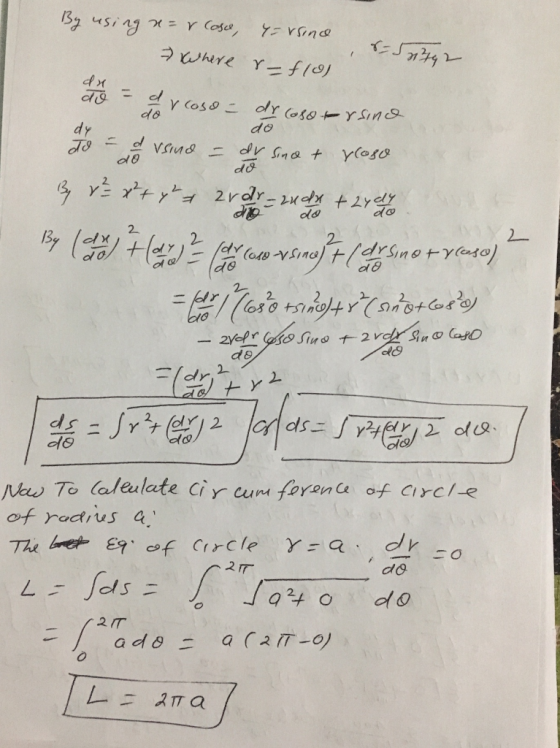
2. Derive an expression for a line element of a circle in cylindrical polar coordi- nates....
d) Three point charges are located as shown in Figure 2 (see page 6). All three...
 d) Three point charges are located as shown in Figure 2 (see
page 6). All three charges are
a distance a from the origin.
i) Calculate the dipole moment for this charge configuration
[2]
ii) By calculating the first two terms of the multipole expansion
for this cofiguration,f ind
an approximate expression for the scalar potential of this
cofiguration. Express your
result in spherical polar coordinates. [5]
iii) Hence provide an approximate expression for the electrical
field, E, for this...
d) Three point charges are located as shown in Figure 2 (see
page 6). All three charges are
a distance a from the origin.
i) Calculate the dipole moment for this charge configuration
[2]
ii) By calculating the first two terms of the multipole expansion
for this cofiguration,f ind
an approximate expression for the scalar potential of this
cofiguration. Express your
result in spherical polar coordinates. [5]
iii) Hence provide an approximate expression for the electrical
field, E, for this...
Derive an expression for the most probable distance of the 1s electrons of an element with...
Derive an expression for the most probable distance of the 1s electrons of an element with atomic number Z. Then, calculate this distance (in pm) for H, Kr, and U.
2. (25 points) A s ball bearing slides without friction in a parabolic surface. The parabola...
 2. (25 points) A s ball bearing slides without friction in a parabolic surface. The parabola is a surface of revolution about the z axis, given by z = 2 where p vy2 is the radial coordinate in the cylindrical coordinate system (a) Calculate the kinetic and potential energy in terms of ρ and φ, where φ is the cylindrical polar angle. Show that the Lagrangian L is given by (b) Calculate the generalized momenta Po and pp appropriate to...
Problem 2 A wire is bent into a quarter-circle of radius R. It is lies in...
 Problem 2 A wire is bent into a quarter-circle of radius R. It is lies in Quadrant 2 of the xy plane with its center at the origin. The wire carries a charge density 0. Final answers not given (a) Derive an expression for E, at the origin (b) Derive an expression for E, at the origin. (c) Find the magnitude and direction of the net electric field at the origin
Problem 2 A wire is bent into a quarter-circle of radius R. It is lies in...
 Problem 2 A wire is bent into a quarter-circle of radius R. It is lies in Quadrant 2 of the xy plane with its center at the origin. The wire carries a charge density λ > 0. Final answers not given] (a) Derive an expression for E at the origin. (b) Derive an expression for Ey at the origin. (c) Find the magnitude and direction of the net electric field at the origin. y'
a) The origin in polar or cylindrical coordinates as compared to the rectangular coordinate system ______________________...
a) The origin in polar or cylindrical coordinates as compared to the rectangular coordinate system ______________________ A. is fixed. B. none C. follows particle. D. is body centered. b) If r = q 2 and q = 2t, find the magnitude of r and q when t = 2 seconds. A. 4 cm/sec, 2 rad/sec2 B. 8 cm/sec, 16 rad/sec2 C. 16 cm/sec, 0 rad/sec2 D. 4 cm/sec, 0 rad/sec2 c) Cylindrical or polar coordinates are a suitable choice for...
(b) For an object in uniform circular motion, derive the expression which relates centripetal force to...
 (b) For an object in uniform circular motion, derive the expression which relates centripetal force to speed. (5 marks] (c) A person swings an object around in a circle on the end of a steel wire, at a constant speed completing one revolution every 1.9 s. The object has a mass of 1.75 kg. The radius of the circle is 2.3 m. (i) Draw a diagram indicating the direction of the following vectors: velocity, centripetal acceleration, centripetal force. [3 marks]...
2014/B5 (a) Draw skecthes to illustrate R, 0 and z coordinate curves for the case of cylindrical polar coordinates (b) Show that the gradient of a scalar field, p, can be expressed in terms of cu...
 2014/B5 (a) Draw skecthes to illustrate R, 0 and z coordinate curves for the case of cylindrical polar coordinates (b) Show that the gradient of a scalar field, p, can be expressed in terms of curvilinear coordinates u1, u2 and us, of an orthogonal coordinate system as where h, Idr/dul. Hence obtain a formula for Vip in cylindrical polar coordinates. (c) Evaluate dp/ds, the rate of change of φ with distance, for the field φ-R, cost) at the point R...
Return 7 2 points The line 2 + y = -9 is tangent to a circle...
 Return 7 2 points The line 2 + y = -9 is tangent to a circle with centre at (2,-5). Determine the radius of the circle. Round your final answer to 3 decimal places Radius of the circle: type your answer units
B.2. The surface Sc of an ice-cream cone can be parametrised in spherical polar coordinates (r,...
 B.2. The surface Sc of an ice-cream cone can be parametrised in spherical polar coordinates (r, 0, 0) by where θ0 is a constant (which you may assume is less than π/2) (a) Sketch the surface Sc (b) Using the expression show that the vector element of area on Sc is given by -T Sin where [41 (c) The vector field a(r) is given in Cartesian coordinates by Show that on Sc and hence that 4 2 (d) The curved...
 d) Three point charges are located as shown in Figure 2 (see
page 6). All three charges are
a distance a from the origin.
i) Calculate the dipole moment for this charge configuration
[2]
ii) By calculating the first two terms of the multipole expansion
for this cofiguration,f ind
an approximate expression for the scalar potential of this
cofiguration. Express your
result in spherical polar coordinates. [5]
iii) Hence provide an approximate expression for the electrical
field, E, for this...
d) Three point charges are located as shown in Figure 2 (see
page 6). All three charges are
a distance a from the origin.
i) Calculate the dipole moment for this charge configuration
[2]
ii) By calculating the first two terms of the multipole expansion
for this cofiguration,f ind
an approximate expression for the scalar potential of this
cofiguration. Express your
result in spherical polar coordinates. [5]
iii) Hence provide an approximate expression for the electrical
field, E, for this...
 2. (25 points) A s ball bearing slides without friction in a parabolic surface. The parabola is a surface of revolution about the z axis, given by z = 2 where p vy2 is the radial coordinate in the cylindrical coordinate system (a) Calculate the kinetic and potential energy in terms of ρ and φ, where φ is the cylindrical polar angle. Show that the Lagrangian L is given by (b) Calculate the generalized momenta Po and pp appropriate to...
 Problem 2 A wire is bent into a quarter-circle of radius R. It is lies in Quadrant 2 of the xy plane with its center at the origin. The wire carries a charge density 0. Final answers not given (a) Derive an expression for E, at the origin (b) Derive an expression for E, at the origin. (c) Find the magnitude and direction of the net electric field at the origin
 Problem 2 A wire is bent into a quarter-circle of radius R. It is lies in Quadrant 2 of the xy plane with its center at the origin. The wire carries a charge density λ > 0. Final answers not given] (a) Derive an expression for E at the origin. (b) Derive an expression for Ey at the origin. (c) Find the magnitude and direction of the net electric field at the origin. y'
 (b) For an object in uniform circular motion, derive the expression which relates centripetal force to speed. (5 marks] (c) A person swings an object around in a circle on the end of a steel wire, at a constant speed completing one revolution every 1.9 s. The object has a mass of 1.75 kg. The radius of the circle is 2.3 m. (i) Draw a diagram indicating the direction of the following vectors: velocity, centripetal acceleration, centripetal force. [3 marks]...
 2014/B5 (a) Draw skecthes to illustrate R, 0 and z coordinate curves for the case of cylindrical polar coordinates (b) Show that the gradient of a scalar field, p, can be expressed in terms of curvilinear coordinates u1, u2 and us, of an orthogonal coordinate system as where h, Idr/dul. Hence obtain a formula for Vip in cylindrical polar coordinates. (c) Evaluate dp/ds, the rate of change of φ with distance, for the field φ-R, cost) at the point R...
 Return 7 2 points The line 2 + y = -9 is tangent to a circle with centre at (2,-5). Determine the radius of the circle. Round your final answer to 3 decimal places Radius of the circle: type your answer units
 B.2. The surface Sc of an ice-cream cone can be parametrised in spherical polar coordinates (r, 0, 0) by where θ0 is a constant (which you may assume is less than π/2) (a) Sketch the surface Sc (b) Using the expression show that the vector element of area on Sc is given by -T Sin where [41 (c) The vector field a(r) is given in Cartesian coordinates by Show that on Sc and hence that 4 2 (d) The curved...
Most questions answered within 3 hours.
-
Where is the error in this code sequence?
String s1 = "Hello";
String s2 = "ello";...
asked 10 months ago -
Financial data for Joel de Paris, Inc., for last year
follow:
Joel de Paris, Inc.
Balance...
asked 10 months ago -
Consider this reaction:
Al2(SO4)3 (aq)+ BaCl3
(aq) Al2Cl6 (aq)- +
3BaSO4(s) . What is the...
asked 10 months ago -
Suppose that Savneet is considering increasing her
recent random sample from 20 car rentals to 40...
asked 10 months ago -
Trucks arrive at an unloading terminal at an average rate of 120
per hour.
Trucks arrive...
asked 10 months ago -
Why are methanol and ethanol completely soluble in water while
octanol is not very little soluble....
asked 10 months ago -
A facilities manager at a university reads in a research report
that the mean amount of...
asked 10 months ago -
When the CuSO4 is rehydrated by adding water to the anhydrous
compound, is this an endothermic...
asked 10 months ago -
A ray of sunlight is passing from diamond into crown glass; the
angle of incidence is...
asked 10 months ago -
A block of mass 0.249 kg is placed on top of a light, vertical
spring of...
asked 10 months ago -
how do the kidneys compensate in the presences of acidosis
a) trigger hyperventilate
b) reserve acid...
asked 10 months ago -
Question 501 pts
The rental rate of capital to the firm increases. Which of the
following...
asked 10 months ago