

Homework Answers
i think b and d part calculated by you is wrong. please find the attched file. hope you will get the answer. thank you.


Add Answer to:
just part e please
Activated sludge design A completely mixed activated sludge process is designed to...
2. A completely mixed activated sludge process is designed to treat 20,000 m/d of domestic wastew...
 2. A completely mixed activated sludge process is designed to treat 20,000 m/d of domestic wastewater having a BODs concentration of 250 mg/L following primary treatment. The NPDES permit requirement for effluent BODs and TSS is 20 mg/L for each. The biokinetic parameters have beern established as: yield 0.6, k 5/d, K-60 mg/L, and kd 0.06/d. The MLVSS concentration in the aeration tank is to be maintained at 3000 mg/L and the ratio of VSS/TSS is 0.75. Assume that the...
3. Determine the aeration tank volume (mgd), excess biomass in the waste sludge (kg/d), and the BOD f a completely mixed activated-sludge process by assuming the following: k 4.0 day r-0.55 lb vS...
 3. Determine the aeration tank volume (mgd), excess biomass in the waste sludge (kg/d), and the BOD f a completely mixed activated-sludge process by assuming the following: k 4.0 day r-0.55 lb vSS/1b BOD, K, 80 mg/l, ks-0.05 day', wastewater flow rate 2.5 mgd, soluble effluent BOD- 15 mgl, soluble influent BOD - 170 mgl, and MLVSS-2200 mg/l, and mean cell residence time -6 days. (15 pts)
3. Determine the aeration tank volume (mgd), excess biomass in the waste sludge...
3. Determine the aeration tank volume (mgd), excess biomass in the waste sludge (kg/d), and the BOD f a completely mixed activated-sludge process by assuming the following: k 4.0 day r-0.55 lb vSS/1b BOD, K, 80 mg/l, ks-0.05 day', wastewater flow rate 2.5 mgd, soluble effluent BOD- 15 mgl, soluble influent BOD - 170 mgl, and MLVSS-2200 mg/l, and mean cell residence time -6 days. (15 pts)
3. Determine the aeration tank volume (mgd), excess biomass in the waste sludge...
(30 points) A completely mixed activated sludge system comprised of an aerated reactor and a secondary clarifier with sludge return is going to treat 15,000 m/d of industrial wastewater. Th...
 (30 points) A completely mixed activated sludge system comprised of an aerated reactor and a secondary clarifier with sludge return is going to treat 15,000 m/d of industrial wastewater. The primary effluent going to the reactor has a BODs of 1,100 mg/L that must be reduced to 150 mg/L prior to discharge to a municipal sewer. The pilot study was conducted and generated the following results: 3. Mean cell residence time- 5 day, MLSS concentration in the reactor 7.200 mg/L...
6. The aeration tank for a completely mixed aeration process is being sized for a design...
 6. The aeration tank for a completely mixed aeration process is being sized for a design wastewater flow of 7500 m²/day. The influent BOD is 130 mg/l with a soluble BOD of 90 mg/1. The design effluent BOD is 20 mg/l with a soluble BOD of 7.0 mg/l. Recommended design parameters are a sludge age of 10 days and volatile MLSS of 1400 mg/l. The kinetic constants from a bench-scale treatability study are Y=0.60 mg VSS/mg soluble BOD and Ka...
For the completely mixed activated sludge process shown below, the system boundary is shown by the...
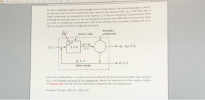 For the completely mixed activated sludge process shown below, the system boundary is shown by the dash line. Qis the wastewater flow rate into the aeration tank; Q, is the flow rate of liquid containing microorganisms to be wasted: X is the microorganism concentration (VSS) entering the aeration tank: X is the microorganism concentration (MLVSS) in the aeration tank; X is the microorganism concentration (VSS) in the effluent from secondary settling tank X, is the microorganism (VSS) in sludge being...
This is all the information I was given For the completely mixed activated sludge process shown...
 This is all the information I was given
For the completely mixed activated sludge process shown below, the system boundary is shown by the dash line. Q is the wastewater flow rate into the aeration tank; Qy is the flow rate of liquid containing microorganisms to be wasted; Xo is the microorganism concentration (VSS) entering the aeration tank; X is the microorganism concentration (MLVSS) in the aeration tank; He is the microorganism concentration (VSS) in the effluent from secondary settling...
This is all the information I was given
For the completely mixed activated sludge process shown below, the system boundary is shown by the dash line. Q is the wastewater flow rate into the aeration tank; Qy is the flow rate of liquid containing microorganisms to be wasted; Xo is the microorganism concentration (VSS) entering the aeration tank; X is the microorganism concentration (MLVSS) in the aeration tank; He is the microorganism concentration (VSS) in the effluent from secondary settling...
For the completely mixed activated sludge process shown below, the system boundary is shown by the...
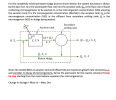 For the completely mixed activated sludge process shown below, the system boundary is shown by the dash line. Q is the wastewater flow rate into the aeration tank; Qu is the flow rate of liquid containing microorganisms to be wasted; X. is the microorganism concentration (VSS) entering the aeration tank; X is the microorganism concentration (MLVSS) in the aeration tank; Xe is the microorganism concentration (VSS) in the effluent from secondary settling tank; &c is the microorganism (VSS) in sludge...
A completely mixed activated sludge plant is designed to treat 10,000 m3/d of an industrial wastewater....
 A completely mixed activated sludge plant is designed to treat
10,000 m3/d of an industrial wastewater. The wastewater has a BOD5
of 1200 mg/L. Pilot plant data indicates that a reactor volume of
6090 m3 with an MLSS concentration of 5000 mg/L should produce 83%
BOD5 removal. The value for Y is determined to be 0.7 kg/kg and the
value of kd is found to be 0.03 d–1. Under ow solids concentra-
tion is 12,000 mg/L. The ow diagram is...
A completely mixed activated sludge plant is designed to treat
10,000 m3/d of an industrial wastewater. The wastewater has a BOD5
of 1200 mg/L. Pilot plant data indicates that a reactor volume of
6090 m3 with an MLSS concentration of 5000 mg/L should produce 83%
BOD5 removal. The value for Y is determined to be 0.7 kg/kg and the
value of kd is found to be 0.03 d–1. Under ow solids concentra-
tion is 12,000 mg/L. The ow diagram is...
4. (40 pts) You need to design a set of activated sludge aeration tanks. The flow...
 4. (40 pts) You need to design a set of activated sludge aeration tanks. The flow rate to treat is 5.6 MGD and the BOD concentration is 150 mg/L. The design solids concentration (X) at steady-state is 2,000 mg/L. The design MCRT is 7 days. The kinetic coefficients are as follows: k = 2 g BOD!g cells*day; K = 25 mg BOD/L; k, = 0.06 1/day; Y = 0.5 g cells/G BOD. The influent ammonia concentration is 40 mg/L and...
A complete-mix activated sludge system is used to treat municipal wastewater after primary sedime...
 A complete-mix activated sludge system is used to treat municipal wastewater after primary sedimentation at 20 °C with MLVSS concentration of 2000 g/m3. The discharge standard for soluble BOD, concentration in the effluent is 0.5 g/m. The characteristics of the primary influent are: flow Q -2000 m'/d, soluble BOD -200 g/m3, Using these data and the kinetic coefficients in following, determine 1. Theoretical solids retention time (SRT) in unit of days 2. Pk vss in unit of kg VSS/d 3....
 2. A completely mixed activated sludge process is designed to treat 20,000 m/d of domestic wastewater having a BODs concentration of 250 mg/L following primary treatment. The NPDES permit requirement for effluent BODs and TSS is 20 mg/L for each. The biokinetic parameters have beern established as: yield 0.6, k 5/d, K-60 mg/L, and kd 0.06/d. The MLVSS concentration in the aeration tank is to be maintained at 3000 mg/L and the ratio of VSS/TSS is 0.75. Assume that the...
 3. Determine the aeration tank volume (mgd), excess biomass in the waste sludge (kg/d), and the BOD f a completely mixed activated-sludge process by assuming the following: k 4.0 day r-0.55 lb vSS/1b BOD, K, 80 mg/l, ks-0.05 day', wastewater flow rate 2.5 mgd, soluble effluent BOD- 15 mgl, soluble influent BOD - 170 mgl, and MLVSS-2200 mg/l, and mean cell residence time -6 days. (15 pts)
3. Determine the aeration tank volume (mgd), excess biomass in the waste sludge...
3. Determine the aeration tank volume (mgd), excess biomass in the waste sludge (kg/d), and the BOD f a completely mixed activated-sludge process by assuming the following: k 4.0 day r-0.55 lb vSS/1b BOD, K, 80 mg/l, ks-0.05 day', wastewater flow rate 2.5 mgd, soluble effluent BOD- 15 mgl, soluble influent BOD - 170 mgl, and MLVSS-2200 mg/l, and mean cell residence time -6 days. (15 pts)
3. Determine the aeration tank volume (mgd), excess biomass in the waste sludge...
 (30 points) A completely mixed activated sludge system comprised of an aerated reactor and a secondary clarifier with sludge return is going to treat 15,000 m/d of industrial wastewater. The primary effluent going to the reactor has a BODs of 1,100 mg/L that must be reduced to 150 mg/L prior to discharge to a municipal sewer. The pilot study was conducted and generated the following results: 3. Mean cell residence time- 5 day, MLSS concentration in the reactor 7.200 mg/L...
 6. The aeration tank for a completely mixed aeration process is being sized for a design wastewater flow of 7500 m²/day. The influent BOD is 130 mg/l with a soluble BOD of 90 mg/1. The design effluent BOD is 20 mg/l with a soluble BOD of 7.0 mg/l. Recommended design parameters are a sludge age of 10 days and volatile MLSS of 1400 mg/l. The kinetic constants from a bench-scale treatability study are Y=0.60 mg VSS/mg soluble BOD and Ka...
 For the completely mixed activated sludge process shown below, the system boundary is shown by the dash line. Qis the wastewater flow rate into the aeration tank; Q, is the flow rate of liquid containing microorganisms to be wasted: X is the microorganism concentration (VSS) entering the aeration tank: X is the microorganism concentration (MLVSS) in the aeration tank; X is the microorganism concentration (VSS) in the effluent from secondary settling tank X, is the microorganism (VSS) in sludge being...
 This is all the information I was given
For the completely mixed activated sludge process shown below, the system boundary is shown by the dash line. Q is the wastewater flow rate into the aeration tank; Qy is the flow rate of liquid containing microorganisms to be wasted; Xo is the microorganism concentration (VSS) entering the aeration tank; X is the microorganism concentration (MLVSS) in the aeration tank; He is the microorganism concentration (VSS) in the effluent from secondary settling...
This is all the information I was given
For the completely mixed activated sludge process shown below, the system boundary is shown by the dash line. Q is the wastewater flow rate into the aeration tank; Qy is the flow rate of liquid containing microorganisms to be wasted; Xo is the microorganism concentration (VSS) entering the aeration tank; X is the microorganism concentration (MLVSS) in the aeration tank; He is the microorganism concentration (VSS) in the effluent from secondary settling...
 For the completely mixed activated sludge process shown below, the system boundary is shown by the dash line. Q is the wastewater flow rate into the aeration tank; Qu is the flow rate of liquid containing microorganisms to be wasted; X. is the microorganism concentration (VSS) entering the aeration tank; X is the microorganism concentration (MLVSS) in the aeration tank; Xe is the microorganism concentration (VSS) in the effluent from secondary settling tank; &c is the microorganism (VSS) in sludge...
 A completely mixed activated sludge plant is designed to treat
10,000 m3/d of an industrial wastewater. The wastewater has a BOD5
of 1200 mg/L. Pilot plant data indicates that a reactor volume of
6090 m3 with an MLSS concentration of 5000 mg/L should produce 83%
BOD5 removal. The value for Y is determined to be 0.7 kg/kg and the
value of kd is found to be 0.03 d–1. Under ow solids concentra-
tion is 12,000 mg/L. The ow diagram is...
A completely mixed activated sludge plant is designed to treat
10,000 m3/d of an industrial wastewater. The wastewater has a BOD5
of 1200 mg/L. Pilot plant data indicates that a reactor volume of
6090 m3 with an MLSS concentration of 5000 mg/L should produce 83%
BOD5 removal. The value for Y is determined to be 0.7 kg/kg and the
value of kd is found to be 0.03 d–1. Under ow solids concentra-
tion is 12,000 mg/L. The ow diagram is...
 4. (40 pts) You need to design a set of activated sludge aeration tanks. The flow rate to treat is 5.6 MGD and the BOD concentration is 150 mg/L. The design solids concentration (X) at steady-state is 2,000 mg/L. The design MCRT is 7 days. The kinetic coefficients are as follows: k = 2 g BOD!g cells*day; K = 25 mg BOD/L; k, = 0.06 1/day; Y = 0.5 g cells/G BOD. The influent ammonia concentration is 40 mg/L and...
 A complete-mix activated sludge system is used to treat municipal wastewater after primary sedimentation at 20 °C with MLVSS concentration of 2000 g/m3. The discharge standard for soluble BOD, concentration in the effluent is 0.5 g/m. The characteristics of the primary influent are: flow Q -2000 m'/d, soluble BOD -200 g/m3, Using these data and the kinetic coefficients in following, determine 1. Theoretical solids retention time (SRT) in unit of days 2. Pk vss in unit of kg VSS/d 3....
Most questions answered within 3 hours.
-
Where is the error in this code sequence?
String s1 = "Hello";
String s2 = "ello";...
asked 11 months ago -
Financial data for Joel de Paris, Inc., for last year
follow:
Joel de Paris, Inc.
Balance...
asked 11 months ago -
Consider this reaction:
Al2(SO4)3 (aq)+ BaCl3
(aq) Al2Cl6 (aq)- +
3BaSO4(s) . What is the...
asked 11 months ago -
Suppose that Savneet is considering increasing her
recent random sample from 20 car rentals to 40...
asked 11 months ago -
Trucks arrive at an unloading terminal at an average rate of 120
per hour.
Trucks arrive...
asked 11 months ago -
Why are methanol and ethanol completely soluble in water while
octanol is not very little soluble....
asked 11 months ago -
A facilities manager at a university reads in a research report
that the mean amount of...
asked 11 months ago -
When the CuSO4 is rehydrated by adding water to the anhydrous
compound, is this an endothermic...
asked 11 months ago -
A ray of sunlight is passing from diamond into crown glass; the
angle of incidence is...
asked 11 months ago -
A block of mass 0.249 kg is placed on top of a light, vertical
spring of...
asked 11 months ago -
how do the kidneys compensate in the presences of acidosis
a) trigger hyperventilate
b) reserve acid...
asked 11 months ago -
Question 501 pts
The rental rate of capital to the firm increases. Which of the
following...
asked 11 months ago