
Homework Answers
2) we have a formula from doppler effect,
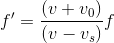
where  is observed frequency, f is actual frequency, v is sound
velocitty,
is observed frequency, f is actual frequency, v is sound
velocitty,  is source velocity and
  is observer velocity. Here in that question observer is at rest
and source coming towards observer, so
is zeo and
is positive. From the equation we can clearly say that observed
frequency will be higher than siren frequency 800Hz.
is observer velocity. Here in that question observer is at rest
and source coming towards observer, so
is zeo and
is positive. From the equation we can clearly say that observed
frequency will be higher than siren frequency 800Hz.
So option d is answer.
3) Option C is the right answer. As the image by the concave mirror will be real and inverted.
4)
 5) The relativistic mass formula,
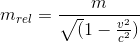
where m is actual mass, v is velocity of object.
And for the relativistic length,
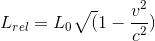
where  is actual length.
For v = 0.9c
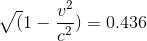
SO it is clear that object will appear massive and length will contacted that is shorter.
So option (d) is correct.
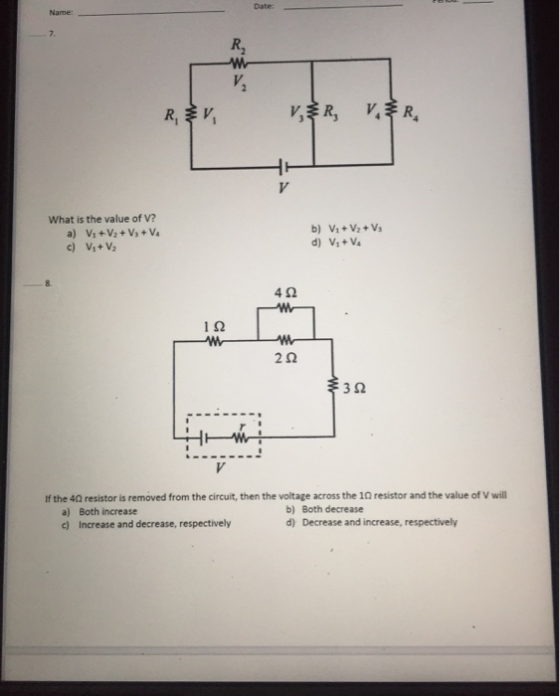
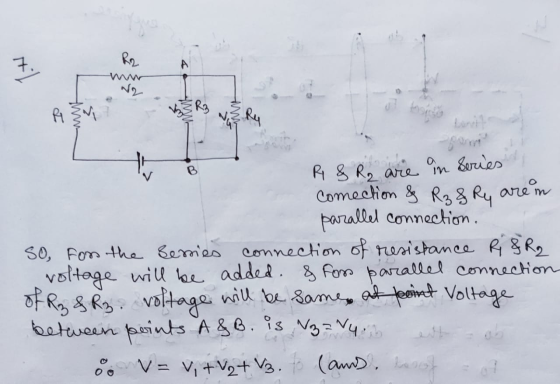
7)
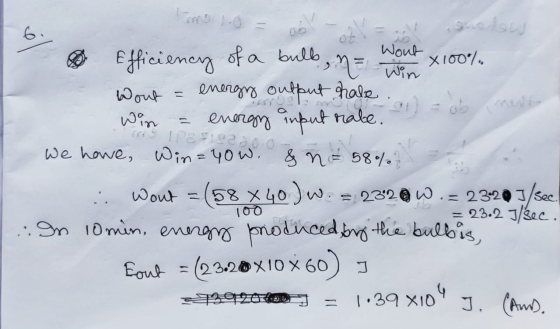
6) The answer of question 6 is (c).
8) Option (a) is correct.
 is in parrallel connection to
  so effective resistance is lower than
.
so effective resistance is lower than
.
As we remove
resistance The effective resistance of the circuit will
increase.
Then voltage across  will increase also V will increase.
Add Answer to:
please answer 2,3,4,5,6,7,8 thankyou
2. If the ambulance siren has a frequency of 800Hz, then to...
Experiment 22: The Compound Microscope f2 Object 2 1 (Objective Lens)d L, (Eyepiece) d#150mm The Compound Microsco...
 Experiment 22: The Compound Microscope f2 Object 2 1 (Objective Lens)d L, (Eyepiece) d#150mm The Compound Microscope A compound microscope uses two lenses to provide greater magnification of near objects than is possible using a single lens as a magnifier. The setup is shown above. The objective lens, L1, functions as a projector. The object is placed just beyond the focal point of L1 so a real, magnified, inverted image is formed. The eyepiece, L2, functions as a magnifier. It...
12. Real images formed by a curved mirror are always A) on the side of the...
 12. Real images formed by a curved mirror are always A) on the side of the mirror opposite the object B) on the same side of the mirror as the object and closer to the mirror than the object C) on the same side of the mirror as the object and upright D) on the same side of the mirror as the object and further from the mirror than the focal poi 13. Aray of light passes from, air into...
number 7 Mirrors 7. A concave mirror has a focal length of 20 cm. What type...
 number 7
Mirrors 7. A concave mirror has a focal length of 20 cm. What type of image (real/virtual, upright/inverted) is formed a) if the object is 30 cm in front of the mirror? b) if the object is 10 cm in front of the mirror? Focal rength 26см, 8. Can a convex mirror ever form a real image? Why or why not? 9. Why are objects in the passenger side mirror closer than they appear?
number 7
Mirrors 7. A concave mirror has a focal length of 20 cm. What type of image (real/virtual, upright/inverted) is formed a) if the object is 30 cm in front of the mirror? b) if the object is 10 cm in front of the mirror? Focal rength 26см, 8. Can a convex mirror ever form a real image? Why or why not? 9. Why are objects in the passenger side mirror closer than they appear?
1. A ray of light parallel to the optic axis of a concave mirror is reflected...
 1. A ray of light parallel to the optic axis of a concave mirror is reflected back a) through the center of the sphere b) through the focal point c) parallel to the optic axis. d) as if it came from the focal point. 2. What type of image is formed when an object is placed at a distance of 1.5 focal lengths from a convex mirror? a) upright and virtual c) upright and real b) inverted and virtual d)...
PLEASE ANSWER ALL PARTS, THANK YOU! Multiple choice Short problems 1. The bending of light as...
 PLEASE ANSWER ALL PARTS, THANK YOU!
Multiple choice Short problems 1. The bending of light as it moves from one medium to another with different indices of refraction is due to change in what property of light? A) amplitude, B) phase, C) frequency, D) speed, E) color 2. A ray of light propagates in air (n= 1.33) and strikes a sheet of crown glass (n=1.523). If angle of refraction in glass is 35.2°, determine the angle of incidence. A) 30.3°,...
PLEASE ANSWER ALL PARTS, THANK YOU!
Multiple choice Short problems 1. The bending of light as it moves from one medium to another with different indices of refraction is due to change in what property of light? A) amplitude, B) phase, C) frequency, D) speed, E) color 2. A ray of light propagates in air (n= 1.33) and strikes a sheet of crown glass (n=1.523). If angle of refraction in glass is 35.2°, determine the angle of incidence. A) 30.3°,...
d d h h; f m 12 6 I 2 -1 4 -0.5 11 6.29 2...
 d d h h; f m 12 6 I 2 -1 4 -0.5 11 6.29 2 -1.14 4 -0.57 10 6.67 2 -1.33 4. -0.66 9 7.2 2 -1.6 4. -0.8 8 8 2 -2 4 - 1 7 9.33 2 -2.67 4 -1.33 6 12 2 -4 4 average 7.9 2 -2 4 5. Was the average of the experimental focal lengths close to the true value of 4? If not, then go back and re-check your measurements and...
Which of the following statements are true about a compound microscope? (There may be more than...
Which of the following statements are true about a compound microscope? (There may be more than one correct choice.)A. The objective lens produces an inverted virtual image of the object.B. The image produced by the objective lens is just inside the focal point of the eyepiece.C. The final image is inverted compared with the original object.D. The object to be viewed is placed just inside the focal point of the objective lens.E. The final image is virtual.
CHAPTER 24 GEOMETRIC OPTICS As an object moves from just inside the focal point of a...
 CHAPTER 24 GEOMETRIC OPTICS As an object moves from just inside the focal point of a sonverzing lens to just gutside it, he image goes from andto and A. large; inverted, large; upright. B. large; upright; large; inverted. C. small: inverted; small; upright. D. small: upright; small; inverted. 7. 8. When the reflection of an object is seen in a concave mirror, the image is A. Virtual and erected. B. Real and inverted. C. Virtual and inverted. D. Real and...
need help. please answer #8-11 8. As an object moves away from a plane mirror on...
 need help. please answer #8-11
8. As an object moves away from a plane mirror on a wall and you observe the object and the image from the position of the mirror, the image of the object A. gets smaller B. may or may not get smaller, depending on where the observer is positioned. C. Is always a real image, no matter how far you are from the mirror. D. Changes from being a virtual to a real image as...
need help. please answer #8-11
8. As an object moves away from a plane mirror on a wall and you observe the object and the image from the position of the mirror, the image of the object A. gets smaller B. may or may not get smaller, depending on where the observer is positioned. C. Is always a real image, no matter how far you are from the mirror. D. Changes from being a virtual to a real image as...
An object is placed 56.0 cm from a concave spherical mirror with focal length of magnitude...
An object is placed 56.0 cm from a concave spherical mirror with focal length of magnitude 16.5 cm. (a) Find the location of the image. cm in front of the mirror (b) What is the magnification of the image? (c) Is the image real or virtual? real virtual (d) Is the image upright or inverted? upright inverted
 Experiment 22: The Compound Microscope f2 Object 2 1 (Objective Lens)d L, (Eyepiece) d#150mm The Compound Microscope A compound microscope uses two lenses to provide greater magnification of near objects than is possible using a single lens as a magnifier. The setup is shown above. The objective lens, L1, functions as a projector. The object is placed just beyond the focal point of L1 so a real, magnified, inverted image is formed. The eyepiece, L2, functions as a magnifier. It...
 12. Real images formed by a curved mirror are always A) on the side of the mirror opposite the object B) on the same side of the mirror as the object and closer to the mirror than the object C) on the same side of the mirror as the object and upright D) on the same side of the mirror as the object and further from the mirror than the focal poi 13. Aray of light passes from, air into...
 number 7
Mirrors 7. A concave mirror has a focal length of 20 cm. What type of image (real/virtual, upright/inverted) is formed a) if the object is 30 cm in front of the mirror? b) if the object is 10 cm in front of the mirror? Focal rength 26см, 8. Can a convex mirror ever form a real image? Why or why not? 9. Why are objects in the passenger side mirror closer than they appear?
number 7
Mirrors 7. A concave mirror has a focal length of 20 cm. What type of image (real/virtual, upright/inverted) is formed a) if the object is 30 cm in front of the mirror? b) if the object is 10 cm in front of the mirror? Focal rength 26см, 8. Can a convex mirror ever form a real image? Why or why not? 9. Why are objects in the passenger side mirror closer than they appear?
 1. A ray of light parallel to the optic axis of a concave mirror is reflected back a) through the center of the sphere b) through the focal point c) parallel to the optic axis. d) as if it came from the focal point. 2. What type of image is formed when an object is placed at a distance of 1.5 focal lengths from a convex mirror? a) upright and virtual c) upright and real b) inverted and virtual d)...
 PLEASE ANSWER ALL PARTS, THANK YOU!
Multiple choice Short problems 1. The bending of light as it moves from one medium to another with different indices of refraction is due to change in what property of light? A) amplitude, B) phase, C) frequency, D) speed, E) color 2. A ray of light propagates in air (n= 1.33) and strikes a sheet of crown glass (n=1.523). If angle of refraction in glass is 35.2°, determine the angle of incidence. A) 30.3°,...
PLEASE ANSWER ALL PARTS, THANK YOU!
Multiple choice Short problems 1. The bending of light as it moves from one medium to another with different indices of refraction is due to change in what property of light? A) amplitude, B) phase, C) frequency, D) speed, E) color 2. A ray of light propagates in air (n= 1.33) and strikes a sheet of crown glass (n=1.523). If angle of refraction in glass is 35.2°, determine the angle of incidence. A) 30.3°,...
 d d h h; f m 12 6 I 2 -1 4 -0.5 11 6.29 2 -1.14 4 -0.57 10 6.67 2 -1.33 4. -0.66 9 7.2 2 -1.6 4. -0.8 8 8 2 -2 4 - 1 7 9.33 2 -2.67 4 -1.33 6 12 2 -4 4 average 7.9 2 -2 4 5. Was the average of the experimental focal lengths close to the true value of 4? If not, then go back and re-check your measurements and...
 CHAPTER 24 GEOMETRIC OPTICS As an object moves from just inside the focal point of a sonverzing lens to just gutside it, he image goes from andto and A. large; inverted, large; upright. B. large; upright; large; inverted. C. small: inverted; small; upright. D. small: upright; small; inverted. 7. 8. When the reflection of an object is seen in a concave mirror, the image is A. Virtual and erected. B. Real and inverted. C. Virtual and inverted. D. Real and...
 need help. please answer #8-11
8. As an object moves away from a plane mirror on a wall and you observe the object and the image from the position of the mirror, the image of the object A. gets smaller B. may or may not get smaller, depending on where the observer is positioned. C. Is always a real image, no matter how far you are from the mirror. D. Changes from being a virtual to a real image as...
need help. please answer #8-11
8. As an object moves away from a plane mirror on a wall and you observe the object and the image from the position of the mirror, the image of the object A. gets smaller B. may or may not get smaller, depending on where the observer is positioned. C. Is always a real image, no matter how far you are from the mirror. D. Changes from being a virtual to a real image as...
Most questions answered within 3 hours.
-
Where is the error in this code sequence?
String s1 = "Hello";
String s2 = "ello";...
asked 10 months ago -
Financial data for Joel de Paris, Inc., for last year
follow:
Joel de Paris, Inc.
Balance...
asked 10 months ago -
Consider this reaction:
Al2(SO4)3 (aq)+ BaCl3
(aq) Al2Cl6 (aq)- +
3BaSO4(s) . What is the...
asked 10 months ago -
Suppose that Savneet is considering increasing her
recent random sample from 20 car rentals to 40...
asked 10 months ago -
Trucks arrive at an unloading terminal at an average rate of 120
per hour.
Trucks arrive...
asked 10 months ago -
Why are methanol and ethanol completely soluble in water while
octanol is not very little soluble....
asked 10 months ago -
A facilities manager at a university reads in a research report
that the mean amount of...
asked 10 months ago -
When the CuSO4 is rehydrated by adding water to the anhydrous
compound, is this an endothermic...
asked 10 months ago -
A ray of sunlight is passing from diamond into crown glass; the
angle of incidence is...
asked 10 months ago -
A block of mass 0.249 kg is placed on top of a light, vertical
spring of...
asked 10 months ago -
how do the kidneys compensate in the presences of acidosis
a) trigger hyperventilate
b) reserve acid...
asked 10 months ago -
Question 501 pts
The rental rate of capital to the firm increases. Which of the
following...
asked 10 months ago