
Homework Answers
Request Answer!
We need at least 10 more requests to produce the answer.
0 / 10 have requested this problem solution
The more requests, the faster the answer.
Add Answer to:
1) Draw the mechanism for the formation of 2-bromopropane. Use the mechanism to explain why 1-bromopropane...
Page < 2 > of 8 ZOOM + 1) Draw the mechanism for the formation of...
 Page < 2 > of 8 ZOOM + 1) Draw the mechanism for the formation of 2-bromopropane. Use the mechanism to explain why 1-bromopropane is not formed in this reaction (10 points) Br HBr Not Br us JUL OL 31
Describe and draw the mechanism for the formation of the Grignard reagent with 2-bromopropane as the...
Describe and draw the mechanism for the formation of the Grignard reagent with 2-bromopropane as the example alkyl halide. Make sure to specify solvent. Describe and draw the mechanism for the reaction of the above Grignard reagent with hexan-3-one as the example carbonyl source. Make sure to draw the oxy-anion intermediate. What is/are the name(s) of the product(s)?
4 4) Write the reaction product and use the curved arrow notation to draw a mechanism...
 4
4) Write the reaction product and use the curved arrow notation to draw a mechanism that accounts for the formation of product upon oxymercuration/ reduction of cis-4-hexenoic acid in aqueous THF. (8 points) a) Write the reaction. 1) Hg(OAC), aq, THE 2) NaBH, aq. THE HO cis-4-hextenoic acid b) Write a mechanism.
4
4) Write the reaction product and use the curved arrow notation to draw a mechanism that accounts for the formation of product upon oxymercuration/ reduction of cis-4-hexenoic acid in aqueous THF. (8 points) a) Write the reaction. 1) Hg(OAC), aq, THE 2) NaBH, aq. THE HO cis-4-hextenoic acid b) Write a mechanism.
are these correct? if not, can you explain? thanks! 9. a) Draw the mechanism for formation...
 are these correct? if not, can
you explain? thanks!
9. a) Draw the mechanism for formation of the product shown. b) Draw the three resonance structures for the cation intermediate. (6 points total) HO-NO2 H2SO4 NO2 A mechanism: H-O-NO2 + H₂SO4 a H-O No2 t B) Resonance structures H NO2 H NO₂
are these correct? if not, can
you explain? thanks!
9. a) Draw the mechanism for formation of the product shown. b) Draw the three resonance structures for the cation intermediate. (6 points total) HO-NO2 H2SO4 NO2 A mechanism: H-O-NO2 + H₂SO4 a H-O No2 t B) Resonance structures H NO2 H NO₂
5. (a) Propose a mechanism for the reaction of 2-bromopyridine with sodium amide to give 2-...
 5. (a) Propose a mechanism for the reaction of 2-bromopyridine with sodium amide to give 2- aminopyridine (b) When 3-bromopyridine is used in this reaction, stronger reaction conditions are required to give a mixture of 3-aminopyridine and 4-aminopyridine results. Propose a mechanism which explains this curious result 6. Show the formation of the following reduction products, if the reaction proceeds. If not, propose a different reagent to reduce the starting material! NaBH, (b) NaBH4 KOH OH 1.) LAIH 2.) H,00...
3 and 4 3) Draw the Frost circle for following structures and state whether or not...
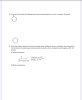 3 and 4
3) Draw the Frost circle for following structures and state whether or not it is aromatic. (5 points) 4) Write the reaction product and use the curved arrow notation to draw a mechanism that accounts for the formation of product upon oxymercuration/ reduction of cis-4-hexenoic acid in aqueous THF. (8 points) a) Write the reaction. rolled HO els-4-hextenoic acid 1) Hg(OC), aq. THE 2) NaBH, aq. THE b) Write a mechanism.
3 and 4
3) Draw the Frost circle for following structures and state whether or not it is aromatic. (5 points) 4) Write the reaction product and use the curved arrow notation to draw a mechanism that accounts for the formation of product upon oxymercuration/ reduction of cis-4-hexenoic acid in aqueous THF. (8 points) a) Write the reaction. rolled HO els-4-hextenoic acid 1) Hg(OC), aq. THE 2) NaBH, aq. THE b) Write a mechanism.
1. Determine the mechanism of each nucleophilic substitution reaction and explain why? Draw the products including...
 1. Determine the mechanism of each nucleophilic substitution reaction and explain why? Draw the products including the stereochemistry. (6 points) Br + CN acetone d. ~ + CH,CO2H - Y Y + POCHE UCH DMSO + TOCH.CH DMF b. + B + OCH + CH4OH DMSO – w ! ho + OCHCH , CH,CH,OH DM . Br + CH3OH + CH3CH,OH
Please provide a mechanism that includes the formation of both products. Why is isoborneol formed more in the reduction...
 Please provide a mechanism that includes
the formation of both products.
Why is isoborneol formed more in the reduction reaction? How
would product distribution change if methyl groups were missing
from camphor?
NaBH4 MeOH -OH OH Borneol Camphor Isoborneol
Please provide a mechanism that includes
the formation of both products.
Why is isoborneol formed more in the reduction reaction? How
would product distribution change if methyl groups were missing
from camphor?
NaBH4 MeOH -OH OH Borneol Camphor Isoborneol
4. Propose a mechanism for the formation of the following products OH +OH Br 5. Draw...
 4. Propose a mechanism for the formation of the following products OH +OH Br 5. Draw the structure of product formed in the following reaction Cl C4HgS Na DMSO Cl Draw the mechanism leading to product formation.
Reduction of Camphor Lab 1) Provide a mechanism that accounts for the formation of both Borneol...
Reduction of Camphor Lab 1) Provide a mechanism that accounts for the formation of both Borneol and Isoborneol. 2) In lecture we have consistently discussed the fact when we add to a sp^2 hybridized carbon we normally see no facial preference. Use your mechanism to explain why more isoborneol is formed from the reduction reaction. How would you expect the product distribution to change if methyl groups are missing from the camphor structure.
 Page < 2 > of 8 ZOOM + 1) Draw the mechanism for the formation of 2-bromopropane. Use the mechanism to explain why 1-bromopropane is not formed in this reaction (10 points) Br HBr Not Br us JUL OL 31
 4
4) Write the reaction product and use the curved arrow notation to draw a mechanism that accounts for the formation of product upon oxymercuration/ reduction of cis-4-hexenoic acid in aqueous THF. (8 points) a) Write the reaction. 1) Hg(OAC), aq, THE 2) NaBH, aq. THE HO cis-4-hextenoic acid b) Write a mechanism.
4
4) Write the reaction product and use the curved arrow notation to draw a mechanism that accounts for the formation of product upon oxymercuration/ reduction of cis-4-hexenoic acid in aqueous THF. (8 points) a) Write the reaction. 1) Hg(OAC), aq, THE 2) NaBH, aq. THE HO cis-4-hextenoic acid b) Write a mechanism.
 are these correct? if not, can
you explain? thanks!
9. a) Draw the mechanism for formation of the product shown. b) Draw the three resonance structures for the cation intermediate. (6 points total) HO-NO2 H2SO4 NO2 A mechanism: H-O-NO2 + H₂SO4 a H-O No2 t B) Resonance structures H NO2 H NO₂
are these correct? if not, can
you explain? thanks!
9. a) Draw the mechanism for formation of the product shown. b) Draw the three resonance structures for the cation intermediate. (6 points total) HO-NO2 H2SO4 NO2 A mechanism: H-O-NO2 + H₂SO4 a H-O No2 t B) Resonance structures H NO2 H NO₂
 5. (a) Propose a mechanism for the reaction of 2-bromopyridine with sodium amide to give 2- aminopyridine (b) When 3-bromopyridine is used in this reaction, stronger reaction conditions are required to give a mixture of 3-aminopyridine and 4-aminopyridine results. Propose a mechanism which explains this curious result 6. Show the formation of the following reduction products, if the reaction proceeds. If not, propose a different reagent to reduce the starting material! NaBH, (b) NaBH4 KOH OH 1.) LAIH 2.) H,00...
 3 and 4
3) Draw the Frost circle for following structures and state whether or not it is aromatic. (5 points) 4) Write the reaction product and use the curved arrow notation to draw a mechanism that accounts for the formation of product upon oxymercuration/ reduction of cis-4-hexenoic acid in aqueous THF. (8 points) a) Write the reaction. rolled HO els-4-hextenoic acid 1) Hg(OC), aq. THE 2) NaBH, aq. THE b) Write a mechanism.
3 and 4
3) Draw the Frost circle for following structures and state whether or not it is aromatic. (5 points) 4) Write the reaction product and use the curved arrow notation to draw a mechanism that accounts for the formation of product upon oxymercuration/ reduction of cis-4-hexenoic acid in aqueous THF. (8 points) a) Write the reaction. rolled HO els-4-hextenoic acid 1) Hg(OC), aq. THE 2) NaBH, aq. THE b) Write a mechanism.
 1. Determine the mechanism of each nucleophilic substitution reaction and explain why? Draw the products including the stereochemistry. (6 points) Br + CN acetone d. ~ + CH,CO2H - Y Y + POCHE UCH DMSO + TOCH.CH DMF b. + B + OCH + CH4OH DMSO – w ! ho + OCHCH , CH,CH,OH DM . Br + CH3OH + CH3CH,OH
 Please provide a mechanism that includes
the formation of both products.
Why is isoborneol formed more in the reduction reaction? How
would product distribution change if methyl groups were missing
from camphor?
NaBH4 MeOH -OH OH Borneol Camphor Isoborneol
Please provide a mechanism that includes
the formation of both products.
Why is isoborneol formed more in the reduction reaction? How
would product distribution change if methyl groups were missing
from camphor?
NaBH4 MeOH -OH OH Borneol Camphor Isoborneol
 4. Propose a mechanism for the formation of the following products OH +OH Br 5. Draw the structure of product formed in the following reaction Cl C4HgS Na DMSO Cl Draw the mechanism leading to product formation.
Most questions answered within 3 hours.
-
Where is the error in this code sequence?
String s1 = "Hello";
String s2 = "ello";...
asked 11 months ago -
Financial data for Joel de Paris, Inc., for last year
follow:
Joel de Paris, Inc.
Balance...
asked 11 months ago -
Consider this reaction:
Al2(SO4)3 (aq)+ BaCl3
(aq) Al2Cl6 (aq)- +
3BaSO4(s) . What is the...
asked 11 months ago -
Suppose that Savneet is considering increasing her
recent random sample from 20 car rentals to 40...
asked 11 months ago -
Trucks arrive at an unloading terminal at an average rate of 120
per hour.
Trucks arrive...
asked 11 months ago -
Why are methanol and ethanol completely soluble in water while
octanol is not very little soluble....
asked 11 months ago -
A facilities manager at a university reads in a research report
that the mean amount of...
asked 11 months ago -
When the CuSO4 is rehydrated by adding water to the anhydrous
compound, is this an endothermic...
asked 11 months ago -
A ray of sunlight is passing from diamond into crown glass; the
angle of incidence is...
asked 11 months ago -
A block of mass 0.249 kg is placed on top of a light, vertical
spring of...
asked 11 months ago -
how do the kidneys compensate in the presences of acidosis
a) trigger hyperventilate
b) reserve acid...
asked 11 months ago -
Question 501 pts
The rental rate of capital to the firm increases. Which of the
following...
asked 11 months ago