Compute the Big O notation. Explain how you got the answer.


Homework Answers
1. O(logN)(base 2) because everytime we are reducing the size of the problem by half i.e. with a factor of 2.
2. First loop runs from i = 0 to n, therefore, its complexity is O(N).
Second loop runs from j = 0 to 5, i.e for some constant time, its complexity is O(5).
The third loop again runs from 0 to N for k, complexity being O(N).
Since these are the nested for loops, we get the complexity of snippet to be O(5N^2), here 5 is a constant, ignore this, complexity is O(N^2).
3. First loop runs from n to 0, again it is O(N).
Inside the first loop, we are changing k as i*N, in the following patter, N^2, (N-1)N, (N-2)N, .... 1(N).
The inner loop runs from j = K but the condition being j < N, and we clearly from the above pattern for k see that it can never be less tha 0, hence this loop never executes.
The overall time complexity is thus O(N) because of the outside loop.
Add Answer to:
Compute the Big O notation. Explain how you got the answer.
on W NA 1 public...
b. what is the order (big -o) of this algorithm? 11. To answer this question, consider...
 b. what is the order (big -o) of this algorithm?
11. To answer this question, consider the n, consider the following algorithm: for (int i-0; i<ni i++) for (int j = 0; j <= i; j++) // three assignment statements in body of this inner loop a. (6 pts) Exactly how many assignments (in terms of n) are made in this algorithm?
b. what is the order (big -o) of this algorithm?
11. To answer this question, consider the n, consider the following algorithm: for (int i-0; i<ni i++) for (int j = 0; j <= i; j++) // three assignment statements in body of this inner loop a. (6 pts) Exactly how many assignments (in terms of n) are made in this algorithm?
Using C++ please explain What is the Big-O time complexity of the following code: for (int...
 Using C++ please explain
What is the Big-O time complexity of the following code: for (int i=0; i<N; i+=2) { ... constant time operations... Select one: o a. O(n^2) O b. O(log n) c. O(n) O d. 0(1) What is the Big-O time complexity of the following code: for(int i=1; i<N; i*=2) { ... constant time operations... Select one: O O a. O(n^2) b. 0(1) c. O(n) d. O(log n) O What is the Big-O time complexity of the following...
Using C++ please explain
What is the Big-O time complexity of the following code: for (int i=0; i<N; i+=2) { ... constant time operations... Select one: o a. O(n^2) O b. O(log n) c. O(n) O d. 0(1) What is the Big-O time complexity of the following code: for(int i=1; i<N; i*=2) { ... constant time operations... Select one: O O a. O(n^2) b. 0(1) c. O(n) d. O(log n) O What is the Big-O time complexity of the following...
Big-O notation for each public static double accumulate (double[] a) { double sum = 0.0; for...
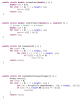 Big-O notation for each
public static double accumulate (double[] a) { double sum = 0.0; for (int i = 0; i < a.length; i++) sum += a[i]; return sum; } public static double innerProduct(double[] a, double[] b) { // assume a. length == b.length double sum = 0; for (int i = 0; i < a.length; i++) sum += a[i] * b[i]; return sum; } public static int twoSum(int[] a) { int count = 0; for (int i = 0;...
Big-O notation for each
public static double accumulate (double[] a) { double sum = 0.0; for (int i = 0; i < a.length; i++) sum += a[i]; return sum; } public static double innerProduct(double[] a, double[] b) { // assume a. length == b.length double sum = 0; for (int i = 0; i < a.length; i++) sum += a[i] * b[i]; return sum; } public static int twoSum(int[] a) { int count = 0; for (int i = 0;...
please help, no explanation just need answer #include <stdio.h> #include <stdlib.h> int main(void) { int -x5);...
 please help, no explanation just need answer
#include <stdio.h> #include <stdlib.h> int main(void) { int -x5); for (int = 0; i < 5; i++) { x[i] = malloc(sizeof (int) - 5); for (int i = 0; i < 5; i++) { for (int j = 0; j < 5; j++) { x[i][j] = i j ; modify(x, 5, 5); return 0; Which of the implementations of method modify below set all elements of the matrix x to zero? 1. void...
please help, no explanation just need answer
#include <stdio.h> #include <stdlib.h> int main(void) { int -x5); for (int = 0; i < 5; i++) { x[i] = malloc(sizeof (int) - 5); for (int i = 0; i < 5; i++) { for (int j = 0; j < 5; j++) { x[i][j] = i j ; modify(x, 5, 5); return 0; Which of the implementations of method modify below set all elements of the matrix x to zero? 1. void...
Describe the worst case running time of the following pseudocode functions in Big-Oh notation in terms...
 Describe the worst case running time of the following
pseudocode functions in Big-Oh notation in terms of the variable n.
Show your work
b) void func(int n) { for (int i = 0; i < n; i = i + 10) { for (int j = 0; j < i; ++i) { System.out.println("i = " + i); System.out.println("j = " + j);
Describe the worst case running time of the following
pseudocode functions in Big-Oh notation in terms of the variable n.
Show your work
b) void func(int n) { for (int i = 0; i < n; i = i + 10) { for (int j = 0; j < i; ++i) { System.out.println("i = " + i); System.out.println("j = " + j);
Please answer both questions thank you. Question 52 (1 point) What is the output of the...
 Please answer both questions thank you.
Question 52 (1 point) What is the output of the code snippet given below? String s = "abcde"; int i = 1; while (i < 5) { System.out.print(s.substring(i, i + 1)); i++; Question 50 (1 point) How many times will the output line be printed in the following code snippet? Please enter your answer as an integer. for (int i = 0; i < 3; i++) { for (int j = 1; j <...
Please answer both questions thank you.
Question 52 (1 point) What is the output of the code snippet given below? String s = "abcde"; int i = 1; while (i < 5) { System.out.print(s.substring(i, i + 1)); i++; Question 50 (1 point) How many times will the output line be printed in the following code snippet? Please enter your answer as an integer. for (int i = 0; i < 3; i++) { for (int j = 1; j <...
QUESTION 5 What is the worst-case complexity of line 10 of function bar? A. O(1) B....
 QUESTION 5
What is the worst-case complexity of line 10 of function
bar?
A.
O(1)
B.
O(N)
C.
O(i)
D.
O(log N)
E.
O(sqrt N)
F.
O(A[i])
G.
O(N sqrt N)
H.
O(N log N)
I.
O(N^2)
J.
O(i^2)
K.
None of the above
QUESTION 6
What is the worst-case complexity of lines 8-11 of function
bar?
A.
O(1)
B.
O(N)
C.
O(i)
D.
O(log N)
E.
O(sqrt N)
F.
O(A[i])
G.
O(N sqrt N)
H.
O(N log N)
I....
QUESTION 5
What is the worst-case complexity of line 10 of function
bar?
A.
O(1)
B.
O(N)
C.
O(i)
D.
O(log N)
E.
O(sqrt N)
F.
O(A[i])
G.
O(N sqrt N)
H.
O(N log N)
I.
O(N^2)
J.
O(i^2)
K.
None of the above
QUESTION 6
What is the worst-case complexity of lines 8-11 of function
bar?
A.
O(1)
B.
O(N)
C.
O(i)
D.
O(log N)
E.
O(sqrt N)
F.
O(A[i])
G.
O(N sqrt N)
H.
O(N log N)
I....
QUESTION 8 What is the worst-case complexity of line 7 of function bar? A. O(1) B....
 QUESTION 8
What is the worst-case complexity of line 7 of function bar?
A.
O(1)
B.
O(N)
C.
O(i)
D.
O(log N)
E.
O(sqrt N)
F.
O(A[i])
G.
O(N sqrt N)
H.
O(N log N)
I.
O(N^2)
J.
O(i^2)
K.
None of the above
QUESTION 9
What is the worst-case complexity of lines 6-11 of function
bar?
A.
O(1)
B.
O(N)
C.
O(i)
D.
O(log N)
E.
O(sqrt N)
F.
O(A[i])
G.
O(N sqrt N)
H.
O(N log N)
I....
QUESTION 8
What is the worst-case complexity of line 7 of function bar?
A.
O(1)
B.
O(N)
C.
O(i)
D.
O(log N)
E.
O(sqrt N)
F.
O(A[i])
G.
O(N sqrt N)
H.
O(N log N)
I.
O(N^2)
J.
O(i^2)
K.
None of the above
QUESTION 9
What is the worst-case complexity of lines 6-11 of function
bar?
A.
O(1)
B.
O(N)
C.
O(i)
D.
O(log N)
E.
O(sqrt N)
F.
O(A[i])
G.
O(N sqrt N)
H.
O(N log N)
I....
1.4.6 Give the order of growth (as a function of n) of the running times of...
 1.4.6 Give the order of growth (as a function of n) of the running times of each of the following code fragments: a, int sum=0; for (int k n: k > 0; k /= 2) for (int i 0; ǐ < k; İ++) sum++; b.int sum 0; for (int i = 1; i < n; i *= 2) for (int j = 0; j < i; j++) sum++; int sum = 0; for (int í = 1; i < n;...
Please answer both questions thank you. Question 39 (1 point) Translate the following conditions to Java,...
 Please answer both questions thank you.
Question 39 (1 point) Translate the following conditions to Java, where x is an integer and s is a string. 1. x >= 6 2. x < 0 s is "Day" 3. S = "Day" x is at least 6 4. X == -7 DODO x is at most 6 5. x = -7 x is - 7 6. s.equals("Day") 7. x <= 6 x is not 27 8. X >O x is positive...
Please answer both questions thank you.
Question 39 (1 point) Translate the following conditions to Java, where x is an integer and s is a string. 1. x >= 6 2. x < 0 s is "Day" 3. S = "Day" x is at least 6 4. X == -7 DODO x is at most 6 5. x = -7 x is - 7 6. s.equals("Day") 7. x <= 6 x is not 27 8. X >O x is positive...
 b. what is the order (big -o) of this algorithm?
11. To answer this question, consider the n, consider the following algorithm: for (int i-0; i<ni i++) for (int j = 0; j <= i; j++) // three assignment statements in body of this inner loop a. (6 pts) Exactly how many assignments (in terms of n) are made in this algorithm?
b. what is the order (big -o) of this algorithm?
11. To answer this question, consider the n, consider the following algorithm: for (int i-0; i<ni i++) for (int j = 0; j <= i; j++) // three assignment statements in body of this inner loop a. (6 pts) Exactly how many assignments (in terms of n) are made in this algorithm?
 Using C++ please explain
What is the Big-O time complexity of the following code: for (int i=0; i<N; i+=2) { ... constant time operations... Select one: o a. O(n^2) O b. O(log n) c. O(n) O d. 0(1) What is the Big-O time complexity of the following code: for(int i=1; i<N; i*=2) { ... constant time operations... Select one: O O a. O(n^2) b. 0(1) c. O(n) d. O(log n) O What is the Big-O time complexity of the following...
Using C++ please explain
What is the Big-O time complexity of the following code: for (int i=0; i<N; i+=2) { ... constant time operations... Select one: o a. O(n^2) O b. O(log n) c. O(n) O d. 0(1) What is the Big-O time complexity of the following code: for(int i=1; i<N; i*=2) { ... constant time operations... Select one: O O a. O(n^2) b. 0(1) c. O(n) d. O(log n) O What is the Big-O time complexity of the following...
 Big-O notation for each
public static double accumulate (double[] a) { double sum = 0.0; for (int i = 0; i < a.length; i++) sum += a[i]; return sum; } public static double innerProduct(double[] a, double[] b) { // assume a. length == b.length double sum = 0; for (int i = 0; i < a.length; i++) sum += a[i] * b[i]; return sum; } public static int twoSum(int[] a) { int count = 0; for (int i = 0;...
Big-O notation for each
public static double accumulate (double[] a) { double sum = 0.0; for (int i = 0; i < a.length; i++) sum += a[i]; return sum; } public static double innerProduct(double[] a, double[] b) { // assume a. length == b.length double sum = 0; for (int i = 0; i < a.length; i++) sum += a[i] * b[i]; return sum; } public static int twoSum(int[] a) { int count = 0; for (int i = 0;...
 please help, no explanation just need answer
#include <stdio.h> #include <stdlib.h> int main(void) { int -x5); for (int = 0; i < 5; i++) { x[i] = malloc(sizeof (int) - 5); for (int i = 0; i < 5; i++) { for (int j = 0; j < 5; j++) { x[i][j] = i j ; modify(x, 5, 5); return 0; Which of the implementations of method modify below set all elements of the matrix x to zero? 1. void...
please help, no explanation just need answer
#include <stdio.h> #include <stdlib.h> int main(void) { int -x5); for (int = 0; i < 5; i++) { x[i] = malloc(sizeof (int) - 5); for (int i = 0; i < 5; i++) { for (int j = 0; j < 5; j++) { x[i][j] = i j ; modify(x, 5, 5); return 0; Which of the implementations of method modify below set all elements of the matrix x to zero? 1. void...
 Describe the worst case running time of the following
pseudocode functions in Big-Oh notation in terms of the variable n.
Show your work
b) void func(int n) { for (int i = 0; i < n; i = i + 10) { for (int j = 0; j < i; ++i) { System.out.println("i = " + i); System.out.println("j = " + j);
Describe the worst case running time of the following
pseudocode functions in Big-Oh notation in terms of the variable n.
Show your work
b) void func(int n) { for (int i = 0; i < n; i = i + 10) { for (int j = 0; j < i; ++i) { System.out.println("i = " + i); System.out.println("j = " + j);
 Please answer both questions thank you.
Question 52 (1 point) What is the output of the code snippet given below? String s = "abcde"; int i = 1; while (i < 5) { System.out.print(s.substring(i, i + 1)); i++; Question 50 (1 point) How many times will the output line be printed in the following code snippet? Please enter your answer as an integer. for (int i = 0; i < 3; i++) { for (int j = 1; j <...
Please answer both questions thank you.
Question 52 (1 point) What is the output of the code snippet given below? String s = "abcde"; int i = 1; while (i < 5) { System.out.print(s.substring(i, i + 1)); i++; Question 50 (1 point) How many times will the output line be printed in the following code snippet? Please enter your answer as an integer. for (int i = 0; i < 3; i++) { for (int j = 1; j <...
 QUESTION 5
What is the worst-case complexity of line 10 of function
bar?
A.
O(1)
B.
O(N)
C.
O(i)
D.
O(log N)
E.
O(sqrt N)
F.
O(A[i])
G.
O(N sqrt N)
H.
O(N log N)
I.
O(N^2)
J.
O(i^2)
K.
None of the above
QUESTION 6
What is the worst-case complexity of lines 8-11 of function
bar?
A.
O(1)
B.
O(N)
C.
O(i)
D.
O(log N)
E.
O(sqrt N)
F.
O(A[i])
G.
O(N sqrt N)
H.
O(N log N)
I....
QUESTION 5
What is the worst-case complexity of line 10 of function
bar?
A.
O(1)
B.
O(N)
C.
O(i)
D.
O(log N)
E.
O(sqrt N)
F.
O(A[i])
G.
O(N sqrt N)
H.
O(N log N)
I.
O(N^2)
J.
O(i^2)
K.
None of the above
QUESTION 6
What is the worst-case complexity of lines 8-11 of function
bar?
A.
O(1)
B.
O(N)
C.
O(i)
D.
O(log N)
E.
O(sqrt N)
F.
O(A[i])
G.
O(N sqrt N)
H.
O(N log N)
I....
 QUESTION 8
What is the worst-case complexity of line 7 of function bar?
A.
O(1)
B.
O(N)
C.
O(i)
D.
O(log N)
E.
O(sqrt N)
F.
O(A[i])
G.
O(N sqrt N)
H.
O(N log N)
I.
O(N^2)
J.
O(i^2)
K.
None of the above
QUESTION 9
What is the worst-case complexity of lines 6-11 of function
bar?
A.
O(1)
B.
O(N)
C.
O(i)
D.
O(log N)
E.
O(sqrt N)
F.
O(A[i])
G.
O(N sqrt N)
H.
O(N log N)
I....
QUESTION 8
What is the worst-case complexity of line 7 of function bar?
A.
O(1)
B.
O(N)
C.
O(i)
D.
O(log N)
E.
O(sqrt N)
F.
O(A[i])
G.
O(N sqrt N)
H.
O(N log N)
I.
O(N^2)
J.
O(i^2)
K.
None of the above
QUESTION 9
What is the worst-case complexity of lines 6-11 of function
bar?
A.
O(1)
B.
O(N)
C.
O(i)
D.
O(log N)
E.
O(sqrt N)
F.
O(A[i])
G.
O(N sqrt N)
H.
O(N log N)
I....
 1.4.6 Give the order of growth (as a function of n) of the running times of each of the following code fragments: a, int sum=0; for (int k n: k > 0; k /= 2) for (int i 0; ǐ < k; İ++) sum++; b.int sum 0; for (int i = 1; i < n; i *= 2) for (int j = 0; j < i; j++) sum++; int sum = 0; for (int í = 1; i < n;...
 Please answer both questions thank you.
Question 39 (1 point) Translate the following conditions to Java, where x is an integer and s is a string. 1. x >= 6 2. x < 0 s is "Day" 3. S = "Day" x is at least 6 4. X == -7 DODO x is at most 6 5. x = -7 x is - 7 6. s.equals("Day") 7. x <= 6 x is not 27 8. X >O x is positive...
Please answer both questions thank you.
Question 39 (1 point) Translate the following conditions to Java, where x is an integer and s is a string. 1. x >= 6 2. x < 0 s is "Day" 3. S = "Day" x is at least 6 4. X == -7 DODO x is at most 6 5. x = -7 x is - 7 6. s.equals("Day") 7. x <= 6 x is not 27 8. X >O x is positive...
Most questions answered within 3 hours.
-
Where is the error in this code sequence?
String s1 = "Hello";
String s2 = "ello";...
asked 11 months ago -
Financial data for Joel de Paris, Inc., for last year
follow:
Joel de Paris, Inc.
Balance...
asked 11 months ago -
Consider this reaction:
Al2(SO4)3 (aq)+ BaCl3
(aq) Al2Cl6 (aq)- +
3BaSO4(s) . What is the...
asked 11 months ago -
Suppose that Savneet is considering increasing her
recent random sample from 20 car rentals to 40...
asked 11 months ago -
Trucks arrive at an unloading terminal at an average rate of 120
per hour.
Trucks arrive...
asked 11 months ago -
Why are methanol and ethanol completely soluble in water while
octanol is not very little soluble....
asked 11 months ago -
A facilities manager at a university reads in a research report
that the mean amount of...
asked 11 months ago -
When the CuSO4 is rehydrated by adding water to the anhydrous
compound, is this an endothermic...
asked 11 months ago -
A ray of sunlight is passing from diamond into crown glass; the
angle of incidence is...
asked 11 months ago -
A block of mass 0.249 kg is placed on top of a light, vertical
spring of...
asked 11 months ago -
how do the kidneys compensate in the presences of acidosis
a) trigger hyperventilate
b) reserve acid...
asked 11 months ago -
Question 501 pts
The rental rate of capital to the firm increases. Which of the
following...
asked 11 months ago