
Homework Answers
AVERAGE TOTAL COST/ AVERAGE COST
Average Total Cost = total cost /the quantity of output.
Average total cost ( ATC) = sum of all production costs/the quantity of output produced.
That is, it measures how much a firm has to spend on each unit of output it produces.
TRUE FACTS
- (Total variable Cost plus Total Fixed Cost) divided by quantity.
- Average Variable Cost plus Average Fixed Cost.
- Total Cost divided by Quantity.
The average total costs include both fixed and variable costs.
Fixed costs are a cost which does not change. Examples of fixed
costs are the cost of the facility or the manufacturing equipment
that the company purchased to create the product. Variable costs
increase or decrease based on output and can include things like
direct labor or the costs of the materials used to create the
product.
The formula for calculating Average Total Cost is:
(Total fixed costs + Total Variable Costs) / number of units
produced = Average Total Cost.
Average costs is U shaped or upward slopping curve and lies above
Average Variable Cost
Add Answer to:
Select choices which are true about Average Total Costs. (Select all that apply.) (change in Total...
1)Which of the following statements is true? A. Average fixed cost equals total fixed cost divided...
1)Which of the following statements is true? A. Average fixed cost equals total fixed cost divided by total output. B. Average total cost always falls as output increases. C. Average fixed cost equals average total cost plus average variable cost. D. Average variable cost is always greater than average fixed cost. 2) As output increases, average fixed cost A. remains constant. B. always decreases. C. decreases, then increases. D. increases, then decreases. 3) Average total cost minus average variable cost...
Matching (15 pts) a.) Average fixed costs b.) Average product c.) Average total cost d.) Average...
 Matching (15 pts) a.) Average fixed costs b.) Average product c.) Average total cost d.) Average variable cost e.) Diseconomies of scale f.) Economies of scale 9.) Fixed costs m.) Optimal output rule h.) Law of diminishing marginal productivity n.) Profit i.) Long run 0.) Short run 1.) Marginal cost p.) Total cost k.) Marginal product q.) Total product 1.) Marginal revenue r.) Variable costs 1.) Total revenue minus total cost 2.) The sum of total fixed and total variable...
True False Answer Bank Average fixed cost is al way s higher than average variable cost....
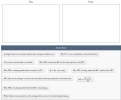 True False Answer Bank Average fixed cost is al way s higher than average variable cost. The VC curve is modeled as a horizontal line. All costs are either fixed or variable. The ATC crosses the MC at the lowest point on the MC The ATC is always greater than or equal to AVC TC= FC + VC +MC The ATC is rising when the MC is below the ATC. MC refers to the change in total cost associated with...
6. Which answer choices are true about photorespiration? Select all that apply. Photorespiration increases the efficiency...
 6. Which answer choices are true about photorespiration? Select all that apply. Photorespiration increases the efficiency of photosynthesis. It happens because 3-phosphoglycerate cannot be reduced to form triose phosphate sugars. It happens because there is so much more CO2 in the atmosphere than 02. It happens because rubisco can add either O or Co, to RuBP. CO2 and ATP are produced. ATP is consumed by photorespiration.
1. Which of the following must be true when average total cost is decreasing? Average fixed...
1. Which of the following must be true when average total cost is decreasing? Average fixed cost is increasing. Average variable cost is constant. Marginal cost is lower than avergae total cost. Marginal cost is decreasing. 2. Which of the following is true? AVC=ATC+AFC. AFC will go up in the beginning but will eventually go down. MC= (change in TC)/ (change in Q) FC+MC=TC. 3. Which of the following is true? Average product (AP) is increasing when the marginal product...
Which of the following statements about a monopoly firm are true? (Check all that apply.) 1)...
Which of the following statements about a monopoly firm are true? (Check all that apply.) 1) it always experiences economies of scale 2) it is always profitable in the short run 3) its long-run average total cost curve is always downward sloping 4) its marginal revenue is always below the price 5) it is the only seller of a good or service with no close substitutes available
Select all that apply. Which of the following is not true about antisecretory medications? A) They...
Select all that apply. Which of the following is not true about antisecretory medications? A) They decrease gastric fluid secretions. B) They are safe to give with antacids, especially those containing aluminum. C) These are not affected by food. D)Can be issued for short term and chronic maintenance therapy. E) They can inhibit interaction of H2 at its receptors. F)None of the choices
Average fixed cost is defined as: O A. total fixed cost divided by quantity OB. the...
 Average fixed cost is defined as: O A. total fixed cost divided by quantity OB. the change in total variable cost divided by the change in quantity OC. total variable cost divided by quantity OD. quantity divided by total variable cost.
Which of the following expressions is correct? Select one: average total cost = (total cost)/(quantity of...
Which of the following expressions is correct? Select one: average total cost = (total cost)/(quantity of output) total cost = variable cost + marginal cost marginal cost = (change in quantity of output)/(change in total cost) average variable cost = (quantity of output)/(total variable cost)
Select all that apply. Which of the following is not true about the cox inhibitor? O...
 Select all that apply. Which of the following is not true about the cox inhibitor? O It is usually indicated for osteoarthritis and acute pain in the joints. O There is only one drug in the category. O This category of drugs suppresses inflammation with only minimal side effects. 0 It has "cox" in the generic name. None of the choices
 Matching (15 pts) a.) Average fixed costs b.) Average product c.) Average total cost d.) Average variable cost e.) Diseconomies of scale f.) Economies of scale 9.) Fixed costs m.) Optimal output rule h.) Law of diminishing marginal productivity n.) Profit i.) Long run 0.) Short run 1.) Marginal cost p.) Total cost k.) Marginal product q.) Total product 1.) Marginal revenue r.) Variable costs 1.) Total revenue minus total cost 2.) The sum of total fixed and total variable...
 True False Answer Bank Average fixed cost is al way s higher than average variable cost. The VC curve is modeled as a horizontal line. All costs are either fixed or variable. The ATC crosses the MC at the lowest point on the MC The ATC is always greater than or equal to AVC TC= FC + VC +MC The ATC is rising when the MC is below the ATC. MC refers to the change in total cost associated with...
 6. Which answer choices are true about photorespiration? Select all that apply. Photorespiration increases the efficiency of photosynthesis. It happens because 3-phosphoglycerate cannot be reduced to form triose phosphate sugars. It happens because there is so much more CO2 in the atmosphere than 02. It happens because rubisco can add either O or Co, to RuBP. CO2 and ATP are produced. ATP is consumed by photorespiration.
 Average fixed cost is defined as: O A. total fixed cost divided by quantity OB. the change in total variable cost divided by the change in quantity OC. total variable cost divided by quantity OD. quantity divided by total variable cost.
 Select all that apply. Which of the following is not true about the cox inhibitor? O It is usually indicated for osteoarthritis and acute pain in the joints. O There is only one drug in the category. O This category of drugs suppresses inflammation with only minimal side effects. 0 It has "cox" in the generic name. None of the choices
Most questions answered within 3 hours.
-
Where is the error in this code sequence?
String s1 = "Hello";
String s2 = "ello";...
asked 10 months ago -
Financial data for Joel de Paris, Inc., for last year
follow:
Joel de Paris, Inc.
Balance...
asked 10 months ago -
Consider this reaction:
Al2(SO4)3 (aq)+ BaCl3
(aq) Al2Cl6 (aq)- +
3BaSO4(s) . What is the...
asked 10 months ago -
Suppose that Savneet is considering increasing her
recent random sample from 20 car rentals to 40...
asked 10 months ago -
Trucks arrive at an unloading terminal at an average rate of 120
per hour.
Trucks arrive...
asked 10 months ago -
Why are methanol and ethanol completely soluble in water while
octanol is not very little soluble....
asked 10 months ago -
A facilities manager at a university reads in a research report
that the mean amount of...
asked 10 months ago -
When the CuSO4 is rehydrated by adding water to the anhydrous
compound, is this an endothermic...
asked 10 months ago -
A ray of sunlight is passing from diamond into crown glass; the
angle of incidence is...
asked 10 months ago -
A block of mass 0.249 kg is placed on top of a light, vertical
spring of...
asked 10 months ago -
how do the kidneys compensate in the presences of acidosis
a) trigger hyperventilate
b) reserve acid...
asked 10 months ago -
Question 501 pts
The rental rate of capital to the firm increases. Which of the
following...
asked 10 months ago