

Homework Answers
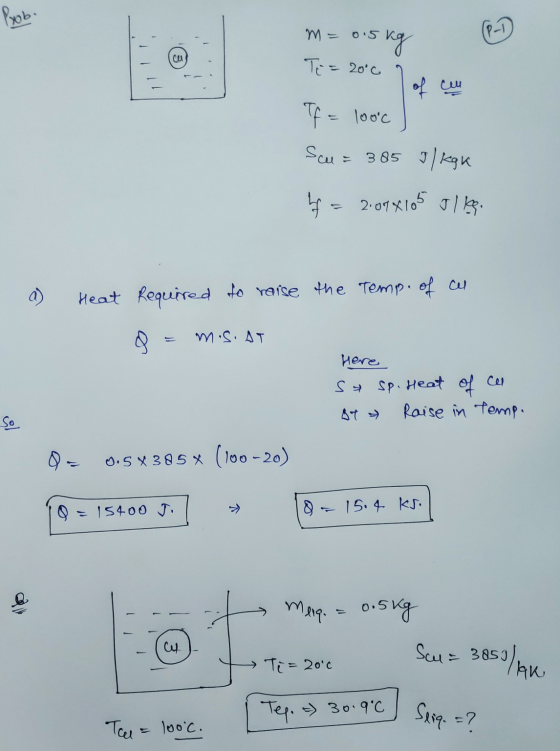
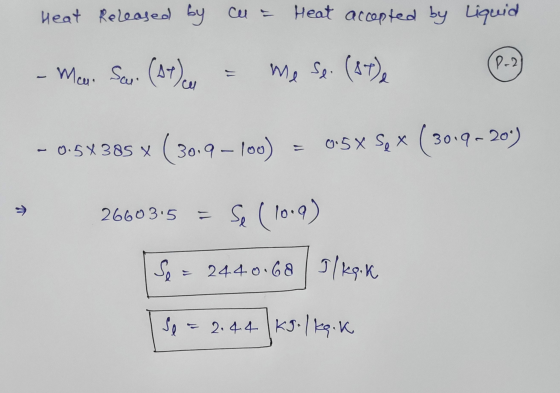
We can easily find the heat required to raise the temperature of metal by the definition of specific heat. As specific heat is the heat required to raise the unit temperature of unit mass. Similarly in 2nd part the heat released (*released heat is represented by -ve sign) by the copper will be taken by liquid and its temperature will raise. Please find the attached solution and provide the feedback.
Add Answer to:
4. A 0.500 kg piece of copper at an initial temperature of 20.0°C is placed in...
4. A 0.500 kg piece of copper at an initial temperature of 20.0°C is placed in...
 4. A 0.500 kg piece of copper at an initial temperature of 20.0°C is placed in a water bath and the temperature of the metal is raised to 100.0°C. Note: The specific heat capacity of copper is 385J/kg K and the latent heat of fusion is 2.07x1057/kg. a. How much heat was required to raise the temperature of the copper? b. How much more heat would be required to raise the copper to its melting point? C. How much heat...
A 6.00-kg piece of solid copper metal at an initial tem- perature T is placed with...
A 6.00-kg piece of solid copper metal at an initial tem- perature T is placed with 2.00 kg of ice that is initially at -20.0°C. The ice is in an insulated container of negligible mass and no heat is exchanged with the surroundings. After thermal equilibrium is reached, there is 1.20 kg of ice and 0.80 kg of liquid water. What was the initial temperature of the piece of copper? What is the change in entropy for the copper metal...
please help me. Thanks A piece of copper metal weighing 36.3 g is initially at 100.0...
 please help me. Thanks
A piece of copper metal weighing 36.3 g is initially at 100.0 degree C. It is dropped into a coffee cup calorimeter containing 50.0 g of water at a temperature of 20.0 degree C. After stirring, the final temperature of both copper and water is 25.0 degree C. Assuming no heat losses, an that the specific heat capacity of water is 4.184 J/g degreeC, what is the specific heat capacity of the copper in J/g degreeC?
please help me. Thanks
A piece of copper metal weighing 36.3 g is initially at 100.0 degree C. It is dropped into a coffee cup calorimeter containing 50.0 g of water at a temperature of 20.0 degree C. After stirring, the final temperature of both copper and water is 25.0 degree C. Assuming no heat losses, an that the specific heat capacity of water is 4.184 J/g degreeC, what is the specific heat capacity of the copper in J/g degreeC?
2. DANS A piece of unknown metal weighs 100.0 g. It is heated to 98.0°C before...
 2. DANS A piece of unknown metal weighs 100.0 g. It is heated to 98.0°C before it was dropped into a calorimeter containing 50.0 g of water at 22.0°C. The final temperature was observed to be 26.4'C. Calculate the specific heat capacity of the metal. Type your answer
3. A75.0 g piece of copper metal is initially at 100°C. It is dropped into a...
 3. A75.0 g piece of copper metal is initially at 100°C. It is dropped into a coffee cup calorimeter containing 75.0 g of water a a rature of 20.0°c. Assuming that the only heat exchange is between the copper metal and the water (no heat is given to the calorimeter), what is the final temperature of the water. Specific heat of copper 0.387 J/goC
21.A piece of copper metal is initially at 100 C. It is dropped into a coffee...
 21.A piece of copper metal is initially at 100 C. It is dropped into a coffee cup calorimeter containing 50.0g of water at a temperature of 20.0°C. After thermal equilibrium established, the final temperature of both copper and water is 25.0 °C. Assume there is no heat loss what is the heat capacity, C, of the copper? The specific heat of water is 4.18 J/g°C tutor a. 2.79 J/oC b. 3.33 JoC c. 2.79 J/oC d. 13.9 JoC 3
A 0.500 kg piece of granite is heated 21.5 °C by a sitting in the sun...
 A 0.500 kg piece of granite is heated 21.5 °C by a sitting in the sun and thereby absorbs 8.5 kcal of heat. What is the specific heat of the granite rock? . 4. An electric current heats a 221 g (0.221 kg) copper wire from 20.0 °C to 38.0 °C. How much heat was generated by the current? (copper = 0.093 kcal/kgCo) How much heat is required to change 0.500 kg of water from a liquid at 50. °C...
A piece of copper metal is initially at 83.0°C. It is dropped into a coffee cup...
 A piece of copper metal is initially at 83.0°C. It is dropped into a coffee cup calorimeter containing 30.0 9 of water at a temperature of 10.0°c. After stirring, the final temperature of both copper and water is 25.0°c. Assuming no heat losses, and that the specific heat (capacity) of water is 4.18 J/(g.), what is the heat capacity of the copper in J/K?
A 25.0g sample of an unknown metal was heated to 100.0 degrees C and placed into...
A 25.0g sample of an unknown metal was heated to 100.0 degrees C and placed into a beaker containing 90.0g of water at 25.32 degrees C. The temperature of the water rose to a final value of 27.18 degrees C. Neglecting heat loss to the room and the heat capacity of the beaker itself, what is the specific heat of the metal? Using the given specific heat values below (in cal/g degrees C), identify the unknown metal. Barium 0.068 Chromium...
- IUI ILALUUUR VIWCUSE) 1. A 145 g sample of copper metal at 100.0°C is placed...
 - IUI ILALUUUR VIWCUSE) 1. A 145 g sample of copper metal at 100.0°C is placed into 250.0 g of water at 25.0°C in a calorimeter. When the system reaches thermal equilibrium, the temperature of the water in the calorimeter is 28.8°C. Assume the calorimeter is perfectly insulated. What is the specific heat capacity of copper?
 4. A 0.500 kg piece of copper at an initial temperature of 20.0°C is placed in a water bath and the temperature of the metal is raised to 100.0°C. Note: The specific heat capacity of copper is 385J/kg K and the latent heat of fusion is 2.07x1057/kg. a. How much heat was required to raise the temperature of the copper? b. How much more heat would be required to raise the copper to its melting point? C. How much heat...
 please help me. Thanks
A piece of copper metal weighing 36.3 g is initially at 100.0 degree C. It is dropped into a coffee cup calorimeter containing 50.0 g of water at a temperature of 20.0 degree C. After stirring, the final temperature of both copper and water is 25.0 degree C. Assuming no heat losses, an that the specific heat capacity of water is 4.184 J/g degreeC, what is the specific heat capacity of the copper in J/g degreeC?
please help me. Thanks
A piece of copper metal weighing 36.3 g is initially at 100.0 degree C. It is dropped into a coffee cup calorimeter containing 50.0 g of water at a temperature of 20.0 degree C. After stirring, the final temperature of both copper and water is 25.0 degree C. Assuming no heat losses, an that the specific heat capacity of water is 4.184 J/g degreeC, what is the specific heat capacity of the copper in J/g degreeC?
 2. DANS A piece of unknown metal weighs 100.0 g. It is heated to 98.0°C before it was dropped into a calorimeter containing 50.0 g of water at 22.0°C. The final temperature was observed to be 26.4'C. Calculate the specific heat capacity of the metal. Type your answer
 3. A75.0 g piece of copper metal is initially at 100°C. It is dropped into a coffee cup calorimeter containing 75.0 g of water a a rature of 20.0°c. Assuming that the only heat exchange is between the copper metal and the water (no heat is given to the calorimeter), what is the final temperature of the water. Specific heat of copper 0.387 J/goC
 21.A piece of copper metal is initially at 100 C. It is dropped into a coffee cup calorimeter containing 50.0g of water at a temperature of 20.0°C. After thermal equilibrium established, the final temperature of both copper and water is 25.0 °C. Assume there is no heat loss what is the heat capacity, C, of the copper? The specific heat of water is 4.18 J/g°C tutor a. 2.79 J/oC b. 3.33 JoC c. 2.79 J/oC d. 13.9 JoC 3
 A 0.500 kg piece of granite is heated 21.5 °C by a sitting in the sun and thereby absorbs 8.5 kcal of heat. What is the specific heat of the granite rock? . 4. An electric current heats a 221 g (0.221 kg) copper wire from 20.0 °C to 38.0 °C. How much heat was generated by the current? (copper = 0.093 kcal/kgCo) How much heat is required to change 0.500 kg of water from a liquid at 50. °C...
 A piece of copper metal is initially at 83.0°C. It is dropped into a coffee cup calorimeter containing 30.0 9 of water at a temperature of 10.0°c. After stirring, the final temperature of both copper and water is 25.0°c. Assuming no heat losses, and that the specific heat (capacity) of water is 4.18 J/(g.), what is the heat capacity of the copper in J/K?
 - IUI ILALUUUR VIWCUSE) 1. A 145 g sample of copper metal at 100.0°C is placed into 250.0 g of water at 25.0°C in a calorimeter. When the system reaches thermal equilibrium, the temperature of the water in the calorimeter is 28.8°C. Assume the calorimeter is perfectly insulated. What is the specific heat capacity of copper?
Most questions answered within 3 hours.
-
Where is the error in this code sequence?
String s1 = "Hello";
String s2 = "ello";...
asked 11 months ago -
Financial data for Joel de Paris, Inc., for last year
follow:
Joel de Paris, Inc.
Balance...
asked 11 months ago -
Consider this reaction:
Al2(SO4)3 (aq)+ BaCl3
(aq) Al2Cl6 (aq)- +
3BaSO4(s) . What is the...
asked 11 months ago -
Suppose that Savneet is considering increasing her
recent random sample from 20 car rentals to 40...
asked 11 months ago -
Trucks arrive at an unloading terminal at an average rate of 120
per hour.
Trucks arrive...
asked 11 months ago -
Why are methanol and ethanol completely soluble in water while
octanol is not very little soluble....
asked 11 months ago -
A facilities manager at a university reads in a research report
that the mean amount of...
asked 11 months ago -
When the CuSO4 is rehydrated by adding water to the anhydrous
compound, is this an endothermic...
asked 11 months ago -
A ray of sunlight is passing from diamond into crown glass; the
angle of incidence is...
asked 11 months ago -
A block of mass 0.249 kg is placed on top of a light, vertical
spring of...
asked 11 months ago -
how do the kidneys compensate in the presences of acidosis
a) trigger hyperventilate
b) reserve acid...
asked 11 months ago -
Question 501 pts
The rental rate of capital to the firm increases. Which of the
following...
asked 11 months ago