

Homework Answers
Request Answer!
We need at least 10 more requests to produce the answer.
0 / 10 have requested this problem solution
The more requests, the faster the answer.
Add Answer to:
QUESTIONS 1. What is the purpose of the sulfuric acid (yes, it's a catalyst, but why...
These question are for the Friedel Crafts Alkylation of 1,4-Dimethoxybenzene organic chem lab 1. Why is...
 These question are for the Friedel Crafts Alkylation of
1,4-Dimethoxybenzene organic chem lab
1. Why is 1,4-di-t-butyl-2,5-dimethoxybenzene the preferred product of this reaction? Why is neither 1,2-di-t-butyl-3,6-dimethoxybenzene nor 1,3-di-t-butyl-3,6-dimethoxybenzene formed as side products? OCH3 OCH3 OCH3 OCH3 1,2-di-t-butyl-3,6-dimethoxybenzene 1,3-di-t-butyl-3,6-dimethoxybenzene 2. 3. 4. Why was the product washed with water? Why was the product washed with methanol? We used t-butyl alcohol to generate t-butyl cation. Suggest two other compounds that could be used to generate the t-butyl cation.
These question are for the Friedel Crafts Alkylation of
1,4-Dimethoxybenzene organic chem lab
1. Why is 1,4-di-t-butyl-2,5-dimethoxybenzene the preferred product of this reaction? Why is neither 1,2-di-t-butyl-3,6-dimethoxybenzene nor 1,3-di-t-butyl-3,6-dimethoxybenzene formed as side products? OCH3 OCH3 OCH3 OCH3 1,2-di-t-butyl-3,6-dimethoxybenzene 1,3-di-t-butyl-3,6-dimethoxybenzene 2. 3. 4. Why was the product washed with water? Why was the product washed with methanol? We used t-butyl alcohol to generate t-butyl cation. Suggest two other compounds that could be used to generate the t-butyl cation.
identify the preferred site(s) of electrophilic attack on the following compound 1-CH-04 >> ringt r ing...
 identify the preferred site(s) of electrophilic attack on the following compound 1-CH-04 >> ringt r ing 2 A) ortho para positions on ring 1 B) meta position on ring 2 C) meta position on ring 1 D) orthopara positions on ring 2 2) The major products) in the nitration of benzoic acid isare) A) nitrobenzene. B) nitroben ene and para-nitrobenzoic acid. C) mixture of the and pre-nitrobenzoic acid. D -nitrobenzoic acid. 3) What is the electrophile in the Friedel-Crafts alkylation...
For a Friedel-Crafts alkylation reaction between 1,4-dimethoxybenzene with 3-methyl-2-butanol and sulfuric acid what product was formed...
For a Friedel-Crafts alkylation reaction between 1,4-dimethoxybenzene with 3-methyl-2-butanol and sulfuric acid what product was formed in this reaction? Use a discussion of the reaction mechanism, IR, and NMR data to justify your conclusion. A figure should be included to aid in the discussion of the reaction mechanism.
Explain why alkylation increases the nucleophilicity of the ring when we synthesize 1 ,4-di-tert-butyl-2 5-dimethoxybenzene OCH...
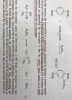 Explain why alkylation increases the nucleophilicity of the ring
when we synthesize 1 ,4-di-tert-butyl-2
5-dimethoxybenzene
OCH ОСНз C(CH3)3 2(CH,),COH 50 CH3 OCH In this reaction, the electrophile is a carbocation, generated by treating a tertiary alcohol ((CH3),C-OH) with á Strong acid CHoSO) as the dehydrating agent The advantage of this method for generating the electrophile is that the tertiary butyl cation is a stable carbocation and does not rearrange CH3 CH H3 After the electrophilic cation has been formed, it...
Explain why alkylation increases the nucleophilicity of the ring
when we synthesize 1 ,4-di-tert-butyl-2
5-dimethoxybenzene
OCH ОСНз C(CH3)3 2(CH,),COH 50 CH3 OCH In this reaction, the electrophile is a carbocation, generated by treating a tertiary alcohol ((CH3),C-OH) with á Strong acid CHoSO) as the dehydrating agent The advantage of this method for generating the electrophile is that the tertiary butyl cation is a stable carbocation and does not rearrange CH3 CH H3 After the electrophilic cation has been formed, it...
24. What would have been the effect of omitting the sulfuric acid from methyl benzoate preparation...
 24. What would have been the effect of omitting the sulfuric acid from methyl benzoate preparation by reacting benzoic acid with methanol? 25. Criticize the following techniques: (a) Heating a mixture that contains n-hexane using an open flame. (b) For a reaction, heating a mixture that contains a large amount of toluene using hot water bath. (c) Running s reaction with tert-butyl alcohol that is cooled to 0°C in an ice bath. (d) A 100-ml graduated cylinder is used to...
numbers 1-3 Post-Laboratory Questions-EXP 3 Nitration of Aromatic Compounds Name: Due after completing the lab. 1....
 numbers 1-3
Post-Laboratory Questions-EXP 3 Nitration of Aromatic Compounds Name: Due after completing the lab. 1. Why is concentrated sulfuric acid emploved in thie on? What is the electrophile that is produced by the reaction of sulfuric acid and nitric acid? 2. Why is it important to maintain the reaction temperature low and the addition of nitric acid-sulfuric acid mixture carried out slowly? 3. Explain why concentrated H2SO4, not concentrated HC1, was used in this experiment? 4. Which ring of...
numbers 1-3
Post-Laboratory Questions-EXP 3 Nitration of Aromatic Compounds Name: Due after completing the lab. 1. Why is concentrated sulfuric acid emploved in thie on? What is the electrophile that is produced by the reaction of sulfuric acid and nitric acid? 2. Why is it important to maintain the reaction temperature low and the addition of nitric acid-sulfuric acid mixture carried out slowly? 3. Explain why concentrated H2SO4, not concentrated HC1, was used in this experiment? 4. Which ring of...
3-5 pls Post-Laboratory Questions-EXP 3 Nitration of Aromatic Compounds Name: Due after completing the lab. 1....
 3-5 pls
Post-Laboratory Questions-EXP 3 Nitration of Aromatic Compounds Name: Due after completing the lab. 1. Why is concentrated sulfuric acid employed in this reaction? What is the electrophile that is produced by the reaction of sulfuric acid and nitric acid? 2. Why is it important to maintain the reaction temperature low and the addition of nitric acid-sulfuric acid mixture carried out slowly? 3. Explain why concentrated H2SO, not concentrated HCl, was used in this experiment? 4. Which ring of...
3-5 pls
Post-Laboratory Questions-EXP 3 Nitration of Aromatic Compounds Name: Due after completing the lab. 1. Why is concentrated sulfuric acid employed in this reaction? What is the electrophile that is produced by the reaction of sulfuric acid and nitric acid? 2. Why is it important to maintain the reaction temperature low and the addition of nitric acid-sulfuric acid mixture carried out slowly? 3. Explain why concentrated H2SO, not concentrated HCl, was used in this experiment? 4. Which ring of...
Please help with questions 1-5. I have attached the additional lab information pages for help if...
 Please help with questions 1-5. I have attached the additional
lab information pages for help if you are unclear on anything
please review those.
We were unable to transcribe this imageEAS 97 5. Calculate the theoretical yiel te the theoretical yield of iodinated salicylamide (product) ass Todination reaction. (Show your calculations.) mide (product) assuming a mono- le, your starting material, is shown in Figure 4. ces in the functional group region of the spectrum IR spectrum of salicylamide, your starting...
Please help with questions 1-5. I have attached the additional
lab information pages for help if you are unclear on anything
please review those.
We were unable to transcribe this imageEAS 97 5. Calculate the theoretical yiel te the theoretical yield of iodinated salicylamide (product) ass Todination reaction. (Show your calculations.) mide (product) assuming a mono- le, your starting material, is shown in Figure 4. ces in the functional group region of the spectrum IR spectrum of salicylamide, your starting...
Experiment: A mixture of equal proportions of benzoic acid, ethyl 4-aminobenzoate, and 1,4-dimethoxybenzene are to be...
Experiment: A mixture of equal proportions of benzoic acid, ethyl 4-aminobenzoate, and 1,4-dimethoxybenzene are to be separated by extraction using the solvent diethyl ether. Day 1: Part A. Isolation of the basic component: In a small beaker, dissolve 3 g of the mixture (benzoic acid, ethyl 4-aminobenzoate, and 1,4-dimethoxybenzene) in 30 mL of diethyl ether and transfer the mixture to a 125- mL separatory funnel (see Fig. 1) using a little diethyl ether to complete the transfer. Add 10 mL...
22. Write an equation that accounts for the solability of benzoic acid in aqueous base, 23....
 22. Write an equation that accounts for the solability of benzoic acid in aqueous base, 23. What would you expect to happen if a solution of sodium benzoate were acidified? Write an equation. 24. What would have been the effect of omitting the sulfuric acid from methyl benzoate preparation by reacting benzoic acid with methanol? 25. Criticize the following techniques: (a) Heating a mixture that contains n-hexane using an open flame. (b) For a reaction, heating a mixture that contains...
 These question are for the Friedel Crafts Alkylation of
1,4-Dimethoxybenzene organic chem lab
1. Why is 1,4-di-t-butyl-2,5-dimethoxybenzene the preferred product of this reaction? Why is neither 1,2-di-t-butyl-3,6-dimethoxybenzene nor 1,3-di-t-butyl-3,6-dimethoxybenzene formed as side products? OCH3 OCH3 OCH3 OCH3 1,2-di-t-butyl-3,6-dimethoxybenzene 1,3-di-t-butyl-3,6-dimethoxybenzene 2. 3. 4. Why was the product washed with water? Why was the product washed with methanol? We used t-butyl alcohol to generate t-butyl cation. Suggest two other compounds that could be used to generate the t-butyl cation.
These question are for the Friedel Crafts Alkylation of
1,4-Dimethoxybenzene organic chem lab
1. Why is 1,4-di-t-butyl-2,5-dimethoxybenzene the preferred product of this reaction? Why is neither 1,2-di-t-butyl-3,6-dimethoxybenzene nor 1,3-di-t-butyl-3,6-dimethoxybenzene formed as side products? OCH3 OCH3 OCH3 OCH3 1,2-di-t-butyl-3,6-dimethoxybenzene 1,3-di-t-butyl-3,6-dimethoxybenzene 2. 3. 4. Why was the product washed with water? Why was the product washed with methanol? We used t-butyl alcohol to generate t-butyl cation. Suggest two other compounds that could be used to generate the t-butyl cation.
 identify the preferred site(s) of electrophilic attack on the following compound 1-CH-04 >> ringt r ing 2 A) ortho para positions on ring 1 B) meta position on ring 2 C) meta position on ring 1 D) orthopara positions on ring 2 2) The major products) in the nitration of benzoic acid isare) A) nitrobenzene. B) nitroben ene and para-nitrobenzoic acid. C) mixture of the and pre-nitrobenzoic acid. D -nitrobenzoic acid. 3) What is the electrophile in the Friedel-Crafts alkylation...
 Explain why alkylation increases the nucleophilicity of the ring
when we synthesize 1 ,4-di-tert-butyl-2
5-dimethoxybenzene
OCH ОСНз C(CH3)3 2(CH,),COH 50 CH3 OCH In this reaction, the electrophile is a carbocation, generated by treating a tertiary alcohol ((CH3),C-OH) with á Strong acid CHoSO) as the dehydrating agent The advantage of this method for generating the electrophile is that the tertiary butyl cation is a stable carbocation and does not rearrange CH3 CH H3 After the electrophilic cation has been formed, it...
Explain why alkylation increases the nucleophilicity of the ring
when we synthesize 1 ,4-di-tert-butyl-2
5-dimethoxybenzene
OCH ОСНз C(CH3)3 2(CH,),COH 50 CH3 OCH In this reaction, the electrophile is a carbocation, generated by treating a tertiary alcohol ((CH3),C-OH) with á Strong acid CHoSO) as the dehydrating agent The advantage of this method for generating the electrophile is that the tertiary butyl cation is a stable carbocation and does not rearrange CH3 CH H3 After the electrophilic cation has been formed, it...
 24. What would have been the effect of omitting the sulfuric acid from methyl benzoate preparation by reacting benzoic acid with methanol? 25. Criticize the following techniques: (a) Heating a mixture that contains n-hexane using an open flame. (b) For a reaction, heating a mixture that contains a large amount of toluene using hot water bath. (c) Running s reaction with tert-butyl alcohol that is cooled to 0°C in an ice bath. (d) A 100-ml graduated cylinder is used to...
 numbers 1-3
Post-Laboratory Questions-EXP 3 Nitration of Aromatic Compounds Name: Due after completing the lab. 1. Why is concentrated sulfuric acid emploved in thie on? What is the electrophile that is produced by the reaction of sulfuric acid and nitric acid? 2. Why is it important to maintain the reaction temperature low and the addition of nitric acid-sulfuric acid mixture carried out slowly? 3. Explain why concentrated H2SO4, not concentrated HC1, was used in this experiment? 4. Which ring of...
numbers 1-3
Post-Laboratory Questions-EXP 3 Nitration of Aromatic Compounds Name: Due after completing the lab. 1. Why is concentrated sulfuric acid emploved in thie on? What is the electrophile that is produced by the reaction of sulfuric acid and nitric acid? 2. Why is it important to maintain the reaction temperature low and the addition of nitric acid-sulfuric acid mixture carried out slowly? 3. Explain why concentrated H2SO4, not concentrated HC1, was used in this experiment? 4. Which ring of...
 3-5 pls
Post-Laboratory Questions-EXP 3 Nitration of Aromatic Compounds Name: Due after completing the lab. 1. Why is concentrated sulfuric acid employed in this reaction? What is the electrophile that is produced by the reaction of sulfuric acid and nitric acid? 2. Why is it important to maintain the reaction temperature low and the addition of nitric acid-sulfuric acid mixture carried out slowly? 3. Explain why concentrated H2SO, not concentrated HCl, was used in this experiment? 4. Which ring of...
3-5 pls
Post-Laboratory Questions-EXP 3 Nitration of Aromatic Compounds Name: Due after completing the lab. 1. Why is concentrated sulfuric acid employed in this reaction? What is the electrophile that is produced by the reaction of sulfuric acid and nitric acid? 2. Why is it important to maintain the reaction temperature low and the addition of nitric acid-sulfuric acid mixture carried out slowly? 3. Explain why concentrated H2SO, not concentrated HCl, was used in this experiment? 4. Which ring of...
 Please help with questions 1-5. I have attached the additional
lab information pages for help if you are unclear on anything
please review those.
We were unable to transcribe this imageEAS 97 5. Calculate the theoretical yiel te the theoretical yield of iodinated salicylamide (product) ass Todination reaction. (Show your calculations.) mide (product) assuming a mono- le, your starting material, is shown in Figure 4. ces in the functional group region of the spectrum IR spectrum of salicylamide, your starting...
Please help with questions 1-5. I have attached the additional
lab information pages for help if you are unclear on anything
please review those.
We were unable to transcribe this imageEAS 97 5. Calculate the theoretical yiel te the theoretical yield of iodinated salicylamide (product) ass Todination reaction. (Show your calculations.) mide (product) assuming a mono- le, your starting material, is shown in Figure 4. ces in the functional group region of the spectrum IR spectrum of salicylamide, your starting...
 22. Write an equation that accounts for the solability of benzoic acid in aqueous base, 23. What would you expect to happen if a solution of sodium benzoate were acidified? Write an equation. 24. What would have been the effect of omitting the sulfuric acid from methyl benzoate preparation by reacting benzoic acid with methanol? 25. Criticize the following techniques: (a) Heating a mixture that contains n-hexane using an open flame. (b) For a reaction, heating a mixture that contains...
Most questions answered within 3 hours.
-
Where is the error in this code sequence?
String s1 = "Hello";
String s2 = "ello";...
asked 11 months ago -
Financial data for Joel de Paris, Inc., for last year
follow:
Joel de Paris, Inc.
Balance...
asked 11 months ago -
Consider this reaction:
Al2(SO4)3 (aq)+ BaCl3
(aq) Al2Cl6 (aq)- +
3BaSO4(s) . What is the...
asked 11 months ago -
Suppose that Savneet is considering increasing her
recent random sample from 20 car rentals to 40...
asked 11 months ago -
Trucks arrive at an unloading terminal at an average rate of 120
per hour.
Trucks arrive...
asked 11 months ago -
Why are methanol and ethanol completely soluble in water while
octanol is not very little soluble....
asked 11 months ago -
A facilities manager at a university reads in a research report
that the mean amount of...
asked 11 months ago -
When the CuSO4 is rehydrated by adding water to the anhydrous
compound, is this an endothermic...
asked 11 months ago -
A ray of sunlight is passing from diamond into crown glass; the
angle of incidence is...
asked 11 months ago -
A block of mass 0.249 kg is placed on top of a light, vertical
spring of...
asked 11 months ago -
how do the kidneys compensate in the presences of acidosis
a) trigger hyperventilate
b) reserve acid...
asked 11 months ago -
Question 501 pts
The rental rate of capital to the firm increases. Which of the
following...
asked 11 months ago