
Homework Answers
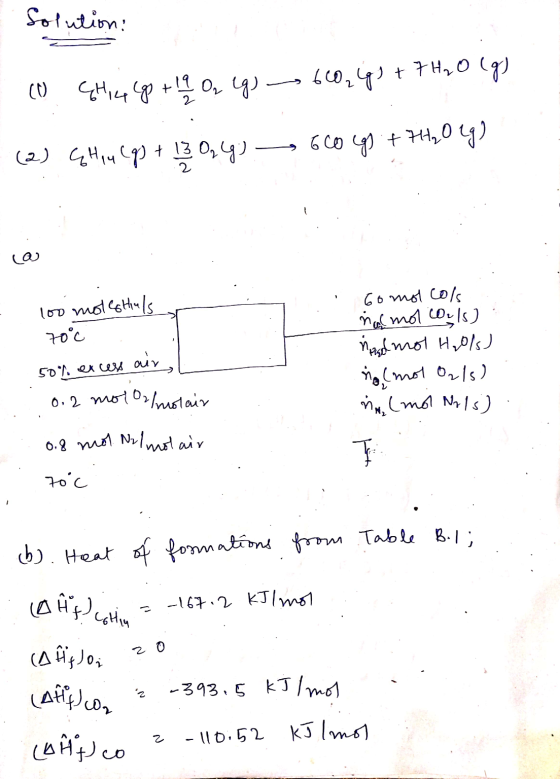
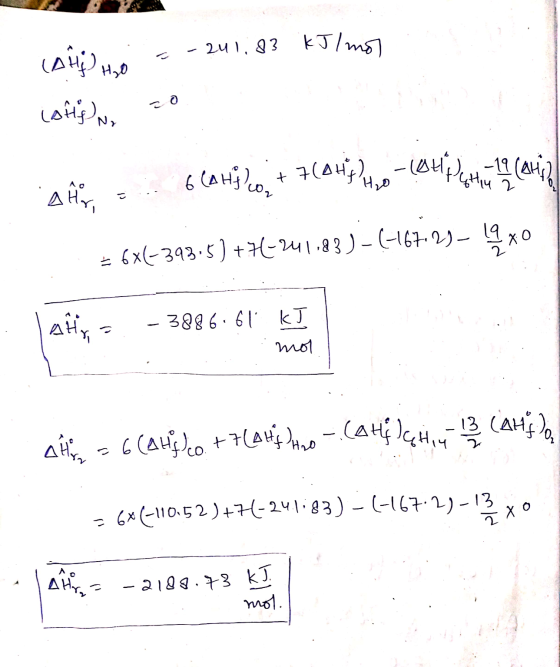

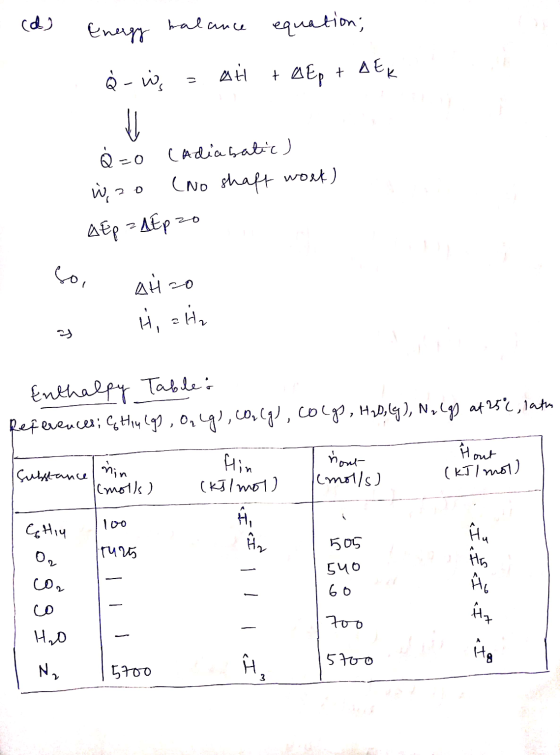
![(now theoretical 2 two molgtmls 19.5 motor I mol & Hiu (15 95 6 mot Orls air 4] set. ๕๕ (44 0.2 ทอ (055) 5:( - mol airls ht 2](http://img.homeworklib.com/questions/ada86380-f9dd-11ea-b165-fb3f694c4f69.png?x-oss-process=image/resize,w_560)
Add Answer to:
3. A process stream of 100 mol/s of n-Hexane vapor at 70.0 °C and 1 atm...
A bituminous coal is burned with air in a boiler furnace. The coal is fed at a rate of 40000 kg/h and has an ultimate analysis of 76wt% C, 5wt% H, 8wt% O, negligible amounts of N and S, and 11wt% non-...
 A bituminous coal is burned with air in a boiler furnace. The
coal is fed at a rate of 40000 kg/h and has an ultimate analysis of
76wt% C, 5wt% H, 8wt% O, negligible amounts of N and S, and 11wt%
non-combustible ash. Air enters a preheater at 30 °C and 1 atm with
a relative humidity of 30%, exchanges heat with the hot flue gas
leaving the furnace and air enters the furnace at temperature Ta
(°C). The flue...
A bituminous coal is burned with air in a boiler furnace. The
coal is fed at a rate of 40000 kg/h and has an ultimate analysis of
76wt% C, 5wt% H, 8wt% O, negligible amounts of N and S, and 11wt%
non-combustible ash. Air enters a preheater at 30 °C and 1 atm with
a relative humidity of 30%, exchanges heat with the hot flue gas
leaving the furnace and air enters the furnace at temperature Ta
(°C). The flue...
Week 4 Process 1: Consider the process below: Water in Combustor Steam Generator Gas In Gas...
 Week 4 Process 1: Consider the process below: Water in Combustor Steam Generator Gas In Gas Out Combustor exit Steam Out A methane (CH) and air mixture is burnt in the combustor then the heat is recovered to produce steam. The CHa/air mixture comes in at 25°C and contains 10 kg/h of CH4 and 500 kg/h of air (assume 79% Nitrogen (N2) and 21 % Oxygen (O2)). The final outlet gas leaves at 100 °C. The combustion reaction follows the...
1.f) Methane gas (CH4) enters a combustion chamber at a rate of 3 kg/sec at a...
 1.f) Methane gas (CH4) enters a combustion chamber at a rate of 3 kg/sec at a temperature of 25 °C. A 200% theoretical air is supplied at a temperature of 400K. At the middle of methane combustion process (i.e., after 50% of methane gas is burnt), liquid propane (C3H8) at 25°C is injected at a rate that produces neither CO nor O2 in the flue gases. Assume steady state and adiabatic process at 1 atm, calculate the following i. The...
n-butane burns with 15% excess air, both streams enter at 25 ° C. The gas burns...
n-butane burns with 15% excess air, both streams enter at 25 ° C. The gas burns completely producing 90 mol of CO2 / 10mol of CO. The combustion gas comes out at 400ºC and 1 atm. Taking as a basis of calculation 1000 moles / h of the gas that feeds the oven: 1. Draw the process diagram 2. Calculate the air feed rate and the composition of the flue gases. 3. Fill the enthalpy table in / out of...
3. (20) Fire Heater Specification After the reactor feed leaves the heat exchanger, it enters a...
 3. (20) Fire Heater Specification After the reactor feed leaves the heat exchanger, it enters a fire heater. In this unit the stream is further heated from 215°C to 350°C, which requires 4649 kJ/h of heat to be added. To accomplish this, the heat from the combustion of methane gas is used: CH4(2) +2 02(g) → CO2() + 2 H20(2) $ = 10.0 molh The design of this fire heater indicates that the temperature of the flue gas will not...
(1). Which of the following molecules is most soluble in hexane, C6H14? NH3 CH3NH2 CH3OH CH3CH3...
(1). Which of the following molecules is most soluble in hexane, C6H14? NH3 CH3NH2 CH3OH CH3CH3 H2O (2). Which of the following molecules is most soluble in methanol CH3OH? N(CH3)3 CH3NH2 CH3COCH3 CH3CH2CH2CH2CH2CH3 HOCH2CH2OH (3). Calculate the concentration of CO2 in a soft drink that is bottled with a partial pressure of CO2 of 5 atm over the liquid at 25 °C. The Henry’s Law constant for CO2 in water at this temperature is 3.12 ´ 10–2 mol L–1 atm–1....
4. [30 marks] 100 mol/min of CO at 300 °C are burned with 100 % excess...
 4. [30 marks] 100 mol/min of CO at 300 °C are burned with 100 % excess Oz which is at 100 °C. The exit gases leave at 400 °C. a) [10 pts) Calculate the molar flowrate of individual components in the feed and exit streams, assuming that there is no unburned CO in the exit stream. Follow the systematic procedure to solve this question. b) [10 pts) Calculate the standard heat of reaction using the standard heats of formation of...
1.) The specific heat of a certain type of metal is 0.128 J/(g⋅∘C). What is the...
1.) The specific heat of a certain type of metal is 0.128 J/(g⋅∘C). What is the final temperature if 305J of heat is added to 41.7 g of this metal, initially at 20.0 ∘C? 2.) When 1723 J of heat energy is added to 42.3 g of hexane, C6H14, the temperature increases by 18.0 ∘C. Calculate the molar heat capacity of C6H14 3.) Liquid sodium is being considered as an engine coolant. How many grams of liquid sodium (minimum) are...
Chapter 5 and Chapter 10 Problem solving (please practice the following questions and make sure that you understand...
 Chapter 5 and Chapter 10 Problem solving (please practice the following questions and make sure that you understand the principles behind: you can find Ar from textbook or website I. A 145 g sample of copper metal at 100.0°C is placed into 250.0 g of water at 25.0°C in a calorimeter. When the system reaches thermal equilibrium, the temperature of the water in the calorimeter is 28.8°C. Assume the calorimeter is perfectly insulated. What is the specific heat capacity of...
1) One hundred (100) ml of a 1.00 M solution of HCl is diluted with water...
 1) One hundred (100) ml of a 1.00 M solution of HCl is diluted with water to prepare a 0.200 M solution. What is the volume of the resulting 0.200 M solution? Or asked another way, to what volume must the original solution be diluted? (3 points) 2) Lithium hydroxide, LiOH, is used in spacecraft to absorb the carbon dioxide exhaled by astronauts. Given 1.3 kg of LiOH, how many kg of CO2 can be absorbed? (10 Pts. The reaction...
 A bituminous coal is burned with air in a boiler furnace. The
coal is fed at a rate of 40000 kg/h and has an ultimate analysis of
76wt% C, 5wt% H, 8wt% O, negligible amounts of N and S, and 11wt%
non-combustible ash. Air enters a preheater at 30 °C and 1 atm with
a relative humidity of 30%, exchanges heat with the hot flue gas
leaving the furnace and air enters the furnace at temperature Ta
(°C). The flue...
A bituminous coal is burned with air in a boiler furnace. The
coal is fed at a rate of 40000 kg/h and has an ultimate analysis of
76wt% C, 5wt% H, 8wt% O, negligible amounts of N and S, and 11wt%
non-combustible ash. Air enters a preheater at 30 °C and 1 atm with
a relative humidity of 30%, exchanges heat with the hot flue gas
leaving the furnace and air enters the furnace at temperature Ta
(°C). The flue...
 Week 4 Process 1: Consider the process below: Water in Combustor Steam Generator Gas In Gas Out Combustor exit Steam Out A methane (CH) and air mixture is burnt in the combustor then the heat is recovered to produce steam. The CHa/air mixture comes in at 25°C and contains 10 kg/h of CH4 and 500 kg/h of air (assume 79% Nitrogen (N2) and 21 % Oxygen (O2)). The final outlet gas leaves at 100 °C. The combustion reaction follows the...
 1.f) Methane gas (CH4) enters a combustion chamber at a rate of 3 kg/sec at a temperature of 25 °C. A 200% theoretical air is supplied at a temperature of 400K. At the middle of methane combustion process (i.e., after 50% of methane gas is burnt), liquid propane (C3H8) at 25°C is injected at a rate that produces neither CO nor O2 in the flue gases. Assume steady state and adiabatic process at 1 atm, calculate the following i. The...
 3. (20) Fire Heater Specification After the reactor feed leaves the heat exchanger, it enters a fire heater. In this unit the stream is further heated from 215°C to 350°C, which requires 4649 kJ/h of heat to be added. To accomplish this, the heat from the combustion of methane gas is used: CH4(2) +2 02(g) → CO2() + 2 H20(2) $ = 10.0 molh The design of this fire heater indicates that the temperature of the flue gas will not...
 4. [30 marks] 100 mol/min of CO at 300 °C are burned with 100 % excess Oz which is at 100 °C. The exit gases leave at 400 °C. a) [10 pts) Calculate the molar flowrate of individual components in the feed and exit streams, assuming that there is no unburned CO in the exit stream. Follow the systematic procedure to solve this question. b) [10 pts) Calculate the standard heat of reaction using the standard heats of formation of...
 Chapter 5 and Chapter 10 Problem solving (please practice the following questions and make sure that you understand the principles behind: you can find Ar from textbook or website I. A 145 g sample of copper metal at 100.0°C is placed into 250.0 g of water at 25.0°C in a calorimeter. When the system reaches thermal equilibrium, the temperature of the water in the calorimeter is 28.8°C. Assume the calorimeter is perfectly insulated. What is the specific heat capacity of...
 1) One hundred (100) ml of a 1.00 M solution of HCl is diluted with water to prepare a 0.200 M solution. What is the volume of the resulting 0.200 M solution? Or asked another way, to what volume must the original solution be diluted? (3 points) 2) Lithium hydroxide, LiOH, is used in spacecraft to absorb the carbon dioxide exhaled by astronauts. Given 1.3 kg of LiOH, how many kg of CO2 can be absorbed? (10 Pts. The reaction...
Most questions answered within 3 hours.
-
Where is the error in this code sequence?
String s1 = "Hello";
String s2 = "ello";...
asked 11 months ago -
Financial data for Joel de Paris, Inc., for last year
follow:
Joel de Paris, Inc.
Balance...
asked 11 months ago -
Consider this reaction:
Al2(SO4)3 (aq)+ BaCl3
(aq) Al2Cl6 (aq)- +
3BaSO4(s) . What is the...
asked 11 months ago -
Suppose that Savneet is considering increasing her
recent random sample from 20 car rentals to 40...
asked 11 months ago -
Trucks arrive at an unloading terminal at an average rate of 120
per hour.
Trucks arrive...
asked 11 months ago -
Why are methanol and ethanol completely soluble in water while
octanol is not very little soluble....
asked 11 months ago -
A facilities manager at a university reads in a research report
that the mean amount of...
asked 11 months ago -
When the CuSO4 is rehydrated by adding water to the anhydrous
compound, is this an endothermic...
asked 11 months ago -
A ray of sunlight is passing from diamond into crown glass; the
angle of incidence is...
asked 11 months ago -
A block of mass 0.249 kg is placed on top of a light, vertical
spring of...
asked 11 months ago -
how do the kidneys compensate in the presences of acidosis
a) trigger hyperventilate
b) reserve acid...
asked 11 months ago -
Question 501 pts
The rental rate of capital to the firm increases. Which of the
following...
asked 11 months ago