Graphically develop the argument that a country’s welfare can be improved by a positive import tariff...
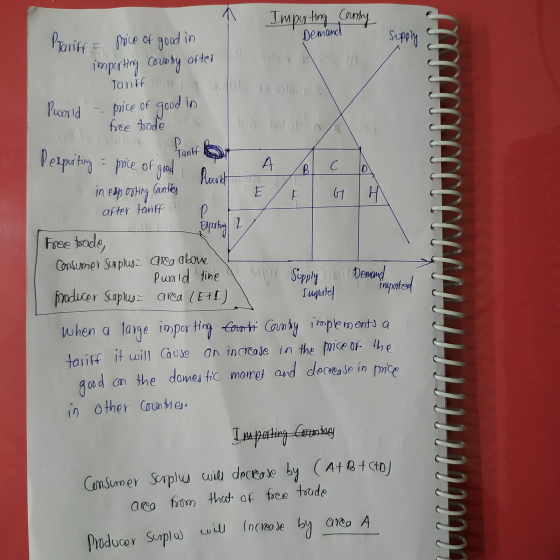
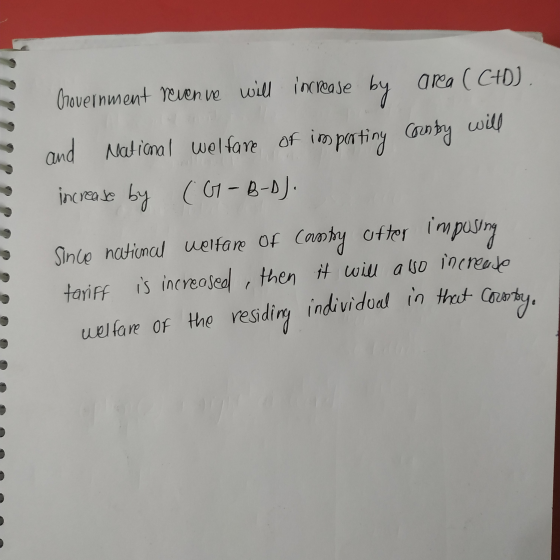
Graphically develop the argument that a country’s welfare can be improved by a positive import tariff rate for an industry compared to free trade.
Homework Answers
Add Answer to:
Graphically develop the argument that a country’s welfare can be
improved by a positive import tariff...
Show graphically, discuss and explain the welfare effects of a tariff in the following circumstances: The...
Show graphically, discuss and explain the welfare effects of a tariff in the following circumstances: The import tariff is imposed by a small economy. The export tariff is imposed by a large economy. The import tariff is imposed in an economy with no home production facing a Home monopoly.
Import tariff in the case of domestic monopoly a) leads to a higher welfare than the equivalent quota b) leads to the lower domestic prices than in the case of free trade c) leads to a lower welfare t...
Import tariff in the case of domestic monopoly a) leads to a higher welfare than the equivalent quota b) leads to the lower domestic prices than in the case of free trade c) leads to a lower welfare than the equivalent quota d) leads to the same level of welfare than the equivalent quota
This is one problem please answer the following 3. Welfare effects of a tariff in a...
 This is one problem please answer the following
3. Welfare effects of a tariff in a small country Suppose Bolivia is open to free trade in the world market for wheat. Because of Bolivia's small size, the demand for and supply of wheat in Bolivia do not affect the world price. The following graph shows the domestic wheat market in Bolivia. The world price of wheat is Pw - $250 per ton. On the following graph, use the green triangle...
This is one problem please answer the following
3. Welfare effects of a tariff in a small country Suppose Bolivia is open to free trade in the world market for wheat. Because of Bolivia's small size, the demand for and supply of wheat in Bolivia do not affect the world price. The following graph shows the domestic wheat market in Bolivia. The world price of wheat is Pw - $250 per ton. On the following graph, use the green triangle...
3. The optimal tariff argument in favor of protectionism cannot hold in country X unless (a)...
 3. The optimal tariff argument in favor of protectionism cannot hold in country X unless (a) country X imposes a very high tariff (b) the other countries also introduce their own tariffs in response (e) country X's demand and supply affect world prices (d) the government in country X spends its revenues on public goods that benefit the median voter (e) none of the above 4. A necessary condition for the Infant Industry argument to hold is the presence of...
5. Welfare effects of a tariff in a small country Suppose Colombia is open to free...
 5. Welfare effects of a tariff in a small country Suppose Colombia is open to free trade in the world market for soybeans. Because of Colombia's small size, the demand for and supply of soybeans in Colombia do not affect the world price. The following graph shows the domestic soybeans market in Colombia. The world price of soybeans is Pw =$400 per ton. On the following graph, use the green triangle (triangle symbols) to shade the area representing consumer's surplus...
3. welfare effects of tariff in small country Suppose Bolivia is open to free trade in...
 3. welfare effects of tariff in small country Suppose Bolivia is open to free trade in the world market for wheat. Because of Bolivia's small size, the demand for and supply of wheat in Bolivia do not affect the world price. The following graph shows the domestic wheat market in Bolivia. The world price of wheat is P $250 per ton. On the folowing graph, use the green triangle (triangle symbols)to shade the area representing consumer surplus (CS) when the...
When the government imposes a tariff on import, what happens? A. The domestic price is higher...
When the government imposes a tariff on import, what happens? A. The domestic price is higher than the global price. B. The amount of import is less than that in free trade. C. There is tariff revenue to the government. D. all of the above While working for Pepsico, after examining the data closely, Jim noticed that when the price of a can of Mountain Dew increased, the number of cans of Mountain Dew sold decreased. He correctly reports that...
3. Welfare effects of a tariff in a small country Suppose Bolivia is open to free...
 3. Welfare effects of a tariff in a small
country
Suppose Bolivia is open to free trade in the world market for
wheat. Because of Bolivia’s small size, the demand for and supply
of wheat in Bolivia do not affect the world price. The following
graph shows the domestic wheat market in Bolivia. The world price
of wheat is PWPW = $250 per ton.
On the following graph, use the green triangle (triangle
symbols) to shade the area representing consumer...
3. Welfare effects of a tariff in a small
country
Suppose Bolivia is open to free trade in the world market for
wheat. Because of Bolivia’s small size, the demand for and supply
of wheat in Bolivia do not affect the world price. The following
graph shows the domestic wheat market in Bolivia. The world price
of wheat is PWPW = $250 per ton.
On the following graph, use the green triangle (triangle
symbols) to shade the area representing consumer...
Aplia Homework: International Trade 3. Welfare effects of a tariff in a small country Suppose Zambia...
 Aplia Homework: International Trade 3. Welfare effects of a tariff in a small country Suppose Zambia is open to free trade in the world market for soybeans. Because of Zambia's small size, the demand for and supply of soybeans in Zambia do not affect the world price. The following graph shows the domestic soybeans market in Zambia. The world price of soybeans is Pw-$400 per ton On the following graph, use the green triangle (triangle symbols) to shade the area...
Assume the market can be described by the following supply and demand curves. Qs=2p Qd=300-p A....
Assume the market can be described by the following supply and demand curves. Qs=2p Qd=300-p A. Assume the world price is $110 and the small country allows free trade. Does this county import or export? How many units does this country import or export? What are the gains-to-trade allowing free trade compared to no-trade? Assume the world price is $60 and the small country allows free trade. Does this county import or export? How many units does this country import...
 This is one problem please answer the following
3. Welfare effects of a tariff in a small country Suppose Bolivia is open to free trade in the world market for wheat. Because of Bolivia's small size, the demand for and supply of wheat in Bolivia do not affect the world price. The following graph shows the domestic wheat market in Bolivia. The world price of wheat is Pw - $250 per ton. On the following graph, use the green triangle...
This is one problem please answer the following
3. Welfare effects of a tariff in a small country Suppose Bolivia is open to free trade in the world market for wheat. Because of Bolivia's small size, the demand for and supply of wheat in Bolivia do not affect the world price. The following graph shows the domestic wheat market in Bolivia. The world price of wheat is Pw - $250 per ton. On the following graph, use the green triangle...
 3. The optimal tariff argument in favor of protectionism cannot hold in country X unless (a) country X imposes a very high tariff (b) the other countries also introduce their own tariffs in response (e) country X's demand and supply affect world prices (d) the government in country X spends its revenues on public goods that benefit the median voter (e) none of the above 4. A necessary condition for the Infant Industry argument to hold is the presence of...
 5. Welfare effects of a tariff in a small country Suppose Colombia is open to free trade in the world market for soybeans. Because of Colombia's small size, the demand for and supply of soybeans in Colombia do not affect the world price. The following graph shows the domestic soybeans market in Colombia. The world price of soybeans is Pw =$400 per ton. On the following graph, use the green triangle (triangle symbols) to shade the area representing consumer's surplus...
 3. welfare effects of tariff in small country Suppose Bolivia is open to free trade in the world market for wheat. Because of Bolivia's small size, the demand for and supply of wheat in Bolivia do not affect the world price. The following graph shows the domestic wheat market in Bolivia. The world price of wheat is P $250 per ton. On the folowing graph, use the green triangle (triangle symbols)to shade the area representing consumer surplus (CS) when the...
 3. Welfare effects of a tariff in a small
country
Suppose Bolivia is open to free trade in the world market for
wheat. Because of Bolivia’s small size, the demand for and supply
of wheat in Bolivia do not affect the world price. The following
graph shows the domestic wheat market in Bolivia. The world price
of wheat is PWPW = $250 per ton.
On the following graph, use the green triangle (triangle
symbols) to shade the area representing consumer...
3. Welfare effects of a tariff in a small
country
Suppose Bolivia is open to free trade in the world market for
wheat. Because of Bolivia’s small size, the demand for and supply
of wheat in Bolivia do not affect the world price. The following
graph shows the domestic wheat market in Bolivia. The world price
of wheat is PWPW = $250 per ton.
On the following graph, use the green triangle (triangle
symbols) to shade the area representing consumer...
 Aplia Homework: International Trade 3. Welfare effects of a tariff in a small country Suppose Zambia is open to free trade in the world market for soybeans. Because of Zambia's small size, the demand for and supply of soybeans in Zambia do not affect the world price. The following graph shows the domestic soybeans market in Zambia. The world price of soybeans is Pw-$400 per ton On the following graph, use the green triangle (triangle symbols) to shade the area...
Most questions answered within 3 hours.
-
Where is the error in this code sequence?
String s1 = "Hello";
String s2 = "ello";...
asked 10 months ago -
Financial data for Joel de Paris, Inc., for last year
follow:
Joel de Paris, Inc.
Balance...
asked 10 months ago -
Consider this reaction:
Al2(SO4)3 (aq)+ BaCl3
(aq) Al2Cl6 (aq)- +
3BaSO4(s) . What is the...
asked 10 months ago -
Suppose that Savneet is considering increasing her
recent random sample from 20 car rentals to 40...
asked 10 months ago -
Trucks arrive at an unloading terminal at an average rate of 120
per hour.
Trucks arrive...
asked 10 months ago -
Why are methanol and ethanol completely soluble in water while
octanol is not very little soluble....
asked 10 months ago -
A facilities manager at a university reads in a research report
that the mean amount of...
asked 10 months ago -
When the CuSO4 is rehydrated by adding water to the anhydrous
compound, is this an endothermic...
asked 10 months ago -
A ray of sunlight is passing from diamond into crown glass; the
angle of incidence is...
asked 10 months ago -
A block of mass 0.249 kg is placed on top of a light, vertical
spring of...
asked 10 months ago -
how do the kidneys compensate in the presences of acidosis
a) trigger hyperventilate
b) reserve acid...
asked 10 months ago -
Question 501 pts
The rental rate of capital to the firm increases. Which of the
following...
asked 10 months ago